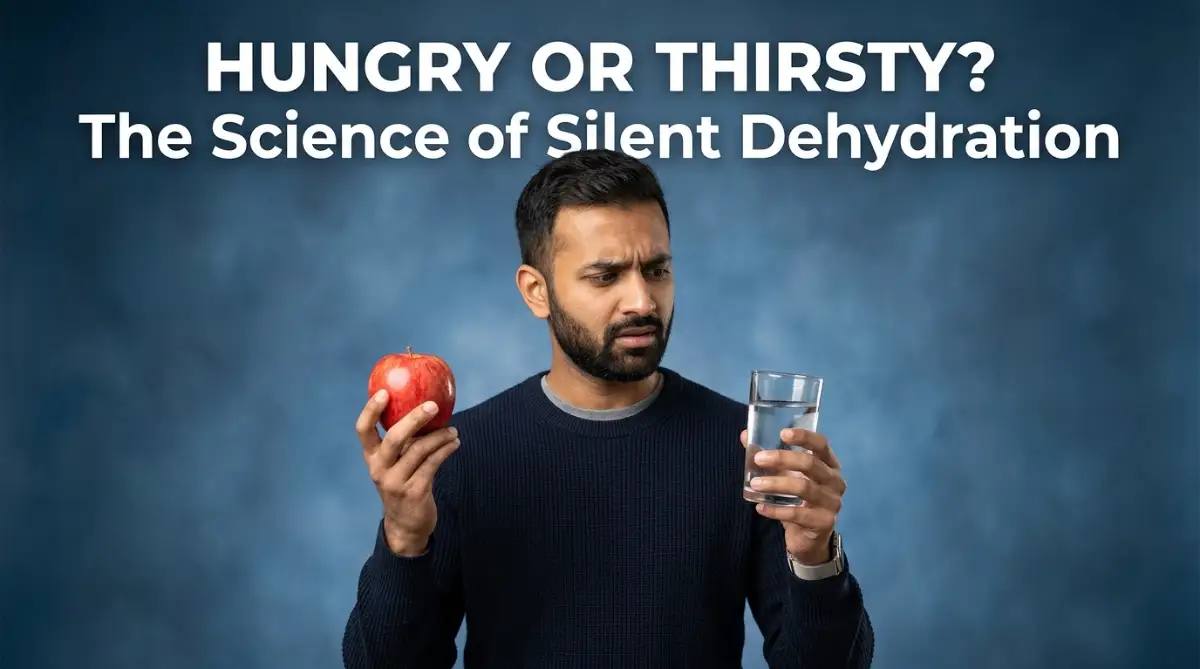
The Constant Cycle of "Mystery Hunger"
We've all been there. You just finished a heavy dinner, sat down on the couch, and twenty minutes later, you are staring into the fridge looking for a snack. Your stomach is physically full, but your brain is screaming that you are still "hungry." For years, I thought I just had terrible willpower and a massive snacking problem. It turns out, I wasn't hungry at all—my brain was just incredibly confused. Let's talk about why your body tricks you into overeating when all it really wants is a glass of water.
This is a struggle millions of people face every single day. We live in a world where food is always available, and we are taught to eat whenever we feel a "twinge" in our gut. But what if I told you that your body is actually crying out for water, not a sandwich?
The mental frustration of constant cravings is exhausting. It makes you feel like you have no willpower. You might even feel guilty for wanting more food after you just ate. This emotional weight can ruin your mood and make you feel disconnected from your own body.
We often ignore the simplest solution because our brains are tricky. We think we need fuel when we actually need a flush. When we mistake thirst for hunger, we end up overeating, which leads to weight gain and low energy.
It is a silent problem that steals your peace of mind. You start to worry about your health, your weight, and your habits. But once you understand the science of how your brain talks to you, the mystery disappears.
I used to sit on my couch every single night, completely frustrated with myself because I was digging through the pantry just an hour after eating a huge dinner. I felt so guilty and honestly thought I had zero self-control when it came to late-night snacking. It took me years to finally realize that my stomach was not actually asking for more food—my severely dehydrated body was just begging me for a simple glass of water.
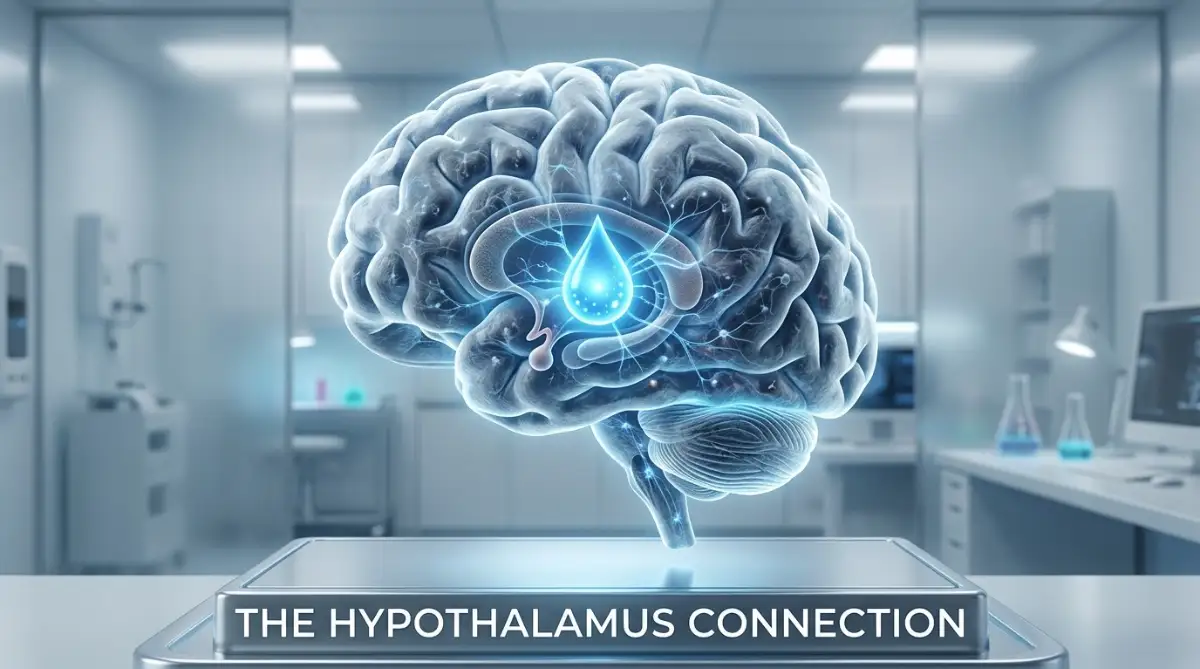
Quick Takeaways: Stopping the "Mystery Hunger"
- The Brain Glitch: Your hypothalamus uses the exact same signal for thirst and hunger. Your brain often mixes them up.
- The Afternoon Slump: That 3 PM crash isn't a lack of coffee; it's a lack of water dropping your blood volume.
- The Dry Mouth Lie: By the time your mouth actually feels dry, you are already severely dehydrated.
- The Salt Secret: Add a tiny pinch of sea salt to your water. Electrolytes help the water actually enter your cells instead of just flushing out.
The Command Center: Why Your Brain Gets Confused
"Before we look at the exact biology below, watch this quick, eye-opening video to see exactly why our brains constantly mix up thirst and hunger, and then keep reading to learn how to fix this annoying glitch forever!"
To understand this problem, we have to look at a tiny part of your brain called the hypothalamus. This is the control center for your body's most basic needs. It regulates your body temperature, your sleep, and most importantly, your hunger and thirst.
The hypothalamus is very efficient, but it has one small flaw. It uses the same nerve signals to tell you that you are hungry as it does to tell you that you are thirsty. It is like having one light on your car dashboard that means both "low oil" and "low gas."
When your body's water levels drop, the hypothalamus sends out an SOS. Because we are used to eating more than we are used to drinking, our brain often interprets this signal as a need for food. We reach for a snack, the signal goes away for a moment, but the thirst remains.
This is why you might feel "hungry" even when your stomach is physically full. Your brain is still waiting for that water. Understanding this biological "glitch" is the first step toward better health and real energy.
The Sugar Craving Trap: Your Liver’s Secret Request
Have you ever had a sudden, intense craving for something sweet? Most people think this means they have low blood sugar. In many cases, it actually means your body is dehydrated.
Your liver needs water to release glycogen, which is the energy your body stores for later. If you are dehydrated, your liver cannot do its job properly. It gets stuck, and it cannot release that energy into your system.
Because your body isn't getting the energy it needs, it sends a signal for a "quick fix." That quick fix is usually sugar. You start craving cookies, soda, or candy because your body is desperate for fuel.
Next time you want a chocolate bar, try drinking a large glass of water first. Wait about fifteen minutes. You might be surprised to find that the craving completely disappears once your liver has the water it needs to function.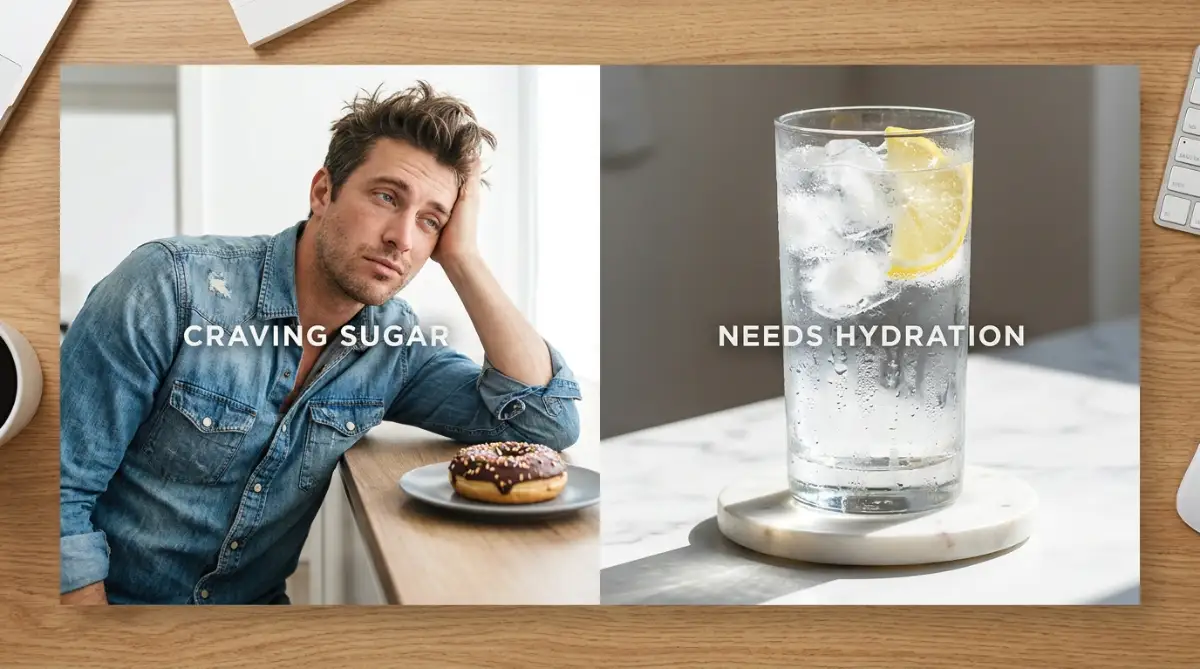
The Afternoon Slump: Thirst in Disguise
We all know that feeling of tiredness around 3:00 PM. You feel foggy, your eyes are heavy, and you just want a nap. Most people reach for a second or third cup of coffee to get through the day.
But caffeine is a diuretic, which means it actually pushes more water out of your body. If your tiredness is caused by dehydration, that coffee will only make the problem worse. You might feel a quick burst of energy, followed by a much bigger crash.
When you don't have enough water, your blood volume drops. This means your heart has to work harder to push oxygen to your brain and muscles. The result is a feeling of total exhaustion that feels like hunger.
Instead of another cup of coffee, try a "hydration reset." Drink two glasses of cool water and take a five-minute walk. You will likely feel more awake than any caffeine could ever make you.
The "Dry Mouth" Myth: Why Thirst is a Late Signal
Many people believe they aren't thirsty because their mouth doesn't feel dry. This is one of the biggest myths in health. By the time your mouth feels dry, you are already significantly dehydrated.
Think of "dry mouth" as the final warning light on your car. Your body has many other ways of telling you it needs water before that happens. Cravings, headaches, and irritability are much earlier signs.
I have noticed that most people live in a state of "micro-dehydration." They drink just enough to keep their mouth moist, but not enough to keep their cells happy. This keeps them in a constant state of feeling hungry and tired.
Hydration: Myth vs. Fact
- Myth: Coffee counts toward my daily water intake.
- Fact: Caffeine is a diuretic. It actually forces your kidneys to push water out of your system, making you even more dehydrated.
- Myth: Chugging a whole bottle of water at once is the best way to hydrate.
- Fact: Your body can only absorb about a quarter-liter every 15 minutes. Chugging just makes you run to the bathroom; pacing actually hydrates your cells.
If you wait until you are thirsty to drink, you are playing catch-up. The goal is to provide your body with a steady stream of water throughout the day. This keeps your signals clear and your energy levels stable.
Physical Clues You Should Never Ignore
Aside from cravings, your body gives you other physical hints that it needs water. One of the most obvious is your breath. If your breath smells bad even after brushing, you might be dehydrated.
Water is needed to produce saliva. Saliva is your mouth’s natural cleaner. It washes away bacteria that cause odors. If you are low on water, your mouth becomes a playground for bacteria, leading to bad breath.
Another sign is skin elasticity. You can test this right now. Pinch the skin on the back of your hand and let go. If it doesn't snap back immediately, your cells are thirsty.
Properly hydrated skin looks plump and healthy. When you are dehydrated, your skin can look dull and show more wrinkles. Many people spend a fortune on skin creams when they really just need to drink more water.
The "Fullness" Illusion: How Water Helps You Eat Less
Science shows that drinking water before a meal can help you feel full faster. Water takes up space in your stomach, which sends a signal to your brain that you are satisfied.
In a study published by the Journal of Natural Science, Biology and Medicine, researchers found that drinking water before meals helped people lose weight significantly. It wasn't magic; it was just clear communication between the stomach and the brain.
By drinking water first, you remove the "thirst signal" that looks like hunger. This allows you to eat only what your body actually needs for fuel. It is a simple habit that changes your entire relationship with food.
Step 1: The "Water First" Rule for Every Craving
From today, I want you to try a simple experiment. Every time you feel the urge to snack, drink a full glass of water first. This is your new "Golden Rule."
Do not judge the craving. Just give your body the water it might be asking for. Wait for ten to fifteen minutes and see if the hunger is still there.
If you are still truly hungry, then eat a healthy snack. But you will find that about 60% of the time, the hunger disappears. You have just saved yourself unnecessary calories and given your body exactly what it needed.
My Personal Trick: The 15-Minute Rule
If you feel an intense sugar craving hit you out of nowhere, do not fight it. Instead, drink 16 ounces of cool water and set a timer for exactly 15 minutes. If you are still craving the chocolate bar when the timer goes off, eat it. But I promise you, 8 out of 10 times, the craving completely vanishes. Your liver just needed water to release its stored energy!
My biggest mistake in the past was trying to "trick" my hunger by drinking tons of zero-calorie diet sodas, which actually made me feel even more tired and hungry later on. I finally learned to keep a massive water bottle right on my desk and forced myself to drink at least half of it before reaching for a bag of chips. You will be completely shocked at how quickly those intense afternoon sugar cravings vanish when you just give your cells the pure hydration they really want.
Step 2: Monitoring Your "Liquid Baseline"
You don't need a complicated app to track your hydration. Just look at the color of your urine. This is the most honest feedback your body can give you.
If it is dark yellow, you are in the danger zone. You need to drink water immediately. If it is clear like water, you might actually be drinking too much too fast.
The goal is a pale straw color. This indicates that your body is perfectly balanced. It shows that your kidneys are working well and your cells are hydrated.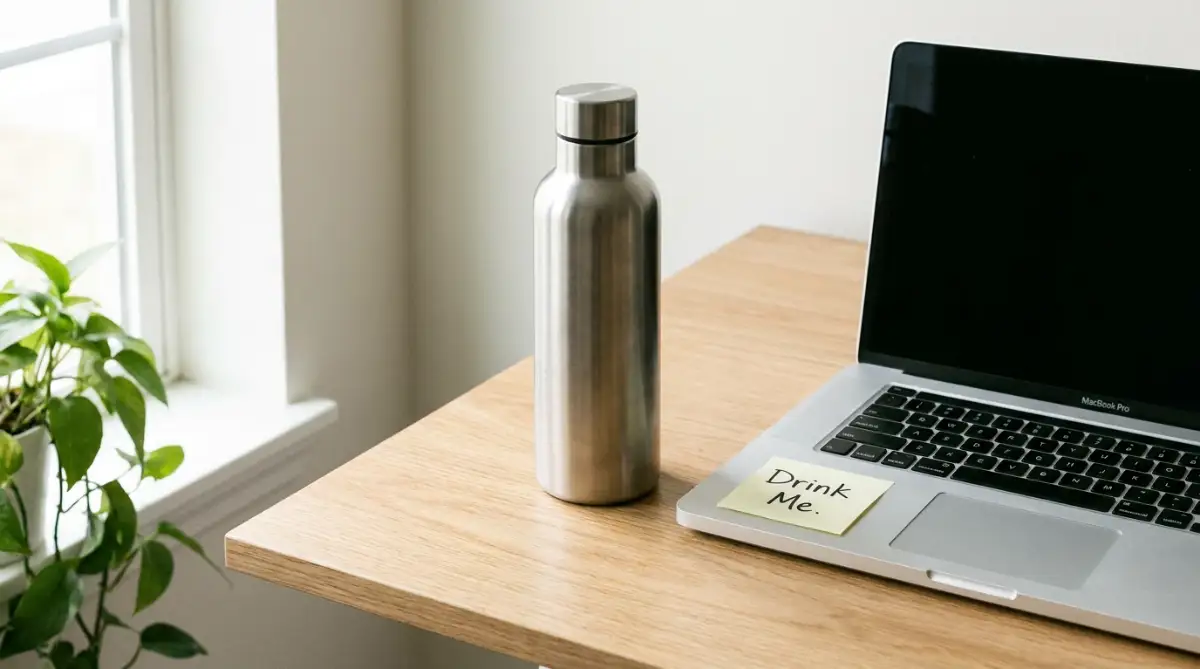
Step 3: Creating an Environment for Success
We are often dehydrated because water isn't "convenient." We reach for what is easy, like a soda or a juice box. To fix this, you must make water the easiest choice.
Keep a glass of water on your desk at all times. If you see it, you will drink it. Carry a reusable bottle with you whenever you leave the house.
Try "eating" your water too. Foods like cucumber, watermelon, and celery are almost 95% water. They provide hydration along with fiber, which helps keep you feel full even longer.
Expert Insight: Why Quality Matters as Much as Quantity
Not all liquids are created equal. Soda, energy drinks, and even some fruit juices are loaded with sugar. This sugar creates an insulin spike, which actually makes you more hungry later.
Pure, clean water is the only thing that truly hydrates your cells without a cost. If you find plain water boring, add a slice of lemon or cucumber. This adds flavor without adding the "hunger-inducing" sugars.
Think of water as a cleaner for your internal systems. It flushes out toxins and helps your organs run smoothly. When your body is clean and hydrated, your brain is sharper and your mood is better.
The Long-Term Reward of Clear Signals
When you start listening to your body’s true needs, everything changes. Your energy becomes stable. Your skin starts to glow. Your "mystery" hunger disappears.
You are no longer a slave to your cravings. You are in control. You have learned to decode the silent signals of your body.
This journey isn't about being perfect. It is about being aware. It is about giving your body the respect it deserves by providing its most basic need: water.
Reclaiming your health starts with a single sip. You have the knowledge now. You know that the "hunger" you feel might just be a whisper for water.
Listen to that whisper today. Your future self will thank you for it. Stay hydrated, stay healthy, and keep your signals clear.
Mastering the Art of Deep Cellular Hydration
Understanding that thirst can look like hunger is only the beginning of your journey. To truly fix this problem, you need to look at how your body handles water on a deeper level. It is not just about how much you drink, but how well your cells actually soak up that moisture.
Think of your body like a dry sponge. If you pour a gallon of water on it all at once, most of it will just run off the sides. Your body works the same way. If you chug a huge bottle of water in one minute, your kidneys will simply flush it out before your cells can use it.
The secret to staying hydrated is pacing and minerals. You need tiny amounts of salt and potassium to help water move into your cells. Without these electrolytes, water stays in your bloodstream and then leaves your body, leaving you still feeling "hungry" and tired.
A simple trick is to add a tiny pinch of sea salt to your water bottle once a day. This doesn't make the water taste salty, but it provides the electrical charge your body needs. It is a pro-level move that helps you stay satisfied for much longer periods.
You should also pay attention to the temperature of your water. While ice-cold water feels great on a hot day, room-temperature water is often easier for your stomach to absorb. Your body doesn't have to work as hard to heat the water up to match your internal temperature.
When you master these small details, you stop the constant cycle of false hunger. You start to feel a level of energy that stays steady from morning until night. It is about working with your biology rather than fighting against it every single day.
According to a research study by the Harvard T.H. Chan School of Public Health, more than half of all children and adolescents in the U.S. are not getting enough water. This habit of chronic dehydration starts young and follows us into adulthood. Breaking this cycle requires a conscious effort to change how we view our daily sips.
Sensory Intelligence: Listening to Your Body's Subtle Language
Most people wait for a loud signal like a growling stomach to take action. But your body speaks in whispers long before it starts to shout. Learning to hear those whispers is a skill that will change your life forever.
When you feel a sudden drop in your mood or you feel "snappy" with your family, check your water levels. Dehydration affects your brain's ability to balance chemicals that keep you happy. A bad mood is often just a thirsty brain.
I recommend doing a "Hydration Body Scan" every two hours. Close your eyes and ask yourself: Is my mouth slightly tacky? Do my eyes feel a bit dry? Am I thinking about food even though I ate recently?
If the answer to any of these is yes, reach for your water bottle before you reach for a snack. It is a mental training process that builds a stronger bond between your mind and your physical needs. Over time, you will become an expert at knowing exactly what your body is asking for.
 The Hidden Traps of Mismanaged Hydration
While trying to fix your hydration, it is very easy to fall into emotional and physical traps. One of the biggest mistakes is the "Sudden Flood" approach. This happens when someone realizes they are dehydrated and tries to fix it by drinking three liters of water in one hour.
This can be dangerous for your body. It dilutes the sodium in your blood too quickly, which can make you feel dizzy or sick. Consistency is always better than intensity. You cannot make up for a week of thirst in a single afternoon.
Another common pitfall is confusing "fluids" with "hydration." Many people think that drinking soda, sweet tea, or energy drinks counts toward their water goal. While these are liquids, the high sugar and caffeine content actually pull water away from your cells.
Think of it like trying to wash your car with soapy, sticky syrup. It might be wet, but it isn't going to leave the car clean. Pure water is the only thing your body uses for deep cleaning and cooling. Everything else is just extra work for your liver and kidneys.
I have seen people struggle with weight for years because they drink their calories. They feel "hungry," so they grab a juice or a latte. The sugar makes their insulin spike, which then makes them feel even hungrier an hour later. It is a vicious circle that leaves you feeling defeated and exhausted.
This neglect of basic health needs can have a long-term impact on your life. It is like the silent credit score killers ruining your chances for a mortgage approval. You don't see the damage day by day, but eventually, the small mistakes add up to a major problem.
According to data from the Centers for Disease Control and Prevention (CDC), substituting water for just one 20-ounce sweetened beverage can save you about 240 calories. Doing this once a day can lead to significant weight loss over a year without ever going on a "diet."
There is also the "Mealtime Drinking" mistake. Some people drink huge amounts of water during their meal. This can thin out your stomach acid, making it harder for your body to digest food properly.
The best time to hydrate is between meals. Try to drink water thirty minutes before you eat or sixty minutes after. This ensures your digestion stays strong while your body stays hydrated and your false hunger stays away.
Lastly, don't fall for the "Thirst is for Athletes" myth. You don't need to be running a marathon to be dehydrated. Just sitting in an air-conditioned office or a heated room all day can dry out your system. Your brain uses a massive amount of water just to think.
If you feel a headache starting at your desk, don't look for an aspirin or a candy bar. Drink a tall glass of water first. Most "tension headaches" are simply the result of a brain that is slightly shrinking due to lack of fluid. It is a physical problem that needs a physical solution.
A Word from the Expert: Your New Hydration Lifestyle
We have spent a lot of time talking about the science and the mistakes. But at the end of the day, this is about your quality of life. You deserve to feel vibrant, clear-headed, and in control of your appetite.
Reclaiming your health is not about perfect rules. It is about a new way of living. It is about choosing to nourish your body with the most basic element of life. Water is not a chore; it is a luxury that keeps your internal engine running smoothly.
Start small tomorrow. Drink one glass of water right when you wake up. This "wakes up" your organs and flushes out the toxins from the night. It is the best gift you can give your body to start the day.
I want you to be patient with yourself as you learn these new habits. It takes time for your brain to stop sending "hunger" signals when it wants water. But every time you choose water over a false craving, you are winning.
You are building a stronger, healthier version of yourself. You are removing the fog from your mind and the weight from your spirit. The results will show up in your skin, your energy, and your mood.
Keep a water bottle you love by your side. Make it your constant companion. Treat it like a tool for your success. Your body is a temple, and water is the light that keeps it shining.
For more guides on managing your personal and financial wellbeing, visit HubNestify. We are here to help you navigate the complexities of modern life with simple, effective advice.
You have the knowledge now. You know the "hidden" signs. You know the mistakes to avoid. Now, it is time to take that first sip and start your new chapter of health.
I am rooting for you on this journey. Stay thirsty for knowledge, but never stay thirsty for water. Your journey to a better life starts with a single drop.
Take that sip now. You've earned it.
Breaking my emotional eating habits felt impossible at first, but simply learning to drink water before reaching for a snack completely transformed my energy and my waistline. You have the exact same power to take control of your body and stop those fake hunger cues in their tracks today. Go grab a big glass of cool water right now, take a deep breath, and start treating your body with the care it truly deserves!
Disclaimer: The information provided in this article is for educational and informational purposes only and should not be considered medical advice. Always consult with a healthcare professional or a registered dietitian before making significant changes to your diet or hydration habits, especially if you have underlying health conditions like kidney disease or heart failure. The tips shared here are general and may not apply to everyone's unique medical needs. Reading this content does not create a doctor-patient relationship.