The Late-Night Anxiety of Cutting the Cord
Have you ever stared at a massive electric bill and thought about just pulling the plug on the city grid forever? I nearly boxed up my first solar panels and shipped them right back because online forums convinced me my family would freeze in the dark. Going off the grid sounds scary when you listen to internet strangers, but I am here to tell you that it is actually incredibly straightforward. Let me save you from that late-night panic and show you how simple building your own power plant really is.
Have you ever sat at your kitchen table late at night, staring at a massive utility bill, and dreamed about pulling the plug entirely? The idea of cutting ties with the city grid sounds incredibly freeing.
You imagine a life where power outages in the neighborhood no longer affect your family. You dream of total energy independence, where your home is a self-sustaining island.
But then, you make the mistake of going online and asking for advice on a public forum. Suddenly, your dream turns into a massive source of anxiety.
"Is it true that I will freeze in the winter without city power?"
"Will I have to throw away my air conditioner and microwave?"
"Do I need an engineering degree just to keep the lights on?"
Within minutes, self-proclaimed internet experts fill your head with terrifying warnings. They make going off the grid sound like a punishment rather than a lifestyle upgrade.
This barrage of misinformation completely ruins the peace of mind of thousands of hopeful homeowners. It makes people abandon their renewable energy goals out of pure fear.
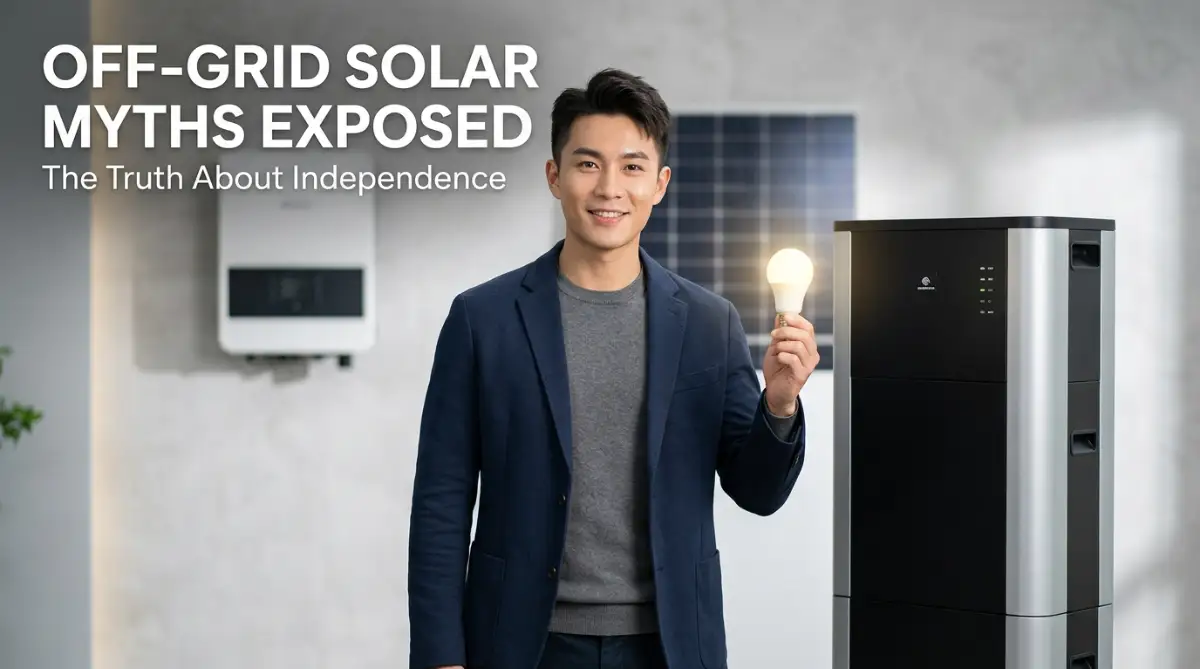
Today, we are going to throw all those scary internet rumors straight into the trash. Let us look at the actual science and reality of modern renewable energy. We are going to expose the biggest falsehoods about living completely disconnected from the power company.
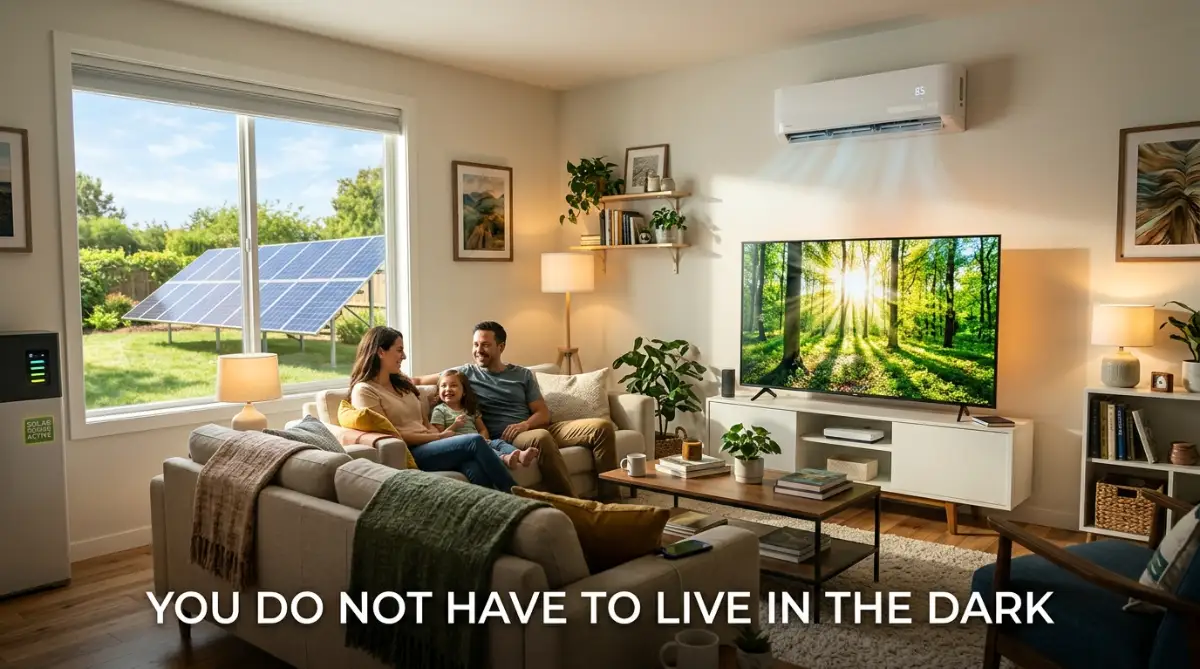
Quick Summary: Off-Grid Truths
- Modern Power: You can absolutely keep your smart TVs and air conditioners. Modern inverters handle them easily.
- Cloudy Days Are Fine: Solar panels still pull power from diffused light through the clouds, and your battery bank handles the rest.
- No Mechanic Needed: You do not need to be an electrician. Smart Bluetooth apps manage the entire system from your phone.
- Efficiency First: Upgrading to LED bulbs and a modern fridge will save you thousands on solar panels.
Myth #1: You Must Say Goodbye to Modern Appliances
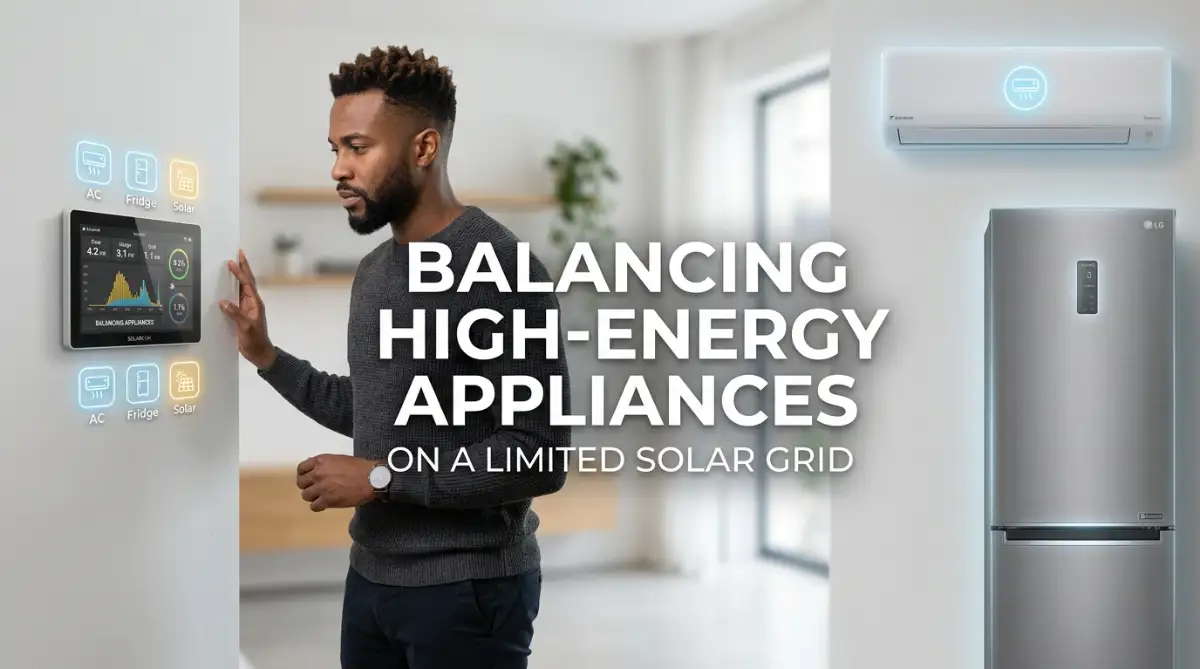
If you still find it hard to believe that you can run a normal house without city power, watch this amazing video tour. It shows exactly how a modern off-grid home easily powers big TVs, refrigerators, and air conditioners using nothing but a smart solar setup.
This is easily the most common and discouraging rumor spread on social media. People genuinely believe that an off-grid home looks like a pioneer cabin from the 1800s.
They assume you have to read by candlelight, wash your clothes by hand, and cook entirely over a wood stove. This specific idea stops so many families from exploring renewable energy.
The truth is completely different. You do not have to sacrifice a single modern comfort to live independently.
The Magic of the Pure Sine Wave
The confusion usually comes from older, outdated technology. Thirty years ago, solar equipment was highly limited and struggled to run sensitive electronics.
Today, we use a device called a "pure sine wave inverter." This machine takes the raw energy from your solar panels and turns it into electricity that is completely identical to what comes out of a city wall outlet.
Your smart television, your high-end gaming computer, and your modern refrigerator cannot tell the difference. They will run perfectly smoothly without any flickering or hesitation.
The "Off-Grid Comfort" Reality Check
You do not have to give up your favorite electronics. Here is a quick look at what a standard modern pure sine wave inverter can easily run at the same time:
The "Energy Salary" Analogy
Living off the grid is not about removing appliances from your home. Instead, it is exactly like managing a monthly financial budget.
Think of your solar panels as your daily salary. Think of your battery bank as your savings account.
You can absolutely buy that fancy coffee maker or run a large air conditioning unit. You simply need to make sure your daily energy "income" is large enough to support your spending habits.
If you want to run a heavy power load, you simply design a slightly larger system. It is a matter of mathematics, not a matter of living in poverty.
Myth #2: Cloudy Weeks Mean Absolute Darkness
Let us address the fear of bad weather. What happens when it rains for three straight days? Will your family be forced to sit in the freezing dark?
Many beginners assume that solar panels only work when the sun is blazing directly overhead. Because of this, they think off-grid living is only possible in hot desert environments.
Understanding Diffused Sunlight
Here is the scientific reality that most people ignore. Solar panels do not need direct, blinding sunlight to generate electricity.
They are designed to capture photons. Even on a heavy, overcast day, a massive amount of light penetrates through the clouds. This is called "diffused light."
Your panels will absolutely continue to pull energy from this diffused light. While the production will be lower than on a sunny day, your system does not completely shut down.
During winter months, snow actually acts as a massive mirror. It reflects ambient light directly back onto your roof, often giving your panels an unexpected boost in energy generation.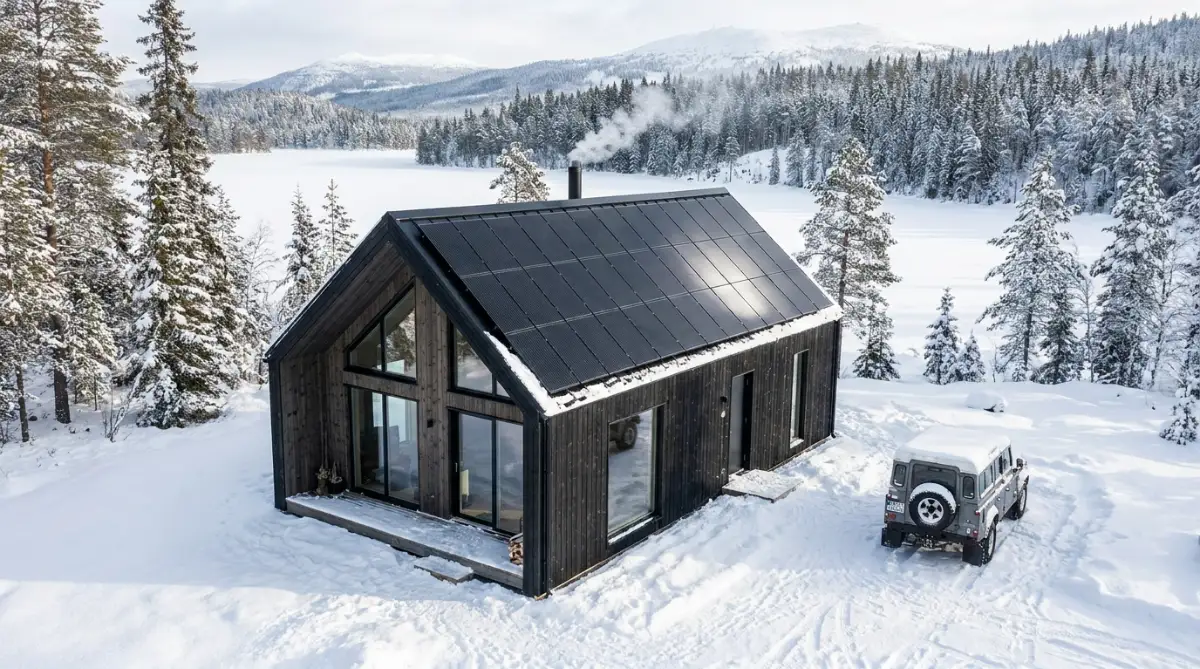
The Heavy Lifter: Your Battery Bank
This is where your energy storage system becomes the hero of the story. The panels only generate the power; the battery bank determines your actual comfort level.
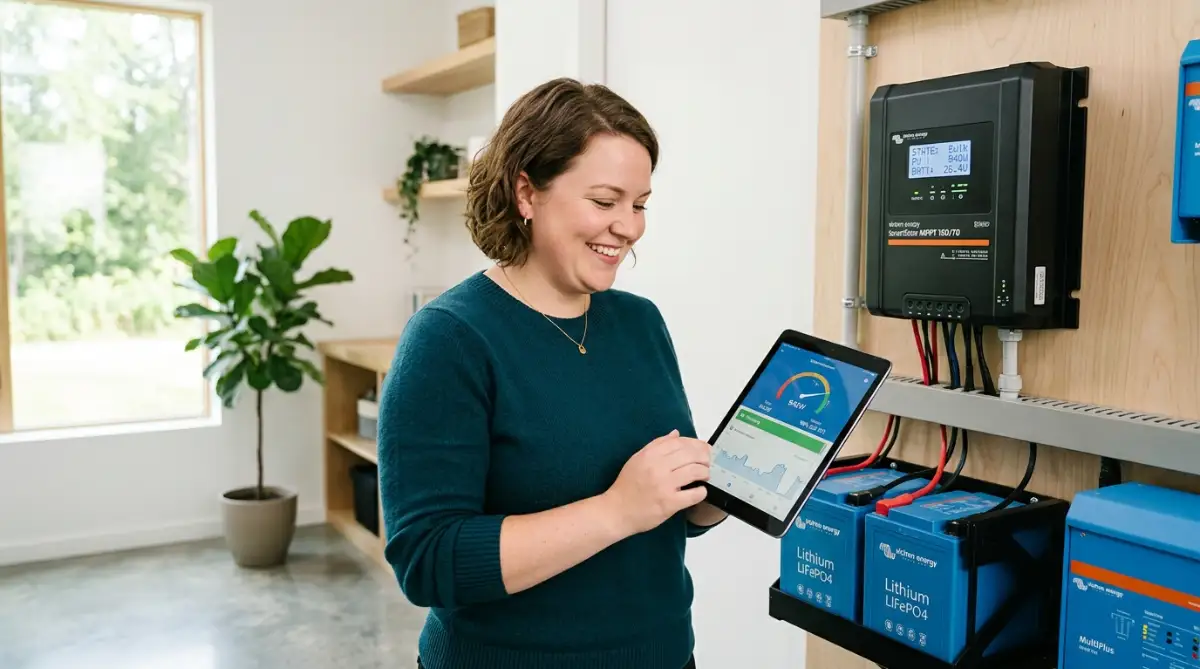
Modern lithium iron phosphate (LiFePO4) batteries are an absolute marvel of engineering. They are completely different from the old, heavy lead-acid batteries your grandfather used.
When you design a completely independent home, you size the battery bank for "days of autonomy." This means calculating exactly how much power your house needs to run normally if the sun never came up for three days straight.
By having a properly sized storage system, a stormy week becomes a minor inconvenience, not an emergency. You simply pull from your deep reserves until the clouds finally break.
Myth #3: The Setup Requires a Full-Time Mechanic
Another massive psychological barrier is the fear of constant, grueling maintenance. Homeowners picture themselves standing on a ladder in the freezing rain, holding a confusing voltage meter.
They believe that owning an independent power station requires constant physical labor. They think they will spend their weekends replacing broken wires instead of relaxing with their family.
Welcome to the Era of Smart Automation
This myth might have been true decades ago, but today's technology is completely hands-off. Modern energy systems are incredibly intelligent and self-managing.
Almost every high-quality component now comes with a smart Bluetooth Battery Management System (BMS). This internal computer watches over every single electrical current moving through your house.
It prevents the batteries from overcharging, balances the voltage perfectly, and shuts things down automatically if it senses a short circuit. The system essentially takes care of itself.
Monitoring From the Couch
Instead of crawling around a dirty garage with tools, your maintenance routine happens on your smartphone. You simply open an app while sitting on your living room couch.
The screen shows you exactly how much power is coming in, how much is being used, and the precise health of your storage bank. If something is slightly out of balance, the app sends a friendly push notification to your phone.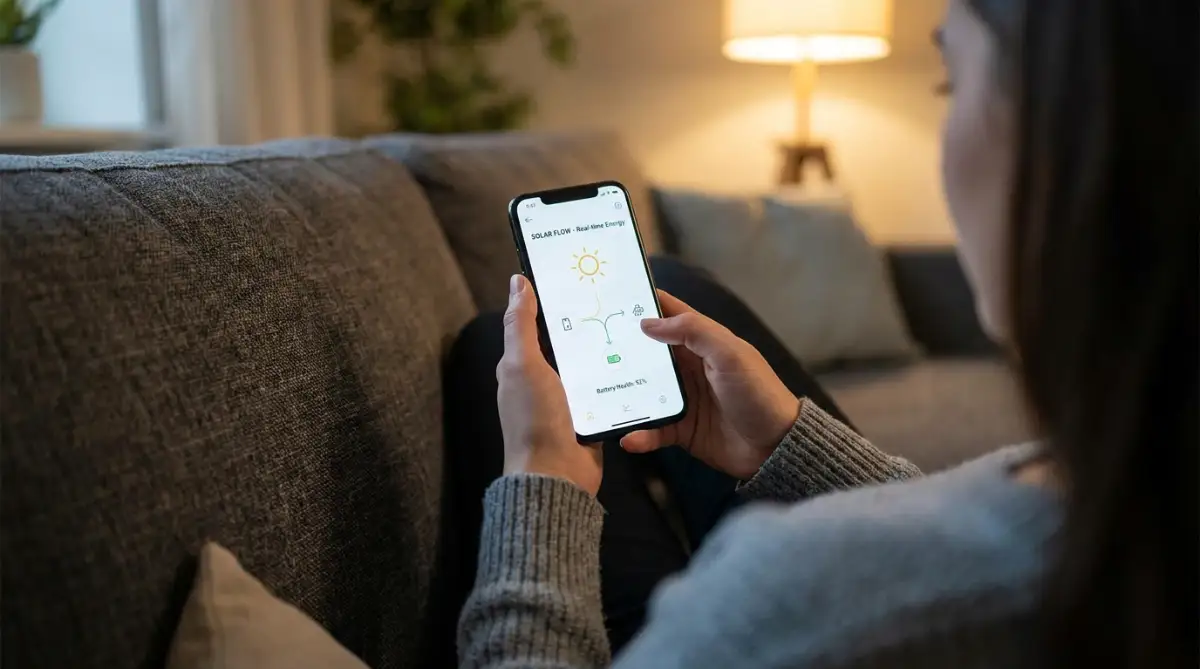
The only actual physical labor required is occasionally washing the dust off the glass panels. Going independent does not mean taking on a second job as a mechanic; it means letting smart technology do the heavy lifting for you.
Myth #4: You Must Cover Every Inch of Property in Panels
When people decide to disconnect from the utility company, they usually start by looking at their current electric bill. They see a massive number and panic.
They assume they will need to buy fifty solar panels and cover their entire roof, garage, and backyard just to match their current lifestyle. The initial cost estimate looks terrifying, and they immediately give up on the dream.
The Secret of Demand Reduction
This panic happens because people try to solve the wrong problem. They try to build a massive power plant to feed an incredibly inefficient house.
The biggest secret in the renewable energy industry is a concept called demand reduction. It is always significantly cheaper to save energy than it is to generate new energy.
Before you even think about buying a single piece of solar equipment, you need to tighten up your home. This means doing a complete energy audit of how your house currently operates.
Small Changes, Massive Savings
Start with the easiest targets. Replacing every old incandescent light bulb with modern LED equivalents instantly drops your lighting energy usage by nearly 80%.
Next, look at your major appliances. That twenty-year-old refrigerator in your kitchen is likely burning through electricity like crazy. Upgrading to a highly rated, energy-efficient model might cost a bit upfront, but it drastically shrinks the size of the solar array you need to buy.
My biggest and most expensive mistake was keeping my old garage refrigerator plugged in when I first tested my off-grid setup. I quickly realized that one rusty appliance was draining almost half of my daily solar power! Once I finally bought a new, high-efficiency fridge, my battery bank stayed full all night, proving that cutting your power waste is always cheaper than buying more solar panels.
Pay attention to your windows and doors. Simple weather-stripping prevents your heated or cooled air from escaping into the yard.
By making your house incredibly efficient first, that terrifying energy number drops drastically. Suddenly, you realize you only need a modestly sized solar array to live comfortably.
The Psychological Shift of True Independence
Breaking free from these myths requires a complete change in how you view electricity. When you are connected to the city, you are a passive consumer.
You just flip a switch, leave the lights on all day, and pay whatever bill arrives in the mail. You never think about where the power actually comes from.
When you make the brave decision to generate your own electricity, you become an active manager of your resources. You become deeply aware of the weather, the changing seasons, and your daily habits.
You are no longer at the mercy of rate hikes or rolling blackouts. You are holding the reins of your own household, completely secure in the knowledge that your family will always have light, warmth, and safety.
Pro-Level Secrets for a Seamless Off-Grid Experience
Once you get past the initial fear and realize that modern technology can easily handle your daily needs, a new chapter begins. Successfully living disconnected from the city grid requires a slight shift in your daily habits.
You are no longer blindly consuming electricity. You are now the manager of a personal micro-utility company.
The people who thrive in this lifestyle for decades do not just buy expensive equipment and ignore it. They actively work in harmony with their environment to squeeze the maximum potential out of every single sunbeam.
Let us explore some advanced strategies that seasoned off-grid homeowners use to keep their systems running perfectly year after year. These simple routines will ensure you never have to worry about a sudden blackout.
Mastering the Art of Seasonal Load Shifting
Your daily energy production will naturally change as the seasons shift. During the summer, the sun sits high in the sky, and your panels will likely produce more power than your batteries can even store.
During the winter, the days are shorter, and the sun sits at a lower angle. To balance this perfectly, experts use a technique called seasonal load shifting.
In the summer months, you can run heavy power tools, electric water heaters, and air conditioners without a second thought. You have an abundance of free power, so you should use it.
However, when winter arrives, you adapt. You might switch to a propane heater instead of an electric space heater. You might choose to do your heavy laundry on a bright, sunny Tuesday rather than a dark, overcast Thursday.
Understanding your home’s unique energy rhythm is a process of personal discovery. It is very similar to personal wellness routines. Just as you take the time to how to identify your exact skin type at home so you can apply the correct treatments, you must identify your home's seasonal behavior to apply the right energy habits.
The "Hybrid" Insurance Policy
Here is a secret that many purists do not want to talk about on social media. The most reliable off-grid systems in the world are not powered 100% by the sun.
They use a hybrid approach to guarantee absolute peace of mind. Every well-designed independent home includes a high-efficiency backup generator wired directly into the main inverter.
This generator is not meant to run every day. It is an insurance policy for the worst-case scenarios, like a historic two-week blizzard that completely covers your panels in thick ice.
Modern inverters are incredibly smart. You can program them to automatically start your backup generator only if your battery bank drops below a specific health threshold, like 20%.
This means you can sleep peacefully through a massive winter storm. You know that even if the sun fails you, your smart system will protect your batteries and keep the refrigerator running without you ever lifting a finger.
Leveraging Passive Temperature Control
If you want your solar batteries to last for fifteen years, you cannot force them to power massive electric heaters all winter. The smartest way to reduce your electrical load is to let your house heat and cool itself naturally.
This concept relies heavily on architectural choices rather than electronic gadgets. By focusing on thick insulation, high-quality window glazing, and thermal mass, your home naturally holds onto comfortable temperatures.
During the winter, south-facing windows allow the sun to naturally heat the stone floors inside your living room. Those floors hold the heat and slowly release it during the cold night.
According to extensive research on energy-efficient passive solar home design by the Department of Energy, these natural building techniques can reduce a home's heating demand by more than 50%. By letting the sun physically heat your living space, your electrical system gets to take a well-deserved break.
The Heartbreaking Pitfalls of Disconnecting Too Fast
The dream of cutting the utility cord is incredibly exciting, but rushing the process often leads to absolute disaster. When families try to skip the planning phase to save a few dollars, the consequences are incredibly painful.
Imagine waking up at three in the morning to the sound of a blaring warning alarm. Your house is freezing, the lights will not turn on, and your entire battery bank is completely dead.
This happens entirely too often to beginners. Let us look at the most dangerous traps people fall into so you can protect your investment and your family’s safety.
The "Average Math" Catastrophe
The most common mistake happens right at the design table. Homeowners look at their past utility bills and design a system based on their "average" daily usage.
This is a terrible idea because weather is never average. If you size your battery bank for a beautiful spring day, your system will completely collapse during a dark winter blizzard.
When you drain a battery completely to zero, it causes permanent internal damage to the chemical cells. Leaving your expensive energy storage unprotected against extreme weather is exactly like ignoring the hidden dangers of browsing without antivirus protection on your computer. You assume everything is perfectly fine until an unexpected threat crashes the entire system instantly.
You must always design your solar array and battery bank for the worst-case scenario. It is much better to have too much power in the summer than to have zero power in the dead of winter.
The Trap of Used and Mixed Batteries
Solar batteries are usually the most expensive part of the entire project. Naturally, people try to find creative ways to lower this cost.
They go on online marketplaces and buy used forklift batteries, or they mix old lead-acid batteries with brand-new ones. They think they are being clever and saving thousands of dollars.
In reality, they are building a ticking time bomb. When you mix old and new batteries, the strong batteries immediately lower their performance to match the weakest link in the chain.
The entire bank becomes unstable, charges unevenly, and drastically increases the risk of an electrical fire.
My Personal Battery Warning:
Never, under any circumstances, wire an old lead-acid battery together with a brand-new lithium battery. The different chemical voltages will fight each other, rapidly heat up, and eventually ruin your entire storage system. Always stick to one battery chemistry and buy them all at the exact same time.
The Danger of DIY High-Voltage Wiring
Watching a few online videos gives people a false sense of confidence. They assume that wiring a massive home energy station is just like wiring a small lamp.
This is incredibly dangerous. The DC voltage coming down from a large solar array can easily cause severe burns, start a roof fire, or be completely fatal if mishandled.
People love to look for quick, cheap solutions to complex problems. However, just as you should absolutely avoid these natural body detox mistakes for clearer skin and trust actual medical science instead of dangerous internet fads, you must trust licensed professionals with your electricity.
Always hire a certified solar electrician to handle the final connections. The peace of mind knowing your home will not catch fire is worth every single penny of their labor fee.
Real-Life Scenario: The Refrigerator Ruin
Consider the story of a family who built a beautiful off-grid cabin. They bought top-tier panels and a massive battery bank, but they made one fatal error.
They brought their massive, twenty-year-old kitchen refrigerator from their old house. They assumed their new, powerful solar setup could easily handle it.
That single appliance had a faulty compressor that constantly pulled a massive power surge every ten minutes. It quietly drained their brand-new battery bank completely dry over a single cloudy weekend.
They blamed the solar panels, but the real enemy was their own inefficient appliance. Always audit your home electronics before you ever plug them into a delicate renewable energy system.
A Word from the Expert: Your Blueprint for Tomorrow
Stepping away from the traditional power grid is not a science fiction fantasy anymore. It is a highly practical, financially smart decision that thousands of normal families are making every single day.
You do not need to be a rugged survivalist to make this work. You simply need to respect the technology, plan for the worst weather, and adjust your daily habits to match the rhythm of the sun.
Modern solar equipment is incredibly resilient. Independent studies focusing on the reliability of photovoltaic technology show that high-quality panels easily produce stable power for over twenty-five years with zero moving parts.
Your journey toward total independence starts right now. Do not let internet rumors or exaggerated horror stories scare you away from a cleaner, more secure future.
Your Action Plan for This Week
Take these exact steps this week to start your transition safely:
- Step 1: Track Your Heavy Hitters. Spend three days writing down exactly when you use your largest appliances (stove, dryer, AC). See if you can shift those activities to high-noon.
- Step 2: Kill the Vampires. Walk through your house and unplug any electronic device that sits in standby mode. Stop letting phantom loads drain your potential energy.
- Step 3: Start the LED Swap. Go to the hardware store and replace your five most-used light bulbs with high-efficiency LEDs.
- Step 4: Talk to an Expert. Call a local, licensed solar installer. Ask them for a site audit based on your worst winter month, not your best summer month.
You have the power to take complete control of your family's comfort and security. Embrace the learning process, trust the modern science, and enjoy the incredible freedom of generating your very own electricity!
Taking the leap to disconnect my house from the city grid was easily the most rewarding decision I have ever made for my family. Watching my electric bill drop to absolute zero while my house stays warm and bright gives me a kind of peace I cannot even describe. Do not let internet rumors steal your dream—start making those small energy upgrades today, and take back control of your own power!
Disclaimer: The information provided in this article is for educational and informational purposes only. Designing and installing an off-grid electrical system involves high-voltage equipment that can cause serious injury, property damage, or death if mishandled. Always consult with a licensed electrician, a certified structural engineer, and your local building code enforcement office before purchasing or installing renewable energy equipment.