Stop Letting Airlines Play With Your Head
I’ve spent way too many nights staring at flight prices, watching them jump $50 every time I hit refresh. It feels like someone is watching you through the webcam, right? I used to clear my cookies and use incognito mode religiously, thinking I was outsmarting the system. I wasn't. I'm going to show you exactly how these airline computers think so you can stop the midnight panic and actually save some money for your trip.
Have you ever sat in front of your computer screen at two in the morning, aggressively hitting the refresh button on a travel website?
Your eyes are burning, your credit card is resting quietly on the keyboard, and your heart sinks as you watch the ticket price jump another fifty dollars. You clear your browser history, open a private window, and try again.
The price stays exactly the same. At this exact moment, you probably feel like the airline is secretly watching you through your screen.
This is the exhausting reality that millions of travelers face every single day. We are completely obsessed with the idea that we are somehow getting tricked by hidden internet forces.
Today, we are going completely behind the curtain to look at the raw data. We are going to expose the biggest misunderstandings that keep travelers trapped in this stressful cycle.
It is time to stop playing a rigged game and start understanding the actual math behind your boarding pass.
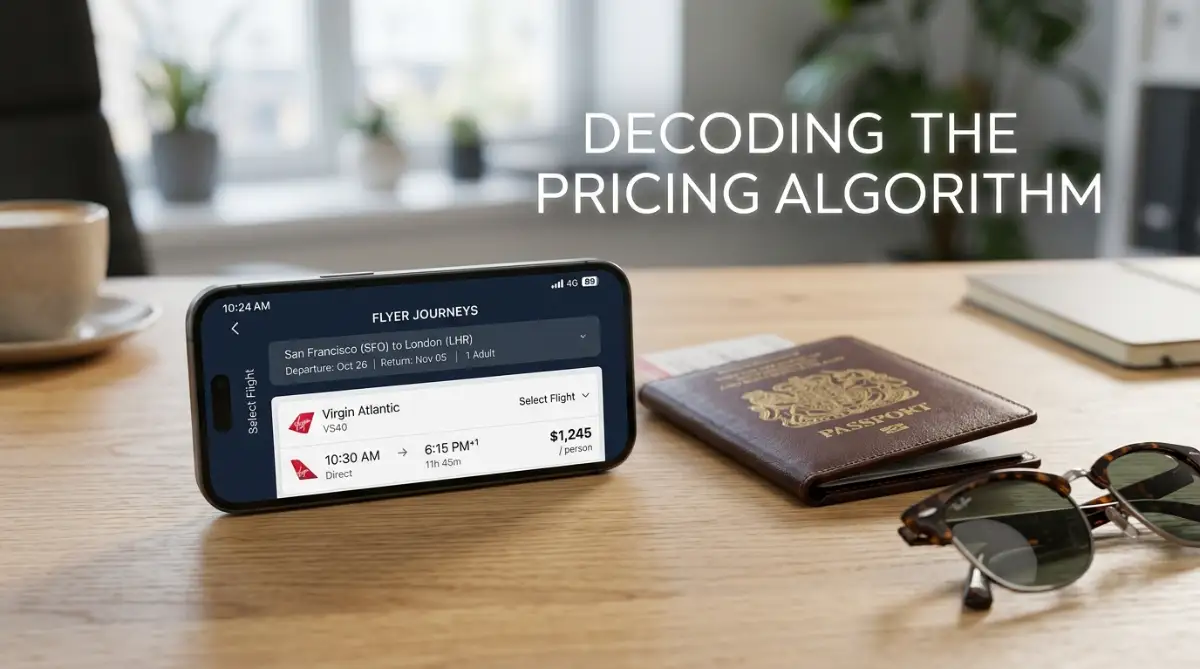
The "No-Panic" Booking Cheat Sheet
- Ignore the Day of the Week: Booking on Tuesday is a dead myth. Buy when the price fits your budget.
- The 21-Day Rule: Prices almost always spike 3 weeks before a flight. Try to book before this cutoff.
- Book Direct for Safety: Use search engines to find deals, but always buy your ticket on the airline’s official site.
- Check "Hacker Fares": Sometimes buying two separate one-way tickets is cheaper than a single round-trip.
Behind the Screen: How Airline Algorithms Actually Think
To solve this massive headache, we need to completely erase everything you think you know about buying airline tickets. You are not fighting against a single person in an office who is manually changing prices to annoy you.
You are interacting with highly advanced revenue management software. These computer systems are designed with one single goal: to extract the absolute maximum amount of money from every single flight.
Let us break down exactly how this system operates by exposing the most common myths holding you back.
Myth #1: The Incognito Mode Deception
This is easily the most famous piece of travel advice on the entire internet. Someone probably told you that airlines track your web cookies to see what flights you are looking at.
The theory claims that if you search for the same route multiple times, the airline will artificially raise the price to scare you into buying. Therefore, browsing in private mode will magically reveal the "true" cheaper price.
This is completely false. Airline pricing software does not care about your personal web browser history at all.
If you still do not believe that the private browsing trick is completely fake, watch this quick breakdown of how airline computers actually track tickets. Understanding this single concept will save you hours of wasted time and help you focus on the real saving strategies in the rest of this guide.
The Scientific Reality of Seat Buckets
Airlines price their tickets using a system called "fare buckets" or inventory classes. Imagine an airplane cabin as a large grocery store shelf holding different baskets of apples.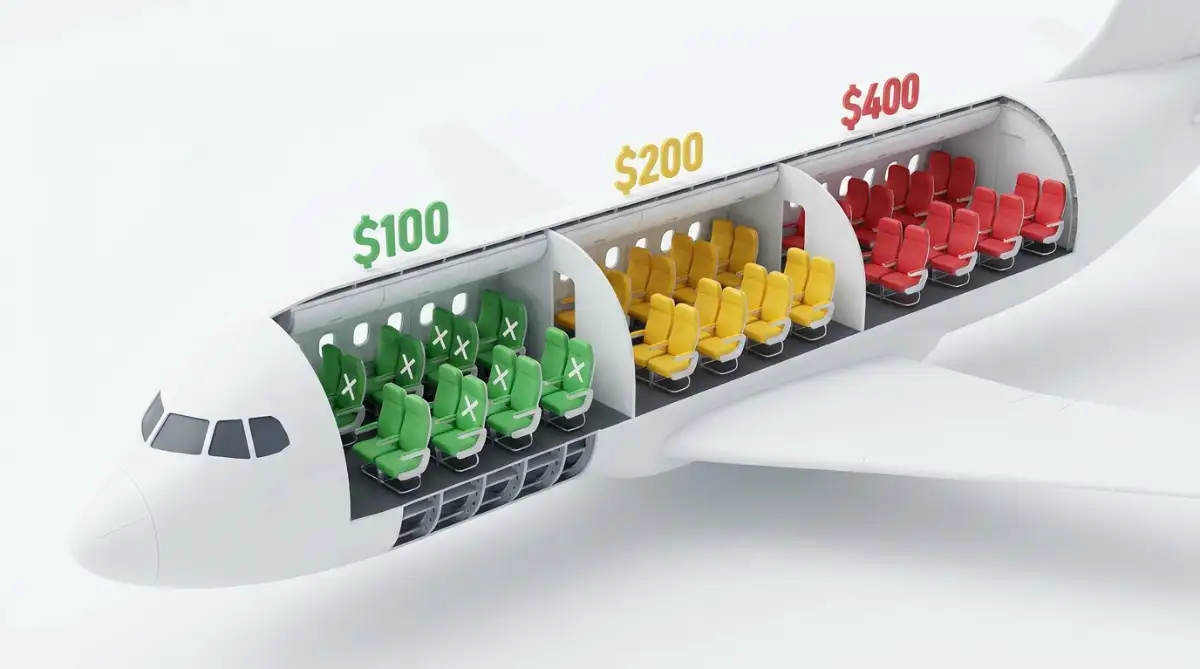
The first basket has ten apples priced at fifty dollars each. The second basket has fifteen apples priced at eighty dollars each.
When you see a ticket price suddenly jump from fifty to eighty dollars, the airline did not track your cookies. The reality is that another family simply bought the very last ticket in the fifty-dollar basket while you were searching.
The computer system automatically moved you to the next available pricing bucket. Clearing your cookies will never magically bring those cheaper seats back into existence.
The "I’m Watching You" Myth: Busted
| What You Think is Happening | What is Actually Happening |
| :--- | :--- |
| The airline saw me search twice and raised the price. | Someone else just booked the last seat in the cheap "bucket." |
| Incognito mode hides my interest from the airline. | Incognito only hides your history from your own family. |
| Clearing cookies resets the price. | The price is set by global demand, not your browser cache. |
Myth #2: The 'Magic Tuesday' Misunderstanding
Another incredibly popular rumor is that you must always book your flights on a Tuesday afternoon. Travel bloggers used to claim that airlines updated their global databases on Tuesday mornings.
This advice actually made sense a very long time ago, before the invention of modern internet algorithms. Today, waiting for a specific day of the week is a terrible strategy that usually costs you more money.
Modern revenue systems are highly dynamic and operate in real-time, twenty-four hours a day. Prices fluctuate based on actual seat demand, seasonal trends, and competitor actions, completely ignoring the day of the week.
Let us look at a simple breakdown to understand how this shift happened.
FeatureThe Old Airline SystemThe Modern Pricing AIPrice UpdatesManual updates loaded once a week by human workers.Continuous automatic updates happening every single second.Best Booking TimeTuesday afternoons after new sales were published.Whenever the current price matches your actual personal budget.Competitor ReactionTook days for an airline to match a rival's discount.Instant automatic price matching across all major booking platforms.
If you deliberately wait until Tuesday to buy a ticket, you risk losing a great deal that was available on Sunday. Your main focus should always be on the total number of days before your departure, not the day you click the buy button.
Pro Tip: The 21-Day Rule
Instead of worrying about Tuesdays, pay close attention to the twenty-one-day mark before your intended flight. This is an essential timeline used by almost all major airline systems.
Business travelers usually book their trips at the very last minute, and airlines know these companies will pay top dollar. Therefore, computers are programmed to automatically raise prices exactly twenty-one, fourteen, and seven days before takeoff.
If you are booking a leisure trip, always aim to secure your seat at least three to four weeks in advance. Buying earlier protects you from this automatic corporate price surge.
Myth #3: The Artificial Scarcity Warning
We have all seen that bright red text on a booking website screaming, "Hurry! Only 2 seats left at this price!"
When you see this message, your brain instantly goes into a state of deep panic. You feel a massive rush of adrenaline, and you immediately reach for your wallet to secure the deal.
Airlines heavily rely on this specific psychological trigger to force quick consumer decisions. However, you need to understand exactly what that warning truly means in the background.
The message is not lying, but it is heavily manipulating the context of the situation. It does not mean the entire airplane is completely sold out of seats.
It simply means there are only two seats left in that specific "fare bucket" we discussed earlier. Once those two seats are sold, the price will simply move up to the next available tier.
There might still be one hundred empty seats on the actual airplane. Taking a deep breath and understanding this logic stops you from making rushed, emotionally driven financial mistakes.
Explaining the Hub and Spoke Penalty
Have you ever wondered why a direct flight from New York to London often costs significantly more than a flight that stops in Iceland? This confuses many travelers because a direct flight requires less fuel and fewer airport resources.
Logically, a shorter, simpler flight should cost less money. However, airline pricing is not based on logic or fuel consumption; it is based entirely on human convenience.
Airlines operate on a "Hub and Spoke" routing model. They know that direct flights save you a massive amount of personal time and physical energy.
The Convenience Tax
Business travelers heavily value their time and will gladly pay a premium to avoid stressful layovers. The airline is actively charging you a "convenience tax" for the privilege of a direct route.
When you book a cheaper flight with a long layover, you are essentially trading your personal time for financial savings. The airline uses these cheaper connecting flights to fill up empty seats on less popular routes.
Understanding this trade-off is incredibly important for your travel strategy. If you are traveling with small children, paying the premium for a direct flight is often worth the extra money just to save your sanity.
If you are a solo backpacker with plenty of free time, you can easily exploit these cheaper layover routes. You simply have to decide what holds more value for your current situation: your wallet or your clock.
The Round-Trip vs. One-Way Illusion
For decades, buying a round-trip ticket was the absolute golden rule of air travel. Airlines would heavily punish passengers who tried to buy a simple one-way ticket by charging them outrageous prices.
This pricing strategy was designed to guarantee that an airline captured your business for both directions of your journey. Many older travelers still firmly believe that round-trip tickets are always the safest financial choice.
However, the rise of modern budget airlines has completely shattered this old pricing model. Traditional airlines have been forced to change their internal rules just to stay competitive.
Today, purchasing two separate one-way tickets on different airlines can sometimes save you a massive amount of money. You might fly out on a premium airline and return home on a low-cost carrier.
This strategy is known as "hacker faring" in the travel industry. It requires a little bit more screen time, but it completely breaks the monopoly that a single airline tries to hold over your vacation.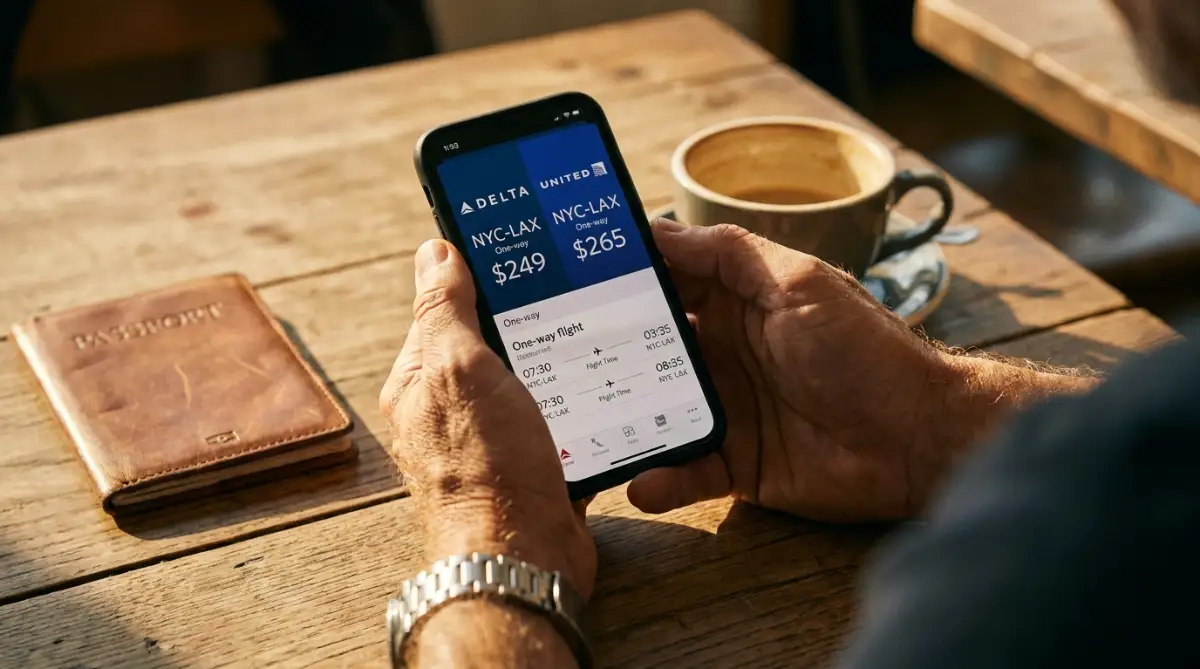
Never blindly assume that the default round-trip option is your best mathematical choice. Always take five extra minutes to compare the cost of splitting your journey into two separate one-way purchases.
You might be completely shocked by the hidden savings waiting just behind a different search tab.
Beating the System: Advanced Fare Strategies Airlines Hide
Now that we have completely destroyed the most common internet rumors, it is time to look at what actually works. Professional travelers do not waste their energy clearing browser cookies or waiting for a specific day of the week.
Instead, they use a series of highly logical strategies that take advantage of how route networks operate. These methods require a little extra effort, but the financial payoff is absolutely massive.
Let us explore a few expert-level tactics that will permanently change how you search for your next vacation.
The Power of the "Positioning Flight"
Most amateur travelers simply type their home airport and their final destination into a search engine. If you live in a smaller city, this simple habit is probably costing you hundreds of extra dollars.
Airlines charge a massive premium for flights originating from smaller, non-hub regional airports. To beat this penalty, you need to start using a strategy known as the Positioning Flight.
Imagine you live in a mid-sized city like Denver, and you want to take your family on a summer vacation to Rome. The direct search might show a terrifying ticket price of twelve hundred dollars per person.
Instead of accepting that high price, try searching for flights to Rome originating from major international hubs like New York or Boston. You will often find these major hub tickets selling for just four hundred dollars.
You can then simply buy a separate, cheap domestic ticket from Denver to New York for one hundred dollars. By splitting your journey into two completely separate purchases, you just saved seven hundred dollars on a single trip.
If you decide to use this strategy, always leave a massive time buffer between your two separate flights. If your first domestic flight is delayed and you miss the international connection, the airline is not legally responsible for rebooking you.
Leveraging the Point of Sale Loophole
Here is a fascinating secret that very few casual vacationers know about the aviation industry. A ticket price can actually change depending on the specific country where the computer thinks you are located.
Airlines adjust their regional pricing based on local economic conditions and current currency exchange rates. A domestic flight entirely within Peru will often be priced much cheaper for local Peruvian residents than for tourists searching from London.
You can sometimes access these cheaper local fares by using a virtual private network to change your digital location. You can also manually switch the regional settings on the airline's official homepage to the destination country.
However, you must be extremely careful when handling sensitive financial data across international servers. When you are jumping across foreign booking portals, you must fully understand the hidden dangers of browsing without antivirus protection.
Always ensure your connection is heavily encrypted before typing your credit card numbers into an unfamiliar regional website. You should also use a travel credit card that completely waives foreign transaction fees to maximize your overall savings.
To better understand how global ticketing standards operate across different borders, you can review the official guidelines provided by the International Air Transport Association (IATA) passenger standards. They set the baseline rules for how international travel documents and fares are processed globally.
Managing the Physical Cost of Hacker Fares
Booking these complex split tickets and cheap layover routes is a fantastic way to protect your bank account. However, this aggressive strategy takes a very real toll on your physical energy and health.
Spending ten extra hours sitting in a busy terminal means you will likely eat heavy, heavily processed airport food. When you finally return home, you might feel bloated, exhausted, and desperately in need of a healthy reset.
Many travelers make the situation worse by trying aggressive diets immediately after their trip. You should definitely read about how to avoid these natural body detox mistakes for clearer skin and a faster recovery.
Additionally, flying on budget airlines usually means sitting in older airplane cabins with terrible air circulation. This dry recycled air pulls moisture directly out of your pores during the entire journey.
Before you pack your small carry-on bag, taking the time to learn how to identify your exact skin type at home will help you pack the correct protective lotions. Knowing exactly what your body needs will keep you looking highly professional, even after an exhausting budget flight.
The Silent Traps That Destroy Your Travel Budget
Even when people learn the truth about pricing algorithms, they often stumble into completely different traps just before checkout. The aviation industry is incredibly skilled at designing hidden fees that catch excited buyers totally off guard.
Let us walk through the most dangerous emotional mistakes that consistently drain money from unsuspecting passengers.
Falling for the "Basic Economy" Illusion
Airlines introduced Basic Economy tickets to compete directly with ultra-low-cost carriers. On the search results page, these tickets look like an absolute steal, often showing up fifty dollars cheaper than a standard ticket.
When you see that incredibly low number, your brain stops processing logic and immediately wants to secure the deal. You rush through the checkout process, ignoring the tiny warning text at the bottom of the screen.
This is exactly what the airline wants you to do. Basic Economy is essentially a cleverly disguised trap designed to punish you with heavy restrictions later.
Once you buy that ticket, you are strictly forbidden from bringing a standard carry-on suitcase. If you show up at the boarding gate with a rolling bag, the staff will force you to check it for a massive penalty fee.
Furthermore, you are entirely blocked from picking your own seat. If you are traveling with your spouse or young children, the computer will automatically separate you across the airplane.
When you finally pay the fees to check your bag and sit next to your family, you actually spend more money than if you had just bought a standard ticket. I learned this the hard way when I bought a super cheap "Basic Economy" ticket for a weekend trip to Miami. When I got to the boarding gate, the staff forced me to pay seventy-five dollars just to bring my small rolling bag on board, which completely wiped out the money I thought I saved. Now, I always grab my phone calculator and add up all the hidden baggage fees before I ever click that final checkout button. Always do the exact math for your personal luggage needs before clicking the final confirmation button.
The Third-Party Booking Nightmare
We all love using massive online travel agencies to compare different route options quickly. These platforms are incredibly useful for doing your initial market research and seeing which airline flies the fastest route.
However, making your final purchase through these third-party websites is a massive gamble. When the skies are clear and everything goes perfectly, you might save ten or twenty dollars.
The nightmare begins the exact moment your scheduled flight gets canceled due to a massive winter storm. You immediately run to the airline customer service desk to ask for a new seat on the next plane.
The agent will politely look at your reservation and tell you that they cannot touch your ticket. Because you bought it through a random online agency, the airline's computer system locks them out of making direct changes.
You are forced to call the third-party website's customer support line, which is usually located in another country. You will likely sit on hold for four hours while every other passenger gets rebooked directly by the airline.
Never trade your peace of mind for a tiny twenty-dollar discount. Always use search engines to find the best route, but go directly to the official airline website to hand over your money.
Ignoring the Universal 24-Hour Rule
Panic buying is a very real psychological phenomenon in the travel world. You see a great price, your heart races, and you immediately book the ticket without checking your work calendar.
Ten minutes later, you realize you accidentally booked the departure for a day when you have a massive corporate presentation. Most people assume they are completely trapped and immediately pay a huge change fee to fix the mistake.
They completely forget about one of the most powerful consumer protection laws in the aviation industry. If you are flying into, out of, or within the United States, you are protected by a strict federal mandate.
The U.S. Department of Transportation (DOT) Aviation Consumer Protection rules state that airlines must allow you to cancel a booking within twenty-four hours for a full refund. This rule applies as long as you booked the ticket at least seven days before the actual departure date.
This means you can lock in a great price the moment you see it without any heavy emotional stress. You have a full twenty-four hours to double-check your schedule, ask your boss for time off, and confirm hotel availability.
If the plan falls apart, you simply click cancel and get every single penny back. Knowing your legal rights is the ultimate weapon against unfair airline pricing strategies.
A Quick "Do and Don't" Checklist for Checkout
To keep things extremely simple, memorize this quick checklist before you finalize any future travel purchases.
- Do double-check the airport codes. Many big cities have multiple airports, and budget airlines love flying into locations that are two hours outside the city center.
- Don't pay for premium seat selection during checkout if you are flying completely solo. Wait until exactly twenty-four hours before the flight when online check-in opens; many premium seats are given away for free to balance the cabin weight.
- Do use a credit card that offers built-in trip cancellation insurance.
- Don't buy the extra travel insurance pushed by the airline at the very end of the checkout page. It is usually overpriced and heavily restricted compared to independent insurance providers.
Your Pre-Flight Action Plan
We have successfully pulled back the curtain on an industry that thrives on consumer confusion. You are no longer a victim of fake countdown timers, imaginary cookie tracking, or emotional panic buying.
You now understand that airline pricing is just a mathematical system balancing supply and demand across different fare buckets. By stepping away from the myths, you instantly regain total control over your travel budget.
The next time you sit down with your laptop to plan a beautiful getaway, take a deep breath. Stop rushing the process and start treating it like a strategic puzzle.
A Smarter Way Forward
Start your search at least four to six weeks early, completely ignoring what day of the week it is. Look closely at alternative airports, run the math on split tickets, and completely avoid the Basic Economy traps.
Travel is supposed to be one of the most enriching and exciting experiences of your life. The journey should absolutely not start with feelings of anxiety and regret at your computer desk.
Share these real strategies with your friends and family so they can stop wasting their time clearing browser histories. The world is a massive, beautiful place, and exploring it should never drain your entire savings account.
Now, close your private browsing window, open an official airline website, and start planning your next amazing adventure with absolute confidence. Safe travels!
Booking a flight used to be the most stressful part of my year, but learning these simple secrets finally gave me my power back. You deserve to spend your hard-earned money on amazing dinners and fun tours, not on fake airline fees and panic purchases. Take a deep breath, use these smart strategies for your next search, and get ready to enjoy the vacation you truly deserve!
Disclaimer: The travel, financial, and booking strategies provided in this article are for informational and educational purposes only. Flight pricing algorithms and airline policies change frequently. Always verify current luggage rules, fare conditions, and consumer protection laws directly with your chosen airline or official government transportation websites before making financial decisions.