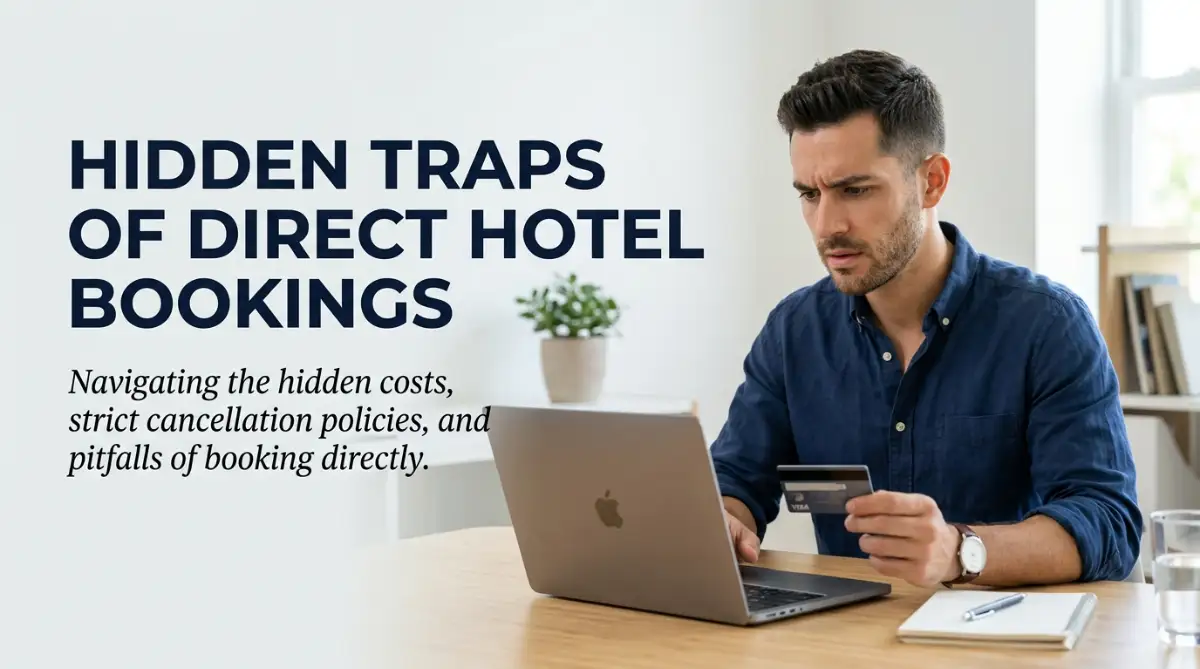
The Unexpected Shock at the Reception Desk
I’ll be honest: I used to think booking directly on a hotel's website was the only way to avoid getting scammed. I was wrong. I’ve been hit with "resort fees" I didn't see coming and lost money on "non-refundable" rooms more times than I'd like to admit. If you're tired of feeling tricked by big hotel brands, I’m going to show you how their systems actually work and how you can save your cash.
You just endured a highly exhausting ten-hour flight. Your back hurts, you are deeply dehydrated, and all you want to do is fall into a soft, clean bed.
You confidently hand over your credit card and passport to the front desk agent. After all, you did everything right by skipping the third-party apps and booking directly through the hotel’s official website.
Then, the agent looks at their computer screen, frowns, and asks for a massive security deposit you never planned for. Or worse, they inform you that the specific ocean-view room you selected is actually not guaranteed.
We are constantly told by travel experts that booking direct is the ultimate, foolproof way to secure a room. They promise better customer service, free room upgrades, and maximum security for your personal data.
The Smart Traveler’s Cheat Sheet
- Skip the Non-Refundable Rate: Saving $20 isn't worth losing $500 if your plans change. Always choose the flexible option.
- Use a Credit Card, Never Debit: Hotels will freeze your actual cash for "incidentals." A credit card just holds your credit limit, not your grocery money.
- Call the Front Desk: Skip the 1-800 number. Call the actual hotel at 1 PM and talk to a manager for a better deal.
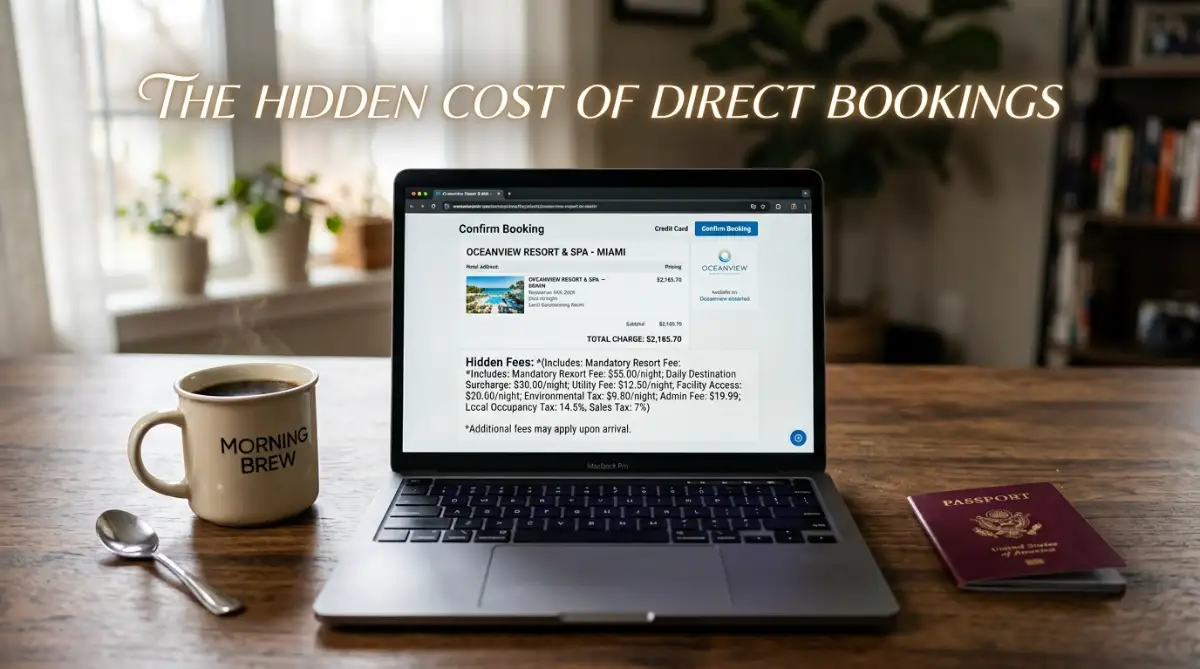
- Check the "Iceberg" Fees: Always scroll to the very last checkout page to see the real price including resort fees and taxes.
Breaking Down the "Official Website" Illusion
When you visit an official hotel website, your brain automatically drops its defensive shields. You assume that because you are dealing directly with the property, the prices are completely honest and transparent.
This assumption is exactly what hospitality revenue managers want you to believe. Behind the beautiful photos of infinity pools and smiling staff members, there is a very aggressive algorithm actively working against you.
To protect your wallet and your sanity, you need to understand the hidden mechanics of direct reservations. Let us walk through the most dangerous traps people fall into.
The Psychology Behind the "Cheapest Room" Trap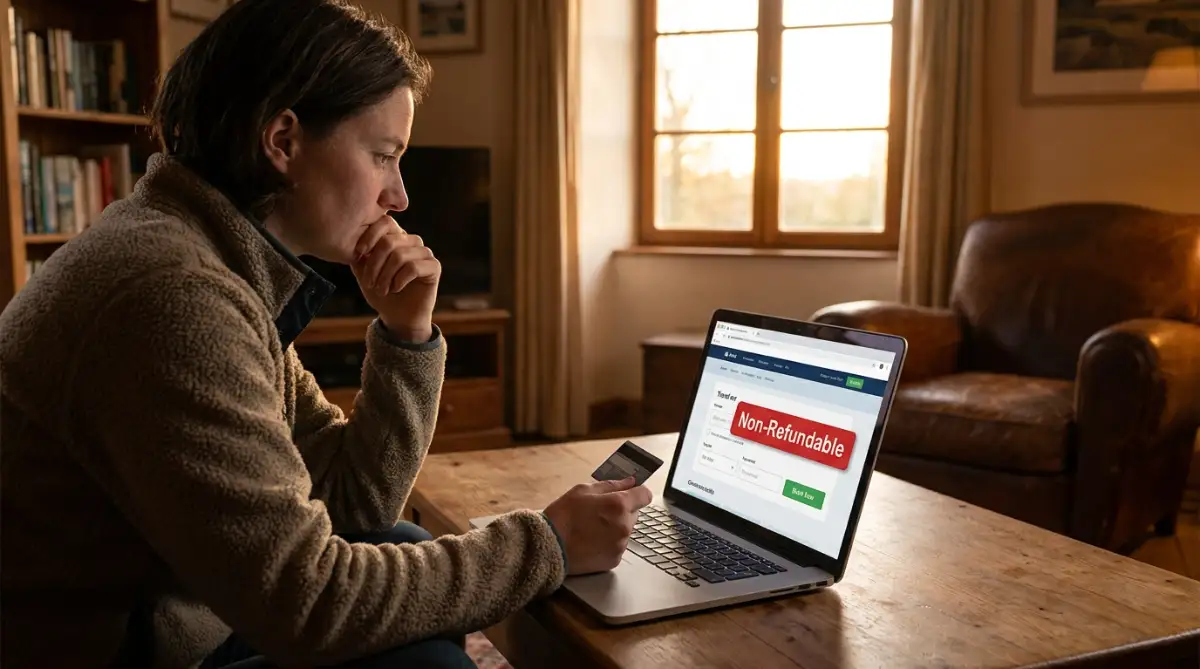
The very first thing you see when you search for specific dates is a highly attractive, extremely low room rate. It is usually highlighted in a bright color, practically begging you to click the reserve button.
This is not just a random design choice. This is a very specific psychological concept known as price anchoring.
The website shows you a ridiculously low number to make you stop searching on competitor websites. However, this base price is almost always attached to a completely non-refundable policy.
The Real-Life Scenario of the Locked Reservation
Imagine you book this incredibly cheap room for a family trip three months in advance. You feel like a financial genius for securing such a great deal on the official site.
Two weeks before the trip, your child gets a sudden fever, or your boss demands you attend an urgent meeting. You call the hotel directly, expecting sympathy and a quick date change because you booked with them directly.
Instead, the customer service agent politely reminds you of the strict terms and conditions you blindly accepted. Because you chose the heavily discounted base rate, they legally keep every single penny of your money.
Never let the initial cheap price anchor your decision. Always manually compare the non-refundable rate to the flexible rate, which usually only costs twenty or thirty dollars more per night.
Paying a little extra for total flexibility is the smartest investment you can make for your mental health.
Expert Insight: The Dynamic Pricing Algorithm
Many travelers believe that room rates are set manually by a hotel manager. They think the price stays the same until the room is actually booked by someone else.
In reality, major hotel chains use highly advanced software that changes prices hundreds of times a day. This system reacts to things you would never even consider.
If it starts raining heavily in the destination city, the algorithm might automatically increase the price of indoor spa suites. If a major music festival is announced nearby, prices will double within ten seconds.
The website also tracks your digital behavior. Let us look at a breakdown of how the same room looks to different users at the exact same time.
You can actively fight this algorithm by always checking the hotel’s direct mobile application before booking on your desktop computer. Sometimes, simply switching your device saves you a massive amount of money.
Myth vs. Fact: The "Official Site" Secrets
| The Myth | The Real Truth |
| :--- | :--- |
| Direct booking is always the cheapest. | Sometimes apps or local rates are 20−
20−
50 cheaper. |
| "Best Rate Guarantee" is easy to claim. | Hotels make the rules so hard that 90% of claims get rejected. |
| Resort fees are for "amenities" like Wi-Fi. | It’s just a sneaky way to show a lower price on search engines. |
The "Resort Fee" Iceberg at Checkout
This is perhaps the most dishonest practice in the modern hospitality industry. You find a gorgeous hotel online and carefully calculate the total cost for five nights.
The website shows a final summary, and you happily enter your credit card details. What you completely missed was a tiny gray text box at the very bottom of the confirmation page.
Understanding the Mandatory Add-ons
This hidden text mentions a mandatory daily "resort fee" or "destination charge." The hotel claims this fee covers basic things like high-speed Wi-Fi, using the gym, or printing your boarding pass.
Imagine buying a brand-new car, only to find out you have to pay a daily rental fee just to use the steering wheel. That is exactly how ridiculous these mandatory fees are.
When you finally arrive at the reception desk, the agent calmly adds an extra fifty dollars per night to your final bill. For a five-night stay, you suddenly owe an unexpected two hundred and fifty dollars.
Hotels do this intentionally to keep their advertised base rates looking extremely low on internet search engines. Once they get you onto their official website, they hide the extra fees in the fine print.
Always search the official FAQ section for the word "fees" before you ever type in your payment information. If the website makes it incredibly difficult to find the final total with taxes, you should immediately reconsider staying there.
My "No-Fee" Hack:
Before you pay, look for the "Taxes and Fees" breakdown. If a hotel hides a $40 resort fee until the very last page, I usually call the hotel directly and ask, "Can you waive the resort fee if I book right now?" If the hotel isn't full, they often say yes just to get the booking.
Myth vs Reality: The "Best Rate Guarantee"
Almost every major hotel brand heavily advertises a program called the Best Rate Guarantee. They boldly promise that you will never find a cheaper price on any third-party travel website.
They claim that if you do find a lower price elsewhere, they will match it and give you an extra discount.
- The Myth: The hotel actively wants you to find a cheaper price so they can reward your loyalty.
- The Reality: The claim process is intentionally designed to be an absolute nightmare.
If you find a cheaper price on another website and submit a claim to the hotel, they will almost always reject it. They will use completely meaningless excuses to deny your request.
They might claim the third-party website has a slightly different cancellation policy, even if it is just a difference of one hour. They might say the currency exchange rate on the competitor site does not perfectly match their internal banking system.
They make the approval process so exhausting and complicated that most regular travelers simply give up. Do not blindly trust the promise of a guaranteed best rate.
Always take ten minutes to independently verify the prices across different platforms before committing to the official site.
The Danger of Pre-Selecting "Upgrades" Online
When you move through the checkout process on a direct hotel website, you will usually hit an upsell page. The screen will suddenly fill with beautiful pictures of champagne bottles, late check-out options, and guaranteed room upgrades.
The website uses high-pressure language, suggesting that these special add-ons will completely sell out if you do not buy them right now.
This is a massive financial mistake. When you pre-pay for a room upgrade on the website months in advance, you lose all your negotiating power.
You are paying full retail price for a larger room that might have been given to you for free upon arrival.
The Art of the Front Desk Conversation
If you wait until you actually walk into the hotel lobby, the situation completely changes. Front desk agents often have the power to upgrade your room at a massively discounted rate, or even for free if the hotel is mostly empty.
A friendly conversation with the staff member, asking politely about any available corner rooms, works much better than clicking an expensive button online.
By avoiding the digital upsell trap on the official website, you keep your cash in your pocket until you actually see the physical property. This simple habit separates amateur travelers from seasoned professionals who know how the system actually works.
Blind Loyalty to Reward Points
Many business travelers develop an intense obsession with collecting hotel reward points. They will completely ignore terrible prices just to maintain their premium status with a specific brand.
Hotel websites know exactly how to trigger this psychological need for status. When you log into your official account, the website welcomes you by name and shows a glowing progress bar of your points.
They make you feel incredibly special, which distracts you from looking at the actual monetary value of the room. You might willingly pay an extra one hundred dollars a night just to earn two thousand loyalty points.
If you do the basic math, those two thousand points might only be worth twenty dollars in real-world value. You just lost eighty dollars simply because you wanted to see your digital points balance increase.
Always detach your emotions from the loyalty program. Treat every single hotel booking as an independent financial transaction.
If staying loyal to the official website is actively costing you hundreds of dollars in lost savings, those reward points are a massive liability, not a benefit.
If you want to see exactly how these sneaky hotel pricing algorithms work behind the scenes, you have to watch this shocking short video below. Check it out to see how much money they are making off simple mistakes, and then keep reading to learn my absolute favorite phone trick to beat their system entirely!
Beating the Revenue Manager: Insider Booking Strategies
Now that we have uncovered the sneaky tactics used by official hotel websites, it is time to fight back. You do not have to accept whatever price the computer screen throws at you.
Professional travel agents and experienced road warriors use very specific methods to bypass these digital traps. They treat hotel booking as a negotiation rather than a simple online transaction.
Let us explore exactly how you can outsmart the hotel revenue systems and keep your hard-earned money safe. These advanced strategies will completely change how you secure your next luxury room.
The "Local Desk" Bypass Method
The absolute best tool you have for securing a massive hotel discount is not your computer mouse. It is actually your smartphone’s calling feature.
When you click the giant "Contact Us" button on a major brand’s website, you usually see a toll-free 1-800 number. If you dial this number, you are sent to a massive international call center.
These call center agents have zero power to negotiate your price. Their computer screens show the exact same expensive rates you see on the website, and they cannot change them.
Instead, you need to find the direct local phone number of the physical hotel property. You can usually find this by searching the specific hotel’s address on a separate map application.
When you call the local desk, you are speaking to the actual managers who work inside the building. They know exactly how many rooms are sitting completely empty for the night.
Timing Your Phone Call Perfectly
You cannot just call the hotel at any random time and demand a better price. If you call at nine in the morning, the front desk is drowning in frustrated guests trying to check out.
If you call at four in the afternoon, they are overwhelmed by a massive line of new arrivals. The secret is to call between one and two in the afternoon, local hotel time.
During this quiet afternoon window, the managers are actively reviewing their evening occupancy numbers. If the hotel is heavily empty, they are incredibly desperate to put heads in beds.
Simply tell the manager that you are looking at their official website, but the price is slightly outside your budget. Ask them directly if they can offer a better "walk-in" or direct local rate.
More often than not, they will instantly drop the price or throw in free breakfast just to secure your business over the phone.
Navigating Geographic Price Discrimination
Just like the airline industry, global hotel chains aggressively use geographic price discrimination. The price of a room in Tokyo might look wildly different depending on where your computer is physically located.
If the official website detects that you are searching from a wealthy neighborhood in London, it might artificially inflate the nightly rate. The algorithm automatically assumes you have a massive vacation budget.
Understanding this concept is highly similar to learning how airline pricing myths compare to hotel algorithms. Both industries use your digital location to maximize their internal profits.
To beat this system, you can use a secure Virtual Private Network (VPN) to mask your true location. Try connecting your VPN to the actual country you plan to visit before loading the hotel website.
Sometimes, viewing the website as a "local resident" unlocks massive regional discounts that are completely hidden from foreign tourists.
The Hidden Power of the "Length of Stay" Adjustment
This is a mathematical trick that constantly surprises amateur travelers. Hotel pricing software is designed to prioritize long-term guests over quick weekend visitors.
Imagine you need a room from Friday night to Sunday morning. The computer sees this as a high-demand weekend trip and charges you three hundred dollars per night.
Try adjusting your online search to include Thursday night or Sunday night, making it a four-day stay instead of two. Suddenly, the computer applies a "Long Weekend Discount" to the entire reservation.
In some crazy situations, staying four nights actually costs less total money than staying just two nights. Even if you have to leave the hotel a day early, you still save a massive amount of cash overall.
Always play around with your arrival and departure dates on the calendar before you finalize the payment. A simple one-day adjustment can trigger a completely different pricing algorithm.
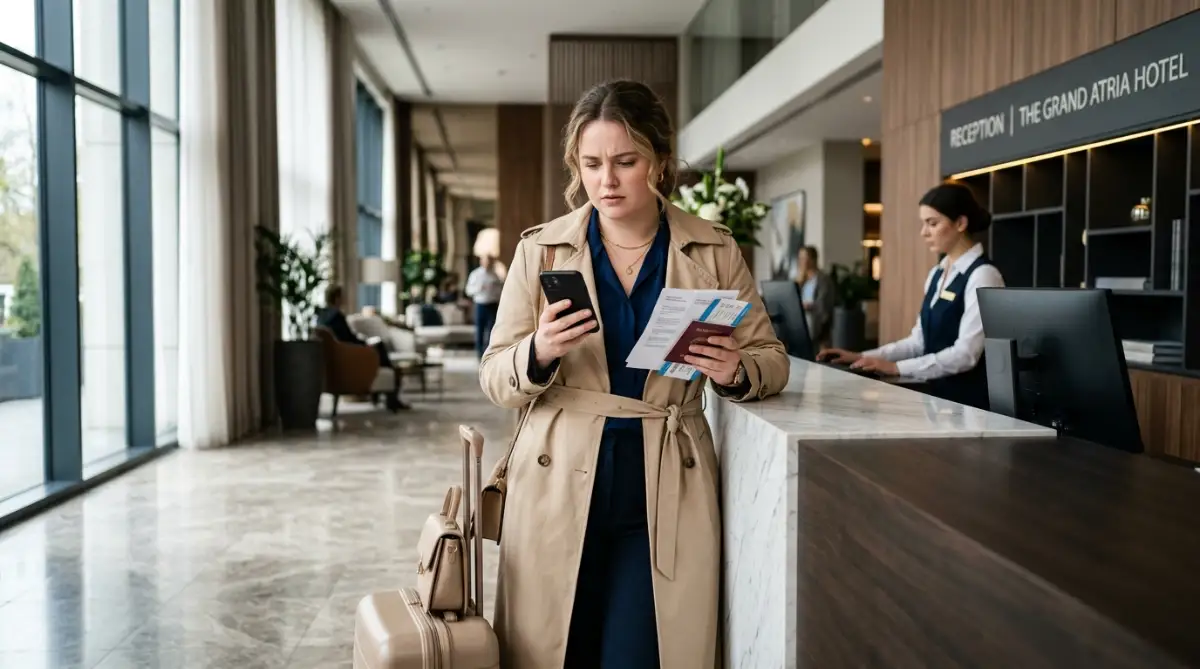
Disastrous Traps That Will Ruin Your Vacation
Knowing how to secure a great rate is only half the battle. The other half involves avoiding the terrifying financial traps hidden inside the fine print.
Many people completely ruin their travel budgets before they even step onto the airplane. Let us look at the most dangerous mistakes that cause massive headaches for unsuspecting guests.
The Debit Card Incidentals Freeze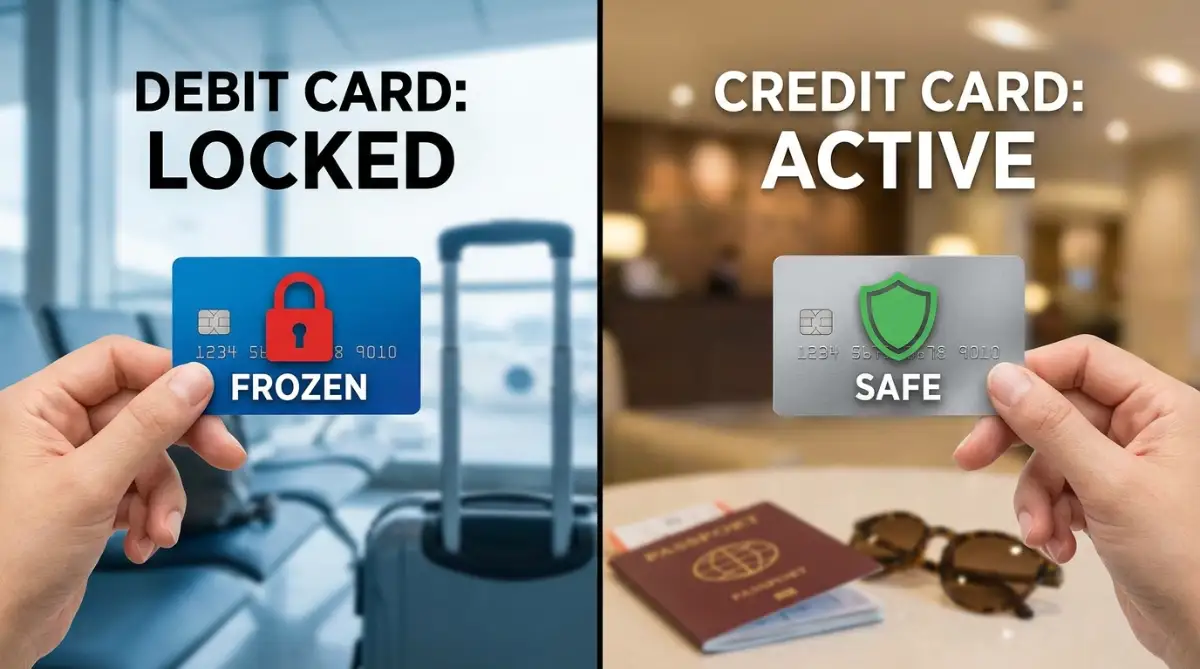
This is arguably the most heartbreaking situation that happens at hotel reception desks worldwide. A young couple arrives for their dream vacation, ready to explore a beautiful new city.
They hand over their standard bank debit card to pay for the room. The receptionist smiles, swipes the card, and hands them their room keys.
What the couple does not realize is that the hotel just placed a massive "authorization hold" on their personal checking account. Hotels always freeze extra money to cover potential damages, room service, or stolen towels.
This hold can sometimes be double the actual cost of the room. Because they used a debit card, that money is immediately removed from their available bank balance.
When the couple goes out for an expensive dinner that night, their debit card is completely declined. Their entire vacation budget is securely locked away in the hotel's banking system.
Even after they check out, it can take up to fifteen business days for the bank to return the frozen money. For years, I made the terrible mistake of handing over my debit card at the front desk, completely unaware that the hotel was quietly freezing hundreds of dollars of my own cash. My biggest realization was that simply switching to a credit card for check-ins instantly stopped my personal bank account from being held hostage during my trips.
If you want to dive deeper into how this banking mechanism works, you should read the official Consumer Financial Protection Bureau (CFPB) guide on debit card holds.
The Simple Solution: Never, ever hand a debit card to a hotel receptionist. Always use a proper credit card for the initial check-in process.
A credit card hold simply blocks a portion of your credit limit; it never touches your actual, real-world cash flow.
Falling for the "Run of House" Room Type
When searching for rooms on an official website, you will often see a category labeled Run of House (ROH). This option is usually priced significantly cheaper than the premium ocean-view suites.
The website description makes it sound exciting, like a fun mystery upgrade. Do not fall for this clever marketing language.
In the hospitality industry, "Run of House" simply means the hotel legally guarantees you a bed, but nothing else. You are basically telling the management that they can throw you into whatever room is left over.
When you arrive, you will almost certainly get the absolute worst room in the entire building. You will be placed right next to the noisy ice machine, directly across from the busy elevators, or facing a brick wall.
When you complain to the front desk about the terrible view, they will point directly to your booking confirmation. You agreed to take whatever was available, so you have absolutely no right to demand a better location.
Always pay the extra twenty dollars to specifically select a guaranteed room type. Your sleep quality is way too valuable to leave entirely to chance.
The Bundling Illusion
Many official hotel websites now offer a feature to book your incoming flight and your room at the exact same time. The website heavily promotes this as a massive time-saver for busy professionals.
They claim that buying everything together in a neat package will unlock a secret mega-discount. In reality, booking flights through a hotel portal strips away all your consumer protections.
If your airline cancels the flight, the hotel website's customer service will refuse to help you rebook it. You are caught in a terrible middle ground where neither company wants to take responsibility for the mess.
If you truly want to avoid travel disasters, you must maintain total control over your schedule. Taking the time to master creating a stress-free international itinerary means keeping your hotel and flight bookings completely separate.
Always book your flights directly with the airline, and your rooms directly with the property. Keeping these transactions isolated protects your money if one part of the trip suddenly falls apart.
Ignoring the Government Warnings on "Junk Fees"
We previously talked about the terrifying nature of hidden resort fees. Many travelers think these fees are just an annoying part of modern travel that they cannot fight.
However, regulatory bodies are finally starting to crack down heavily on this deceptive pricing model. The hotel industry is actively facing massive legal pressure to stop hiding these mandatory costs.
You do not have to accept these charges blindly. If the resort fee was completely hidden during your online checkout process, you have the right to strongly dispute it.
You can educate yourself by reviewing the Federal Trade Commission regulations on junk fees and deceptive pricing. Knowing your basic consumer rights makes you a much more confident negotiator at the front desk.
If you politely refuse to pay an undisclosed fee and mention deceptive advertising laws, managers will often quietly remove the charge from your final bill.
Your Action Plan for Seamless Travel
We have completely shattered the illusion that booking directly on a hotel website is always a safe, transparent process. The modern hospitality industry is a highly competitive business, and their websites are built to maximize profits, not your comfort.
However, you are no longer an easy target for their clever marketing algorithms. You now possess the exact knowledge needed to navigate these digital platforms like a seasoned travel expert.
Let us build a quick mental checklist that you can use every single time you plan a new getaway.
The Expert Traveler’s Final Checklist
Before you ever type your credit card numbers into a hotel website, ask yourself these highly specific questions:
- Did I check the local time? Have I called the physical front desk during their afternoon quiet hours to ask for a direct walk-in rate?
- Am I using the right payment method? Is my debit card safely hidden away in my wallet, ensuring I only use a credit card for the security deposit?
- Did I read the final total carefully? Have I clicked through all the way to the final confirmation page just to hunt for hidden resort or destination taxes?
- Am I buying flexibility? Did I spend the extra fifteen dollars to secure a fully refundable rate, protecting myself from sudden life emergencies?
Taking Control of Your Journey
Planning a beautiful vacation should fill your mind with excitement, not endless financial anxiety. When you understand the rules of the game, you stop reacting to bad situations and start managing them proactively.
Do not let hidden fees or deceptive room descriptions steal the joy of your hard-earned time off. Use these expert strategies to force the hotel systems to work in your favor.
The next time you see a supposedly "unbeatable" rate online, take a deep breath. Call the local desk, negotiate confidently, and secure the amazing deal you actually deserve.
Now, go close those confusing browser tabs, pick up your phone, and start planning your next incredible adventure! Safe travels, and enjoy the room upgrade.
Looking back at my own stressful travel mistakes, I promise you that taking a few extra minutes to call the front desk or read the fine print will completely change your travel life. Do not let the fear of hidden fees stop you from exploring the world; just use these simple tricks on your next booking and watch how much money you actually save!
Disclaimer: The travel, financial, and booking strategies provided in this article are for informational and educational purposes only. Hotel pricing algorithms, policies, and local consumer protection laws change frequently. Always verify current cancellation rules, mandatory fee structures, and your specific bank’s debit card policies directly with the property before making any financial commitments.