
The Sudden Darkness That Changed My Mindset
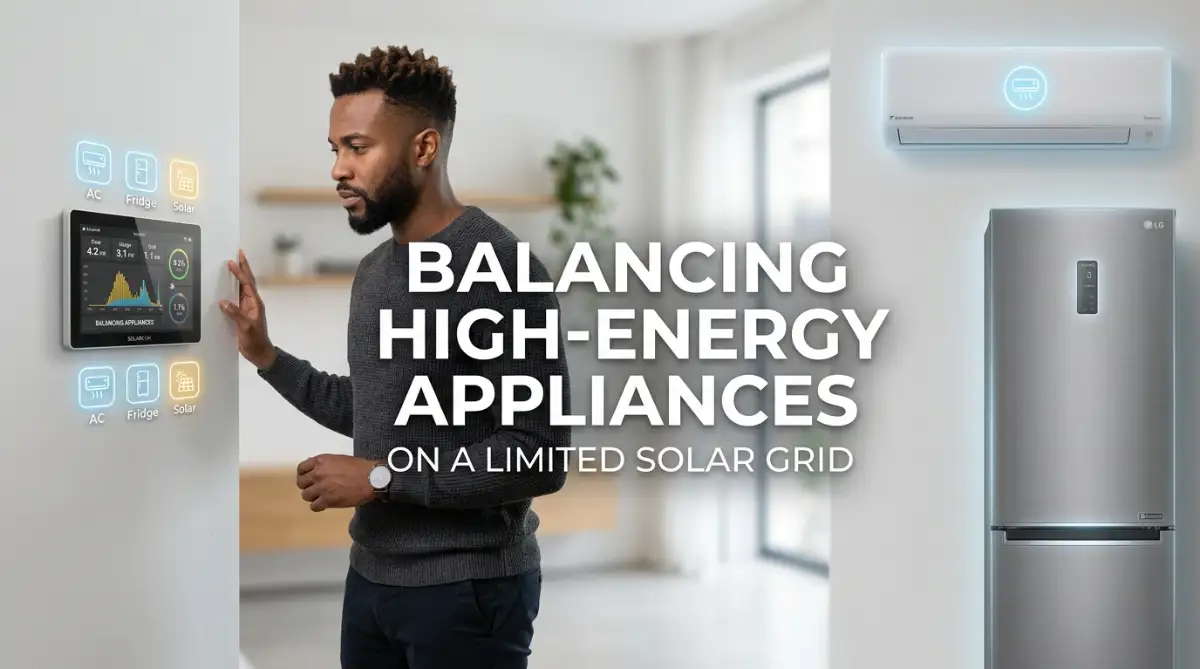
I still remember the exact moment my entire house went completely dark on a hot Tuesday afternoon. I had just turned on the air conditioner to cool down the living room. Without thinking, I walked into the kitchen and turned on the microwave to heat up my lunch. Within three seconds, I heard a loud, angry beep from my inverter, followed by complete silence. My small solar setup had completely crashed under the heavy pressure.
I sat there in the dark, sweating and feeling completely helpless. I realized that owning solar panels was only half the battle. The real challenge was learning how to actually live with them without constantly tripping the system. My dream of living off the grid was slowly turning into a daily nightmare of stress and mental math.
Every single day felt like playing a very risky game of chess with my own house. I was constantly shouting at my family members to turn off the television before using the blender. We were living in a modern home, but we felt like we were camping in the wild. The constant fear of damaging our expensive inverter or draining the batteries completely ruined our peace of mind.
This is a very common reality for anyone trying to run a modern home on a limited solar grid. You spend a lot of money to be independent from the main power company. You expect a smooth, stress-free life filled with free energy from the sun.
Instead, you find yourself staring at your battery monitor every ten minutes. You start planning your laundry around cloud coverage, and taking a hot shower becomes a highly calculated event. It is incredibly frustrating when you cannot just flip a switch and enjoy your own home.
Why Our Brains Struggle with Solar Power Logic
We are all trained to use electricity in a very specific way since childhood. When you plug something into a standard wall outlet, the power just flows continuously without any complaints. We never had to think about how much energy a hair dryer pulls compared to a simple light bulb.
When you switch to a small solar setup, all of those old habits instantly become a huge problem. Your solar inverter has a very strict maximum limit for how much power it can give out at one time. If your inverter is rated for 3000 watts, asking it for 3500 watts will immediately trigger a system shutdown.
Most people do not realize that running just two heavy household items together can easily break that limit. This invisible barrier makes everyday tasks feel incredibly overwhelming. You start feeling like a strict traffic police officer in your own house, directing which appliance gets to move and which one has to wait.
Myth vs. Reality: The Solar Power Edition
Let's clear up some massive misunderstandings about living on solar power. Most beginners fall into these traps and end up deeply frustrated.
-
The Myth: If my solar panels produce 4000 watts, I can run 4000 watts of appliances anytime.
-
The Reality: Your panels might produce that much, but your inverter might only handle 2500 watts of continuous load. Your inverter is the main boss, not just the panels.
-
The Myth: I can use my heavy appliances at night because my batteries are fully charged.
-
The Reality: Running heavy items at night drains your batteries incredibly fast. This can leave you completely in the dark by early morning.
Finding the True Power Hogs in Your House
To stop your solar system from crashing, you need to know exactly which items are causing the trouble. Not all household items are created equal. Some appliances are sneaky energy vampires that quietly suck your batteries dry.
The biggest rule of thumb is very simple to remember. Anything that creates heat or cold is going to use a massive amount of power. This includes your air conditioner, electric water heater, microwave, iron, and hair dryer.
On the other hand, things that create light or sound use surprisingly little energy. Your television, LED lights, laptops, and Wi-Fi router are mostly safe to run all day long. The secret to a balanced system is knowing exactly when to use those heavy, heat-producing items.
The Hidden Danger of Startup Surges
Here is a scientific fact that trips up almost every new solar owner. Many appliances require a massive burst of energy just to wake up and start working. This is known as a startup surge, and it is a very big deal for limited grids.
For example, your air conditioner might only need 1000 watts to run normally. However, for the first three seconds when it turns on, it might demand up to 3000 watts to get the motor spinning. If your inverter only handles 2500 watts, the AC will instantly crash your whole system before it even starts cooling the room.
Refrigerators and water pumps also have this exact same hidden surge. You must always calculate your limits based on these initial spikes, not just the normal running numbers. Understanding this simple concept will save you from hundreds of sudden power outages.
My Personal Realization: I used to think my old refrigerator was broken because it kept shutting down my power. I eventually realized it was the massive startup surge overloading my small 2kW inverter every single time the compressor kicked in. Changing my habits around this one issue completely saved my solar setup.
The Art of Staggering Your Heavy Loads
If you cannot run your heavy appliances at the same time, you have to learn the art of staggering. Staggering simply means spreading out your high-energy tasks throughout the day. It is the most powerful habit you can build to protect your limited solar grid.
Think of your solar inverter like a small bridge over a river. If five heavy trucks try to cross the bridge at the exact same time, the bridge will collapse. But if you make the trucks cross one by one, the bridge will easily hold all of them without any damage.
Your heavy appliances are those trucks. You cannot wash your clothes, bake a cake in the electric oven, and run the air conditioner all at noon. You have to schedule them one by one to keep the traffic flowing smoothly.
How to Create a Bulletproof Appliance Schedule
Ready to see how the experts handle heavy loads perfectly? Check out this incredibly helpful video that breaks down the exact math behind safe appliance staggering.
The best way to stagger your loads is to create a physical schedule for your family. Once everyone knows the rules, the mental stress completely disappears.
You can dedicate Monday mornings exclusively for running the washing machine. When the washing machine is running, nobody is allowed to use the microwave or the vacuum cleaner. Once the laundry is completely done, the next heavy appliance gets its turn on the power stage.
It sounds a bit restrictive at first, but it quickly becomes a very natural rhythm. Your family will stop fighting about sudden power outages, and your inverter will run quietly and smoothly. You are simply giving your solar system the breathing room it needs to perform at its best.
Adapting Daily Routines to the Sun’s Schedule
Living on a limited solar grid means you have to become very good friends with the sun. When the sun is shining brightly, your system is producing "free" energy that goes straight to your house. When the sun goes down, you are pulling energy strictly from your valuable battery storage.
Your goal is to shift as many heavy tasks as possible to the peak daylight hours. This strategy is known as "sun syncing," and it is an absolute game changer. By doing this, you save your precious battery power for the long, dark nights.
Morning Power Rhythms
The morning is a tricky time for solar users. The sun is just starting to come up, so your panels are not producing their maximum power yet. At the same time, you probably want to make coffee, toast some bread, and take a hot shower.
Try to delay your heaviest tasks until at least 9 or 10 AM. Use a simple stovetop kettle for your coffee instead of a high-power electric coffee maker. If you absolutely need to use a heavy item, pick just one and let it finish completely before starting another.
Afternoon Peak Usage
Between 11 AM and 3 PM, your solar panels are usually working at maximum capacity. This is your golden window to run those power-hungry items. Your batteries are likely full by now, so any extra energy your panels make is ready to be used right away.
This is the perfect time to run your washing machine or turn on the air conditioner to cool the house. You can also use this time to run electric water heaters to store hot water for later. Taking advantage of this peak time feels incredibly rewarding because you are maximizing your investment.
Evening Battery Preservation
As the sun sets, your mindset needs to shift entirely to preservation mode. Your panels are sleeping, and your batteries are now doing all the heavy lifting. This is the worst possible time to use anything that creates heat.
We have a strict rule in my house after sunset. No microwaves, no electric heaters, and absolutely no hair dryers. We stick to entertainment devices, fans, and lights. By protecting the battery bank at night, we easily make it through until the next morning without ever losing power.
Smart Tech That Does the Heavy Lifting for You
If keeping track of all these rules sounds exhausting, do not worry. We live in a highly advanced world where technology can manage most of this for you. You do not have to rely perfectly on your memory to protect your grid.
There are brilliant little devices called smart plugs that can automate your appliance schedule. You can plug your heavy items into these smart sockets and program them from your phone. You can tell the smart plug to completely disable the microwave whenever the washing machine is running.
Load Shedding Devices Explained
For a more permanent solution, you can install automatic load-shedding switches inside your main electrical panel. These switches are like smart bouncers for your home energy system. They constantly monitor how much power your inverter is using in real-time.
If the switch notices that your air conditioner is running and you suddenly turn on the electric oven, it takes action. The switch will automatically cut power to the less important item (like the oven) to save the inverter. Once the AC turns off, the switch will give power back to the oven.
This happens instantly and automatically. You never have to shout across the house or sprint to turn things off again. It completely removes the human error from the equation, giving you total peace of mind.
Making the Switch to Soft Starters
Remember those terrifying startup surges we talked about earlier? There is a highly effective hardware solution for that problem as well. It is called a soft starter, and it is a small device you attach directly to heavy motors like your air conditioner.
A soft starter slowly feeds power into the motor instead of slamming it with full energy all at once. It completely flattens out that massive power spike. This simple addition allows a small inverter to easily start a heavy air conditioner without ever breaking a sweat.
Adding soft starters to your biggest appliances feels like giving your solar system a massive upgrade. It magically expands your system's capabilities without forcing you to buy more expensive panels or batteries.
By combining good habits with a few pieces of smart technology, living on a limited grid becomes surprisingly easy. You stop fighting your system and start working right alongside it. The sudden darkness becomes a thing of the past, replaced by steady, reliable power every single day.
Next-Level Tactics for a Stress-Free Off-Grid Experience
Once you master the basic rules of load staggering, you can push your solar setup to do amazing things. You do not have to settle for just barely surviving on your limited grid. With a few smart adjustments, you can actually make your small system feel much bigger than it really is.