The Quiet Weight of the Daily Grind
I used to sit in endless office meetings, secretly fixing the terrible grammar on my boss's presentation slides in my head. I thought my obsession with catching typos was just a weird, annoying habit. It turns out, that exact habit is a highly paid skill that eventually let me quit my stressful day job. If you are tired of trading your time for a paycheck you hate, I am going to show you exactly how to turn your sharp eyes into a profitable freelance proofreading business right from your living room.
Most people think that escaping the "rat race" requires a million-dollar idea or a tech degree. They see others working from cafes or quiet home offices and think, "That could never be me." This feeling of being stuck is not just about a job; it is about a loss of hope. The mental stress of a dead-end career can ruin your health and your happiness.
I have talked to so many people who are brilliant with words. They notice every typo on a restaurant menu. They can’t help but fix the grammar in a text message. Yet, they never realized that this "annoying" habit is actually a high-value skill. You are sitting on a goldmine of talent, but you are too afraid to dig.
The fear of failure is real. You worry about where you would find clients. You wonder if AI will take over before you even start. This uncertainty keeps you paralyzed in a life you don't love. But let me tell you something: the world needs human eyes now more than ever. Robots don't understand the "feel" of a sentence. They don't understand the heart behind a story. You do.
I remember sitting in my boring office job a few years ago, secretly correcting the grammar in my boss's emails just to keep my mind active. I felt completely stuck and exhausted, wondering if my annoying habit of spotting typos could ever actually pay my rent. When I finally took a chance, set up my computer, and got paid for my first freelance proofreading gig, it honestly changed my entire life.
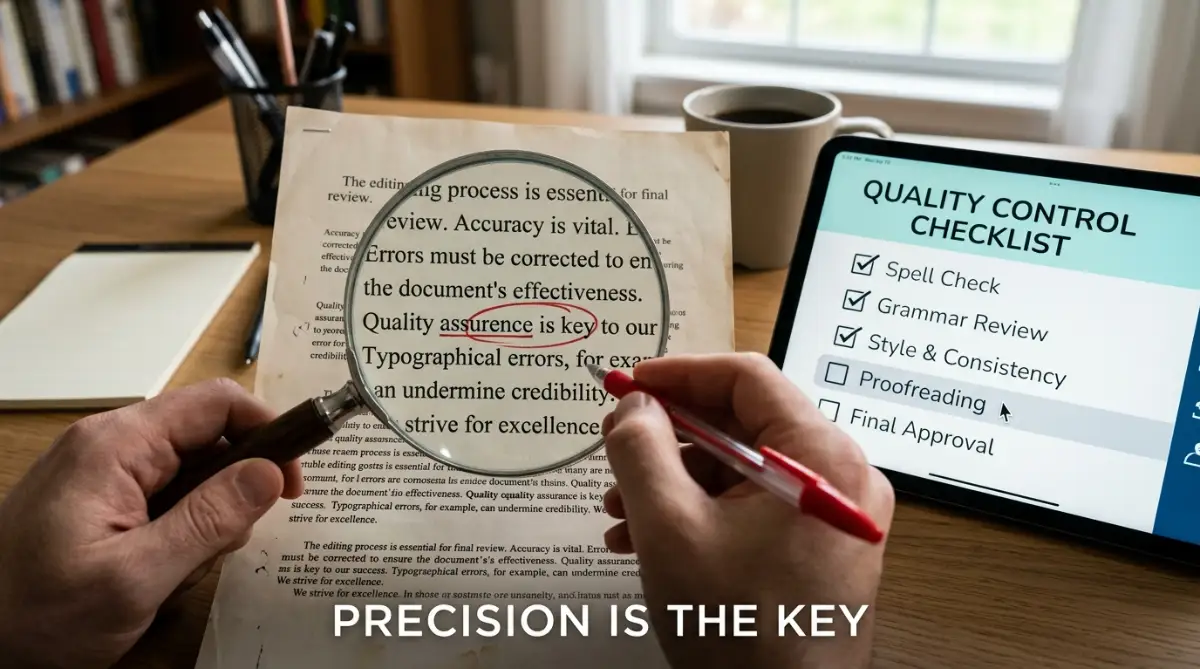
Your Quick Freelance Action Plan
- Know Your Lane: Stop offering to rewrite entire articles. Proofreading is strictly about finding spelling, grammar, and punctuation mistakes.
- Pick a Rulebook: Buy a digital copy of the Chicago Manual of Style or AP Stylebook. Never guess a rule when you can look it up.
- Avoid Software Traps: Tools like Grammarly are helpful assistants, but relying on them completely will ruin your client's natural voice. Your human eyes must make the final call.
- Start Small: Do not pitch massive books on day one. Target short blog posts and social media captions to build your confidence and gather 5-star reviews.
Defining Your Role: Proofreading vs. Editing
Before we jump into the steps, we need to clear up a common mistake. Many beginners think proofreading and editing are the same thing. They are not. If you mix them up, you will lose money and frustrate your clients.
Think of a house being built. The editor is the one who looks at the walls and the floor plan. They might suggest moving a room or changing the color of a wall. They look at the "big picture." Editing is about the flow, the tone, and the structure of the writing.
Proofreading is the very last step. It is like the person who walks through the house at the end to make sure there are no scratches on the paint or dust on the windows. A proofreader looks for spelling, grammar, and punctuation errors. You are the safety net. You are the final wall between a writer and an embarrassing mistake.
Knowing this difference is important for your business. You should be clear about what you offer. If a client wants you to rewrite their whole book, that is editing. If they just want you to find the missing commas, that is proofreading. Focus on one first, and you will become an expert much faster.
Want to clearly understand the exact differences between editing and proofreading so you never confuse your future clients? Watch this short, helpful video below to see real-life examples, and then keep reading to discover the exact tools you need to start making money today!
The Tools of the Trade: Your Digital Toolbox
You don't need a lot of expensive gear to start. This is why this career is so great for beginners. However, you do need a few high-quality tools to look like a pro. Don't just rely on your "good eyes" alone.
First, you need a reliable computer and a comfortable chair. You will be sitting for long hours, so take care of your back. Second, you need a quiet space where you can focus. Proofreading requires deep concentration. Even a small noise can make you miss a big mistake.
Next, let's talk about software. You should be a master of Microsoft Word and Google Docs. Most clients use these. Learn how to use "Track Changes" perfectly. This is how you show the client what you fixed. If you don't know how to use this feature, you aren't ready to charge money yet.
You should also have a good dictionary and a style guide. Professional proofreaders don't guess. They look things up. The Chicago Manual of Style (CMOS) and the AP Stylebook are the bibles of this industry. Buy a copy or get a digital subscription. It shows your clients that you follow the rules of the pros.
Building the Foundation: Necessary Skills
You also need to be a good communicator. Freelancing is a business. You have to talk to clients, set deadlines, and handle feedback. If you are shy about your work, it will be hard to grow. You must be confident in the "why" behind your corrections.
Another big part is patience. Proofreading can be slow and sometimes boring. You are reading every single word, one by one. If you like to rush through things, this might not be the path for. But if you find peace in the quiet work of making things perfect, you will love it.
Myth vs. Reality: The Truth About Proofreading
The Myth The Reality AI will replace human proofreaders soon.AI makes many mistakes; humans are needed for the final check. You need a PhD in English to start. You need a sharp eye and a good style guide. You will get rich in your first week. It takes time to build a list of regular clients. You can work from a busy beach. You need a quiet, distraction-free zone to be accurate.
Style Guides: The Secret Language of Pros
Every industry has its own way of writing. If you proofread for a doctor, the rules are different than if you proofread for a lawyer. This is why you must learn style guides.
A style guide tells you things like:
- Should we use the Oxford comma?
- Should we capitalize this specific title?
- How should we write dates and times?
Most beginners ignore this. They just fix what "looks wrong" to them. Don't do that. Ask your client, "Which style guide do you prefer?" This one question will make you look like a top-tier expert. It shows you know the "web" of professional publishing.
Quick Cheat Sheet: Which Style Guide Should You Use?
| Your Client's Industry | The Guide You Need | Why They Use It |
| :--- | :--- | :--- |
| Book Publishers & Authors | Chicago Manual of Style (CMOS) | It is the gold standard for storytelling and heavy book formatting. |
| Journalists & News Blogs | AP Stylebook | Focuses on saving space and keeping news articles punchy. |
| Doctors & Psychologists | APA Style | Perfect for handling complex medical data and strict citations. |
Setting Up Your "Home Headquarters"
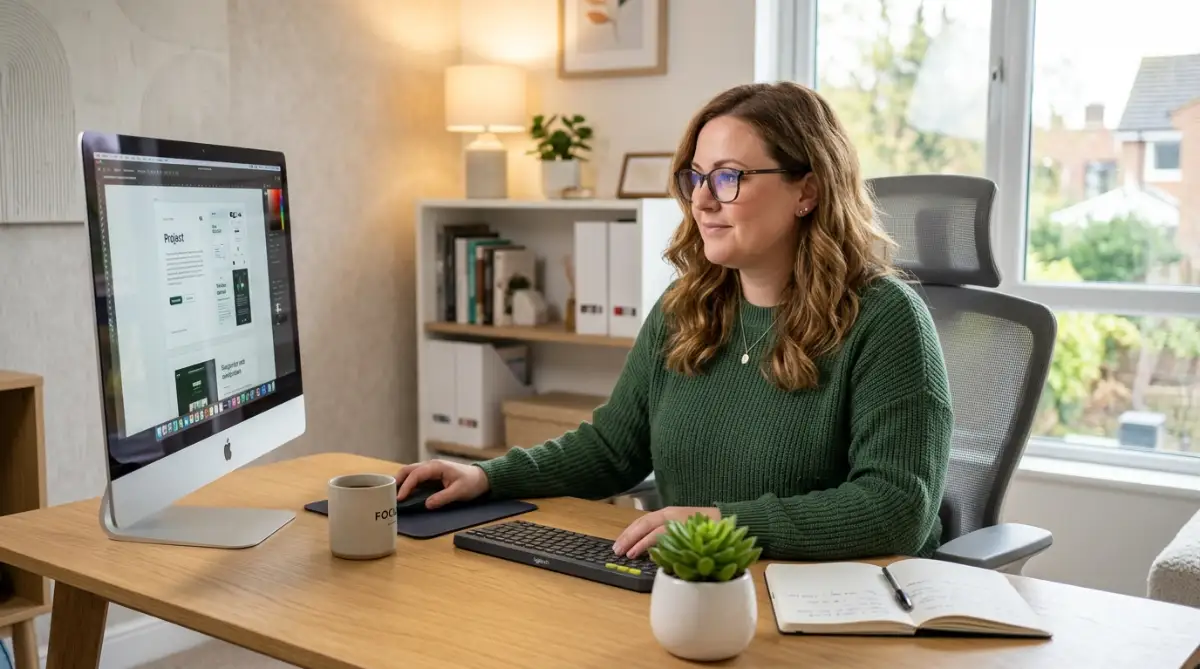
If you want to be treated like a professional, you must act like one. This starts with your workspace. You cannot do high-quality proofreading while sitting on a couch with the TV on. Your brain needs a signal that it is time to work.
Set up a desk that is only for your proofreading. Keep it clean. Keep your style guides and a notepad nearby. This physical boundary helps you enter "deep work" mode. When you sit in that chair, your eyes start looking for errors automatically.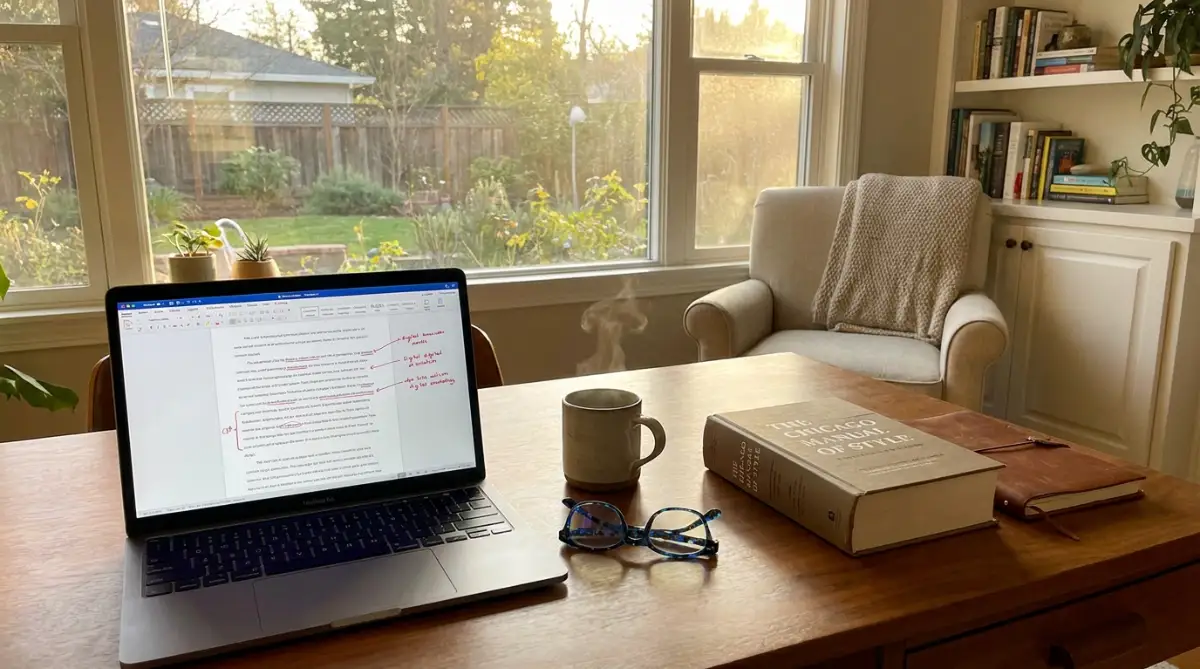
Also, consider your digital health. Proofreading can be hard on the eyes. Invest in a pair of blue-light-blocking glasses. Or, use a monitor that has a "comfort view" setting. If your eyes are tired, you will miss typos. If you miss typos, you will lose clients. Protect your eyes like a carpenter protects his hands.
The "Why" Behind Your Corrections
When you send a document back to a client, you shouldn't just send the fixes. Sometimes, you should explain why you made a change. This is how you add real value.
If you see a client making the same mistake over and over, leave a polite note. Say something like, "I noticed you used 'its' instead of 'it is' several times. Based on the CMOS guide, the correct version is..." This helps the client become a better writer.
They aren't just paying for a clean paper; they are paying for your expertise. When you teach them, they trust you more. This trust is what leads to repeat business and referrals. Repeat clients are the lifeblood of a freelance business.
Expert Insight: Starting Small to Gain Big Wins
Don't try to get a huge book deal on your first day. That is too much pressure. Start with small jobs. Look for blog posts, short essays, or even social media captions.
These small jobs help you practice your system. You learn how long it takes you to read 1,000 words. You learn how to talk to clients. Every small job is a brick in your wall of confidence.
I also suggest proofreading for friends or local non-profits for free at first. In return, ask them for a written testimonial. These reviews are your social proof. They show future paying clients that you are the real deal. A good review is worth more than a fancy logo.
Overcoming the "Quiet" Challenge
Proofreading is a lonely job. It is just you and the text. For some, this is a dream. For others, it can be hard. You must learn to manage your own energy.
Take breaks every 45 minutes. Look at something far away to rest your eyes. Get up and move your body. If you are tired, your brain will start "auto-correcting" the text in your head. You will see what you expect to see, not what is actually on the page.
Staying fresh is part of being a professional. You are selling your focus. If you lose your focus, you are selling a broken product. Respect your mind, and your business will grow.
The First Milestone: Your "Quality First" Mindset
As we wrap up the first part of this roadmap, I want you to remember one thing: Speed comes later; quality is now.
Don't worry about being the fastest proofreader on the internet. Worry about being the one who never misses a typo. Your reputation is built on the mistakes you find. If you find them, the client is happy. If the client’s audience finds them, you are in trouble.
Take your time. Read out loud if you have to. Read backward if the text is very complex. Do whatever it takes to be perfect. This commitment to excellence is what will set you apart from the thousands of people who are "just trying" to make money online. Be the expert they can't afford to lose.
In the next part, we will explore how to find your niche, where to find high-paying clients, and how to set your prices so you actually make a profit. Your journey to freedom is just beginning. Stay focused, keep your eyes sharp, and remember that every comma counts.
Mastering the Industry: Advanced Strategies for Career Growth
Once you have learned the basics of grammar and punctuation, it is time to think about how you will stand out in a crowded market. Many beginners stay at a low pay level because they try to be a "generalist" for too long. To earn a higher income, you must find your specific niche.
Think about your background. Have you worked in a hospital? You should look into medical proofreading. Did you study law? Legal proofreading pays significantly better than checking blog posts. When you specialize, you become an expert in the eyes of the client. They are willing to pay more for someone who understands their specific vocabulary.
You should also look into technical proofreading for software companies or engineering firms. These industries produce a lot of white papers and manuals that must be perfect. If you can handle complex terms and data, you will never run out of high-paying work. This is how you transition from a side hustle to a full-time professional career.
Networking is another secret to reaching the top. Don't just sit on freelance sites like Upwork or Fiverr. Join groups on LinkedIn or forums like the Editorial Freelancers Association. Talk to other editors and writers. Often, an editor will have too much work and will need a reliable proofreader to help them. This is how you find the "hidden" jobs that are never posted publicly.
The Art of Setting Your Rates
How much should you charge? This is a question that stops many people from starting. You don't want to be too cheap, but you don't want to be so expensive that no one hires you. The key is to value your time and your focus.
Most pros charge either per word or per hour. Per-word pricing is great for you because as you get faster, your hourly pay goes up. For a beginner, a rate of $0.01 to $0.02 per word is a good starting point. As you gain reviews and experience, you can move this up to $0.05 or more for specialized technical work.
Real Talk Q&A: Pricing Your First Job
- Should I ever work for free? I highly recommend doing one or two small, free jobs for a local non-profit or a friend, but only in exchange for a glowing LinkedIn review. After that, you charge for every single word.
- What if a client says my rate is too high? Never lower your rate just out of fear. Simply reply, "I understand my rates might not fit your current budget. If things change, I would love to work together." Stick to your guns, and better clients will find you.
Always ask for a sample of the work before you give a final price. A 5,000-word document that is clean will take much less time than a 5,000-word document full of errors. You must protect your profit by knowing what you are getting into. This mindset is just as important as managing a personal budget when you are first starting out in the gig economy.
Scaling Your Business with Recurring Clients
Finding one client is good, but finding a client who needs you every week is better. Recurring income is the goal. Look for small businesses, bloggers, or marketing agencies that produce content on a regular schedule. They need someone they can trust to give them a final check before they hit "publish."
When you work with someone regularly, you learn their "voice." You know their favorite words and their common mistakes. This makes you faster and more valuable to them. They will be happy to pay your rate because they know you understand their brand. A loyal client is worth ten one-time jobs.
To keep these clients, always hit your deadlines. In fact, try to deliver the work a few hours early. It shows that you are organized and that you respect their time. In the world of remote work, reliability is just as important as skill. If you are the person who always delivers, you will always have work.
Dangerous Pitfalls: Avoiding the Errors That Stop Your Progress
Many new proofreaders fail because they fall into the "Burnout Trap." They say yes to every job, even if they are tired. When you are exhausted, your brain starts to "auto-correct" the text in your head. You will look at a mistake and think it is correct because you are just too tired to notice.
This leads to a loss of quality, and in this business, quality is your only currency. If a client finds three typos in a document you "cleaned," they will never hire you again. They might even leave a bad review that stops others from hiring you. It is better to turn down a job than to deliver bad work.
Another common mistake is underpricing yourself just to get a job. If you charge $5 for five hours of work, you will quickly hate your new career. You will feel resentful and stressed. This is similar to the silent credit score killers that ruin your financial chances—small bad choices add up until you are in a hole you can't climb out of.
The Software Crutch Mistake
Many beginners think they can just run a document through Grammarly or ProWritingAid and be done. This is a huge mistake. While these tools are helpful for finding basic errors, they often miss the "context" of a sentence. They might suggest a fix that actually changes the meaning of the writing.
A professional uses software only as a starting point. The real work happens with your eyes and your brain. If you rely too much on software, you are not a proofreader; you are just a software operator. Clients pay for your human judgment and your understanding of style guides. Don't let a computer do your thinking for you.
When I first started, I made the terrible mistake of running a client's document through a grammar app and accepting every single change without double-checking. The app completely ruined the author's natural voice, and I had to spend three hours fixing my own mess for free. I quickly realized that software should only be a helpful assistant, while your own human eyes must always make the final call.
Poor Communication and Ghosting
Communication is where many freelancers fail. If a document is taking longer than you thought, tell the client immediately. Most people are understanding if you give them a heads-up. But if you miss a deadline without saying anything, you have destroyed the trust.
Also, be careful about how you give feedback. Don't just tell the writer they were "wrong." Use your style guides to explain the change. Say something like, "Based on the Chicago Manual of Style, we should use a comma here." This shows that you are a pro, not just a "grammar snob." It turns a correction into a learning moment for the client.
Failing to manage your income is another big pitfall. When you work for yourself, you must set aside money for taxes and insurance. Many people forget this and face a huge bill at the end of the year. This is just as stressful as making costly mistakes when filing a health insurance claim. You must stay organized with your money from day one to avoid future headaches.
Building a Future of Freedom and Accuracy
Starting a career as a professional freelance proofreader is one of the most rewarding things you can do if you love words. You are the guardian of clear communication. You help writers, businesses, and researchers share their messages with the world without the embarrassment of a silly mistake.
This journey requires patience and a sharp eye, but the rewards are worth the effort. You get to work on your own terms, from anywhere you choose. You are no longer stuck in a cycle of work that you don't enjoy. You are building a business that belongs to you.
Your Action Plan for Tomorrow
I want you to start right now. Don't wait for the "perfect" moment. Pick one style guide, like the Purdue OWL, and spend thirty minutes reading about a topic you find tricky. Maybe it is the use of semicolons or how to handle citations.
Then, update your professional profile. Be clear about your niche and your skills. Start looking for small jobs to build your confidence. You have the skills, you have the roadmap, and you have the drive. The only thing left to do is take that first step.
If you ever feel overwhelmed, remember that everyone starts at zero. Every top-tier editor once struggled with a complex sentence. Just stay curious and keep learning. Your future of freedom is waiting for you on the other side of that first corrected page.
You can find more helpful guides on building a better life and career at HubNestify. We believe in your potential to create the career of your dreams. Go out there and start making the world a more accurate place, one word at a time.
Final Checklist for Your New Career
- Choose your specific niche (Legal, Medical, Blog, etc.).
- Buy or subscribe to a professional style guide.
- Set your rates based on your word count and skill level.
- Build a quiet, focused workspace in your home.
- Focus on human judgment over software suggestions.
- Always meet your deadlines and talk clearly with your clients.
You are ready. The pages are waiting. Happy proofreading!
Leaving my stressful day job to become a full-time proofreader was the scariest but most rewarding choice I ever made for my mental health. I promise that if you just set up your workspace and apply for your very first small job today, you will be amazed at how quickly your confidence grows. Take a deep breath, trust your sharp eyes, and start building the free life you completely deserve!
Disclaimer: The information provided in this article is for educational purposes only. Starting a freelance business involves financial risks and requires dedication. We do not guarantee a specific income or career outcome. Always consult with a tax professional or legal expert when setting up your own freelance business. Success in proofreading depends on your individual skill level and market demand.