The $20,000 Mistake Nobody Talks About
I once watched a smart, hard-working guy drain his entire $20,000 life savings to build a meal-planning app because his friends told him it was a "genius idea." When he finally launched six months later, exactly three people downloaded it—and two of them were his parents. It completely broke him. If you have a brilliant app idea right now, close your coding software immediately. I am going to show you exactly how to prove strangers will actually pay for your idea before you spend a single dollar on expensive developers.
He was absolutely convinced that busy parents would happily pay ten dollars a month for his service. His friends told him it was a genius idea. His family encouraged him to chase his dreams.
So, David did what most first-time founders do. He hired a freelance development agency to build the app.
He emptied his savings account, spending exactly twenty thousand dollars. He spent six exhausting months reviewing code, picking button colors, and fixing software bugs.
Finally, launch day arrived. David pushed the app to the store, posted it on his social media, and waited for the money to roll in.
One week later, he had exactly three downloads. Two of them were his parents.
The silence was absolutely deafening. David did not just lose his entire savings; he lost his confidence. The emotional weight of building something that nobody actually wanted completely crushed his spirit.
He fell into a deep depression, convinced that he was just a terrible entrepreneur. But David was not a bad businessman. He simply made the oldest, most expensive mistake in the startup world.
He built the product before he proved the demand. He assumed that because he thought it was a good idea, strangers would automatically open their wallets to buy it.
I actually lived through my own version of this nightmare a few years ago when I first started out. I spent five months and almost $8,000 building what I thought was the perfect productivity tool, only to launch it to absolute crickets. That painful failure taught me the hard way that assuming people want your idea is the fastest way to completely empty your bank account.
We are going to make sure you never end up like David. Today, I am going to show you how to test if strangers will actually pay you, without spending a single dollar on software developers.
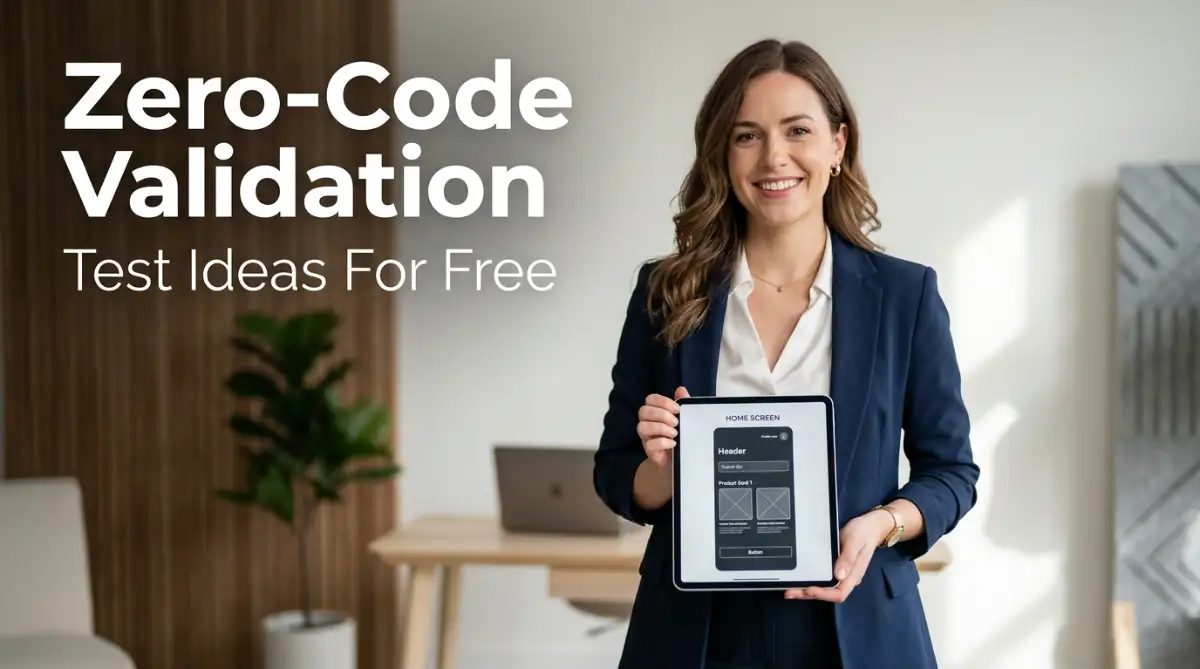
Zero-Code Validation Checklist (Read This Before You Build)
- Don't write code yet: Use a cheap drag-and-drop website builder to make a fake storefront.
- Test the 'Buy' button: See how many strangers actually click your pricing button before you build the real product.
- Do things manually first: If you are building a service, do the hard work manually behind the scenes (The Concierge Method) to see if people actually want it.
- Ignore your mom's feedback: Friends and family will lie to protect your feelings. Only trust the actions of complete strangers.
Rethinking How We Build Companies
The internet has completely changed the rules of starting a business. Ten years ago, you actually needed an engineering team to test a tech idea.
Today, that barrier to entry has completely vanished. You can build a highly believable illusion of a business in just one afternoon.
We call this the Zero-Code Validation Framework. Instead of building the entire machine, we are just going to paint a highly realistic picture of the machine.
To understand why this is so powerful, let's look at the harsh differences between the old way and the new way.
When you look at it this way, hiring a developer before you have paying customers is actually a terrible business decision. Let's break down exactly how you can set up your first zero-code test today.
If you are still wondering how it is actually possible to test a business idea without writing any code, check out this brilliant short video below. It perfectly explains the mindset shift you need to make, and right after you watch it, keep reading to learn how to set up your own fake storefront today!
Phase One: The Painted Door Strategy
In the tech industry, we use a brilliant concept called "The Painted Door." Imagine walking down a hallway in an office building.
You see a door that says "Free Coffee Inside." You grab the handle and try to pull it open.
But the door does not open. It is not even a real door. It is just painted on the wall.
However, the person who painted the door now knows a very important fact. They know exactly how many people tried to open it. They have proven the demand for coffee without ever brewing a single cup.
You can do this exact same thing on the internet. You do not need a working app to see if people want your app.
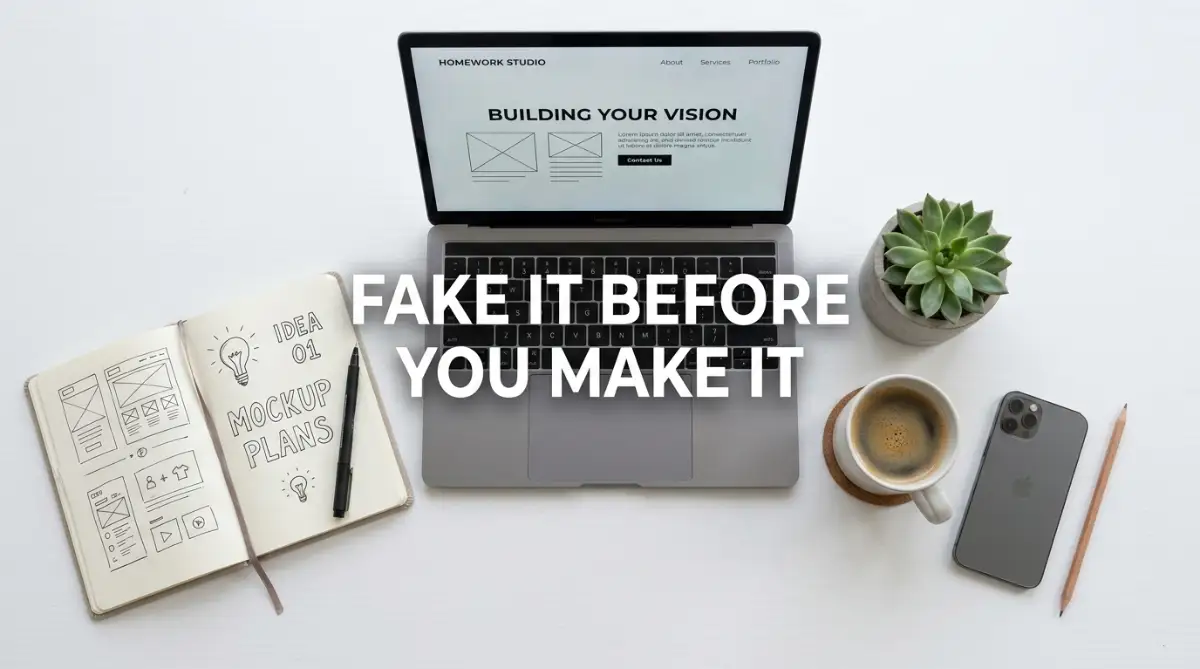
You only need a simple, single-page website. This landing page will explain exactly what your product does, how much it costs, and the specific problem it solves.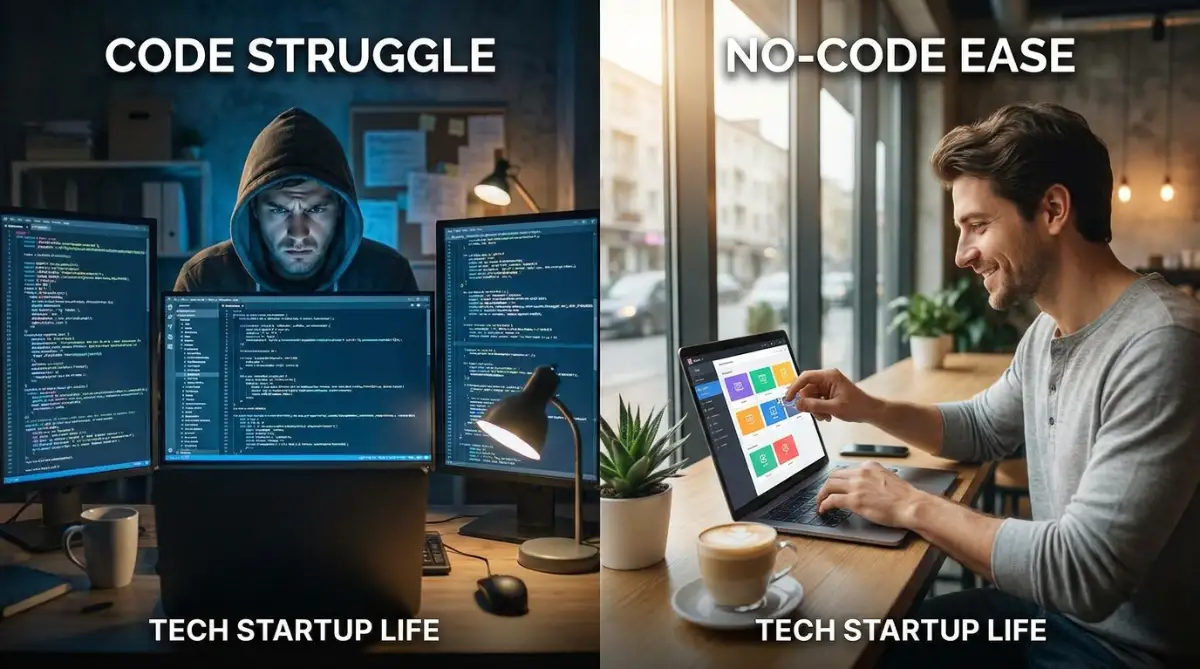
Structuring Your Fake Storefront
Setting up this landing page is incredibly easy. You do not need to know HTML, CSS, or any coding languages.
There are dozens of free, drag-and-drop website builders available online right now. You simply pick a clean, professional template.
The secret sauce is in your copywriting. Do not talk about your idea like it is a future concept. Talk about it as if it exists right now, ready to be purchased today.
When I first tried setting up a fake storefront, I made the huge mistake of making my landing page look too futuristic and vague. I quickly realized that people don't buy cool concepts; they buy immediate solutions to their daily headaches, so I changed my headline to focus entirely on their pain instead of my fake product.
Your headline must address a massive pain point. For example, instead of writing "A new dog walking app," you should write "Never feel guilty about leaving your dog home alone again."
Below the headline, add three simple bullet points. These points should clearly explain the benefits of your service.
Finally, you need the most important element on the page. You need a highly visible pricing section with a bright "Buy Now" or "Start Trial" button.
Capturing the Intent to Buy
This is where the magic happens. What actually happens when a user clicks your "Buy Now" button?
Since your product does not exist yet, you cannot actually take their money. Taking money for a product you cannot deliver is fraud, and we will never do that.
Instead, when they click the button, a small popup window should appear.
This window will gently explain the reality. You can write something honest like: "Wow, we are overwhelmed by the response! We are currently in private beta and cannot accept new users today. Leave your email, and you will be the first to get access when we launch."
This is the ultimate validation metric. If a stranger reads your pricing, decides the price is fair, and clicks the buy button, they have shown true purchasing intent.
They did not just say your idea was good. They actively tried to give you their hard-earned money.
If one hundred people visit your site and zero people click the buy button, you just saved yourself thousands of dollars. You now know the idea needs to change before you hire a developer.
Phase Two: The Concierge Illusion
Sometimes, an email signup is not enough proof for you. Sometimes you want to deliver the actual service to see if the business model works.
This brings us to the Concierge Method. This means you manually perform the tasks behind the scenes to make the customer feel like they are using automated software.
Let's say you want to build an automated AI travel agency that plans perfect vacations. Building that AI software would cost a fortune.
Instead, you put up a simple landing page offering custom travel itineraries for fifty dollars. A customer fills out a basic text form with their travel dates and preferences.
They pay you the fifty dollars. Then, you sit at your kitchen table for three hours.
You manually research flights on Google. You manually read hotel reviews. You manually type up a beautiful PDF itinerary and email it to them.
The customer thinks they just used a highly advanced, automated tech platform. In reality, it was just you doing the heavy lifting manually behind the scenes.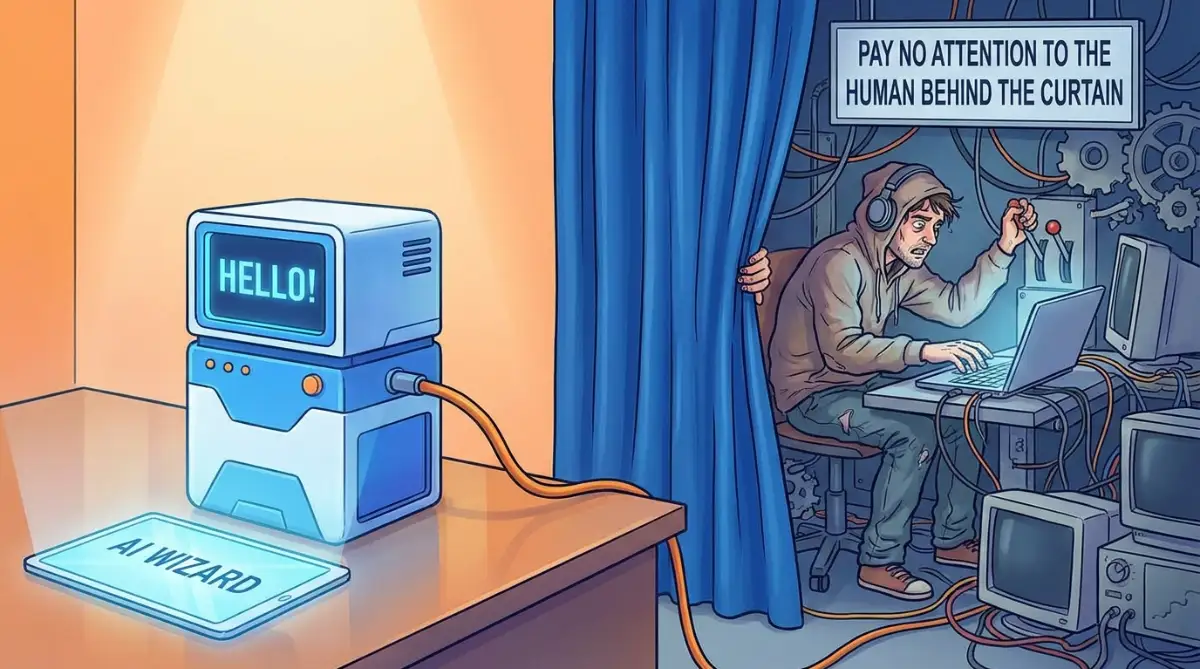
The Genius of Manual Testing
Why is the Concierge Method so powerful? Because it allows you to learn exactly what the customer actually wants before you build the code.
While you are manually researching those flights, you might realize that customers do not actually care about cheap hotels. You might discover they only care about finding kid-friendly restaurants.
If you had hired a developer first, you would have wasted months building a hotel-booking feature nobody cared about. By doing it manually, you gather priceless human insights.
The founder of Zappos, the massive online shoe retailer, famously used this exact method. He did not build a massive warehouse or buy thousands of shoes.
He literally went to a local shoe store, took photos of the shoes, and posted them online. When someone bought a pair on his website, he walked back to the physical store, bought the shoes with his own money, and mailed them from the post office.
He validated a billion-dollar online shopping industry without holding a single box of inventory. You can apply this exact same hustle to your idea today.
Let's look at how the "Concierge Method" beats traditional building every single time:
Driving Free Traffic to Your Test
Now you have your painted door. You have your fake storefront ready to capture emails or manual orders.
But a storefront in an empty desert is useless. You need people to actually walk past your door.
Many founders think they need to spend thousands on Facebook ads to test an idea. This is another dangerous trap that drains your limited resources.
Instead, you should leverage highly targeted, free communities. The internet is already organized by human interests.
Find out where your ideal customers hang out online when they are bored. Are they in specific Reddit communities? Are they in local neighborhood Facebook groups?
Do not go into these groups and blindly spam your website link. People hate blatant self-promotion.
Instead, start a genuine conversation about the specific problem you are trying to solve. Ask the community how they currently handle that specific pain point.
Once people start complaining about the problem in the comments, you casually drop your solution. You reply by saying, "I actually built a small tool to fix this exact headache. You can check it out here if it helps."
This strategy requires zero marketing budget. It relies entirely on empathy, timing, and understanding your customer's daily struggles.
Next-Level Validation: Turning a Fake Page into a Smart Machine
Setting up a basic landing page is just your starting line. To truly understand your potential customers, you need to collect data like a scientist.
You do not need a computer science degree to do this. You just need to connect a few free digital tools together to create an invisible research machine.
Let's look at how you can squeeze the maximum amount of learning out of your simple test page. We are going to track behavior, not just opinions.
The Magic of Invisible Digital Bridges
When a user submits their email on your test page, what happens next? If you just let that email sit in a database, you are wasting a massive opportunity.
You need to strike while their interest is at its absolute peak. You can use free automation platforms to instantly trigger a response.
Think of these automation tools as invisible digital pipes connecting different services. When a user clicks your "Start Trial" button, an automation tool can instantly send them a personalized welcome email from your personal Gmail account.
You can ask them a very simple question in that email. You might write, "Hey, thanks for joining the waitlist. Quick question: what is the single biggest problem you hope this software will solve for you today?"
Because this email looks like it came from a real human, people will actually reply. They will type out long, emotional paragraphs about their daily struggles.
This is absolute gold for your business. You are getting your exact target audience to write your future marketing copy for you, completely for free.
Watching the Silent Body Language of Users
In the physical world, a store owner can watch a customer walk down the aisle. They can see if the customer picks up a product, looks at the price tag, and puts it back down.
You can replicate this exact experience on your test website. There are free heatmap and session recording tools you can install on your landing page with one simple click.
These tools record a video of exactly where the user moves their mouse. You can literally watch a stranger scroll down your page in real-time.
You might notice that every single visitor stops reading when they reach your pricing section. They hover their mouse over the fifty-dollar package for ten seconds, and then they completely close the window.
This silent behavior tells you exactly what is wrong. The design is fine, but the price point is creating massive hesitation. Understanding user interactions through simple tracking helps you identify design flaws early, a concept strongly supported by usability testing research from the Nielsen Norman Group.
You did not have to guess what went wrong. The data showed you the exact moment they lost interest.
Q&A: Handling the "Angry Customer" Fear
Question: If I offer a product that does not exist yet, won't people get angry when they find out they cannot buy it today?
Answer: This is a very common fear, but it rarely happens in reality. If you are honest in your popup message and explain that you are giving them exclusive early access to a private beta, most people feel special. They appreciate being part of the founding journey.
Testing Price Tolerance Without a Product
Pricing a new service is usually a total guessing game. Founders often price things too low because they lack confidence.
Your zero-code test page is the perfect laboratory to find your perfect price. Because you do not actually have a product yet, you can change the price tag every single day.
On Monday, list your service for twenty dollars a month and track how many people click the buy button. On Wednesday, change the text to fifty dollars a month and measure the difference.
You might discover that the conversion rate stays exactly the same at fifty dollars. If you had just guessed the lower price, you would have left thousands of dollars on the table.
My Personal Founder's Rule: Never ask "How much would you pay for this?" People will always lowball you. Instead, put a price tag on the page, track the clicks, and let their actions do the talking. Action is the only metric that cannot lie.
Once you find the perfect price and prove the demand, things get serious. This is exactly when you should start thinking about making things official by transitioning your freelance side hustle into a legal business.

The Deceptive Illusions That Ruin Early Tests
Even with the best zero-code tools, humans are naturally wired to look for comfort. We desperately want our ideas to be good.
This deep desire for approval often causes founders to run highly flawed tests. They accidentally collect bad data that leads them straight off a cliff.
If you make business decisions based on bad data, you will end up building a company nobody cares about. Let's explore the dangerous traps you must avoid during your validation phase.
The "Thanksgiving Dinner" Validation Trap
Imagine sitting around the dinner table with your closest friends and family. You excitedly pitch them your brand new startup idea.
Your mother smiles and says it is brilliant. Your best friend swears they would be your very first paying customer.
You walk away feeling like the next tech billionaire. But you have just collected the most dangerous type of fake data.
The Reality: Your friends and family love you. They do not want to hurt your feelings.
They will lie to your face to protect your emotions. A compliment from your mother is entirely worthless in the business world.
You must only seek validation from complete strangers who owe you nothing. If a stranger ignores you, that is honest feedback.
The Illusion of "Future Promises"
Another massive mistake is running a survey asking people, "Would you pay twenty dollars for this?"
Surveys are logical. But human purchasing behavior is highly emotional.
When you ask someone if they will buy something in the future, they imagine their ideal self. Their ideal self is highly productive, rich, and organized.
So, they check the "Yes" box on your survey. But six months later, when you actually ask for their credit card, their real self takes over.
Their real self is tired, distracted, and protecting their bank account. They disappear and ignore your emails.
How to Fix This: Never ask for an opinion. Only ask for an action.
Asking for an email address is an action. Asking them to click a pricing button is an action.
According to behavioral studies on optimism bias and decision making by the American Psychological Association, people consistently overpredict their positive future actions. You must test what they do right now, not what they promise to do tomorrow.
The Perfectionist Procrastination Trap
I see founders spend three solid weeks trying to design the perfect logo for their zero-code test page. They obsess over the exact shade of blue for their buttons.
They delay launching the test because the page does not look like a massive corporate website yet. This is a massive mistake.
The Reality: Perfectionism is just fear disguised as hard work. You are delaying the launch because you are terrified of finding out that nobody wants your idea.
If your core idea solves a truly painful problem, people will not care about an ugly logo. They will click the button because they desperately need a solution.
If you spend months trying to make a fake product look perfect, you might end up making desperate decisions later.
A Quick Founder's Reality Checklist
To keep yourself grounded during the testing phase, stick to these hard rules.
- Do not talk to your friends about the idea until the test is over.
- Do launch your test page within 48 hours of having the initial idea.
- Do not spend a single dollar on paid advertising until a stranger signs up organically.
- Do assume your first idea is completely wrong, and let the customer data guide your pivots.
Remember, the goal of this framework is not to prove that you are a genius. The goal is to figure out exactly what the market actually wants before you spend your hard-earned money.
Your 48-Hour Action Plan for This Weekend
You now have a complete, bulletproof system for testing any business idea without writing code. You understand how to build the painted door, how to measure real intent, and how to avoid the traps of fake validation.
The old excuse of "I do not know how to code" is officially dead. The only thing standing between you and a profitable business model is a few hours of focused effort.
You have the power to protect your savings account while testing wild, ambitious ideas. You can act like a massive tech company from the comfort of your kitchen table.
This weekend, I challenge you to take your favorite idea out of your notebook and put it onto a screen.
Buy a cheap domain name for ten dollars. Pick a free website builder. Write a bold headline that attacks a specific pain point.
Publish the page and drop the link in three highly relevant online communities. Then, simply step back and watch what the data tells you.
Do not be afraid of a failed test. A failed zero-code test is actually a massive victory. It means you just saved yourself a year of wasted time and thousands of dollars in developer fees.
Keep testing, keep listening to the data, and build something that people are actually desperate to buy. Your entrepreneurial journey starts the moment you hit publish.
Looking back at my own journey, learning how to test my wild ideas for free completely removed my fear of starting a new business. Grab a cheap domain name this weekend and just put your idea out into the world, because finding out the truth early is the absolute greatest gift you can give your future self.
Disclaimer: The strategies discussed in this article are for educational and informational purposes only. Every business carries inherent risks, and individual results will vary. Always perform your own due diligence and consider consulting with a certified business advisor or legal professional before officially launching or accepting payments for a new business entity.