The Expensive Nightmare of a Simple Weekend Chore
Are you noticing a scary drop in your daily solar production? It is probably just a layer of dirty pollen on the glass, but before you grab a bucket of soapy water and a pressure washer, please stop. I completely ruined my expensive solar warranty last summer because I thought cleaning panels was just like washing a dirty car windshield. Let me show you exactly why everyday tap water and dish soap will secretly destroy your clean energy setup.
He notices that his power generation has dropped by about 15% over the last two months. He walks outside, looks up at his roof, and sees a thick layer of yellowish pollen and agricultural dust covering his expensive solar investment.
Wanting to fix the problem immediately, Mark grabs his heavy-duty pressure washer from the garage. He fills it with aggressive driveway detergent, climbs up an unstable ladder, and blasts the dark glass panels until they look somewhat shiny again.
He goes to sleep that night feeling incredibly productive. However, a week later, his energy production does not go up. In fact, his system efficiency drops another 10%, and this time, it stays down permanently.
What exactly happened to Mark? Without realizing it, he completely destroyed the microscopic anti-reflective coating on his solar glass.
The high-pressure water jet stripped away the chemical layer designed to capture sunlight. The harsh driveway soap left a sticky, invisible film that immediately attracted even more dust the very next day.
His attempt to save a little bit of energy ended up costing him thousands of dollars in permanent hardware damage. Worst of all, his aggressive cleaning method completely voided his twenty-five-year manufacturer warranty.
The anxiety of realizing you just ruined your own expensive equipment is a terrible burden to carry. People naturally want to protect their investments, but the internet is full of terrible, destructive advice regarding solar maintenance.
You do not have to make these same heartbreaking mistakes. Today, we are going to look at the exact science of photovoltaic glass and learn how to maintain your energy system safely, effectively, and without a single scratch.
I will never forget the panic I felt when I checked my solar app last summer and saw my energy production had tanked by 20%. My first thought was to drag my pressure washer up the ladder and blast the dust off, thinking I was just being a smart, proactive homeowner. Thankfully, a friend stopped me right before I made a terrible mistake that would have ruined my entire system. Let me share what I learned so you don't accidentally destroy your own expensive setup.
Quick Summary: How to Wash Panels Safely
- Never Use Soap: Dish soap leaves a sticky film that attracts heavy dust the very next day.
- Filter Your Water: Standard tap water leaves permanent hard-water stains on the glass. Use an inline deionizer filter.
- Mind the Temperature: Spraying cold water on a hot panel in the afternoon will instantly shatter the expensive glass.
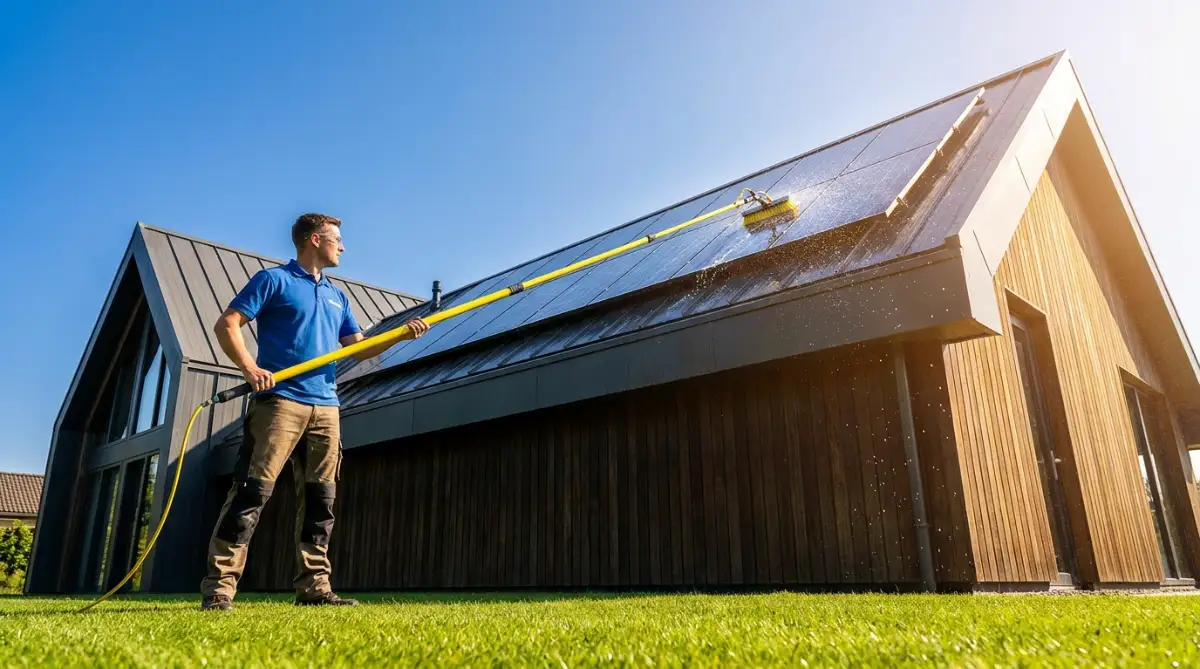
- Stay Off the Roof: Use a long water-fed extension pole to clean the array while standing safely on the ground.
Decoding the Anatomy of Your Power Plant
Before you ever point a water hose at your roof, you need to understand what you are actually looking at. Solar panels are not ordinary house windows.
If you treat them like the windshield of your car, you are going to run into serious trouble. The top layer of a modern photovoltaic module is made of highly engineered, tempered glass.
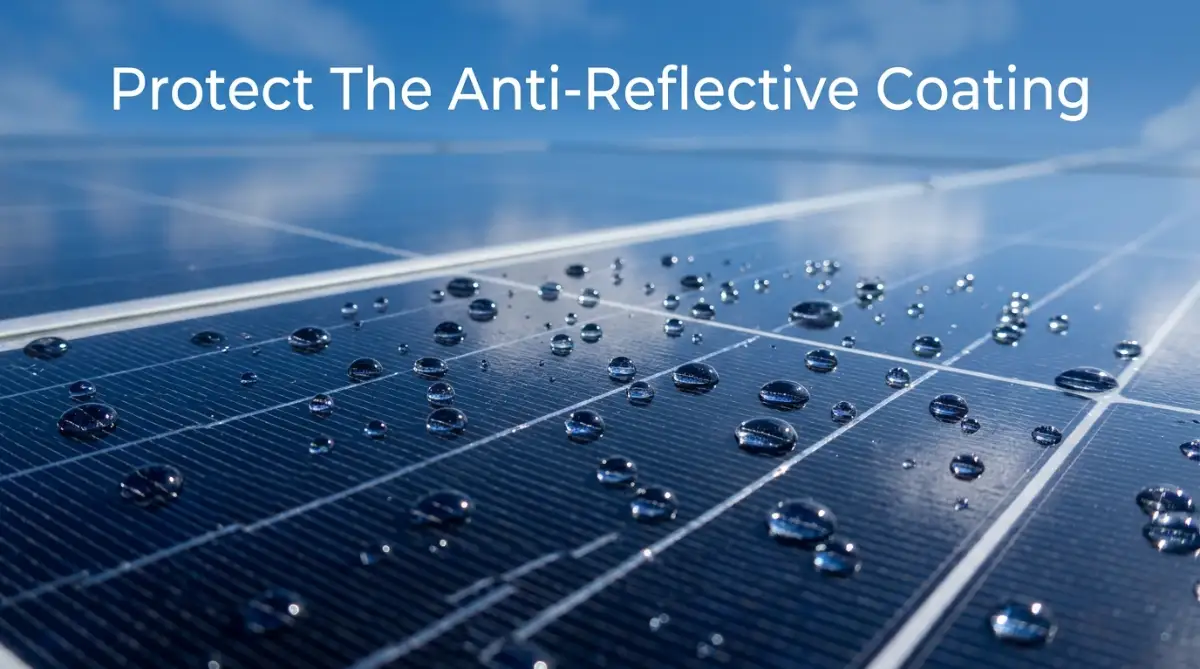
This glass is specifically designed to be incredibly strong against large impacts like heavy hail. However, the very top surface is covered in a microscopic layer known as an Anti-Reflective (AR) coating.
This AR coating is the absolute secret to your home's energy efficiency. Instead of letting the sun's rays bounce off the glass into the sky, this coating bends the light and forces it downward into the silicon cells.
Treat Your Panels Like Expensive Eyeglasses
Think about a pair of highly expensive prescription eyeglasses. You would never scrub your glasses with a rough kitchen sponge and heavy chemical bleach, right?
You know that doing so would instantly leave tiny micro-scratches everywhere. You would look through the lenses and see a blurry, cloudy mess.
Your solar panels operate on the exact same logic. Any micro-scratch on the AR coating causes sunlight to scatter wildly instead of absorbing directly into the panel.
When you prepare to wash your array, your primary goal is not just removing dirt. Your primary goal is preserving the absolute integrity of that invisible AR layer.
The Silent Threat of Thermal Shock
Let us discuss the most dangerous physical reaction that homeowners completely ignore. It has nothing to do with the tools you use, and everything to do with the clock on your wall.
Solar panels sit under direct, blazing sunlight for hours on end. By two o'clock in the afternoon, the dark glass and metal frames absorb an incredible amount of heat.
On a standard eighty-degree summer day, the physical surface temperature of a solar panel can easily reach 150 degrees Fahrenheit. The glass physically expands under this intense heat.
If you take a garden hose filled with sixty-degree cold tap water and spray it directly onto that boiling hot glass, you create an event called thermal shock. The glass tries to contract so violently and rapidly that it literally shatters into thousands of pieces instantly.
The Perfect Window of Opportunity
You must always let nature dictate your maintenance schedule. The only safe time to introduce water to your rooftop array is when the glass is completely cool to the touch.
You have two safe windows of opportunity. The absolute best time is just after sunrise, before the direct rays of the sun have had a chance to bake the equipment.
The early morning air is cool, and the morning dew has already started to naturally soften the baked-on bird droppings and tree sap. If you cannot manage a morning session, your second option is late evening, just as the sun is dipping below the horizon.
Never try to squeeze in a quick cleaning session during your lunch break. A sudden shattered panel is an incredibly dangerous electrical hazard and a massively expensive mistake.
I actually made the mistake of trying to spray my panels on a hot Saturday afternoon, and I immediately heard a scary popping sound from the temperature change. Now, I only ever pull out my hose at 6 AM when the roof is completely cool to the touch. It is so much safer for the equipment, and honestly, enjoying the quiet morning air makes the chore surprisingly relaxing.
Why Your Tap Water is a Hidden Enemy
Now that we know when to work, we need to talk about the liquid we are using. It seems completely logical to just attach a standard hose to your outside house spigot and start spraying.
Unfortunately, standard municipal tap water is rarely pure. Unless you live in a very specific geographic area, your home water supply is likely full of dissolved minerals.
We call this "hard water." It contains high levels of microscopic calcium, magnesium, and other natural earth elements.
The "Dishwasher Spot" Phenomenon
Think about pulling a clear drinking glass out of your kitchen dishwasher. If you do not use a special rinse aid, the glass often dries with chalky white spots all over it.
Those spots are the minerals left behind after the pure water evaporates. Now, imagine spraying hundreds of gallons of that same hard water onto your solar panels.
The hot morning sun quickly bakes the water away, leaving a permanent, chalky white mineral film directly over your silicon cells. You just spent two hours trying to clean your system, but you actually added a layer of permanent shade.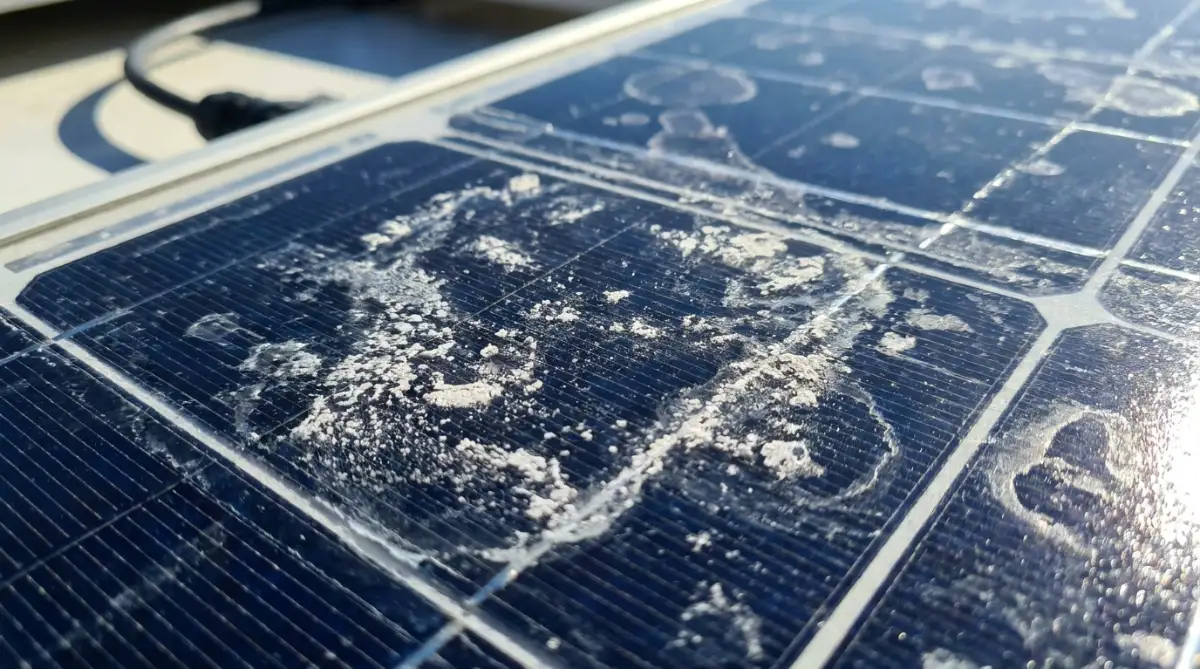
Over time, this hard water scaling bakes into the glass so deeply that normal scrubbing will never remove it. Your panels will permanently lose a large percentage of their daily generating capacity.
The Science of Deionization
Professional solar technicians never use raw tap water. They use a specialized tool called a water deionizer.
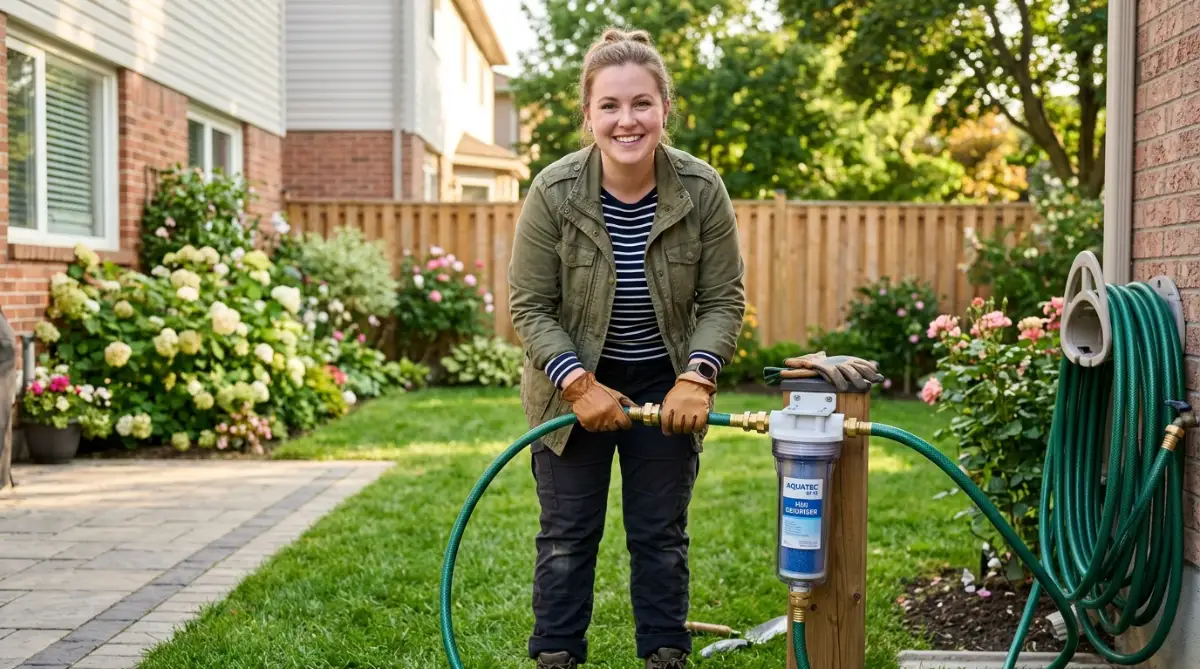
This is a simple filtration tank that connects directly in line with your garden hose. Inside the tank, a special resin physically pulls all the heavy minerals out of the liquid.
What comes out of the nozzle is 100% pure, mineral-free water. Pure water is naturally "hungry." Because it has been stripped of its minerals, it actively pulls dirt and dust off the glass without needing any heavy scrubbing.
Best of all, when deionized water dries in the sun, it evaporates completely clean. There are zero white spots left behind, leaving your AR coating perfectly clear and highly efficient. You can easily purchase an inline RV water filter or a basic deionizer online for a very small investment.
The Absolute "No-Soap" Rule Explained
This brings us to a topic that confuses almost every homeowner. We are socially conditioned to believe that cleaning requires thick, foamy soap.
People frequently carry buckets of liquid dish detergent or heavy car wash shampoo up to their roofs. They think the aggressive degreasers will make the panels shine like a new car.
You must completely unlearn this habit immediately. Chemical soaps are the natural enemy of long-term solar efficiency.
The Sticky Residue Trap
Household detergents are designed to leave a thin, protective chemical film behind. This is what makes your dinner plates feel slippery or your car paint look glossy.
When you put that chemical film on a solar panel, it becomes an absolute magnet for airborne debris. The soap residue acts exactly like sticky flypaper on your roof.
The very next time the wind blows, every single particle of agricultural dust, exhaust soot, and spring pollen will stick directly to the glass. Within two weeks of using soap, your panels will actually be significantly dirtier than before you started.
Myth vs Reality: Solar Cleaning Agents
If you encounter an incredibly stubborn stain, like baked-on bird droppings, you simply need patience, not chemicals. Soak the specific spot with pure water and let it sit for five minutes. The water will naturally rehydrate and soften the organic material, allowing you to easily wipe it away.
Selecting the Right Mechanical Tools
We have eliminated high pressure, hot glass, hard water, and chemical soaps. Now we need to choose the actual physical tools that will touch your valuable equipment.
Remember our comparison to expensive eyeglasses. You need a tool that provides enough friction to move the dirt, but is gentle enough to leave the glass completely unscarred.
Myth vs. Reality: The "Scrubbing" Mistake
- The Myth: You need to scrub hard with a stiff brush to get the baked-on bird poop off the glass.
- The Reality: Hard scrubbing creates microscopic scratches in the anti-reflective coating. Instead, just let pure water sit on the dirt for five minutes. The water will naturally rehydrate the organic mess, and it will slide right off without any scratching.
A standard kitchen broom or a stiff garage brush will instantly ruin your array. The hard plastic bristles drag sharp microscopic rocks across the glass, causing permanent cloudiness.
The Power of the Water-Fed Pole
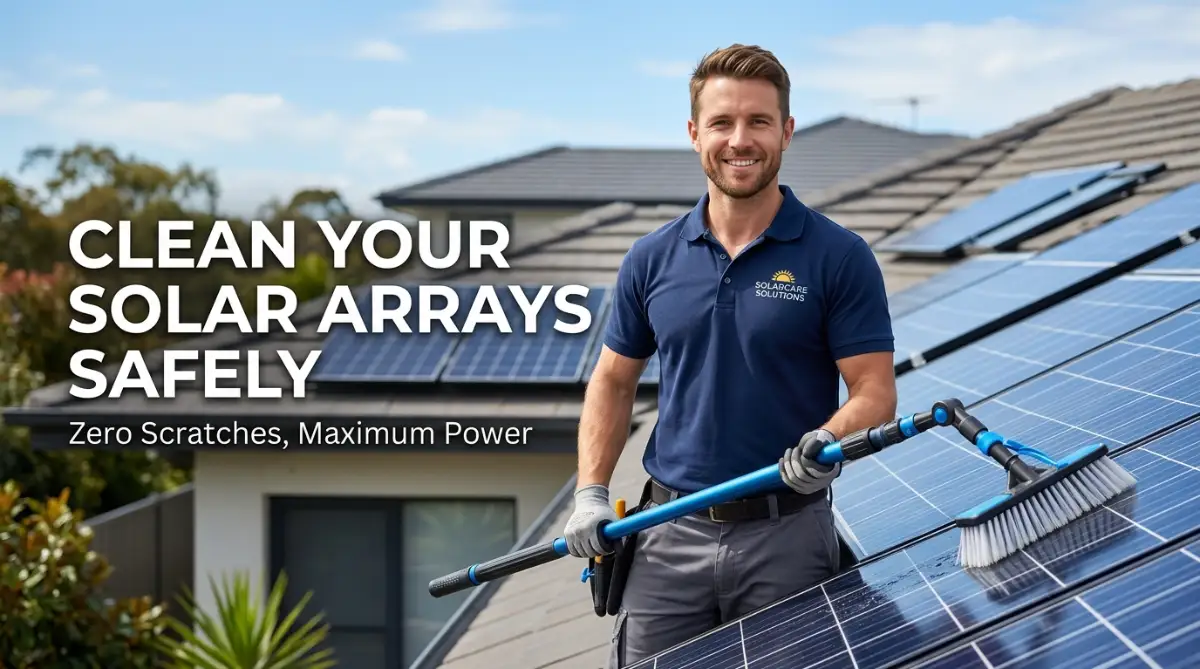
The safest and most effective tool for this job is a specialized water-fed extension pole. This is a long, lightweight aluminum or carbon fiber pole with a specific brush head attached.
The brush head is made of incredibly soft, flagged nylon bristles. "Flagged" means the very tips of the bristles are split open to make them feel as soft as a painter's brush.
Your garden hose connects directly to the bottom of the pole. The pure water travels up through the center of the tube and sprays out directly between the soft bristles.
This creates a perfect cleaning environment. The constant flow of water acts as a gentle lubricant, floating the dirt up and away from the glass. Meanwhile, the soft bristles simply guide the debris off the bottom edge of the frame.
By using a water-fed pole, you avoid all the aggressive scrubbing that causes micro-cracks. You simply glide the brush across the surface, letting the pure water do the actual heavy lifting.
If you are having a hard time picturing how this actually looks, watch this quick video demonstrating a safe water-fed pole in action. It shows exactly how the pure water lifts heavy dirt away without scratching the glass, so check it out before moving on to the advanced care routine below!
Advanced Care Routines for Long-Term System Health
Now that you understand the basic mechanics of safe washing, we can elevate your maintenance routine to a professional level. Keeping your energy system running smoothly requires a little bit of strategic planning.
The secret to decades of free electricity lies in understanding exactly what falls onto your roof and adjusting your cleaning schedule to match the seasons. Let us explore some advanced strategies that experienced solar owners use to protect their investment.
The Science of "Micro-Shading" at the Frame Edge
When you use a water-fed pole, the natural tendency is to scrub the center of the glass and completely ignore the metal edges. This is a massive mistake that steals a shocking amount of power.
Most solar panels have a slightly raised aluminum frame that wraps around the entire glass sheet. When rainwater or dew runs down the slope of the roof, it naturally pools against the bottom edge of this metal frame.
As the water evaporates in the sun, it leaves behind a thick ridge of heavy mud and concentrated dirt right along the bottom edge of the panel. This might seem like a cosmetic issue, but it causes a severe electrical problem known as micro-shading.
Because of how standard string inverters operate, the National Renewable Energy Laboratory confirms that partial shading on just the bottom row of silicon cells can reduce the total power output of the entire panel by a massive margin. The system thinks the sun has gone down, even when the top 90% of the glass is perfectly clean.
Pro Tip: Next time you wash your array, spend 80% of your effort carefully tracing the absolute bottom metal edge of each panel. Use the soft bristles of your pole to dig into that metal lip and flush all the heavy mud out completely.
Developing a Seasonal Frequency Strategy
How often should you actually drag the hose out into the yard? This is the most common question new owners ask, and the honest answer is completely dependent on your specific zip code.
If you live in a coastal area with frequent, heavy rainstorms, you might only need a proper wash once a year. The natural weather will handle the light dust fairly well.
However, if you live in a dry agricultural zone, or near a busy highway, your reality is completely different. Heavy farming seasons kick massive amounts of sticky pollen and fine topsoil directly into the atmosphere.
You need to act exactly like an allergy sufferer tracking the daily pollen count. During heavy harvest seasons or extreme dry spells, you should visually inspect your roof with binoculars at least once a month.
The Hidden Dangers of DIY Maintenance Gone Wrong
We have spent a lot of time talking about protecting the glass, but we need to talk about protecting the human holding the brush. Rooftop maintenance is inherently dangerous, and overconfidence is your absolute worst enemy.
Every year, thousands of homeowners end up in the emergency room because they completely underestimated the physics of a wet roof. Taking the wrong approach to this chore does not just risk breaking an expensive solar panel; it risks severe personal injury.
Let us look at a few highly emotional and dangerous traps that you must actively avoid. Your safety is always worth infinitely more than a slight bump in energy production.
The Trap of the Wet Roof Surface
Picture this very common, yet terrifying scenario. A homeowner decides to climb directly onto their slanted roof to reach a difficult upper panel.
They wear their standard gardening shoes and carry a dripping wet sponge. As they step onto the asphalt shingles, the soapy water runs down the slope, instantly turning the entire roof into a frictionless slide.
In a split second, they lose their footing completely. The natural instinct is to grab onto the nearest object to stop the fall, which is almost always the edge of a solar panel.
Not only does this violently tear the panel right off its mounting rails, but it rarely stops the person from falling off the edge of the house entirely. Never, under any circumstances, walk directly onto a wet, sloped roof.
If you cannot reach the absolute top edge of your array using an extension pole while standing safely on the ground or on a firmly secured ladder, you must stop immediately. You have reached the limit of safe DIY maintenance, and it is time to hire a professional crew equipped with proper safety harnesses.
The Hidden High-Voltage Threat
We often forget that a solar array is a live, high-voltage electrical plant. We treat them like windows, forgetting they are actively generating hundreds of volts of deadly DC electricity.
Most panels are incredibly well-sealed against water intrusion from the top glass side. However, the thick black wires running underneath the panels are highly vulnerable.
Over a few years, local squirrels or birds might chew slightly through the rubber insulation covering those wires. If you blast a heavy stream of water up underneath the panels trying to wash out a bird's nest, the water can easily bridge the gap between the exposed wire and the metal frame.
If you are holding a wet metal extension pole or touching a metal ladder when that short circuit happens, the electrical current will travel directly through your body. The Occupational Safety and Health Administration strongly warns against water contact near any compromised residential PV wiring.
Always keep your water flow directed entirely at the top glass surface. Never intentionally spray water underneath the array, and if you see frayed wires, immediately call your installation company.
My 3-Step Safety Checklist Before Cleaning:
Before I even turn on the water hose, I always do a quick 3-minute visual check:
- Check the Clock: Is it before 8:00 AM? If the sun is already hot, the glass will shatter.
- Check the Wires: Are there any chewed wires or bird nests hanging out from underneath the panels?
- Check the Ground: Can I reach the top of the panels with my extension pole while my feet are safely on the grass? If I need to climb onto a slippery roof, I am calling a pro.
Over-Tightening the Equipment Mentality
There is a strange psychological urge to "fix" things while you are up near the roof. A homeowner might notice a slightly loose mounting bolt and decide to tighten it down with a heavy wrench.
They crank the metal bolt down as hard as they possibly can, thinking they are making the system more secure. This is a massive mistake.
Solar mounting systems are intentionally engineered with a specific amount of flex. The aluminum frames and rails need tiny microscopic gaps to expand during the boiling hot summer and contract during freezing winters.
If you over-tighten a clamp, the metal has absolutely nowhere to expand when the sun hits it. The pressure builds up until the tempered glass simply shatters from the immense physical stress. Unless you have a calibrated torque wrench and the manufacturer's exact specifications, do not ever attempt to adjust the mounting hardware yourself.
Final Checklist for a Perfect Power Yield
Taking care of a renewable energy system should be a rewarding, peaceful experience, not a source of constant anxiety. You have already done the hardest part by breaking away from the traditional utility grid.
Now, you just need to act like a smart, proactive manager. You understand exactly why high-pressure washers, abrasive brushes, and chemical soaps are the absolute enemy of your financial investment.
You know that pure, deionized water and a soft-bristled extension pole are the only tools you will ever need. By focusing on the bottom edges of the frames and letting the water do the actual work, your system will run perfectly for decades.
Do not let the fear of maintenance scare you away from exposing the biggest myths about living entirely on off-grid solar power or embracing clean energy. When you use the right tools and the right timing, keeping your panels clean is easier than washing your car.
Your Weekend Maintenance Strategy
Do not wait for a massive drop in your energy app to take action. Set up a simple, logical routine this weekend to protect your power:
- The Morning Ground Check: Grab a pair of binoculars on Saturday morning. Look closely at the bottom edge of the metal frames for thick mud ridges.
- Filter Preparation: If the glass looks hazy, order an inline RV water filter or a basic deionizer for your garden hose.
- The Safe Setup: Wait for the coolest part of the early morning. Attach your soft water-fed pole and practice reaching the panels while keeping both feet firmly on the solid ground.
Treat your solar investment with the gentle respect it deserves, and it will reward your family with abundant, free electricity for the rest of your life!
Worrying about my solar panels used to stress me out, but now it is just a simple, easy routine I do twice a year. You have all the right knowledge in your hands right now to protect your investment without paying a fortune to professional cleaners. Go grab the right tools, wait for a cool morning, and enjoy watching your energy production shoot right back up to maximum power!
Disclaimer: The information provided in this article is for educational and informational purposes only. Working near roof edges and interacting with high-voltage electrical equipment carries a severe risk of injury, electrocution, or death. Always prioritize your personal safety. If you cannot safely reach your solar array from the ground using an extension pole, you should hire a licensed, insured, and certified solar maintenance professional. Always consult your equipment manufacturer's warranty guidelines before applying any water or tools to your solar panels.