
The Silent Rejection: When Your Home Just Doesn't "Click"
My house sat on the market for 42 days without a single offer. I scrubbed the floors until my back hurt, baked the cookies, and did everything the internet told me to do. But buyers would walk in, politely smile, and leave after five minutes. It drove me crazy until my real estate agent told me a harsh truth: my house felt like a cold furniture showroom, not a place where someone wanted to actually live. Let me show you the weird psychological tricks that finally got my house sold in under a week.
A few years ago, I was trying to sell my own home, and after three weeks of complete silence from buyers, I felt sick with worry. I had cleaned until my hands were raw, yet people would just walk in, look around, and leave without a single word. That is when I realized my house felt like a cold museum, not a warm home, and I needed to change my strategy fast.
Most sellers feel this deep anxiety. You are not just selling bricks and wood; you are selling a part of your life. When people walk through and don't feel "at home," it feels like a personal failure. It keeps you up at night, worrying about the mortgage and the move.
I have talked to many homeowners who feel stuck. They think they need a $20,000 kitchen upgrade to get a buyer. They see the dust on the baseboards and feel like the house is working against them. The mental stress of an unsold property is a heavy weight to carry.
But here is a secret: People don't buy houses with their calculators first. They buy them with their hearts. If the "vibe" is wrong, no amount of granite countertops will fix it.
You want that visitor to walk in and say, "I can see myself living here." You want them to feel a sense of peace the moment they cross the doorway. Achieving this doesn't require a bank loan; it requires a bit of brain science.
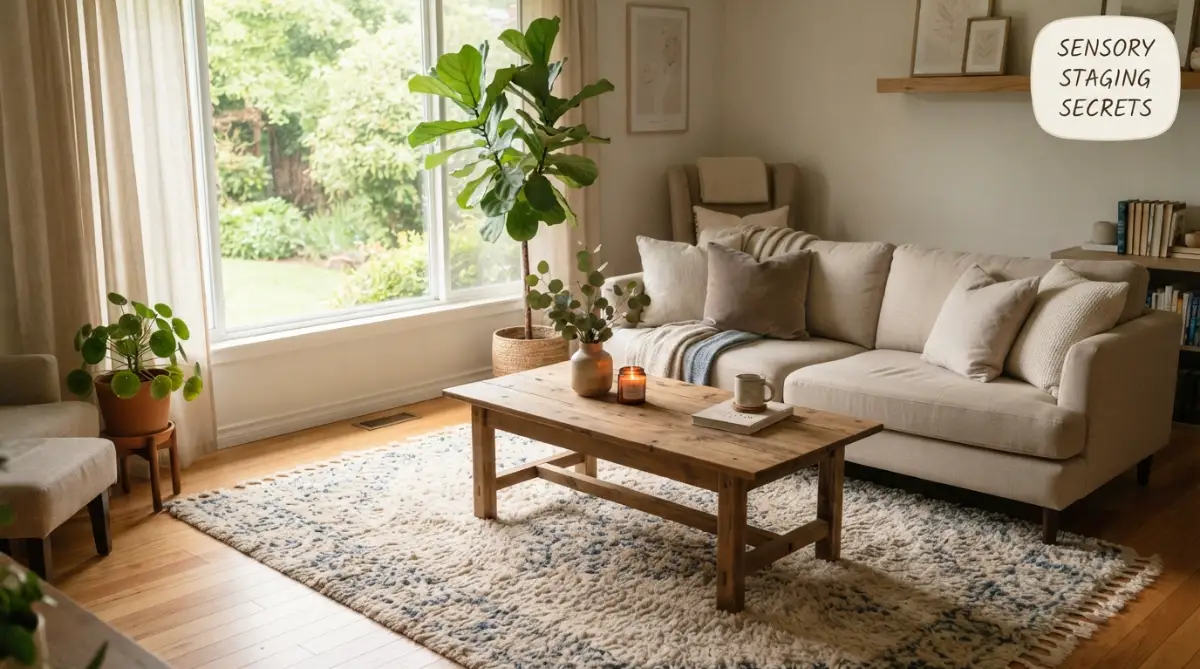
Your 60-Second Cheat Sheet:
- Nail the first 7 seconds: Put a healthy green plant at your front door. It instantly signals to a buyer's brain that the house is full of life and well-cared for.
- Stop hiding stuff in closets: Buyers will open your closet doors. If stuff falls out, they immediately assume the house is too small. Clear them out!
- Kill the visual noise: Leave empty space on your kitchen counters and coffee tables so buyers can imagine their own family living there.
- Ditch the harsh overhead lights: Turn on small corner lamps to make the space feel cozy and warm instead of cold and exposed.
The Seven-Second Rule: Mastering the Entryway Psychology
Did you know that most people decide if they like a house within the first seven seconds? That is barely enough time to take off their shoes. This means your entryway is the most powerful part of your home.
If the first thing they see is a pile of mail or a dark hallway, their brain marks the house as "cluttered" or "depressing." You want to trigger a "hit" of dopamine instead. Place a small, healthy green plant right by the door.
Green tells the human brain that this area is safe and full of life. Make sure the light in the entry is warm and bright. Avoid those cold, blue-toned bulbs. They make a home feel like a hospital.
Think of your entryway like the cover of a book. If the cover is boring, no one wants to read the story. Make that first look feel like a warm hug.
The Cinnabon Secret: Using Scent to Build Memories
Smell is the only sense that goes directly to the emotional center of the brain. This is a big deal for property sellers. If your house smells like "nothing," you are missing a chance to connect.
Don't use heavy chemical sprays or "ocean breeze" plugins. Most people find those annoying or suspicious. They think you are hiding a mold problem. Instead, think about the smell of home.
I often suggest putting a drop of vanilla extract on a baking sheet in a low-heat oven. Or better yet, brew a fresh pot of coffee. These scents are tied to feelings of warmth and safety.
When a visitor smells coffee, their brain relaxes. They stop looking for flaws and start feeling comfortable. It is a tiny trick that costs pennies but changes the entire mood of the tour.
I once made the huge mistake of spraying a strong floral air freshener right before a showing, and a buyer actually left early because it gave them a headache! Now, I only stick to natural, familiar smells like fresh coffee or a drop of vanilla. It is amazing how much faster people relax when a house just smells like a normal, happy morning.
Quick Q&A: The Scent Strategy
- Q: Should I bake cookies before every showing?
- A: Honestly, no. It takes too much time, makes a mess in your clean kitchen, and can feel a bit desperate to smart buyers.
- Q: What is the easiest way to make my house smell good fast?
- A: Put a few drops of real vanilla extract in a coffee mug, pour boiling water over it, and leave it on the kitchen counter. It smells exactly like fresh baking, takes 10 seconds, and tricks the buyer's brain into feeling instantly at home.
Visual Quiet: The Science of Reducing "Mental Noise"
When we enter a room full of small objects, our brains have to work hard. We have to look at every photo, every toy, and every souvenir. This is called "Visual Noise," and it makes buyers feel tired.
You want "Visual Quiet." This means clear surfaces. If you have ten items on a counter, take away seven.
When a room is clear, the buyer can project their own life into the space. They can imagine their own photos on the wall. If your family photos are everywhere, the buyer feels like a guest in your house, not a future owner.
Pro Tip: Look at the corners of your rooms. If a corner is packed with stuff, it makes the whole room feel smaller. Empty corners make a house feel spacious and airy.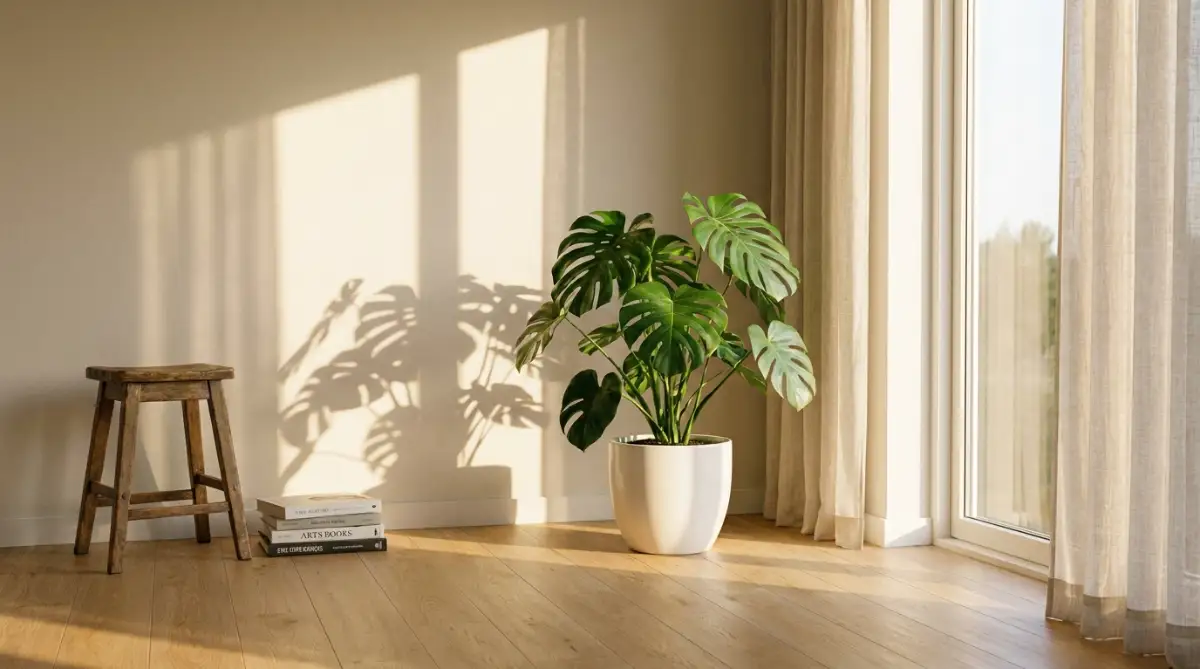
The Power of "Three": Creating Visual Harmony
There is a scientific reason why we like things grouped in threes. It is a pattern that the human eye finds very satisfying. Use this to style your coffee tables and shelves.
Place a tall vase, a medium book, and a small candle together. This creates a "triangle" that feels balanced. It makes your home look like a professional designed it.
When a home looks balanced, it sends a signal that the house is well-maintained. A buyer thinks, "If the shelves are this organized, the plumbing must be good too." It sounds funny, but that is exactly how the human brain makes quick judgments.
Mirroring the Buyer: The "Future Self" Strategy
People buy a house because they want a better version of their current life. They want to be the person who hosts dinner parties or the person who reads by a sunny window. You need to show them that person.
Set the scene. Put a clean book and a soft blanket on a chair by the window. Set two nice plates and glasses on the dining table. Don't set the whole table; just two.
This allows the buyer to "act out" a scene in their head. They think, "I could sit here and have coffee." You are not selling a room; you are selling a moment.
The "Warm Glow" Method: Lighting for Emotional Safety
Lighting is the fastest way to change the "feel" of a property. Many sellers make the mistake of having one bright light in the middle of the ceiling. This creates harsh shadows and makes people feel exposed.
Instead, use "Layered Lighting." Turn on small lamps in the corners. Use under-cabinet lights in the kitchen. The goal is to remove dark corners.
Darkness creates a tiny bit of fear in our lizard brains. It makes a house feel "unknown" or "creepy." By filling every corner with soft light, you make the house feel safe and open.
Lighting Upgrade Budget Breakdown:
Instead of spending $5,000 on new windows to get more light, try this $65 trick to completely change the vibe of your home:
| Item | Cost | Where to put it | Why it works |
| :--- | :--- | :--- | :--- |
| 4-Pack LED Warm Bulbs | $15 | Entryway & Living Room | Kills the cold "hospital" feeling. |
| 2 Small Accent Lamps | $30 | Dark corners | Makes your rooms look 20% bigger. |
| Under-cabinet stick-on lights | 20∣Kitchencounters∣Screams"expensiveupgrade"forcheap.∣∣∗∗TotalInvestment∗∗∣∗∗
20∣Kitchencounters∣Screams"expensiveupgrade"forcheap.∣∣∗∗TotalInvestment∗∗∣∗∗
65** | | Huge buyer impact! |
Color Psychology: Why White Isn't Always the Answer
A lot of people say you should paint everything white to make it look bigger. While white is clean, it can also feel cold and sterile. It doesn't feel like a home; it feels like a box.
Try "Warm Neutrals" instead. Think of colors like soft beige, warm grey, or "greige." These colors make people feel physically warmer.
Science shows that people are more likely to make an offer in a room that feels "cozy" rather than "stark." You want them to feel like they can kick off their shoes and stay a while.
The "Open Door" Policy: Creating a Sense of Flow
When you are showing a house, keep every interior door open. This includes closet doors if the closets are clean. Open doors create a psychological "path" for the visitor.
If a door is closed, the buyer feels a tiny bit of resistance. They wonder, "Should I go in there?" It breaks their focus.
When everything is open, the house feels like one big, flowing space. It feels larger, even if the square footage is small. It also shows that you have nothing to hide.
The "Mirror" Effect: Expanding Space and Light
If you have a small room or a dark hallway, use a mirror. This is an old trick, but it works because of how our eyes process depth. A mirror tricks the brain into seeing more space.
Place a mirror opposite a window. It will catch the natural light and throw it back into the room. It makes the space feel twice as bright.
A bright house is seen as a "happy" house. People are willing to pay more for happiness. It is a low-cost way to add thousands of dollars in perceived value.
The "Soft Touch" Technique: Using Textures
Humans are very tactile creatures. Even if we don't touch something, our brain "simulates" how it feels. If a house has all hard surfaces (wood, tile, metal), it feels "hard" and "cold."
Add "Soft Touches." A plush rug, some velvet pillows, or a woven throw blanket. These textures absorb sound and make the house feel quiet.
A quiet house is seen as a peaceful house. In a loud, busy world, peace is a luxury that people will pay for.
Action Plan: Your Two-Hour "Irresistible" Checklist
You don't need a week to change the feel of your home. You can do it this afternoon. Start with these quick moves:
- Remove all magnets and papers from the fridge. (Visual Quiet)
- Open all curtains and blinds to let the light in. (Warm Glow)
- Put away all personal items like toothbrushes and sponges. (Mirroring the Buyer)
- Place a bowl of fresh, bright oranges on the kitchen counter. (Color Pop)
These small actions tell the buyer that this house is ready for them. It feels like a fresh start. And that is exactly what every home buyer is looking for.
Want to see exactly how to set up your rooms for a quick sale? Watch this short video below for some amazing visual examples, and then keep reading to discover the hidden traps that might be secretly scaring your buyers away!
The Invisible Pull: Strategic Psychology for Property Owners
Moving beyond the basic setup, you need to understand how "Social Proof" works in real estate. When a visitor walks into a house, they aren't just looking at the walls. They are subconsciously looking for signs that other people want this house too.
You can create this feeling without saying a word. Leave a small, elegant "Guest Sign-in" book on a side table. Even if it only has two or three names in it, it signals to the brain that this property is a hot commodity.
Another expert secret is the "Mirroring Effect." Humans feel most comfortable in spaces that reflect their own values. If you are selling a family home, leave one high-quality wooden toy in a corner.
It shouldn't be a mess, but a single, well-placed item suggests a happy life was lived here. This tiny detail bypasses the logical brain and hits the emotional heart. You are telling a story of a peaceful family life without showing a single photo.
Timing your visitors is also a major pro-level move. Try to schedule visits during the "Golden Hour," which is shortly before sunset. The light is softer, warmer, and makes every room look expensive.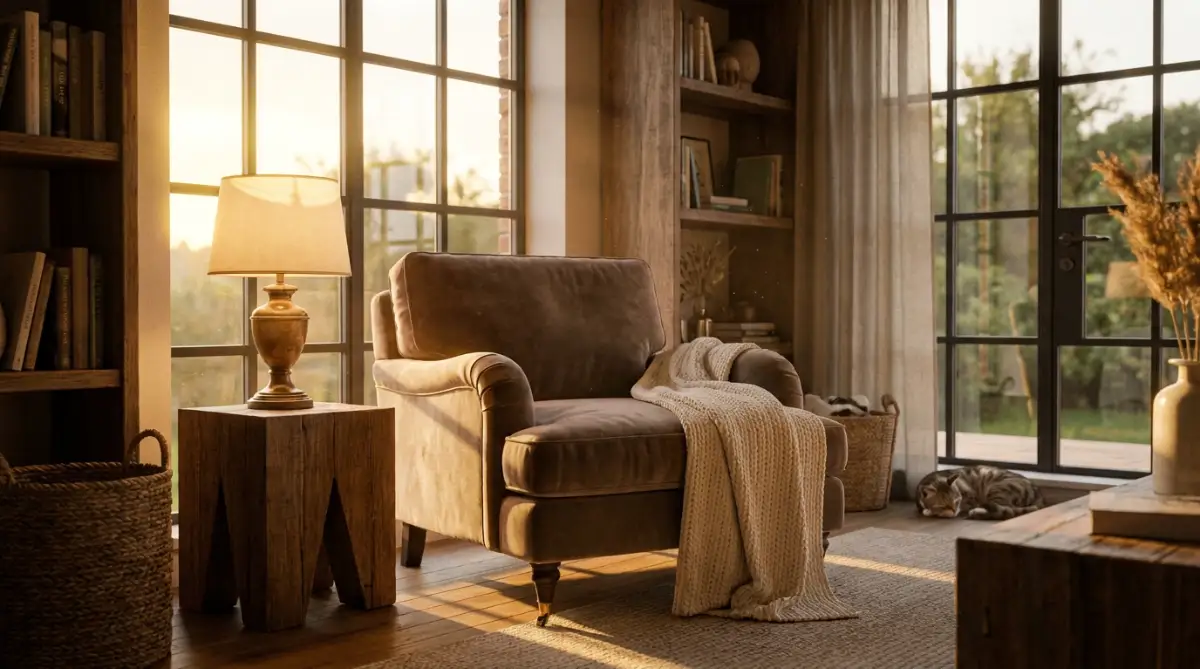
Research from the National Association of Realtors on home staging shows that emotional connection is the top reason for a quick sale. Warm lighting is the fastest way to build that connection. It hides small flaws and highlights the best parts of your architecture.
Lastly, pay attention to the "Soundscape" of your property. Total silence can actually feel heavy and awkward. Play very soft, lyric-free music in the background.
Think of lo-fi beats or soft jazz at a volume so low you barely notice it. It fills the "dead air" and prevents visitors from feeling like they are being watched. This creates a relaxed environment where they feel safe to linger and talk.
The Hidden Traps That Quietly Kill Property Interest
Sometimes, what you don't do is more important than what you do. Many owners make the mistake of "Over-Bleaching" their home. While cleanliness is good, the sharp smell of chemicals can be a major turn-off.
If a house smells like a hospital, the visitor’s brain starts searching for trouble. They think, "Are they hiding mold? Did someone get sick here?" This leads to a loss of trust that no visual beauty can fix.
Another emotional pitfall is the "Closet Cram." We all have clutter, and most people shove it into the closets before a visit. But buyers always check the closets to see the storage space.
If they open a door and things fall out, they feel a sense of stress. Their brain registers the house as "too small." This is a fatal mistake because storage space is one of the top three things buyers look for.
Think of your home's presentation like a health routine. If you take shortcuts, you end up making natural body detox mistakes for clearer skin that don't actually work. Real results come from deep organization, not just hiding the mess.
I also see people make the "Temperature Error." A house that is too hot or too cold is physically uncomfortable. When a person is physically uncomfortable, they want to leave as quickly as possible.
They won't remember the beautiful kitchen; they will only remember that they were sweating. Keep the temperature perfect. You want them to feel so comfortable that they lose track of time.
There is also the "Personal Ghost" mistake. This happens when you stay in the house during the tour. Your presence makes the visitor feel like an intruder.
They won't open cabinets or speak freely because you are standing there. They need to "try on" the house like a coat. They can't do that if the owner is watching them.
Lastly, be careful with your digital presentation. Many people use "fish-eye" lenses for photos to make rooms look huge. When the visitor arrives and sees the room is actually tiny, they feel cheated.
The Final Checklist for an Irresistible Home
You now have a deep understanding of how the human mind views a property. Selling a home isn't about the biggest budget; it is about the smartest strategy. You are managing feelings, not just square footage.
Take a moment to walk through your front door today as if you are a stranger. What is the first thing you smell? Where do your eyes go first? Use your new psychological tools to fix those small friction points.
Here is your Instant Action Summary:
- Clear the visual noise to give the brain a rest.
- Use warm lighting to create a sense of safety.
- Group items in threes for natural harmony.
- Leave the handle for the visitor to grab (The "Future Self" hack).
Your home has a story, and you are the one who gets to tell it. By focusing on these low-cost psychological shifts, you are making it easy for someone else to fall in love with your space. You are moving from being a "Seller" to being a "Dream Maker."
Don't wait for a huge renovation to start these changes. The best results often come from the smallest shifts in energy and light. Trust your instincts and focus on the emotional comfort of your visitors.
You have worked hard to maintain your property. Now, let these psychological hacks do the heavy lifting for you. You are ready to turn "For Sale" into "Sold."
Good luck on your journey. Your perfect buyer is out there, and now, they will finally feel "at home" the moment they walk in.
Looking back, the moment I stopped stressing over expensive kitchen upgrades and started focusing on how my home actually felt, everything changed. I got an offer just a few days later, and I know you can experience that same amazing relief. Take a deep breath, try just two or three of these simple tricks today, and get ready to hand over those keys.
Legal Disclaimer: The information in this article is for educational and informational purposes only. Real estate markets vary by location, and psychological staging does not guarantee a sale or a specific price. We recommend consulting with a local real estate professional to ensure your property meets all safety and legal standards before hosting visitors. Any actions taken based on this advice are at the reader's own risk.