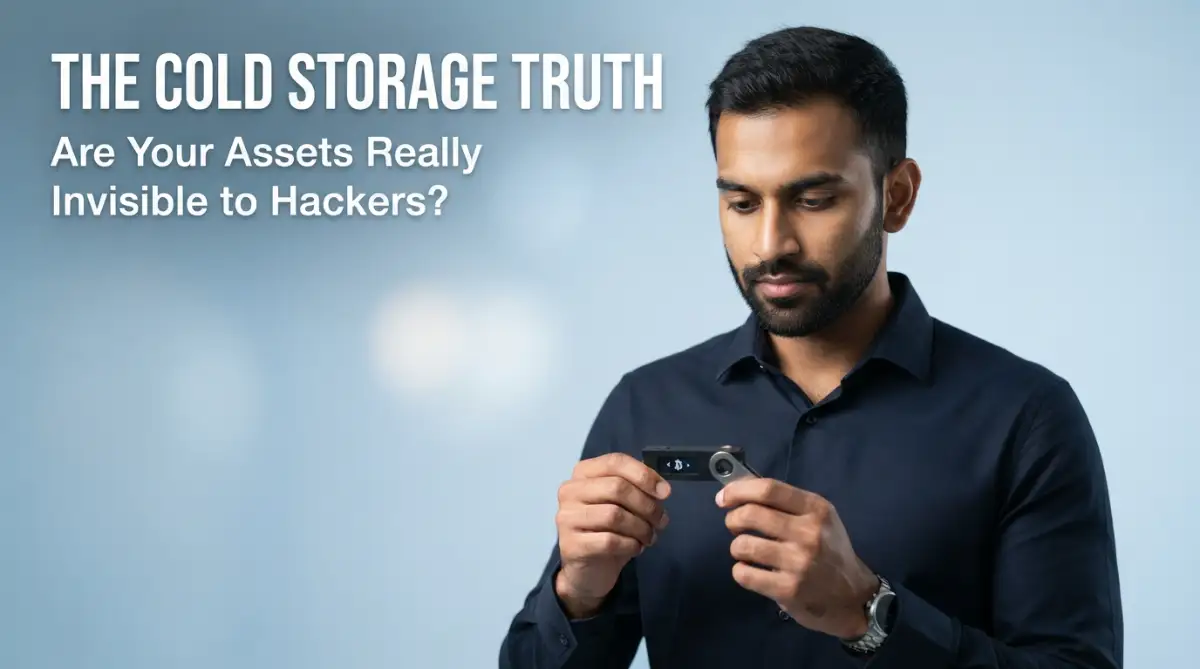
The False Sense of Security in a Digital Fortress
You bought the expensive hardware wallet. You wrote down your 24 words on a piece of paper, locked it in a drawer, and patted yourself on the back for being "unhackable." You thought you did everything right. But what if I told you that hackers don't even need to touch your device to drain your entire life savings? I've talked to guys who lost six figures while holding their cold wallet in their hands. Let's look at the terrifying blind spots in offline crypto security that nobody warns you about.
Then, one morning, you check your balance and see a zero. Your heart stops. Your palms get sweaty. The "unbreakable" vault you trusted is empty. This isn't just a scary story; it is a reality for people who think "offline" means "impossible to hack."
We often talk about crypto as the future of money. We love the idea of being our own bank. But being your own bank means you are also your own security guard. When things go wrong, there is no customer service line to call.
The mental weight of losing your life savings is something nobody should feel. It ruins your peace of mind and makes you doubt your every move. You feel betrayed by the very technology that promised to keep you safe.
Most people believe that if a device isn't connected to the internet, it is safe from the world. But hackers don't always need a Wi-Fi signal to get to your keys. They use the small gaps we never think to look at. Let's talk about the silent cracks in your digital armor.
I will never forget the panic I felt a few years ago when I plugged in my new cold wallet and saw a strange, unexpected popup on my screen. My hands were literally shaking because all my savings were on that tiny device, and I thought a hacker had just stolen everything. That terrifying moment made me realize that just buying a piece of hardware is not enough; I had to learn how to truly protect myself.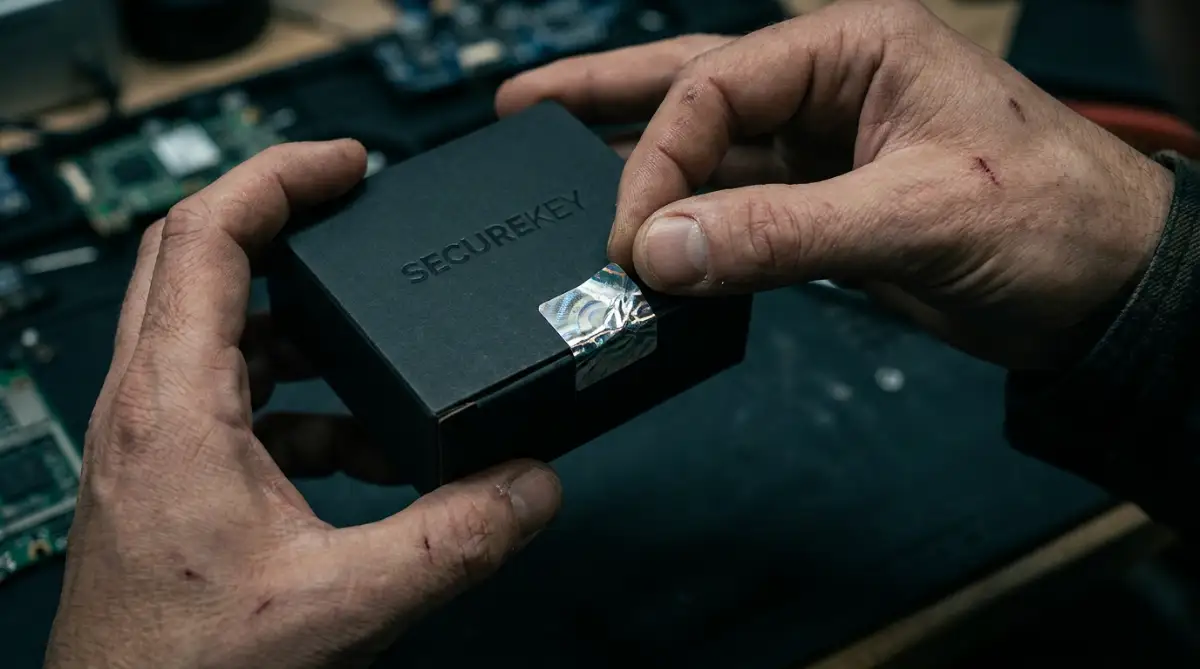

Your 4-Step Hardware Survival Checklist
- The Box Check: Never buy a cold wallet from Amazon or eBay; if the factory seal looks weird, throw it away.
- The 25th Word: Always set up a custom "Passphrase" so thieves can't steal your money even if they find your paper backup.
- The Poison Trick: Hackers will send you $0.00 from a fake address that looks exactly like yours. Stop copy-pasting from your history!
- The Keyboard Rule: Your 12 or 24 words should never touch a computer keyboard. Type them directly into the device only.
The Nightmare of the Supply Chain Shadow
Most people assume their security starts the moment they open the box. In reality, the biggest risk can happen before the device ever reaches your front door. This is what experts call a supply chain attack.
Think of it like buying a brand-new house but the builder kept a secret copy of the key. If a person in the warehouse or a delivery driver opens the box, they can tampered with the hardware. They might set up a "recovery seed" for you before you even see it.
When you turn the device on, it looks perfect. You see a list of words and write them down. But those words were already known by someone else. You are essentially putting your gold into a safe that the thief already has the combination to.
Always check the physical seals on your device. If the plastic looks like it was glued back on, do not use it. Only buy directly from the maker, never from a random seller on a discount site. It is worth the extra cost to know your "keys" were never seen by a stranger.
The Blind Signing Trap: A Click Away from Disaster
One of the most common ways people lose money with "safe" wallets is through blind signing. This happens when you interact with modern apps or trade coins. The screen on your computer asks you to approve a transaction, but the details are a mess of numbers.
Your hardware wallet might show a long string of letters and numbers that don't make sense. You think, "Well, I'm just swapping one coin for another," and you press the button. In that one second, you might have signed a contract that gives a hacker permission to empty your whole wallet.
A hardware wallet is smart, but it can only show you what the software tells it. If the software is fake, you are signing a blank check. Never approve a transaction if you do not understand exactly what the smart contract is asking for.
Many newer devices now offer "Clear Signing." This means they show the actual names and amounts on the device screen. If your device doesn't do this, you are walking through a dark room with a blindfold on.
Test Yourself: The Blind Signing Scenario
Situation: You want to swap $50 of ETH for a new coin on a popular website. Your wallet screen lights up, but instead of saying "Send $50 ETH," it shows a massive block of random hex codes like 0x89a....
What do you do?
If you click "Approve," you fail. Hackers use these confusing codes to hide malicious contracts. If your wallet cannot clearly read the contract (Clear Signing), you must cancel the transaction immediately.
Myth vs. Reality: The Truth About Offline Storage
The Common Myth The Technical Reality
My coins are inside the device. The device only holds the keys; the coins stay on the public map.
Hackers need my device to steal my money. If they have your seed phrase, they don't need the device at all.
A cold wallet protects me from phishing. You can still be tricked into giving your keys away through fake apps.
Cold storage is 100% hack-proof. No system is perfect; physical and software bugs can exist.
The Physical Weakness: Why Your Location Matters
We focus so much on hackers in other countries that we forget about the world around us. A cold wallet is a physical object. If someone finds it and knows your PIN, your money is gone.
Some people think their PIN is enough. But advanced thieves can use "side-channel attacks." They measure the power used by the chip or the time it takes to process a click. By watching these tiny changes, they can slowly guess your secret codes.
There is also the "Wrench Attack." This isn't a digital hack; it is a physical threat. If someone knows you have a lot of crypto, they can simply ask you for the password. Your security plan must include keeping your mouth shut about your wealth.
Don't leave your recovery words in a desk drawer. Don't take a picture of them with your phone. A digital photo is an invitation for a hacker to look into your private life. Keep your physical backup as hidden as the digital one.
Expert Insight: The Danger of "Update Fatigue"
Companies release software updates to fix bugs that hackers have found. Many people see a "New Update" sign and ignore it because they don't want to deal with the hassle. In the world of crypto, an old version is a target.
If a security flaw is found in a wallet's code, it becomes public news. Hackers then look for people who haven't updated yet. They know exactly where the "back door" is left open.
Make it a habit to check for updates once a month. Use the official app from the manufacturer. If a website asks you to download a "special" update from a link in an email, it is a scam. Only trust the source you bought the device from.
The Seed Phrase: Your Greatest Asset and Your Biggest Weakness
Your hardware wallet can be crushed, burned, or lost. You can still get your money back if you have your 12 or 24 words. These words are the real key to your bank.
The problem is that we often treat these words like a grocery list. We write them on a piece of paper and forget about it. Paper burns. Paper gets thrown away by accident. Paper can be read by anyone walking by.
Consider using a metal backup. These are small plates of steel that can survive a house fire. If your house burns down, your paper keys go with it. But your metal keys will be waiting in the ashes.
Pro-Level Secret: The Passphrase (25th Word)
Most good wallets let you add a "Passphrase." This is a word you pick that isn't on the list. Even if a thief steals your 24 words, they can't see your money without that extra word. It is like having a secret room inside your safe.
Early on, I made the terrible mistake of keeping my recovery words folded up inside my regular leather wallet, thinking keeping it close was the safest option. I soon realized that if I dropped my wallet at the grocery store, my entire crypto fortune would be gone forever. Now, I only use a solid steel plate for my backup and hide it far away from my everyday life.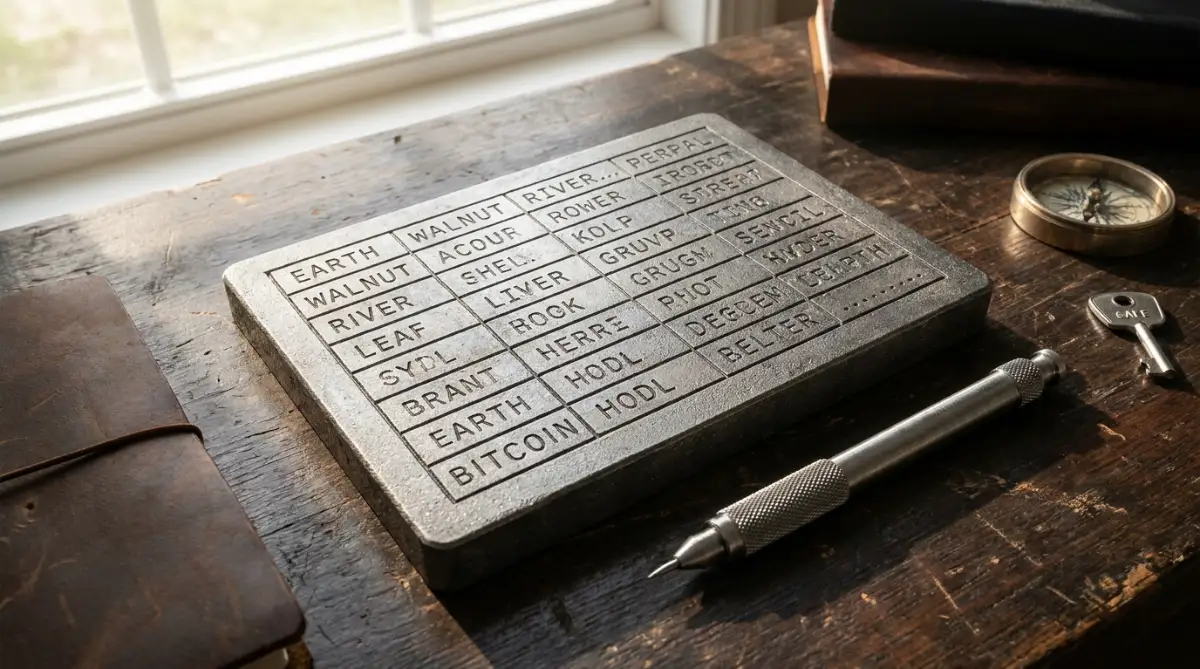
Phishing the "Unphishable"
A cold wallet is great because it doesn't talk to the internet. But you do. Hackers spend millions to make you feel scared or rushed.
You might get an email saying, "Your wallet has been blocked! Enter your seed phrase here to fix it." A real wallet company will NEVER ask for your seed phrase. They don't need it.
They might create a fake version of the wallet software that looks exactly like the real one. When you type your words into your computer, the hacker sees them instantly. Always remember: Your seed phrase should only ever be typed into the device itself, never on a keyboard.
Using Your Cold Wallet Like a Pro
If you want to stay safe, treat your crypto like a real physical vault. You wouldn't open your bank vault in the middle of a crowded park. Don't use your hardware wallet on a public Wi-Fi or a computer you don't trust.
Think about using a "burner" wallet. Keep a small amount of money on a phone app for daily use. Keep the bulk of your savings on the cold wallet. Don't touch the cold wallet unless you absolutely have to.
The less you use the device, the fewer chances there are for something to go wrong. Security is about reducing the number of doors a thief can try to open. By staying quiet and being careful, you make yourself a very hard target.
A Quick Action Guide for Today
- Check your device for physical damage. Look for cracks or signs of glue.
- Move your seed phrase to a safe, private location. No photos, no cloud storage.
- Check for a firmware update. Only use the official software.
- Set up a passphrase if your device supports it. This adds a huge layer of safety.
- Clear your browser history. Some sites can track that you visited a wallet page.
Want to see exactly how to set up your device safely step-by-step without making costly errors? Watch this short, helpful video below, and then keep reading to uncover the advanced security tricks that even the pros use!
Protecting your crypto is not a one-time job. It is a mindset. You have the tools to be safe, but you must be the one to use them. Don't wait until you see a zero on your screen to start caring about these hidden gaps.
The world of digital money is amazing, but it requires a new kind of responsibility. By understanding these silent risks, you are already safer than most people. You are taking the right steps to guard your future and your peace of mind.
Stay alert, stay updated, and never trust a "friendly" message asking for your secret words. Your keys, your crypto. Your safety, your responsibility.
Advanced Fortress Techniques for the Modern Investor
Building a basic defense is just the start of your security journey. If you want to truly protect your digital wealth, you need to think like a professional security auditor. You have to move beyond just hiding your device and start looking at how data moves through your system.
One of the most powerful secrets used by experts is the Air-Gap Philosophy. This means your private keys never, ever touch a device that has a Wi-Fi or Bluetooth connection. Some high-end hardware wallets use QR codes or microSD cards to move data.
By doing this, you create a physical wall that hackers cannot jump over. It is like a submarine that stays in deep water and never surfaces to the air. If the data stays in the submarine, the pirates on the surface can never see it.
You should also look into Multi-Signature (Multi-sig) Wallets. This is like a bank vault that requires three different keys from three different people to open. You can set up a system where you need two out of three keys to move any money.
One key could be on your main hardware wallet. The second could be on a backup device in a safe deposit box. The third could be a mobile wallet with extra security. This prevents a single point of failure.
Even if a thief steals one device, they still cannot take your money. They would need to find your other hidden keys at the same time. This level of planning is exactly how large funds protect millions of dollars in assets.
Understanding these complex systems is very similar to the ultimate beginner's blueprint to decoding term life coverage terminology. Both require you to learn a new language to protect your family's financial future. Once you master the basics, the fear starts to fade away.
I also suggest you start Verifying Hardware Checksums. Every time you download a wallet app, the maker provides a "hash" or a code. You can use simple tools to check if the file you downloaded matches that code.
If the codes are different, it means someone has changed the software to steal your keys. It only takes two minutes to check, but it can save your entire life savings. Professional organizations like the Cybersecurity & Infrastructure Security Agency (CISA) often remind us that verification is our best shield.

The Emotional Traps and Psychological Pitfalls
We often worry about the technology, but we forget about our own human emotions. Hackers are masters at using fear and greed to make us do something we normally wouldn't. They create a sense of urgency that forces us to move too fast.
Imagine receiving a message that says your wallet is under attack right now. You panic and click a link to "freeze" your funds. In that moment of fear, you might accidentally give your secret words to a fake website. Panic is the hacker's best friend.
I have talked to many people who lost everything because they were trying to be "helpful" on social media. They joined a Discord group or a Telegram channel to ask a simple question. A "Support Agent" with a friendly profile picture sent them a direct message.
This person seemed so kind and knowledgeable. They sent a link to a "Security Tool" that needed the user's seed phrase to run a diagnostic. This is a heart-wrenching mistake that happens every day.
A real company will never send you a private message first. They will never ask you to "verify" your wallet on a random website. If you find yourself feeling rushed or scared, stop everything. Take a walk, drink some water, and talk to a trusted friend.
Another subtle danger is the "Check My Balance" habit. If you constantly connect your hardware wallet to different portfolio tracking websites, you are leaving a digital trail. You are telling the world exactly how much you have and where it is.
Thieves can use this data to target you specifically. They might send "Dusting Attacks" to your address. These are tiny amounts of coins that help them track who you are and who you send money to. Privacy is the highest form of security.
The Invisible Risk of Address Poisoning
Hackers are getting more clever with a trick called Address Poisoning. They watch the blockchain and see when you send money to a friend. Then, they create a fake address that looks almost exactly like your friend's address.
They send a tiny amount of worthless coins to your wallet from this fake address. Now, when you go to your transaction history to copy your friend's address again, you might copy the hacker's address by mistake. They are banking on your laziness.
Always double-check every single character of an address before you hit "Send." Never just look at the first four and last four digits. Hackers can generate millions of addresses until they find one that matches yours at both ends.
This is a physical and mental test. You have to be perfect every time. If you send money to the wrong place, it is gone forever. There is no "Undo" button on the blockchain.
The 4-4 Rule is Dead
For years, crypto influencers told people to "just check the first 4 and last 4 letters of the wallet address." Hackers built software that generates thousands of fake addresses per second to perfectly match your start and end characters. Pro Advice: You now need to verify at least the first 6, the middle 4, and the last 6 characters before hitting send.
Moving Forward with Absolute Confidence
You have spent a lot of time learning about the dark corners of the crypto world. It can feel scary at first, but knowledge is what keeps the shadows away. You are no longer a target; you are an informed guardian of your own wealth.
Start today by auditing your physical security. Is your seed phrase in a place where a fire or a flood could destroy it? If so, move it to a metal plate or a high-quality fireproof safe. Your future self will thank you for this small effort.
Check your wallet software right now. Is it the latest version? If not, download the update from the official source only. Remember to never, ever type your words into your computer keyboard.
We are living in an incredible time where we can control our own money. But this freedom comes with a price. That price is constant vigilance. You are the CEO, the security guard, and the vault manager of your own bank.
You have the tools to win this battle. By following these steps, you are making it almost impossible for a hacker to reach your funds. You are building a wall of logic and technology that will stand for a long time.
Take a deep breath and feel the peace that comes with being prepared. You have done the hard work of learning the truth. Now, go out and enjoy the benefits of the digital age with a clear mind and a safe wallet.
The journey of an investor is full of challenges, but you are now ready for whatever comes next. Stay safe, stay smart, and keep your keys hidden. Your digital sovereignty is worth the effort.
Taking these extra security steps used to feel like a huge burden to me, but now I finally sleep peacefully knowing my hard-earned money is truly locked down. You have already done the hardest part by choosing to educate yourself today. Take just ten minutes this evening to check your backups and update your device, and you will feel an amazing sense of relief.
Disclaimer: The information provided in this article is for educational and informational purposes only. Cryptocurrency investments and security practices involve significant risks. We are not financial advisors or cybersecurity professionals. Always perform your own research and consult with a qualified expert before making major financial decisions or changing your security protocols. Any action you take based on this content is at your own risk.