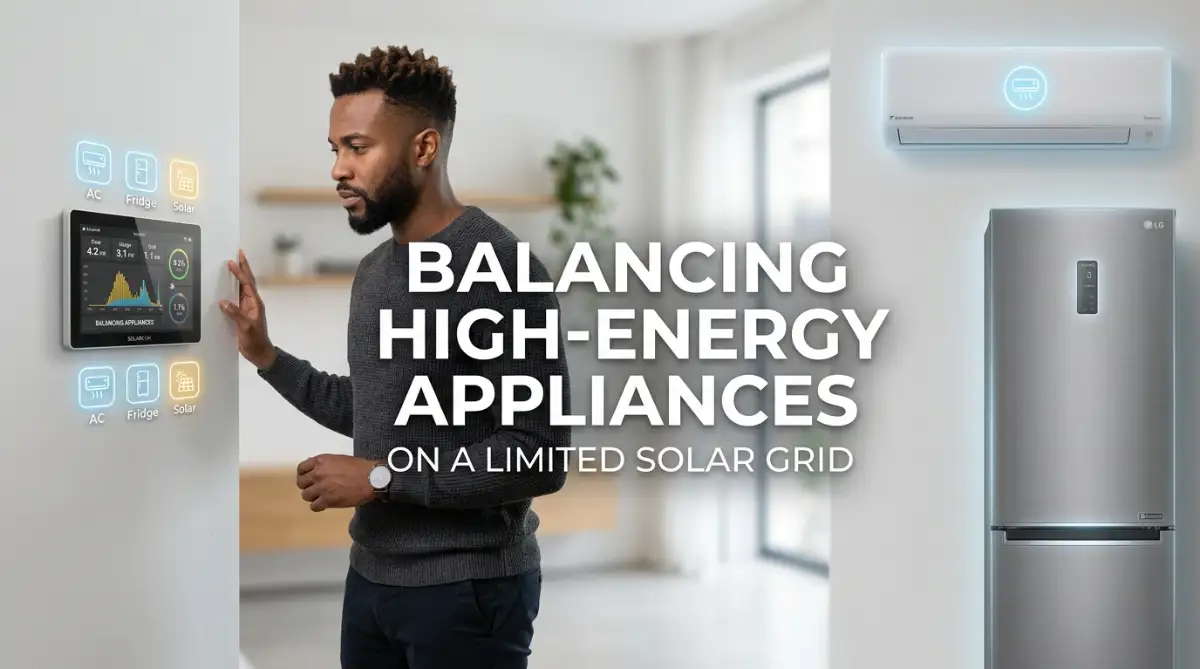
The Frustrating Reality of Shrinking Solar Energy Returns
You spent thousands of dollars on solar panels, completely expecting your electric bill to disappear. So why did you just get a massive utility bill in the mail this month? I felt completely scammed when this happened to me last summer. But before you call the installation company and start yelling, let me show you the hidden, invisible energy thieves on your roof that are quietly stealing your free electricity right now.
Imagine opening your monthly electricity bill, fully expecting to see a balance of zero. You invested heavily in a beautiful residential solar system, right? But instead, your heart sinks as you stare at an unexpected charge that makes absolutely no sense.
You walk outside, look up at your roof, and everything seems perfectly fine. The sun is shining brightly, the panels are sitting exactly where they were installed, and there are no visible warning lights flashing.
So, where is all your expensive energy going?
This exact scenario is playing out in thousands of homes right now. People assume that once a solar grid is installed, it runs perfectly on autopilot forever. We easily forget that these highly sensitive photovoltaic cells require specific conditions to perform at their peak.
When your energy production slowly drops month after month, it usually is not a massive hardware failure. Instead, it is a series of tiny, invisible habits and oversights that silently eat away at your power generation.
The good news is that you do not need an advanced engineering degree to figure this out. Most of these energy-draining culprits are incredibly common and surprisingly easy to fix. Let us explore exactly what is happening on your roof and how you can reclaim every single watt of power you deserve.
Quick Summary: Reclaim Your Lost Power
- Wash the Glass: Rain does not wash away sticky tree sap and pollen. You need to gently wash the glass twice a year.
- Track the Shadows: Watch out for growing trees! A tiny shadow on one panel can shut down your entire roof's energy flow.
- Cool the Brain: Make sure your outdoor inverter box has plenty of shade and airflow. If it gets too hot, it stops making power.
- Kill Phantom Loads: Unplug your TVs and gaming consoles when not in use. They are secretly eating your solar energy all day long.
 The "Windshield Effect" and Invisible Power Thieves
When we talk about panel efficiency, we have to start with the most common offender hiding in plain sight. Many homeowners fall victim to the myth of the "self-cleaning" solar panel.
Sales teams often mention that rainwater is enough to wash away dirt. While a heavy downpour certainly helps, it rarely does a perfect job.
Think about your car windshield after a light rain storm. The water usually leaves behind a sticky film of dust, water spots, and grime. The exact same thing happens to the glass covering your solar cells.
The Problem With Micro-Debris
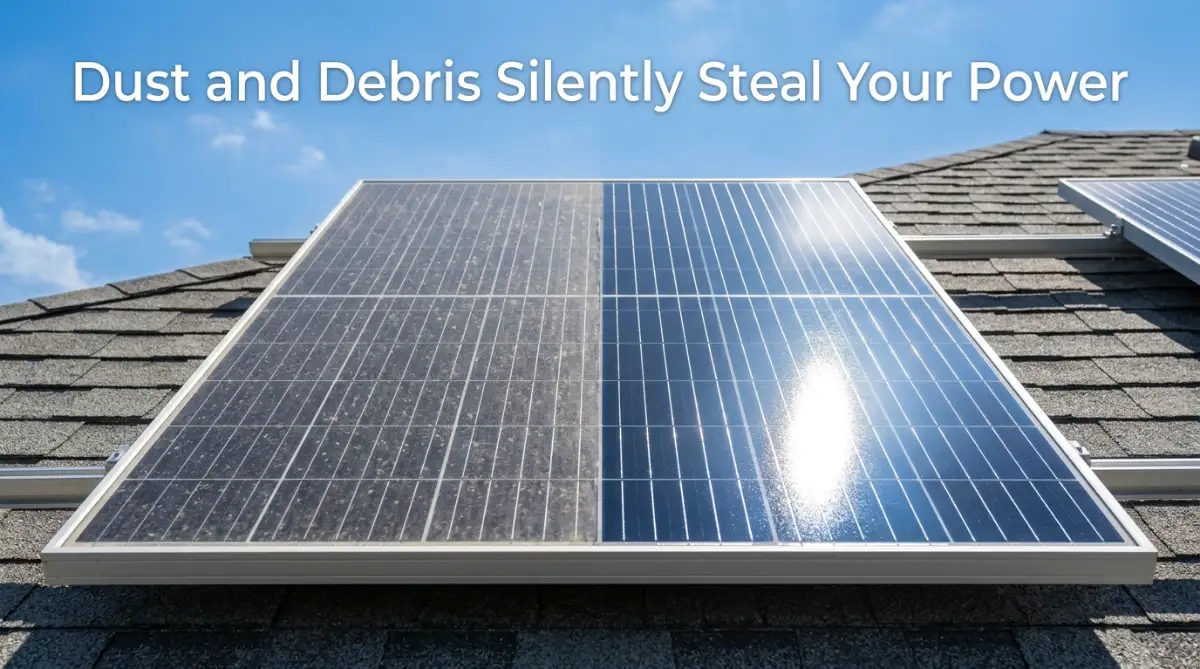
Over time, an invisible layer of micro-debris builds up on your system. This includes fine road dust, sticky tree sap, agricultural pollen, and even industrial smog.
To the naked eye from ground level, your panels might look reasonably clean. However, this microscopic film acts like a pair of dark sunglasses blocking the sun.
When sunlight hits this layer of grime, the light scatters instead of penetrating directly into the silicon cells. This scattering effect can secretly reduce your energy output by 15% to 25% over a few dry months.
How to Reclaim Your Lost Sunlight
If you are still unsure about the safest way to remove stubborn grime without voiding your warranty, watch this quick DIY guide. It shows you the exact tools and gentle scrubbing techniques you need to use to clean your panels perfectly without causing any expensive damage.
You need to establish a smart, safe observation routine. Take a pair of binoculars and inspect your roof once a month from a safe distance. Look for dull, matte patches on the glass instead of a sharp, mirror-like reflection.
If you live in an area with high pollen counts or near a busy dirt road, you cannot rely on rain alone. You will need to gently rinse the panels using a soft, non-abrasive method.
Never use harsh chemicals or high-pressure power washers. These aggressive methods can easily strip away the delicate anti-reflective coating on the glass, causing permanent damage to your efficiency. 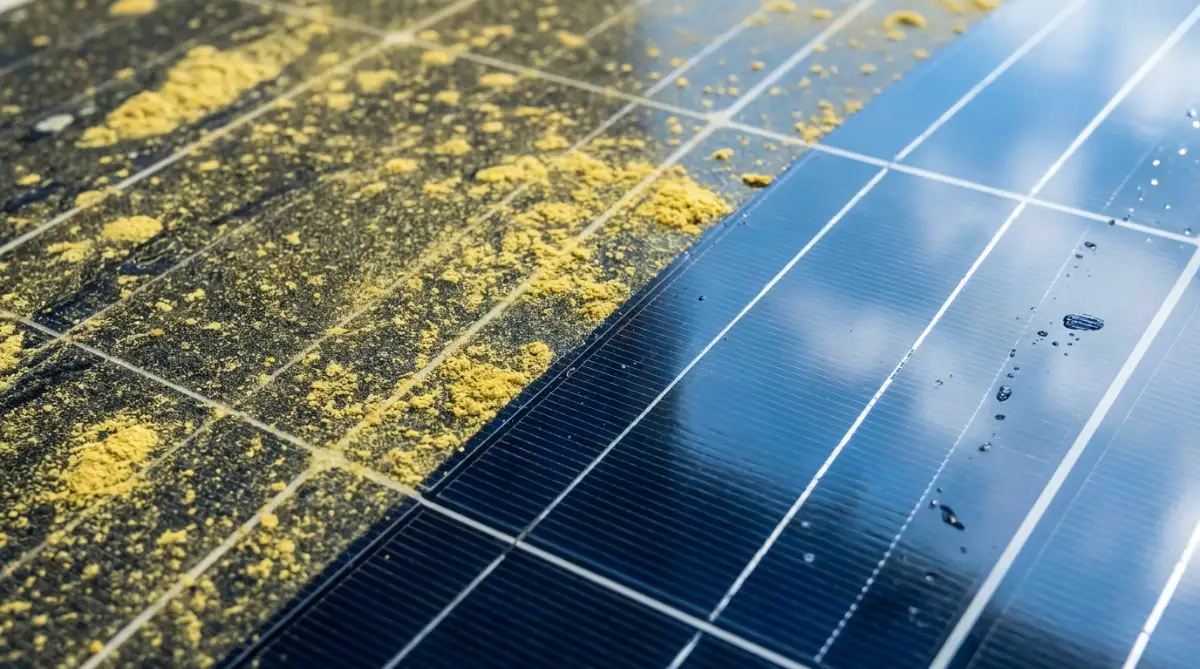
The "Garden Hose" Phenomenon of Micro-Shading
Let us move on to a structural issue that confuses almost every new solar owner. You might think that if a shadow covers just 10% of your panel array, you only lose 10% of your power.
Unfortunately, standard string inverter systems do not work like that at all. They operate exactly like a garden hose carrying water.
If you step on a garden hose, the water flow stops completely for the entire hose, not just the part you stepped on. Solar panels wired in a series behave in this exact same way.
How Tiny Shadows Cause Massive Blackouts
If a single chimney shadow, an overgrown tree branch, or even a thick layer of bird droppings covers just one or two solar cells, the entire string suffers. The energy output of the entire row drops to match the performance of that single shaded cell.
This is a massive, silent mistake that drains residential solar panel efficiency every single day. Homeowners often plant small trees near their house, forgetting how tall they will eventually grow.
Suddenly, a beautiful oak tree is casting a long, thin shadow across your roof right during peak sunlight hours. You might not even notice it unless you physically watch the shadows move across your roof throughout the afternoon.
Your Action Plan for Uninterrupted Sun
Start by doing a physical shadow audit this weekend. Step outside three times during the day: once in the morning, once at solar noon, and once in the late afternoon.
Track exactly where the shadows fall on your roof. Are your neighbor's new roof extensions blocking your afternoon sun? Have your own roof vents suddenly become an obstacle?
If trees are the problem, schedule regular pruning to keep the canopy well away from your solar window. If the shading is completely unavoidable due to architectural changes, you might need to consult an expert about adding micro-inverters.
Pro Tip: Micro-inverters attach to each individual panel. They allow every single panel to operate independently, meaning a shadow on one corner will no longer shut down your entire roof.
Myth vs. Reality: The Shadow Problem
- The Myth: "If a shadow covers 10% of my panel, I only lose 10% of my power."
- The Reality: If you have an old-school string inverter, a tiny shadow from a neighbor's chimney covering just one single panel can drop the power of the entire row by up to 50%! It works like stepping on a garden hose—the flow stops for everything behind it.
The Overheated Brain of Your Solar Operation
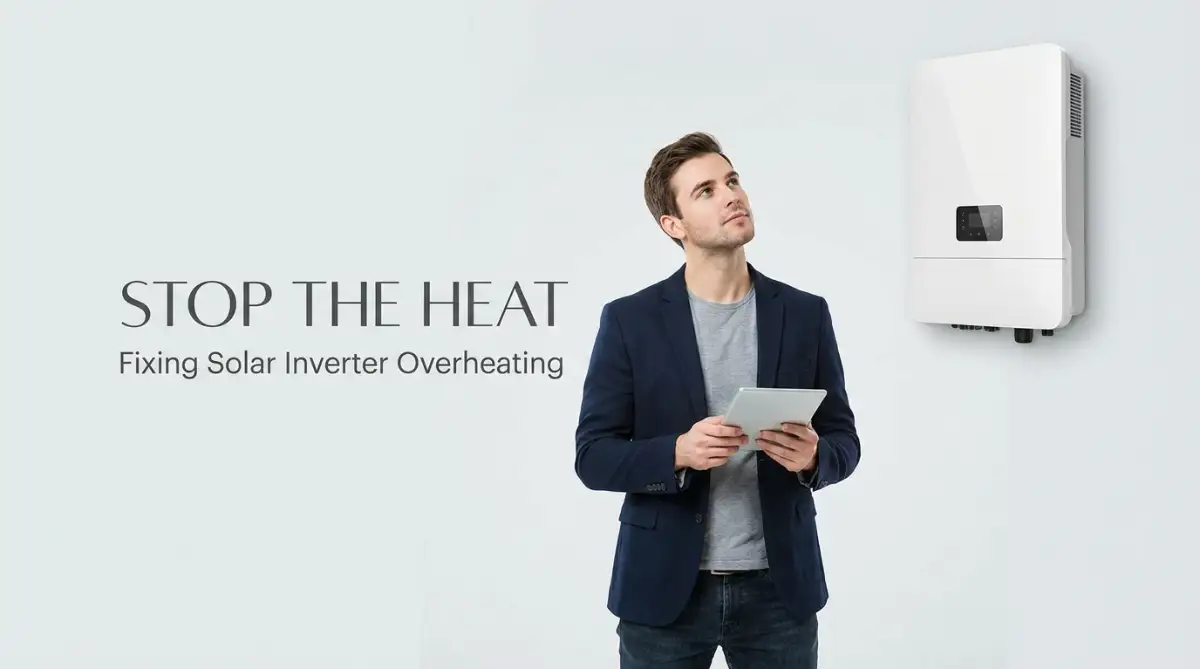
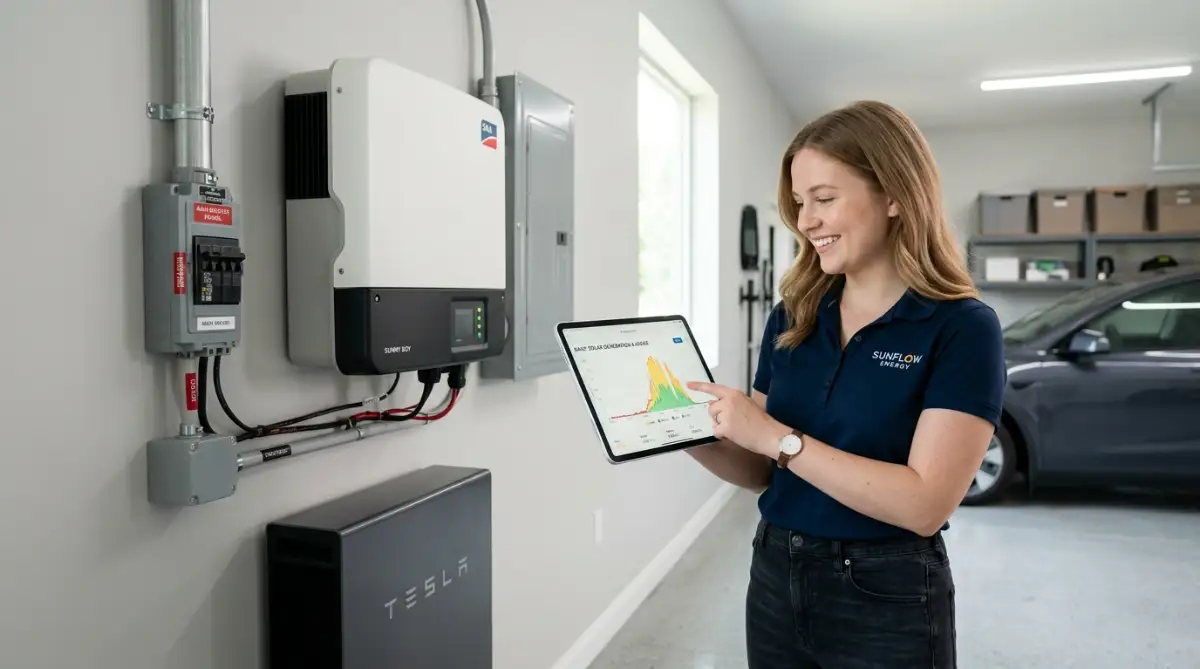
We spend so much time looking up at the roof that we completely ignore the most sensitive piece of equipment in the house. Your solar inverter is the absolute brain of your entire energy setup.
The inverter has a massive responsibility. It takes the wild, raw DC electricity generated by the sun and carefully converts it into the smooth AC power your television and refrigerator use.
This conversion process requires massive amounts of computing and physical energy. As a result, the inverter naturally generates a significant amount of heat while working.
When Heat Becomes the Enemy
Electronic components absolutely hate extreme temperatures. If your inverter gets too hot, it does something called "thermal clipping."
To protect its internal circuits from melting down, the inverter intentionally slows down its processing speed. It purposely reduces your energy production just to cool itself off.
This is a terrible cycle. On the brightest, hottest days when your panels are producing the maximum amount of energy, your overheated inverter might be throwing that free power straight into the garbage.
Where is your inverter installed right now? Many builders place them on the exterior wall of a garage facing direct afternoon sunlight. This is a massive mistake that drains your system's potential silently.
Creating a Healthy Environment for Your Hardware
Go inspect your inverter setup today. Place your hand near the metal casing during peak afternoon hours. If it feels painfully hot to the touch, you are definitely losing valuable electricity.
You need to prioritize airflow and shade for this essential machine. If it is mounted outside, consider building a small, ventilated wooden shade cover to block direct sunlight.
Make sure there is at least two feet of empty space around the entire unit. Do not stack boxes, gardening tools, or bicycles directly against the inverter, as this traps the exhausting heat. A cool, well-ventilated inverter will always give you a much higher energy yield.
The Danger of "Install and Forget" Monitoring
The final silent mistake we need to discuss is purely psychological. When a family first gets solar installed, they check their mobile tracking app five times a day.
They celebrate every kilowatt generated. But after a few months, life gets busy. The app gets pushed to the back screen of the phone, and they completely stop checking their daily data.
Why Ignorance is Expensive
This "set it and forget it" mindset is incredibly dangerous for your energy independence. Solar systems rarely break down with loud alarms or flashing red lights.
Instead, parts degrade slowly. A tiny wiring fault might reduce your output by 5% in March, then 10% in April, and 20% in May. Because you stopped looking at the daily graphs, you completely miss the downward trend.
You only discover the problem three months later when the utility company sends a massive grid-usage bill. By then, hundreds of dollars of potential energy have already vanished into thin air.
Typical Homeowner Immediate Consequence Long-Term Result
Habit
Ignoring daily energy app Missing early warning signs of hardware faults Massive surprise grid bills
Skipping seasonal cleaning Pollen bakes into the panel glass Permanent 15% drop in maximum yield
Overlooking tree growth Micro-shading shuts down entire panel string sSystem underperforms during peak hours
Building a Bulletproof Monitoring Habit
You must treat your solar tracking app like your personal bank account. You wouldn't go months without checking your bank balance, would you?
Set a specific, recurring alarm on your phone for every Sunday evening. Take exactly two minutes to open your energy app and look at the weekly production graph.
Compare this week's curve to the exact same week from the previous month. Are the peaks noticeably lower despite having clear, sunny weather?
If you spot a strange dip in the graph early, you can take immediate action. You can wash the panels, trim a tree, or call a technician before a minor hiccup turns into an expensive system failure. Staying actively involved in your energy data is the ultimate secret to long-term solar success.
Expert Strategies to Squeeze Every Drop of Power from Your System
Now that we understand how invisible dust and tiny shadows steal your energy, it is time to level up your approach. You do not have to be an electrical engineer to optimize your home power grid.
In fact, the most effective strategies for maximizing your daily solar yield rely on simple, everyday habits. We are going to look at how your system interacts with the environment around it.
By making a few smart adjustments to your daily routine, you can easily recover that lost power. Let us look at some advanced but highly practical secrets that industry insiders use to keep their panels running perfectly.
The Myth of Heat and the Power of Airflow
Most homeowners completely misunderstand how solar panels actually generate electricity. It is incredibly common to assume that a scorching hot summer day will produce the most power.
This is actually a massive misconception that leads to false expectations. Solar panels are powered by light, not by heat.
Just like your smartphone or laptop, electronic components absolutely hate extreme temperatures. As the physical temperature of your roof rises, the electrical efficiency of your solar cells drops significantly.
Think about a marathon runner. They perform best on a bright, cool morning, not in the middle of a boiling hot afternoon. When your panels bake in the summer sun, they experience a natural drop in power output.
You can read more about how temperature changes impact photovoltaic efficiency through the Department of Energy’s research. Since we cannot control the weather, we have to focus on what we can control: airflow.
If you are planning to add more panels in the future, always insist on a mounting system that leaves a generous gap between the roof and the glass. That empty space acts as a natural cooling channel. The wind sweeps underneath the array, carrying away excess heat and keeping your system running at maximum capacity.
Mastering the Art of "Solar Load Shifting"
Here is a brilliant secret that has absolutely nothing to do with the panels themselves. It is all about timing your heaviest energy usage to perfectly match your highest production hours.
Many families run their dishwashers, laundry machines, and pool pumps late in the evening. By that time, the sun has already gone down, and your panels are completely asleep.
If you do not have a massive battery backup system, you are forced to buy expensive energy directly from the utility grid. Meanwhile, all the free energy your roof generated at noon was sent away because you were not using it.
To fix this, you need to practice solar load shifting. Set your heavy appliances on a delay timer to run right in the middle of the day. Let your washing machine run at 1 PM when your roof is producing more energy than your house knows what to do with.
Managing your home energy flow is just like managing your digital safety. Just as you would carefully avoid the hidden dangers of browsing without antivirus protection by setting up automated security, you must set up automated appliance schedules to protect your wallet.
Defeating the Silent "Phantom Loads"
Even when your panels are working perfectly, it might feel like your efficiency is dropping. Sometimes, the problem is not on the roof at all.
Instead, the culprit is hiding right inside your living room. Modern homes are filled with smart TVs, gaming consoles, and microwave clocks that constantly draw power, even when turned off.
These are called "phantom loads," and they silently eat away at the solar power you generate. Over an entire month, these resting devices can consume a massive chunk of your overall energy yield. 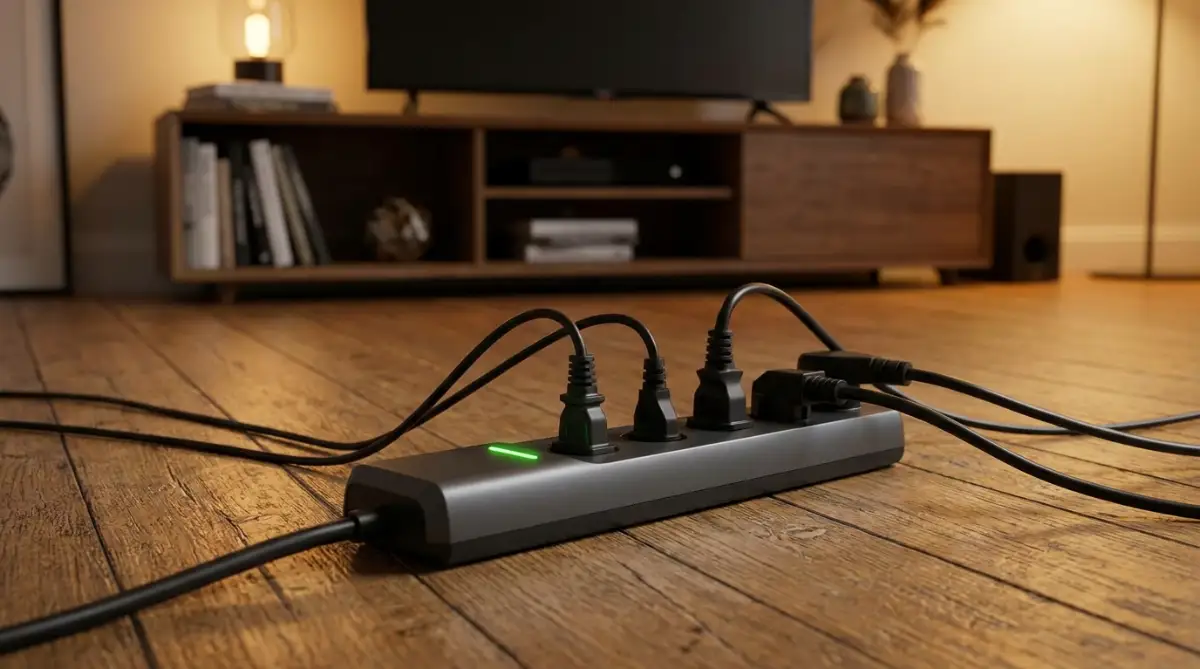
Take a walk around your house and plug your entertainment centers into smart power strips. These strips automatically cut off the electrical current entirely when the devices are not in use. By reducing your home’s resting energy demand, your solar panels will suddenly feel much more powerful.
 The Heartbreaking Traps of DIY Solar Maintenance
When families finally notice a drop in their energy production, they naturally want to fix it immediately. This enthusiasm is great, but it often leads to disastrous, expensive mistakes.
Solar panels look like ordinary windows, so people treat them like ordinary windows. This is the exact moment when good intentions cause permanent damage to a very expensive investment.
Let us talk about the dangerous pitfalls you must avoid at all costs. These are the completely avoidable errors that will immediately void your warranty and destroy your equipment.
The Pressure Washer Catastrophe
Imagine looking up at your dusty roof and thinking a quick blast from a heavy-duty pressure washer will solve everything. This is easily the most common and destructive mistake homeowners make.
Your solar panels are covered in a highly engineered, microscopic anti-reflective coating. This invisible layer is designed to pull sunlight directly into the silicon cells instead of letting it bounce off into the sky.
When you hit that glass with a high-pressure water jet, you literally strip that delicate coating right off. Once that coating is gone, it is gone forever, and your panels will permanently lose a massive percentage of their efficiency.
I actually learned this lesson the hard way during my first year of being a solar owner. I thought I was being incredibly smart by using my new pressure washer to quickly blast away some sticky tree sap, but I actually ruined the protective coating on two of my panels. Now, I only use a highly soft sponge and a regular garden hose early in the morning when the glass is cool, which safely keeps my energy production at its absolute peak.
This situation is very similar to how people treat their own bodies when trying to get quick results. Just as you should clearly avoid these natural body detox mistakes for clearer skin by staying away from harsh, unproven chemical scrubs, you must keep harsh treatments far away from your solar glass.
Always use a regular garden hose with low pressure. If you need to scrub away stubborn bird droppings, use a remarkably soft, non-abrasive sponge attached to an extension pole.
The Hidden Danger of Micro-Cracks
Here is a scenario that breaks the hearts of solar technicians everywhere. A homeowner climbs onto their roof to clean out their gutters or sweep away some fallen leaves.
To reach a difficult spot, they casually step right onto the corner of a solar panel. The glass does not shatter, and it makes no sound, so they assume everything is perfectly fine.
However, beneath that tempered glass, the delicate silicon cells are incredibly fragile. The weight of a human foot instantly creates invisible micro-cracks inside the electrical pathways.
You will not see the damage with your naked eye, but your energy production will plummet instantly. The National Renewable Energy Laboratory frequently studies PV degradation, and invisible impact damage remains a leading cause of sudden system failure.
Never, under any circumstances, walk on, lean on, or place heavy tools on top of your solar array. Treat them as if they were made of the thinnest, most fragile ice.
Ignoring the Warning Signs of Inverter Failure
Another major pitfall is completely ignoring the physical hardware attached to the side of your house. We discussed keeping the inverter cool, but you also need to listen to it.
A healthy inverter hums quietly and displays a solid green indicator light. If you start hearing strange clicking noises, loud buzzing, or see a flashing yellow light, do not ignore it.
Many people assume the system will just fix itself or wait for their annual utility check to see if anything is wrong. By the time they realize the inverter was failing, they have lost months of potential free electricity.
My Personal Inverter Warning Cheat Sheet:
If you look at the box on the side of your house (the inverter) and see something weird, here is what it usually means:
- Solid Green Light: Everything is perfect. Go watch TV for free.
- Flashing Green Light: Usually means it is powering up or down (common at sunrise/sunset).
- Yellow/Orange Light: Warning! The inverter might be overheating and slowing down your power.
- Solid Red Light: Complete system fault. Call your installer immediately!
Quick "Do's and Don'ts" for System Safety
To keep things perfectly clear, here is a quick safety checklist for every solar owner:
- DO visually inspect your panels from the ground using binoculars.
- DON'T use abrasive sponges, bleach, or harsh window cleaning chemicals on the glass.
- DO check your mobile monitoring app at least once a week to catch sudden drops in power.
- DON'T attempt to open the inverter box or mess with the thick DC wiring yourself.
- DO hire a certified professional if you notice a heavy buildup of sap or industrial grime that a simple hose cannot remove.
By avoiding these completely preventable traps, you guarantee that your system will easily survive its expected lifespan without any sudden, expensive surprises.
Your Personal Action Plan for Unstoppable Energy
Taking control of your home’s energy production does not have to be a stressful or overwhelming experience. You already did the hardest part by making the smart financial decision to install renewable energy in the first place.
Now, it is simply about protecting that investment with a few minutes of mindful observation each month. You hold the absolute power to keep your system running beautifully.
When you know exactly where the shadows fall, how much dust is on the glass, and what your inverter sounds like, nothing can catch you by surprise. You become an active participant in your home’s energy ecosystem.
Your Weekend Power Checklist
Do not wait for your next massive utility bill to take action. Start building better habits this weekend with this simple, actionable plan:
- The Shadow Audit: Walk outside at noon and again at 4 PM. Look closely at your roof and identify any new tree branches or objects casting long shadows across your panels.
- The App Check-in: Open your solar tracking application. Compare your energy generation from today with the same day last month. Look for any unexplained downward trends.
- The Hardware Walkby: Walk over to your inverter during the hottest part of the afternoon. Ensure it is free from clutter, well-ventilated, and showing a healthy green light.
- The Gentle Rinse: If it has not rained heavily in several weeks, wait for the early, cool morning hours. Give your panels a gentle spray with a standard garden hose to wash away the invisible pollen and dust.
By following this easy routine, you eliminate the silent mistakes that drain your energy. You will finally get to experience that amazing feeling of opening a utility bill and seeing absolutely zero charges.
Enjoy your clean, abundant, and perfectly optimized solar energy! You have earned every single watt of it.
Taking care of your home power system does not have to be a scary or confusing chore. Once I figured out these simple daily and monthly routines, tracking my energy production actually became a really fun hobby for me. You have already made the amazing choice to go solar, so take ten minutes this weekend to do a quick visual check and confidently reclaim your free energy!
Disclaimer: The information provided in this article is for educational and informational purposes only and does not constitute professional electrical or engineering advice. Always consult with a certified solar technician or licensed electrician before performing any physical maintenance, repairs, or structural modifications to your residential solar panel system. Improper handling of solar equipment carries a risk of high-voltage electric shock and may void your manufacturer warranty.