
The Sudden Shock: When Your Career Disappears Without Warning
You grab your morning coffee, sit at your desk, and suddenly HR calls you into a quick meeting. Ten minutes later, you are carrying your personal items in a cardboard box, totally shocked. They say you are fired because of "at-will employment," making it sound like you have zero rights. The truth is, companies use this confusing phrase to scare people, but you actually have massive legal protections they hope you never find out about. Let me show you how to fight back and protect your paycheck.
By 10 AM, he was packing up his desk into a small cardboard box. He received no prior warning. There were no bad performance reviews to point to.
He was simply handed a final paycheck and told his services were no longer needed. The HR manager casually threw around the term "at-will employment" as if it were an unbreakable magic spell.
This exact scenario plays out across the country every single day. Hardworking people lose their primary source of income in the absolute blink of an eye.
Many employees simply walk out the door feeling completely powerless. They believe the corporate system is entirely stacked against them and that employers hold absolute, unchecked power.
I remember the day I was called into a surprise afternoon meeting and handed a cardboard box without a single warning. I felt totally crushed and spent weeks thinking I was a failure because I did not understand my own rights. Looking back, the scariest part was not just losing my paycheck, but realizing how completely clueless I was about how the system actually works.
But I am here to tell you that the popular narrative is deeply flawed. You are not just a disposable piece of machinery in a corporate game.
You have highly specific protections built into the law. Understanding these exact boundaries can instantly shift your mindset from helpless panic to empowered action.
Let us break down exactly what employers can and cannot do. It is time to clear away the fog of confusion.
Before You Read: 4 Ways to Protect Your Paycheck
- "At-will" does not mean your boss can break federal discrimination laws.
- You are never legally forced to give two weeks' notice before quitting a toxic job.
- Send "clarification emails" after sketchy verbal meetings to trap bad managers in writing.
- Never sign a severance package on the spot—always take it home for at least 24 hours.
Decoding the At-Will Illusion: What It Actually Means
Let us start by stripping away the complicated legal jargon. We need to understand the core definition before we can spot the lies.
At its very core, at-will employment means an employer can terminate your job at any time, for any reason, without giving you prior notice.
It sounds incredibly scary when you read it out loud. It makes it seem like your boss is an untouchable dictator who can ruin your day on a whim.
However, there is a massive catch that companies conveniently forget to mention. They can fire you for a good reason, a silly reason, or no reason at all—but they cannot fire you for an illegal reason.
This one little distinction changes the entire game. The phrase "at-will" is not a free pass for companies to break federal or state laws.
If they cross certain lines, that termination suddenly transforms into wrongful termination. And when that happens, the law steps in to protect you.
If you are still a bit confused about how at-will employment actually works, watch this quick video below to see real-life examples of what bosses can and cannot do. After watching, keep reading to find out how to easily build a bulletproof safety net around your current job.
The Real-Life Comparison
Think of at-will employment like renting a month-to-month apartment without a fixed lease.
The landlord can ask you to leave with proper notice just because they want to renovate. That is their right as the property owner.
But the landlord absolutely cannot kick you out because of your race, your religion, or because you reported them for unsafe living conditions.
Your job works in a very similar way. The company owns the business, but they must play by strict societal rules.
Shattering the Most Common Workplace Myths
The biggest enemy of a modern employee is bad information. Workplace rumors spread fast, and people often accept them as undeniable facts.
Let us tear down the most common myths that keep employees living in constant fear.
Myth 1: They Can Fire You for Absolutely Anything
This is the most widespread lie in the corporate world. Yes, your boss can fire you because they do not like the color of your shoes.
They can even fire you because you root for a rival sports team. These are petty reasons, but they are technically legal.
However, they cannot fire you based on protected characteristics. Federal laws strictly prohibit discrimination.
If you are let go because of your age, race, gender, religion, or a physical disability, the at-will rule immediately goes out the window.
Expert Insight: The Paper Trail Strategy
If you ever suspect you are being targeted for discriminatory reasons, start documenting everything immediately. Forward important emails to your personal account. Write down the dates, times, and exact quotes of inappropriate comments. A strong paper trail is a bad employer's worst nightmare.
Quick Q&A: Saving Emails Safely
Q: Can I forward my boss's shady emails to my personal Gmail?
A: Yes, but only if they are directly about your schedule, HR issues, or personal performance reviews.
Q: What should I never forward?
A: Never send client lists, trade secrets, or private company financials to your personal email. That can easily get you sued for stealing company property!
Myth 2: You Must Always Give Two Weeks' Notice
We have all been conditioned to believe that quitting without two weeks' notice is a massive legal violation.
People stay in highly toxic, abusive work environments just to fulfill this imaginary legal obligation.
Here is the truth: at-will employment is a two-way street. Just as they can fire you without warning, you have the right to quit without warning.
Giving two weeks' notice is simply a professional courtesy. It helps you maintain a good relationship and secure a positive reference for the future.
But if your workplace is severely damaging your mental health or asking you to do unethical things, you can legally walk out the door right now.
Myth 3: If You Sign an At-Will Agreement, You Lose All Rights
During onboarding, you will likely sign a massive stack of papers. One of those documents will boldly state that your employment is at-will.
Employers often point to this specific signature if you ever try to complain about unfair treatment.
Do not let this intimidate you. Signing that paper does not mean you have signed away your basic human rights.
A company contract can never override federal or state anti-discrimination laws. You cannot legally consent to being treated illegally.
The Hidden Exceptions Every Employee Must Know
Now that we have busted the common myths, we need to look at the powerful legal exceptions.
Most states recognize specific scenarios where the at-will rule simply does not apply. If your situation falls into one of these categories, you hold the winning cards.
Exception 1: The Public Policy Shield
Society relies on good people doing the right thing. The law aggressively protects employees who stand up for the greater good.
Under the public policy exception, your employer cannot fire you for refusing to perform an illegal act.
Imagine you work as an accountant, and your boss orders you to alter the tax documents to hide company profits.
If you refuse to commit this tax fraud and get fired as a result, that is textbook wrongful termination.
This exception also protects you if you take time off for jury duty or file a legitimate workers' compensation claim after getting hurt on the job.
They cannot punish you for exercising a fundamental legal right. Doing so puts them directly in the crosshairs of the justice system.
Exception 2: The Implied Contract
Sometimes, companies make promises without ever printing a formal, signed contract.
They might put specific rules in the company handbook or verbally guarantee your job security during a team meeting.
This creates what the legal world calls an implied contract. It means the company has willingly limited its own ability to fire you at will.
A Practical Example
Let us say your employee handbook clearly states a strict "three-strike policy" for disciplinary actions.
The handbook says an employee will receive a verbal warning, then a written warning, and finally termination.
If your boss fires you for a minor mistake without ever giving you those first two warnings, they have broken their own implied contract.
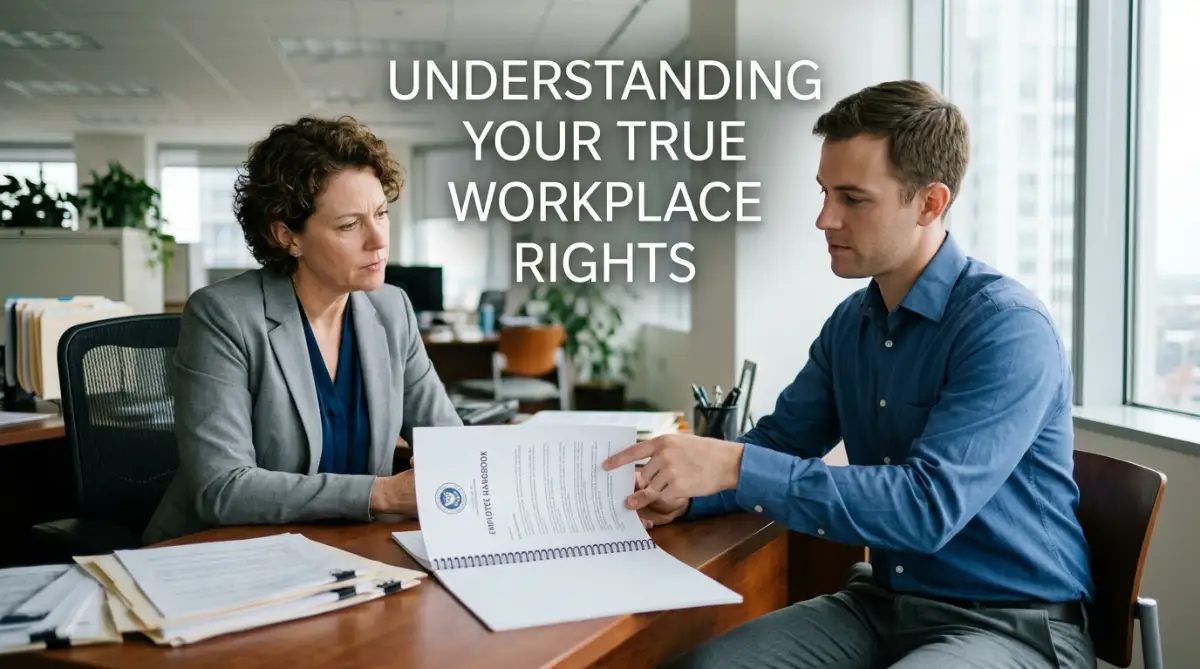
You can use their own written policies against them. Always read your employee handbook cover to cover. It is often packed with hidden protections you never knew existed.
Exception 3: The Covenant of Good Faith and Fair Dealing
This is one of the most interesting and powerful protections available to workers.
A handful of states mandate that employers must act fairly and in good faith when dealing with their employees.
They cannot fire you out of pure malice or to cheat you out of something you rightfully earned.
Imagine a commissioned salesperson who spends six months landing a massive, million-dollar client.
Right before the massive commission check is supposed to be paid out, the company fires the salesperson to avoid paying the bonus.
Under the covenant of good faith, a judge would heavily penalize the company. Firing someone solely to steal their earned benefits is completely unacceptable under this rule.
Quick Comparison: Legal vs. Illegal Firings
To make this completely clear, let us look at a quick side-by-side comparison of different scenarios.
Reason for Termination Is it Legal? Why?
Your boss simply dislikes your personality. Yes Personality conflicts are not protected by law.
You complained to HR about sexual harassment. No This is illegal retaliation for reporting abuse.
The company is downsizing to save money. Yes Business restructuring is a valid reason.
You requested legally mandated medical leave. No Family and Medical Leave laws protect your job.
You were five minutes late to work one time. Yes It is harsh, but lateness is a valid reason.
Understanding these clear distinctions helps you quickly evaluate your own situation. You can separate normal bad management from actual illegal behavior.
The Dark Reality of Workplace Retaliation
We must also talk about the ugly side of office politics. Often, an employee discovers something wrong and tries to fix it through the proper channels.
They report safety violations, unpaid overtime, or hostile behavior to the human resources department.
Suddenly, their work life becomes a living nightmare. Their shifts are cut back. They get passed over for promotions. Finally, they get fired for a fabricated "performance issue."
This is known as workplace retaliation, and it is highly illegal.
Companies know they cannot fire you directly for complaining. So, they try to build a fake case against you to make the termination look completely normal.
They will suddenly start writing you up for minor things they previously ignored. They will set impossible deadlines just to watch you fail.
If you notice a sudden, dramatic shift in how management treats you immediately after you file a complaint, your radar should go off.
You must act fast to protect yourself. Save every positive performance review you have ever received.
Gather evidence of your past successes to prove that this sudden drop in your "performance" is nothing but a manufactured excuse.
Do not let them spin the narrative. You have the power to control your own professional story if you stay vigilant and prepared.
Shielding Your Career: Pro-Level Defense Strategies
Now that we know the hidden rules of at-will employment, it is time to play offense. Knowing your rights is only the first half of the battle.
You actually need a solid, everyday strategy to protect your income and your mental peace. Many workers wait until they are in the hot seat to start defending themselves.
That is like waiting for a storm to hit before fixing a massive hole in your roof. You want to build a bulletproof safety net around your career starting today.
Let us break down a few highly effective habits that smart professionals use to keep bad employers in check. These methods are simple, legal, and surprisingly powerful.
The Art of the "Clarification Email"
Verbal conversations are the absolute breeding ground for workplace manipulation. Shady managers love to give illegal or unethical instructions over the phone.
They do this because there is no physical record of their demands. If things go wrong, it simply becomes your word against theirs.
You can easily shut this down using the clarification email strategy. After any strange or uncomfortable verbal request, send a polite follow-up email immediately.
I used to just nod and agree whenever my old manager gave me weird verbal instructions, which almost got me in huge trouble later on. Now, I make it a strict rule to always send a quick "just to confirm our chat" email, and it is amazing how fast people change their tune when things are forced into writing.
Keep it extremely professional. You might write, "Hi Mark, just to make sure I am on the same page, you want me to process these refunds without the standard client signatures, correct?"
If they reply "yes," you now have hard, undeniable proof of their sketchy request. If they call you back to yell at you, they know they have been caught.
This simple habit stops toxic managers right in their tracks. It creates a natural boundary that forces them to respect your professional limits.
Becoming Your Own Record Keeper
You cannot rely on the human resources department to keep accurate files on your successes. Their main job is to protect the company, not to build a shrine to your achievements.
You must become the chief archivist of your own career. Every time a client sends you a glowing review, save a copy.
If your boss sends a quick message praising your handling of a massive project, take a screenshot. Keep a private, running document of every single positive contribution you make.
Why is this so incredibly important? Because if a company decides to fire you illegally, they will suddenly claim you were a terrible employee.
They will try to build a fake narrative about your poor performance. When you pull out two years' worth of documented praise, their entire defense crumbles.
This is very similar to how people handle personal legal claims. Failing to keep proper records is one of the silent mistakes that can accidentally sabotage your legal rights when things go wrong. Documenting everything gives you the ultimate leverage.
Mastering the Blind Copy (BCC) Strategy
If you ever feel that your job is in serious danger, you need to secure your evidence. Companies will shut off your email access the very second they fire you.
Once you are locked out of the system, all your proof of their bad behavior vanishes forever.
To prevent this, start forwarding highly suspicious emails to your personal email address. Use the Blind Carbon Copy (BCC) feature so you have an exact timestamped replica of the conversation.
A quick word of warning here: Be very careful not to forward confidential client data or company trade secrets.
You only want to forward emails that directly relate to your personal treatment, schedule changes, or inappropriate comments. Understanding the exact boundaries of EEOC guidelines on workplace retaliation can help you know exactly what kind of proof is legally protected.
Always keep your personal defense strictly separated from the company's private business assets.

The Dangerous Traps Employees Walk Right Into
Even with the best intentions, smart people make terrible decisions under extreme stress. Losing a job is an emotional shock to the system.
When humans panic, they look for the fastest way to make the pain stop. Unfortunately, bad employers know exactly how to exploit this panic.
Let us look at the massive traps you need to avoid if you ever find yourself facing an unexpected termination.
Trap 1: Signing the Severance Package Blindly
Imagine you are sitting in a cold conference room. The HR manager slides a thick stack of papers across the table.
They tell you that you are being let go, but they are generously offering you two weeks of extra pay. The catch? You have to sign the document right this second.
They create an intense, high-pressure environment to make you act quickly. This is the biggest red flag in the corporate world.
That document is almost certainly a massive legal waiver. By signing it, you completely give up your right to sue the company for unpaid overtime, discrimination, or wrongful termination.
Never sign anything on the spot. You always have the legal right to take those documents home.
Tell them you need 24 hours to review the paperwork with your family. If the employer refuses and demands an immediate signature, they are hiding something huge.
Walking away from two weeks of pay might sting today. But signing away your right to a massive wrongful termination settlement will haunt you forever.
The 24-Hour Severance Rule
Whenever HR hands you a severance package, follow this exact checklist to stay safe:
- Simply say: "I need to review this at home."
- Do not let them bully you into signing right then and there.
- Have an employment lawyer look over it. Companies often hide sneaky clauses that ban you from working in your own industry for years!
Trap 2: The Social Media Meltdown
We all have an immediate urge to vent when someone treats us terribly. You might want to grab your phone and post a huge rant about your horrible boss on Facebook.
You might even want to expose all the shady things the company is doing behind closed doors. Please, put the phone down and step away from the keyboard.
Venting online can completely destroy your chances of fighting back legally. The company lawyers will immediately take screenshots of your angry posts.
They will use your own words to paint you as a bitter, unstable, and aggressive former employee. They will argue that firing you was completely justified because of your bad attitude.
While some group discussions about working conditions are protected by National Labor Relations Board regulations, a purely personal, insulting rant is not.
Keep your emotions entirely off the internet. Share your anger with a close friend or a professional counselor over a private cup of coffee. Let your legal strategy do the talking for you later.
Trap 3: Treating Human Resources Like a Therapist
This is a harsh reality that every employee must face. Human Resources is a department designed to manage the company's human capital.
Their primary function is to keep the business out of lawsuits. They are not your personal friends, and they are not workplace therapists.
If you go into an HR office and emotionally break down about how much you hate your manager, you are making a huge mistake.
You are simply handing them a playbook on how to manage you out of the company. They will carefully document your emotional state and use it to build a case that you are not a good fit for the team.
If you need to report a real issue, like sexual harassment or unpaid wages, do it in writing. Keep your tone completely emotionless and stick only to the undeniable facts.
Treat every interaction with HR as a formal business negotiation. Keep a polite smile on your face, but always guard your personal feelings.
Your Tomorrow Starts Today: The Empowerment Checklist
We have covered a massive amount of ground today. You now know that the scary "at-will" label is mostly just a corporate scare tactic.
You understand the distinct lines between legal firings and illegal discrimination. More importantly, you know exactly how to document your successes and protect your income.
You no longer have to walk into your office feeling like a disposable number. You have real, heavy-hitting legal protections on your side.
So, what should you do the moment you finish reading this?
First, go find your official employee handbook. Dust it off, open it up, and read the sections on disciplinary actions and termination policies.
Highlight any promises the company made to you about warnings or performance reviews. Remember, those written words form an implied contract that they must honor.
Next, set up a simple, private digital folder on your personal computer. Call it your "Career Success Vault."
Start dropping in those positive client emails and great performance reviews right now. Building this safety net is just as important as long-term strategic estate planning for your family's future.
Finally, take a deep breath and let go of the workplace anxiety. Knowledge truly is power.
When you know the rules of the game better than your own manager, the entire dynamic shifts. You can go to work with genuine confidence, knowing exactly where you stand.
Stand tall, document your wins, and never let a company trick you into giving away your basic human rights. You deserve fairness, respect, and total peace of mind in your career.
Going from feeling totally helpless to actually knowing exactly how to defend myself completely changed my working life. You do not have to live in fear of a sudden HR meeting anymore, so start building your own backup files today and take your power back!
Disclaimer: The information provided in this article is for educational and informational purposes only and does not constitute official legal advice. Employment laws vary significantly by state and country. If you believe your workplace rights have been violated, you should consult with a licensed employment attorney in your local jurisdiction to discuss the specific details of your situation.