The Silent Anxiety in the Modern Coding World
I’ll be honest—the first time I saw a 'no-code' tool build a full app in five minutes, I felt a knot in my stomach. I thought, 'Is this it? Are my years of learning Java and Python totally useless now?' But after spending months actually testing these tools, I found out the truth is a lot less scary and a lot more exciting for real builders like us.
I talk to junior developers every day who feel this exact weight of uncertainty. They wonder if they are studying for a job that won't exist in a few years. It is a scary thought. Imagine the hours spent sweating over a complex algorithm, only to see a "drag-and-drop" tool do something similar in seconds.
But here is the thing: Fear often grows where information is missing. We see the "magic" of low-code, but we don't often see its walls. We hear the marketing hype, but we don't hear the frustrated screams of businesses trying to scale those "simple" tools.
A few years ago, I stared blankly at my monitor watching a new visual builder recreate a login system in thirty seconds—a project that had just taken me three sleepless nights to code from scratch. A cold wave of panic hit my stomach as I seriously wondered if my entire career was about to become obsolete. I actually started looking up totally different career paths that night, feeling like all my hard work learning complex syntax had been a massive waste of time.
The 'Stay Relevant' Cheat Sheet
Before we get into the details, here are the big things you need to remember:
- Don't Fight the Tools: Use low-code for the boring stuff (like forms) so you can spend your time on the hard, cool stuff.
- Architect, Don't Just Type: Focus on learning how whole systems work together, not just memorizing syntax.
- Security is Your Edge: Companies are terrified of leaks; if you know how to keep data safe, you’ll always have a job.
- The Escape Hatch: Always make sure your business has a way to move their code if a tool suddenly changes its prices or shuts down."
Understanding the Great Abstraction: Why Low-Code Exists
To understand why people think programmers are being replaced, we first need to look at what low-code actually is. Low-code is simply a new layer of abstraction. In the early days, people coded with punch cards. Then came Assembly, then C, then Python.
Each step made coding "easier" and more "visual." Low-code is just the next step in that journey. It tries to hide the messy parts of coding behind a clean interface.
Businesses love this idea because they want to save money. They think, "Why hire five senior devs when one manager can drag boxes on a screen?" This is where the myth of the disappearing programmer starts.
The Logic Gap: Where Visual Tools Hit a Wall
I’ve seen this happen firsthand. A client once tried to save $10,000 by using a popular drag-and-drop builder for their inventory system. It looked great for a week. Then, they tried to sync it with their shipping partner's API, and the whole thing just... died. They ended up paying me double to rip it all out and write clean, custom code. The lesson? Speed is great until you need things to actually talk to each other.
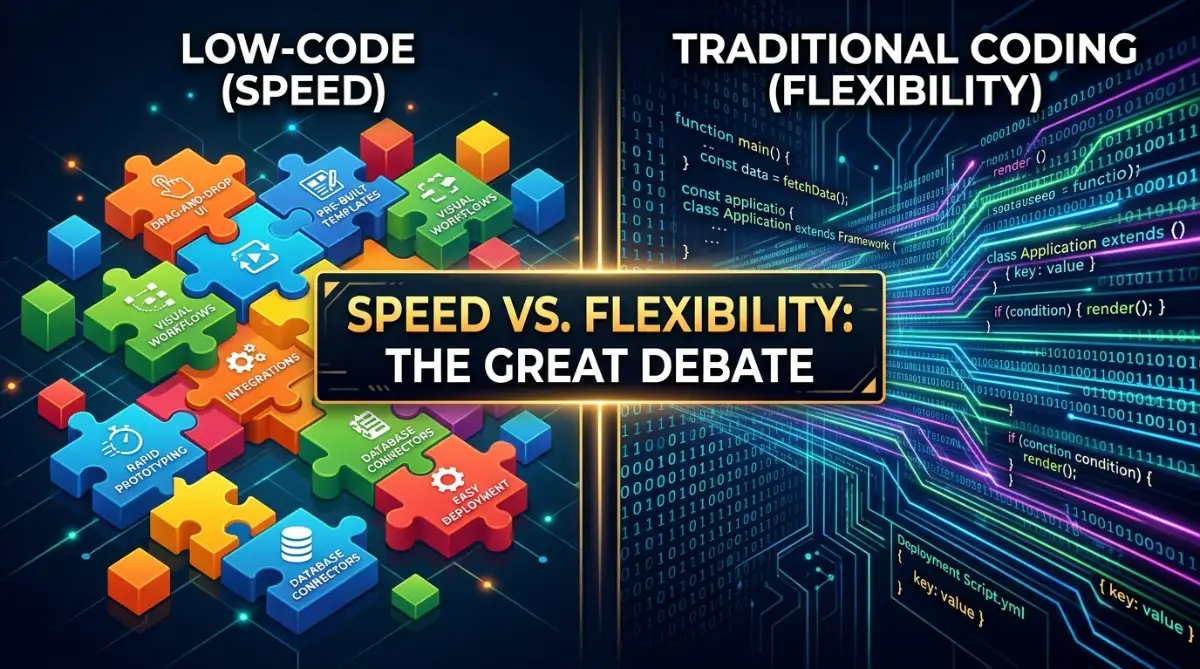
Most low-code platforms are built on "if-this-then-that" logic. This works great for simple tasks. If you need a basic form to collect emails, low-code is fantastic. It is fast and efficient.
But software is rarely that simple. Real-world problems are messy, unpredictable, and full of "edge cases." This is what I call the Logic Gap.
A low-code tool stays within its pre-built box. If your business needs something that the tool creator didn't think of, you are stuck. You can't just "drag" a solution into existence. This is where human logic becomes the savior.
Human programmers think in systems, not just boxes. We understand how data flows through a hidden pipeline. We know how to optimize a database so it doesn't crash when a million people click "submit." A visual tool doesn't "know" these things; it just follows a recipe.
Myth vs. Reality: The Truth About Automated Coding
The Myth The Reality
Low-code replaces the need for developers. Low-code replaces the need for repetitive tasks. Anyone can build a complex enterprise app. Non-coders often build "spaghetti" logic that breaks easily.
You don't need to understand code anymore. You need to understand code more to fix what the tool breaks.
Development costs drop to zero. Maintenance costs for "bad" low-code apps can be huge.
"Before we talk about the famous 'Last 10 Percent' rule below, watch this quick video that perfectly explains why visual coding tools actually create more high-paying jobs for real developers!"
Expert Insight: The "Last 10 Percent" Rule
There is an unwritten rule in the tech world. A low-code tool can get you 90% of the way there very quickly. It looks amazing during the demo. The buttons work, the colors are bright, and the data saves.
But then, you hit the Last 10 Percent.
This is the part where the client asks for a specific security integration. Or they need the app to talk to a 20-year-old legacy system. Or they need a custom animation that isn't in the "drag-and-drop" menu.
Low-code fails at the Last 10 Percent. This is when companies panic and start searching for a "real" programmer. They realize that they built a house on sand, and they need a coder to build a proper foundation.
The Rise of the "Citizen Developer" and Your New Role
You might have heard the term "Citizen Developer." These are office workers who use low-code to build their own tools. This sounds like a threat, but it is actually an opportunity for you.
Think of it like this: Before calculators, people were hired just to do long division. When calculators came out, those people didn't lose jobs; they became accountants and engineers. They used the tool to do more complex work.
Your role is shifting from "Code Writer" to "Software Architect." You will be the one who:
- Sets up the environment for these tools.
- Ensures the data is secure.
- Writes the custom "blocks" that the tools use.
- Fixes the system when the "Citizen Developer" breaks it.
We are not being replaced; we are being promoted. We are moving away from the boring, repetitive parts of coding. We are moving toward high-level design and complex problem-solving.
The Security Nightmare: Why Companies Still Fear Low-Code
Security is a massive issue in the tech industry. When a human writes code, they can audit every line. They can see exactly how data is handled.
With low-code, you are trusting a third-party vendor with your entire logic. If that vendor has a hole in their system, your app is wide open.
Big banks and healthcare companies are very nervous about this. They can't afford to have "black box" logic running their systems. They need human programmers who can explain every single function and ensure data privacy. Your expertise in security is a shield that low-code cannot penetrate.
Step 1: Embracing the "Hybrid" Mindset
If you want to stay ahead, stop fighting the tools. Start using them.
The best programmers today are "Hybrid Developers." They use low-code to build the boring parts (like admin panels or basic UI). This saves them time. Then, they spend their brainpower on the core engine of the app.
The 'Can a Bot Do This?' Checklist
I use this quick mental test to decide when to use a tool and when to write the code myself:
By doing this, you become twice as fast as a traditional coder. You become more valuable to your company because you deliver results quickly without sacrificing quality.
Step 2: Mastering System Design Over Syntax
Years ago, knowing the exact syntax for a loop was a big deal. Today, Google and AI can give you that in a second. Syntax is becoming cheap.
What is becoming expensive (and valuable) is System Design.
- How do different services talk to each other?
- How do we scale a database for 10 million users?
- How do we keep the system running if one part fails?
These are architectural questions. Low-code tools don't answer these. They just provide the bricks. You are the architect who knows how to build a skyscraper that won't fall down in a storm. Focus on the "Why" and the "How," not just the "Where the semicolon goes."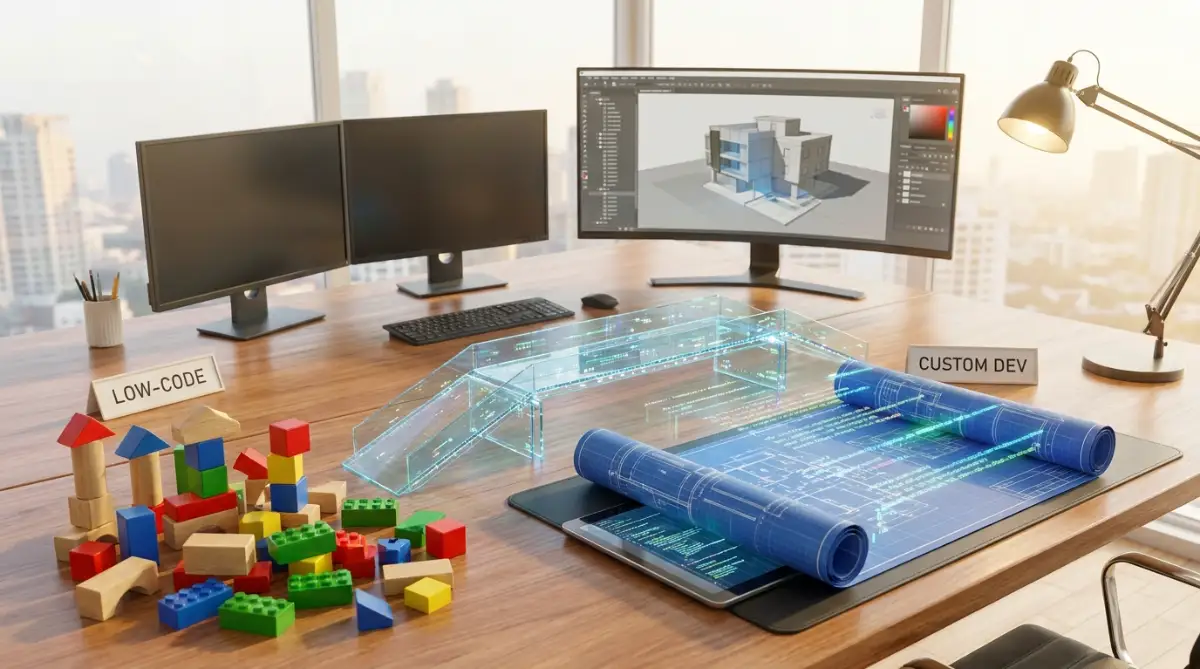
Step 3: Deep Dive into Integration Skills
The future of tech is not about building "islands." It is about connecting different systems.
An app today needs to talk to Stripe for payments, AWS for storage, and maybe a custom AI model for processing. Low-code tools are often terrible at complex integrations.
If you become a Master of APIs and Data Pipelines, you will never be out of a job. You will be the person who connects the "simple" low-code frontend to the "powerful" backend systems. You are the bridge. Without you, the bridge falls, and the data stops moving.
Why Human Creativity is the Ultimate Code
Software is not just math. It is creative expression. When we build an app, we are thinking about the user's journey. We are thinking about how to make an interface feel "human" and intuitive.
A machine can follow a pattern, but it cannot innovate. It can't look at a problem and say, "What if we tried something completely different that has never been done before?"
Innovation is a human trait. As long as businesses want to disrupt markets and create new things, they will need humans. They will need your ability to think outside the "visual block."
The Economics of the Tech Talent Gap
Despite the rise of these tools, the demand for high-level software engineers is actually growing. Why? Because the more "basic" apps we have, the more we need complex systems to manage them.
Every low-code app creates a need for more infrastructure, more security, and more data management. We are creating a digital world that is becoming more complex every day.
There are not enough people who truly understand how the "pipes" work. If you are one of those people, your value will only go up. Don't fear the tool that makes the simple things easy. Fear being the person who only knows how to do simple things.
The Psychological Shift: From Coder to Solution Provider
We need to change how we see ourselves. If you define yourself as "Someone who writes Java," you might feel threatened. But if you define yourself as "Someone who solves business problems using technology," you are safe.
A "Solution Provider" uses any tool available. Sometimes that tool is Python. Sometimes it is a low-code platform. Sometimes it is just a better database design.
By broadening your identity, you remove the power of the "low-code threat." The tool is just a hammer. You are the one who knows how to build the house. The hammer might change, but the need for a builder remains.
Pro Tip: How to Spot a "Low-Code Trap"
When a client or boss says, "Let's just use [Low-Code Tool] for this," don't just say no. Ask these questions:
- How will we migrate the data if we leave this platform?
- Can we run custom tests on this logic?
- How does this tool handle 10,000 concurrent users?
- Where is the "escape hatch" if we need custom code?
By asking these, you show that you are thinking about the business's future. You are acting as a consultant, not just a worker. This builds massive trust and proves why they need your "human" brain on the project.
Beyond the Surface: Strategies for the Hybrid Developer
Now that we understand why these tools are not a threat to your existence, we need to focus on how to use them to your advantage. The most successful people in tech right now are not "just" coders. They are people who know how to blend manual skill with automated speed.
Think of yourself as a master chef. A food processor doesn't replace a chef; it just helps them chop vegetables faster. You still need the chef to know the recipe and taste the soup. Your technical deep-knowledge is the "taste" that software lacks.
One of the best ways to stay ahead is to master The Art of the Custom Override. Every low-code platform has a limit. They usually provide a way to inject "Custom CSS" or "Javascript Functions."
If you are the person who can step in when the visual tool fails, you are the hero of the office. You are providing the "brain" for the "body" that the tool built. This creates a safety net for your career that no automation can break.
The Architecture Mindset: Building for Scale
Most people using visual tools forget about the future. They build for "right now." They don't think about what happens when 50,000 users sign up in one hour.
This is where you come in. You need to focus on Data Normalization and Schema Design. A low-code user might save all their data in one giant, messy table. This is like costly mistakes you are probably making when filing a health insurance claim where one small error in the paperwork ruins the whole process.
You should be the one designing the database. You ensure that the data is clean, searchable, and efficient. When the app slows down, you will be the one who knows how to index the database or refactor the queries.
According to research by Gartner on the evolution of software engineering, the role of the developer is shifting toward orchestration. This means you aren't just writing code; you are managing how different pieces of code work together.
Mastering the "Hidden" Layers of Performance
Visual tools are heavy. They often load unnecessary scripts and files that make an app feel "slugish." A real programmer knows how to look under the hood.
Start learning about Browser Rendering and Latency. If a visual tool creates a page that takes 5 seconds to load, you can find out why. Maybe it is a large unoptimized image or a poorly written loop in the background.
Fixing these small things makes a huge difference in user experience. It’s like silent credit score killers that you don't notice until you need a loan. Small performance issues in code don't seem like a big deal until the whole system crashes under pressure.
Your ability to optimize is a high-value skill. Companies will always pay more for an app that is fast and reliable. Low-code can give them "working," but you give them "excellent."
The Importance of Version Control and Security Audits
One big problem with low-code is that it often ignores "Git" or version control. If a "Citizen Developer" makes a mistake and deletes a screen, it might be gone forever.
You should introduce Professional DevOps Workflows to these tools. Even if the tool is visual, you can still manage the deployment cycles. You can set up "Staging" and "Production" environments.
This brings a level of professionalism that businesses need. They can't run a multi-million dollar company on a "guess and check" method. They need the structure that only a trained software engineer understands.
Also, look at security. Tools like OWASP Top 10 give us a list of the biggest web risks. Most visual tools don't automatically protect against things like SQL injection or Cross-Site Scripting (XSS). You are the gatekeeper. You check the inputs, validate the data, and keep the hackers away.

The Dangerous Allure of the "Quick Fix"
The biggest mistake people make is falling in love with the speed of low-code. It feels good to see an app working in twenty minutes. But this speed is often a trap.
When you build too fast, you skip the Planning Phase. You end up with a "Frankenstein" app. It’s a bunch of different parts sewn together that don't really fit.
This creates "Technical Debt." Technical debt is like a high-interest loan. You get the money (the app) now, but you have to pay it back with interest (bugs and crashes) later.
If you don't manage this debt, it will eventually bankrupt your project. I have seen companies throw away entire low-code systems because they became too messy to fix. They had to hire a team of "real" programmers to start over from scratch. The shortcut often becomes the longest road.
Early in my career, I made the huge mistake of building a client's entire app on a basic low-code platform just so I could finish it by the weekend. The second they asked for a custom payment feature a month later, the whole visual system broke down, and I had to rebuild everything from scratch using actual code. That embarrassing nightmare taught me to never trust a tool's speed without testing how it handles custom updates first.
The "Vendor Lock-in" Trap: A Warning for Businesses
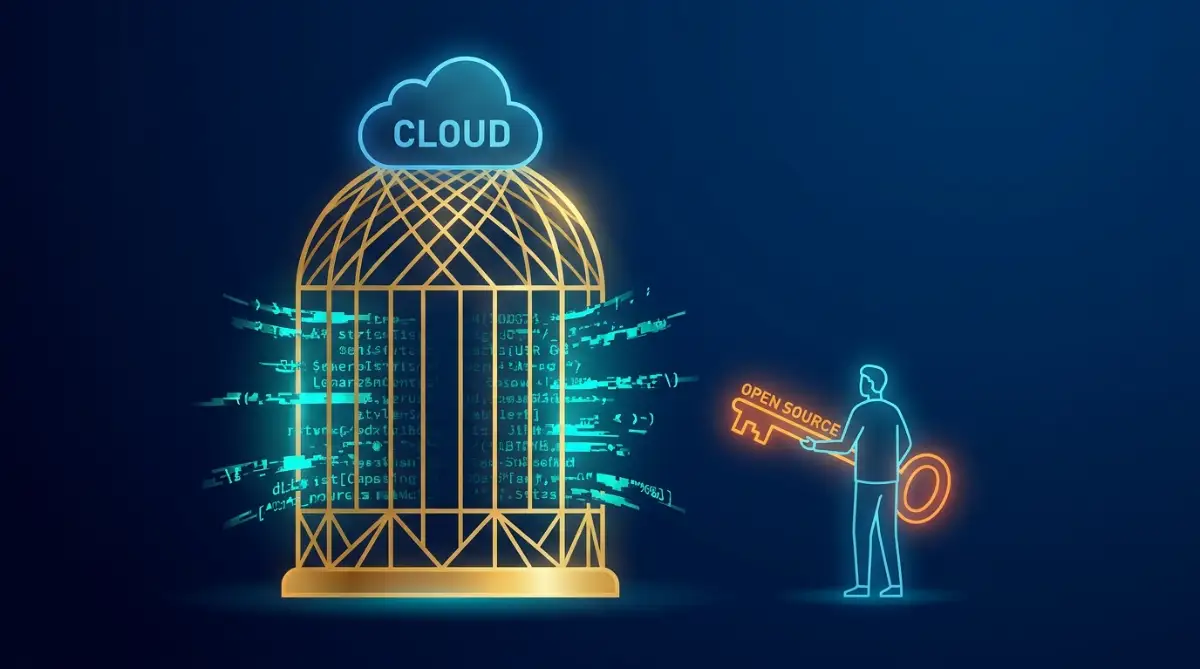 Imagine building your entire business on a platform, and then that platform doubles its price next month. Or worse, what if the platform goes out of business?
This is the reality of "Proprietary Software." When you write code in Python or Java, you own that code. You can move it to any server in the world.
With low-code, your logic is often trapped inside their system. You can't just "export" it and run it somewhere else. This is a massive risk.
When advising a company, you should always look for Open-Source Low-Code alternatives. Or, ensure that the core business logic remains in a database or a custom API that you control. This gives the company an "emergency exit" if the tool fails them.
Building a business without an exit strategy is like decoding term life coverage terminology without understanding the payout rules. You think you are covered, but when the crisis hits, you find out you are not.
The Blind Trust in "Magic" Algorithms
Many modern tools now use "AI" to help generate code. People think the AI is always right. This is a mistake.
AI models are trained on existing code. If that existing code has bugs or security holes, the AI will copy them. If you blindly trust the "magic" button, you are inviting disaster into your server.
You must Read Every Line. Even if a tool generates it for you, you are responsible for it. "The tool did it" is not an excuse that a client will accept.
Be the skeptic in the room. Test everything. Try to break the system. If you can't break it, then it is ready for the world. This mindset is what separates a "User" from a "Developer."
Ignoring the Human Connection: The UI/UX Gap
A tool can place a button on a screen, but it doesn't know why a user wants to click it. Visual tools often lead to very "boring" and "robotic" designs.
They follow the same templates over and over. This makes every app look the same. In a world where every business is fighting for attention, "the same" is a death sentence.
You need to focus on Empathy-Driven Design. Talk to the users. Find out what frustrates them. Use your technical skills to build custom interactions that feel smooth and premium.
Your value comes from your ability to connect Human Needs with Technical Solutions. A visual block cannot feel empathy. It cannot understand the frustration of a user who can't find the "checkout" button.
Your New Roadmap to Success
We are moving into an era where the "barrier to entry" for making software is gone. This is a good thing. It means more people can create.
But it also means the world needs "Digital Architects" more than ever. You are the one who will build the foundations. You are the one who will ensure the lights stay on and the data stays safe.
Don't spend your time worrying about "being replaced." Spend your time Expanding Your Toolbox. Learn a little bit of low-code. Learn a lot about system design. Become the person who knows how to choose the right tool for the right job.
If you want to build a simple tool for your team, use low-code. If you want to build the next global social network, use custom code. Knowing the difference is your superpower.
A Message to the Next Generation of Tech Leaders
The industry is not shrinking; it is evolving. Every time people say "coding is dead," it actually becomes more important.
You have a choice. You can be afraid of the change, or you can lead it. I suggest you lead it. Start by visiting resources like HubNestify to stay updated on how the digital world is changing.
The future belongs to the Curious and the Adaptable. Those who can look at a new tool and say, "How can I use this to solve a bigger problem?"
Go out there and build something. Whether you use a keyboard or a mouse to do it, remember that The Logic is Yours. The tools are just helpers. Your brain is the master of the machine.
Keep learning. Keep building. And most importantly, stay human. The world has enough robots; it needs your unique, creative, and logical mind.
Changing my mindset from a simple code typist to a big-picture problem solver completely removed my fear of these new automation tools. You have the exact same power to take control of your career, so open up a new system architecture tutorial today and start building the high-level skills that machines simply cannot copy!
Disclaimer: The information provided in this article is for educational purposes only. The tech industry is constantly changing, and we recommend consulting with a professional software architect before making major infrastructure decisions for your business. External links to third-party sites are provided for context and do not constitute an endorsement of all their policies.