
The Heartbreak of the Unopened Pitch: Why Your Hard Work Isn't Paying Off
You just spent three hours writing the perfect pitch to a dream client, only to hear absolute crickets for the next two weeks. I know exactly how much that hurts. A few years ago, I was stuck working 60-hour weeks for clients paying me barely $5 an hour, completely convinced the freelance market was just "too saturated." The truth? My skills were fine, but my desperate, copy-pasted emails were secretly screaming "beginner" to every high-paying CEO. Let me show you exactly how to stop pushing premium clients away and start landing the heavy-hitting contracts you actually deserve.
Then, you sat down and wrote what you thought was a perfect pitch. You hit "send" with a heart full of hope. You waited for the "I'd love to jump on a call" reply.
But days turned into weeks. Silence. Nothing but the sound of your own keyboard.
I remember staring at my inbox with tears in my eyes after my tenth pitch of the week got completely ignored. I was working endless hours for literally five dollars an hour, feeling like a total failure while other VAs bragged about their dream clients. It took me months of painful rejection to finally realize that my own desperate pitching style was actually pushing the good clients away.
This is the reality for thousands of talented virtual assistants. They have the skills. They have the passion. Yet, they stay stuck in the "low-pay trap."
They watch others land $3,000 monthly retainers while they fight for $5-an-hour gigs. It feels unfair. It feels like the market is too crowded.
I know how it feels when you check your inbox every ten minutes. The knot in your stomach gets tighter each time there is no new message. You start to doubt yourself.
"Maybe I'm not good enough," you think. "Maybe the successful VAs just got lucky."
But luck has very little to do with it. Most of the time, it is not your skills that are the problem. It is the "silent errors" you don't even know you are making.
These errors act like a "Keep Out" sign for high-paying clients. These clients have a different mindset. They look for specific red flags that low-paying clients don't notice.
If you are tired of the struggle, you need to look at your process through a different lens. You need to see what the client sees.
Are you accidentally showing them that you aren't ready for the big leagues? Are your emails screaming "beginner" even though you are an expert?
Let's break down these hidden walls. It is time to stop guessing and start fixing the leaks in your career.
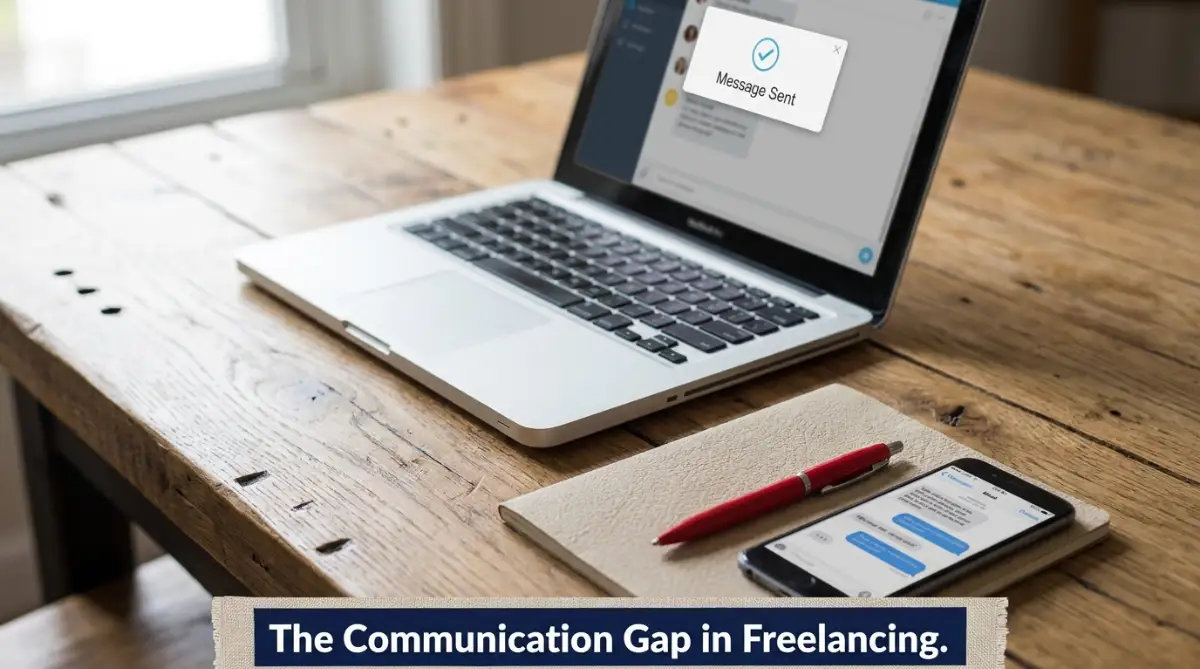
Your Quick Guide to Landing Premium Clients
- Ditch the Generic Emails: Stop sending "To Whom it May Concern" pitches. High-paying CEOs only read emails that directly address their specific pain points.
- Specialize to Monetize: Generalists are cheap; specialists are expensive. Pick one clear niche (like Real Estate VA or Podcast Manager) to instantly raise your rates.
- Always Be Proactive: Never wait for instructions. Premium clients are buying their time back—anticipate their needs before they have to ask.
- Stop Pricing by the Hour: Switch to monthly retainers or package pricing. If you charge hourly, you get financially punished for working faster.
The Professional Image: Beyond the Profile Picture
Many VAs think their work speaks for itself. They believe that if they can do the task, the client won't care about anything else.
This is a huge mistake. High-paying clients are not just buying a task. They are buying a professional partner.
If your email address is "cool-girl-92@gmail.com," you have already lost. It sounds small, but to a CEO, it looks unprofessional.
A premium client wants to see that you invest in your own business. If you don't take your business seriously, why should they?
Use a clean, professional email. Better yet, get a domain-based email. It shows you are here for the long haul.
Also, look at your social media presence. You don't need to be an influencer. But you do need to look like someone a business owner can trust.
Mastering the Art of the "Client-First" Pitch
Stop talking about yourself. This might sound strange, but it is the truth.
Most pitches are a long list of "I can do this" and "I have five years of experience in that." The client doesn't care about your five years.
They care about their own problems. They care about their overflowing inbox or their messy calendar.
A high-paying client is busy. They want to know one thing: "Can you make my life easier?"
Instead of a list of skills, show them a solution. Use their name. Mention a specific problem they have.
Show them you have done your homework. A generic "Dear Hiring Manager" pitch goes straight to the trash.
I used to make the terrible mistake of copying and pasting the exact same cover letter to fifty different business owners, just changing the name at the top to save time. The moment I stopped doing that and started writing short, customized emails solving just one specific problem for the client, my reply rate went through the roof.
Personalization is the key to the premium door. It shows you are not just blasting out 100 emails a day.
Real Example: Why Your Pitch is Getting Ignored
- The Rookie Pitch: "Hi, I have 5 years of experience in admin work and I am a fast learner. Please hire me." (Focuses entirely on the freelancer, offers no clear solution).
- The Premium Pitch: "Hi [Name], I noticed your podcast episodes have been coming out late. I can take over your audio editing and show notes so you can get 5 hours of your week back to focus on interviewing guests." (Focuses entirely on saving the client's time).
If you want to see exactly how to write an email that a busy CEO will actually read, watch this quick video below for a proven pitch template, and then keep reading to find out why trying to offer every service is actually costing you money.
The Myth of the "Generalist" Virtual Assistant
Many VAs are afraid to pick a niche. They think that by offering everything, they will get more clients.
The opposite is actually true. When you try to serve everyone, you become a "commodity."
Commodities are cheap. Experts are expensive.
Think about it this way. If you have a heart problem, do you go to a general doctor or a heart surgeon? You go to the specialist. And you pay them more.
The same rule applies to the VA world. A "General VA" earns a basic wage. A "Real Estate Systems Expert" or an "E-commerce Operations Manager" earns premium rates.
Pick an industry or a specific tool. Master it. Become the person that people in that niche talk about.
The "Silent" Communication Killers
High-paying clients value their time more than their money. If they have to chase you for an update, you are failing.
One of the biggest silent errors is being "reactive" instead of "proactive."
A reactive VA waits for instructions. They do exactly what is asked and nothing more.
A proactive VA looks ahead. They say, "I finished the task, and I also noticed your calendar has a conflict next Tuesday. Should I move that meeting?"
That one sentence makes you a premium VA. It shows you are thinking for the client.
Also, pay attention to your grammar and tone. Use tools to check your spelling. A pitch with typos tells a client you don't have an eye for detail.
In the virtual world, your words are your clothes. If they are messy, you look messy.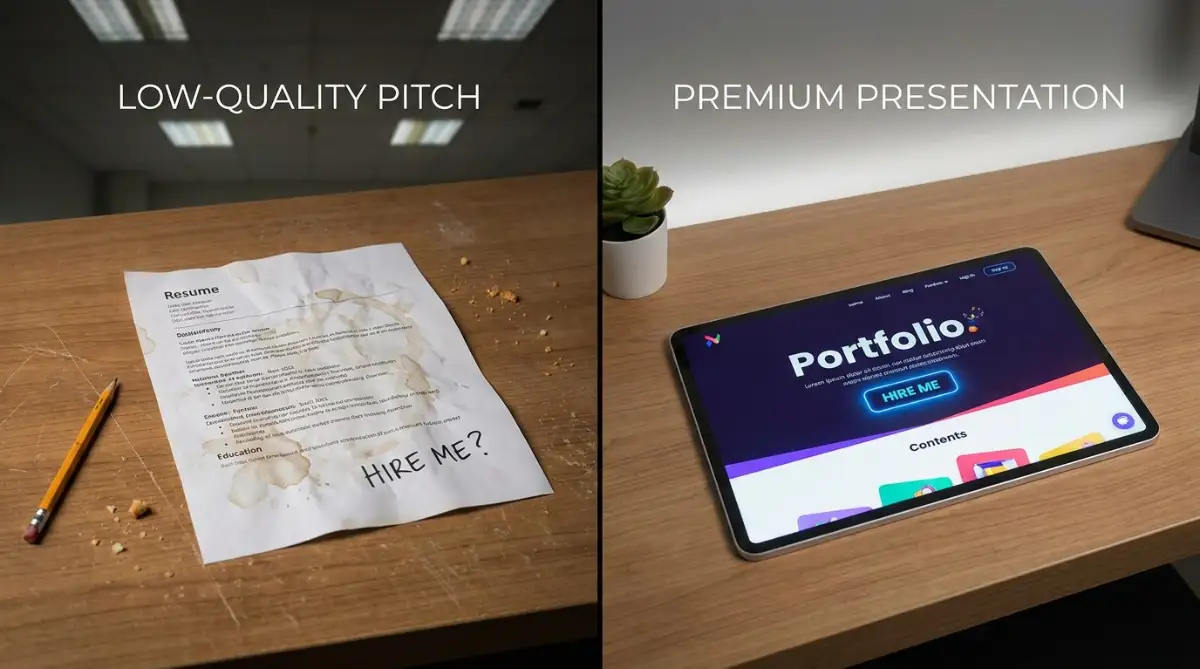
Building a Portfolio That Actually Sells
Do not send a 20-page PDF of every certificate you have ever earned. No one has time to read that.
A premium portfolio is a collection of "Results."
Instead of saying "I managed social media," say "I grew a client's Instagram by 40% in three months."
Use screenshots. Show "Before" and "After" scenarios.
If you are a new VA and don't have clients yet, create "Sample Projects."
Design a mock-up social media plan for a brand you love. Organize a messy (fake) inbox. Show them what you can do.
High-paying clients want to see proof of work, not just a list of classes you took.
Expert Insight: High-paying clients don't hire people. They hire "peace of mind." If your portfolio and pitch give them confidence, the price becomes secondary.
The Hidden Power of Follow-Ups
Most VAs send one pitch and then give up. They think if the client didn't reply, they weren't interested.
This is rarely the case. Business owners are often just distracted. Your email might have arrived right before a big meeting.
A polite follow-up three days later shows persistence. It shows you actually want the job.
But don't just say, "Did you see my email?" Add value.
"I saw your recent post about X, and I thought this resource might help you."
This keeps you on their radar without being annoying. It builds a relationship instead of just a transaction.
My Personal 3-Day Follow-Up Script:
If they don't reply to my first pitch, I wait exactly 72 hours and send this short email:
"Hi [Name], I know how busy your inbox gets, so I just wanted to float this to the top. Even if you don't need a VA right now, I loved your recent post on [Topic] and shared it with my network. Have a great week!"
This takes the pressure off them to buy and usually gets an immediate, friendly response.
Understanding Client Psychology
To earn more, you must think like the person who has the money.
A small business owner hiring their first VA is often scared. They are worried about the cost.
A high-level CEO is different. They are worried about their time. They are happy to pay $50 an hour if it saves them 10 hours a week.
They don't want a "worker." They want a "manager" of tasks.
If you can demonstrate that you can take ownership of a project, they will pay your rate without blinking.
Stop talking about "working for them." Start talking about "supporting their vision."
The "Speed of Trust" in Remote Work
Trust is the currency of the virtual world. Since they can't see you, they need to feel your presence.
Fast response times during business hours build trust quickly.
Consistency is even better. If you say you will send a report by 5 PM, send it by 4:45 PM.
Being early is the easiest way to look like a pro. Being late, even by five minutes, is a silent error that kills your reputation.
Premium clients talk to each other. Once you gain the trust of one, they will refer you to others.
Referrals are the secret weapon of high-earning VAs. You stop chasing clients, and they start chasing you.
Investing in the Right Tools
You don't need every shiny new software. But you do need the basics.
A reliable computer and fast internet are non-negotiable.
Beyond that, learn the tools that high-end clients use. Familiarize yourself with Project Management software like Asana or Notion.
Learn how to use Slack for communication. These tools are the language of modern business.
If a client has to teach you how to use their basic tools, they will feel like they are paying to train you.
Be the expert who walks in and knows exactly how to set things up. That is how you command a high rate.
Pricing Your Services Correctly
The final silent error is pricing yourself too low.
It sounds backwards, right? You think a lower price makes you more attractive.
For a high-paying client, a low price is a red flag. It tells them you probably don't know what you are doing.
It suggests you don't value your own time. Why should they value it?
Research the market rates for your niche. Price yourself in the middle or top tier.
Then, back it up with the professional image and proactive communication we discussed.
When your value matches your price, the right clients will find you. They aren't looking for a bargain. They are looking for a win.
Beyond the Basics: Stepping into the World of High-Value Partners
Now that we have fixed the surface issues, it is time to look deeper. Landing a high-paying client is only the first half of the battle. Keeping them and growing your income requires a change in how you think.
Most people in this field treat it like a temporary gig. They do the work and wait for the weekend. But premium clients are looking for someone who treats their business like it is their own.
You need to shift from being a "worker" to being a "solution provider." This shift happens in the small details. It happens in how you organize your day and how you handle the client's data.
When you start acting like a partner, the client stops looking at your price. They start looking at the value you bring. They realize that losing you would cost them more than paying you a higher rate.
Building Systems That Do the Heavy Lifting for You
One of the biggest secrets of top-tier VAs is their use of systems. High-paying clients often have messy businesses. They are hiring you because they are overwhelmed.
If you come in and ask them how to do everything, you are adding to their stress. Instead, show them that you have a system for onboarding. Have a simple document that asks for their passwords, their preferred tools, and their goals.
By doing this, you take control of the situation. It shows that you are organized and ready to lead. This is what separates a $10-an-hour VA from a $50-an-hour specialist.
Also, consider how you manage your own time. Use tools like Timeular or even a simple spreadsheet to track your tasks. Show the client exactly where their money is going.
Transparency builds trust faster than anything else. When a client sees a detailed report of how you saved them five hours this week, they feel good about paying your invoice.
Mastering the Art of Data Security and Privacy
Premium clients handle sensitive information. They might give you access to their credit cards, customer lists, or future business plans. If you don't have a plan for security, they will never trust you with the big tasks.
Start by using a password manager like Bitwarden or LastPass. Never ask a client to send a password in a plain email. Tell them, "For your security, please share this via a secure link."
This one sentence makes you look like a total professional. It shows you understand the risks of the digital world. It gives the client peace of mind.
I have seen many VAs lose great clients simply because they were careless with a login. Don't let that be you. Treat their data like it is gold.
If you want to understand the grit it takes to build this kind of professional trust, you should read about the passive income lie. Building a real business takes effort, but it pays off in the long run.
The Power of Weekly Performance Reports
Do not wait for your client to ask what you did this week. Send them a "Weekly Wins" email every Friday. This email should be short and easy to read.
List the tasks you completed. Mention any problems you solved without their help. Most importantly, list one thing you plan to improve next week.
This keeps you top-of-mind. It also creates a paper trail of your value. When it comes time to ask for a raise, you have months of "Weekly Wins" to show them.
High-paying clients love data. They love seeing progress. If you can show them that you are constantly moving the needle, you become indispensable.
According to research on remote team dynamics from Buffer, clear communication and self-management are the top traits clients look for. Being the person who provides these without being asked puts you in the top 1% of freelancers.
Transitioning to Package-Based Pricing
If you want to escape the "hours for dollars" trap, you must look at your pricing structure. Hourly rates are okay for beginners, but they punish efficiency.
If you get faster at your job, you make less money. That makes no sense. Instead, move toward package-based pricing or monthly retainers.
For example, instead of charging $25 an hour for social media, charge $800 a month for "Full Social Media Management." This allows you to focus on results rather than the clock.
The client is happy because they know exactly what they are paying. You are happy because you can work efficiently and increase your hourly value. This is how you scale your business without burning out.

The Invisible Traps That Sink Even Expert VAs
Even if you have the best skills, some mistakes can quietly destroy your reputation. These are not technical errors. They are "soft skill" failures that make you look unreliable.
The most common trap is the "Yes-Man" syndrome. Many VAs are so afraid of losing a client that they say "yes" to everything. They take on too much work and then start missing deadlines.
When you miss a deadline for a high-paying client, you break the trust. It is better to say, "I can't do that by Friday, but I can have it ready by Tuesday."
Honesty is more valuable than speed. A premium client would rather have a realistic timeline than a broken promise.
Another silent error is "Ghosting" when things get difficult. If you make a mistake, don't hide. Don't stop replying to messages.
Admit the error immediately. Offer a solution to fix it. A client will forgive a mistake, but they will never forgive a lack of communication.
Losing a high-paying client because you were afraid to speak up is a painful lesson. I have seen talented people quit the industry because they felt overwhelmed by their own silence.
If you struggle with the tiny details that lead to these errors, practicing a freelance proofreading business mindset can help you develop the focus you need. Every word and every deadline matters.
Ignoring the "Why" Behind the Task
Many VAs act like robots. They get a task, do it, and move on. They never stop to ask why the task is being done.
If you don't understand the "why," you can't provide extra value. For instance, if a client asks you to upload a blog post, the "why" is likely to get more traffic or sales.
If you know that, you might suggest a better headline or add a call to action. Suddenly, you are not just an uploader. You are a marketing assistant.
When you ignore the bigger picture, you stay at the bottom of the pay scale. You become a tool that can be replaced by an app.
Connect with the client's goals. Ask them about their vision for the next six months. When their goals become your goals, you become part of the team.
Emotional Burnout and Lack of Boundaries
Working for a high-paying client can be intense. They expect a lot. If you don't set boundaries, you will burn out in a few months.
The error here is being available 24/7. If you answer an email at 2 AM, the client will expect you to always answer at 2 AM.
This creates a stressful environment where you can never truly rest. Set clear "office hours" from the start.
"I am available from 9 AM to 5 PM EST. Outside of these hours, I will respond on the next business day."
Most professional clients will respect this. In fact, they prefer it because it shows you have a structured life. It shows you are a professional, not a desperate freelancer.
Stop Searching for "Gigs" and Start Building Relationships
A major mistake is always looking for the next client instead of nurturing the ones you have. It is much cheaper and easier to keep a client than to find a new one.
Are you checking in with your current clients? Do you ask them how their weekend was? Do you remember their birthday?
These human touches matter. High-paying clients are people too. They want to work with someone they like and trust.
If you treat every client like a transaction, they will treat you like a line item on their budget. When times get tough, line items get cut. Relationships stay.
Your Path to a Premium Career
Landing high-paying clients isn't about being the smartest person in the room. It is about being the most reliable, the most organized, and the most professional.
You have the skills. You have the drive. Now, you just need to fix those silent errors that have been holding you back.
Update your portfolio to show results instead of just tasks. Pick a niche and start learning everything about it.
The world of premium virtual assistance is waiting for you. There is plenty of room at the top because most people are too lazy to do the small things correctly.
Moving Forward with Confidence
Don't let this information just sit in your head. Take one action item from this list and complete it right now.
Maybe it is setting up your password manager. Maybe it is drafting a new pitch template that focuses on the client's problems.
Whatever it is, do it. The difference between a struggling VA and a successful one is action.
You deserve to be paid well for your hard work. You deserve to work with clients who respect your time.
By avoiding these silent errors, you are clearing the path to the career of your dreams. It won't happen overnight, but it will happen if you stay consistent.
Believe in your value. When you value yourself, the world will follow. Go out there and land that premium client!
Looking back at those early days of crying over empty inboxes, I am so thankful I didn't quit when things felt impossible. You absolutely have the power to turn your virtual assistant skills into a highly profitable career, so take a deep breath, fix those silent errors today, and watch your income grow!
Disclaimer: The information provided in this article is for educational purposes only. Success in the virtual assistant industry depends on individual effort, skill level, and market conditions. We do not guarantee specific income results.