The Burn of the Green Candle: Why We Chase Ghosts
We've all been there. You are scrolling through X (formerly Twitter) late at night, and someone you went to high school with is bragging about doubling their money on a random meme coin. Your chest gets tight. You feel like you are the only one missing out on the easiest money in the world. So, you hit "Buy" right at the top, just as the price crashes. I’ve made that exact mistake, letting raw FOMO burn my hard-earned cash. Let’s talk about why our brains hijack our wallets, and how to finally stop it.
This is the moment when the "Instant Wealth Myth" takes hold of your brain. It is a powerful, addictive feeling that tells you that you are falling behind. You start to think that if you don't click "Buy" right now, you will lose your only chance at a better life. This mental pressure is heavy.
I have seen people lose years of hard-earned savings in a single afternoon because of this pressure. They weren't bad people, and they weren't stupid. They were just human. They let their fear of missing out (FOMO) drive the car, and they ended up in a ditch.
I remember staring at my phone at 2 AM a few years ago, watching a random stock shoot up and feeling like I was the only one missing out on getting rich. I threw a big chunk of my rent money into it right at the top, only to wake up the next morning and see my investment had crashed by half. That sick feeling in my stomach was the exact moment I realized my emotions were destroying my financial future, and I knew I had to completely change my approach.
The struggle is real. When you lose money because of an emotional choice, it doesn't just hurt your wallet. It hurts your self-trust. You feel like a failure, and you start to doubt every choice you make. This stress can ruin your sleep and make you snap at your family.
We need to be honest about how hard it is to stay calm when everyone else seems to be winning. Real-life investing is not a movie. It is a test of your character. If you want to keep your money and grow it, you have to learn to fight the ghosts of "easy wealth" that haunt your screen.
Quick Takeaways: Protecting Your Peace & Portfolio
- FOMO is a trap: Chasing green candles usually means you are buying the top right before a crash.
- Boring makes money: The most successful investors don't check their portfolios every hour; they let compounding do the work over years.
- Never trade for revenge: If you lose money, step away from the screen. "Winning it back" usually leads to total wipeouts.
- Set a strict exit plan: Decide your profit-taking goals before you buy, and stick to them no matter what Twitter says.
Mastering the Internal Market: How Your Brain Fights Your Wallet
Before you can win in the market, you must win the war inside your head. Our brains were built for survival, not for modern trading. Back in the day, we had to grab food as soon as we saw it. Today, that same urge makes us buy coins at the highest price because we want to "grab the food."
To fix this, we need to look at how we think about money and time. Success is not a sprint; it is a long walk. Here are the ways you can build a mental wall to protect your money.
Building a Logical Wall: Setting Rules Before the Storm
The best time to make a plan is when the market is quiet. You cannot think clearly when prices are jumping up and down. Think of your investment plan like a set of house rules. You decide what to do before the "party" starts.
Write down your rules. For example, tell yourself, "I will not buy a coin that has gone up 50% in one day." Or, "I will only check my account once a week." When you see these rules in your own handwriting, it is harder to break them.
Rules take the "guesswork" out of the game. They act like a safety belt. You might still feel the bumps in the road, but you won't fly through the window. Having a clear plan is the first step to becoming a professional investor.
The Shift: Gambler vs. Wealth Builder
- The Gambler Mindset: "I need to check the 5-minute chart right now. If I miss this breakout, my whole week is ruined."
- The Wealth Builder Mindset: "I buy quality assets on a schedule, once a week. I don't care what the price does today, because I am not selling until 2030."
- The fix: If your investment strategy requires you to stare at a screen for more than 10 minutes a day, you aren't investing—you're working a second, highly stressful job.
The Power of the "Wait and See" Technique
One of the most useful tools in your kit is the 24-hour rule. If you feel a sudden urge to buy something, wait one full day. Most of the time, the heat of the moment will cool down. You will look at the same chart the next day and realize it was a bad idea.
Patience is a superpower in a world that is always in a hurry. Most "instant" gains turn into instant losses just as fast. By waiting, you allow your logical brain to catch up with your emotional brain.
I often tell people that the best trades are the ones you never make. Protecting what you already have is more important than chasing what you might get. If the opportunity is real, it will still be there tomorrow. If it is a bubble, you will be glad you stayed away.
I used to break my own rules all the time simply because I kept my trading apps right on my phone's home screen, making it too easy to click buy. My biggest realization was that deleting those apps and forcing myself to only log in on my laptop completely stopped my late-night panic buying. If you add just a little bit of friction to your routine, you give your logical brain the extra time it needs to save your wallet.
The Science of Why Boring is Better
We all love excitement, but excitement is the enemy of profit. The best investors in the world are often the most bored. They don't look for the "next big thing" every hour. They pick a good path and they stay on it for years.
Think about a tree. You don't dig it up every day to see if the roots are growing. If you keep moving your money around, you kill the growth. Compounding—the way money grows on top of itself—needs time and silence to work.
Myth vs. Reality: The Investor's Mindset
The Myth The Reality
You need to find the "hidden gem" to get rich. You need to hold good assets for a long time.
Smart investors trade every day. Smart investors trade as little as possible.
Big risks lead to big wins. Big risks usually lead to big losses.
You have to follow the news 24/7. Too much news leads to bad choices.

Managing the Digital Noise: Your Information Diet
Social media is a noisy place. Everyone wants to show you their wins, but nobody shows you their losses. This creates a fake reality. You think everyone is winning except you, and that makes you take big risks to catch up.
You must limit where you get your info. If an account only talks about "moon" shots and "100x" gains, unfollow them. They are not trying to help you; they are trying to get clicks.
Find quiet sources of information. Look for books on basic finance or long-term trends. These sources don't scream at you. They help you think. A good information diet keeps your mind clear and your stress levels low.
Want to see exactly how successful investors train their brains to ignore the daily market noise? Watch this short, helpful video below to learn how to control your money emotions, and then keep reading to discover why diversification is your best safety net!
Diversification as a Mental Safety Net
If you put all your money into one thing, you will be terrified every time the price drops. This fear will force you to make a mistake. You will sell at the bottom because the pain of losing everything is too much to handle.
When you spread your money out, you spread your stress out. If one part of your portfolio goes down, the other parts might stay steady. This balance allows you to stay in the game longer.
Survival is the name of the game. If you can survive the bad times without panicking, you will be there to enjoy the good times. Don't put your whole life into a single basket. It is not worth the mental cost.
The Reality of Compounding: Why Slow is Smooth
We often hear about people making millions in a month. These stories are like lottery winners. You cannot build a life based on a lottery ticket. Real wealth is built through the power of compounding.
If you grow your money by just a small amount every year, after twenty years, you will be amazed. The "magic" happens at the end, not at the start. Most people quit in the first few years because they think it is too slow.
Stay the course. Every time you feel like quitting, remember that the "slow" way is the only way that actually works for most people. Trust the math, not the hype. Slow is smooth, and smooth is fast.
My Personal Trick: The 24-Hour Cooling-Off Rule
Whenever I feel a massive emotional urge to buy a skyrocketing asset, I force myself to do three things first:
- Close the exchange app and open my notes app.
- Write down exactly why I want to buy this (Hint: "Because it's going up" is a banned reason).
- Wait exactly 24 hours. If I still want it tomorrow based on solid fundamentals, I'll buy it. 99% of the time, the hype dies down, and I save my money.
Documenting Your Decisions: The Investor's Journal
One great way to stay honest with yourself is to keep a journal. Write down why you bought an asset. Write down how you felt that day. Were you excited? Were you scared?
Six months later, go back and read what you wrote. You will see patterns in your behavior. You might realize that you always buy when you are feeling lonely or bored.
Self-knowledge is your best shield. Once you see your own mistakes on paper, you stop making them. You become an observer of your own mind. This is how you move from being a "gambler" to being a "professional."
Managing the Exit: Knowing When to Say Goodbye
Most people focus on when to buy, but they forget to plan when to sell. Greed will tell you to "just wait a bit more" forever. Then the market crashes, and your profit disappears.
Set a target before you buy. If you say you will sell at a 20% gain, then do it. Don't listen to the voice that says it will go higher. Taking a profit is never a mistake.
By having a clear exit plan, you remove the emotional tug-of-war. You are just following your own rules. This leads to a quiet life and a growing bank account.
Pro Tip: Focus on Your "Real" Life
The best way to stop obsessing over your investments is to have a full life outside of them. If your screen is your whole world, your emotions will always be a mess.
Spend time with your family. Go for a run. Read a book that has nothing to do with money. The more you value your "real" world, the less power the "digital" world has over you.
When you have a balanced life, you can look at a red chart and say, "That's okay, I'm still going for my walk." This detachment is the secret of the world's most successful investors. You are not your bank account. You are a human being with a plan.
Advanced Mindset Mastery: Strategies for the Disciplined Investor
Now that we have covered the basics of why our brains fight our bank accounts, let's look at how the pros actually operate. Professional investors do not have better "luck" than you; they simply have better systems for managing their own humanity.
One of the most powerful secrets is the concept of Inverse Emotional Intelligence. When the market is screaming and everyone is buying in a panic, the pro feels a sense of caution. When the market crashes and people are crying on social media, the pro feels a quiet sense of focus.
You can practice this by training your brain to see "Red Days" as a sale at your favorite store. Most people run away when prices drop. But a disciplined person knows that if they liked an asset at a high price, they should love it even more at a low price.
Another secret is Strategic Capital Preservation. This means you never bet the "rent money." You only ever put a small percentage of your total wealth into high-risk areas like individual stocks or crypto.
By doing this, you remove the "life or death" feeling from your trades. If a specific coin drops to zero, you are still okay. You can still pay your bills and sleep in your bed. This lack of desperation is what allows you to make calm, logical choices.
You should also look into Automated Decision Systems. Many people use dollar-cost averaging to take their hands off the steering wheel. Instead of trying to guess when the price is low, you buy a small amount every single week.
This removes the need to be "right." It turns your investment journey into a boring, repetitive habit. And as we learned in Part 1, boring is where the money is made.
Professional investors also understand the power of a "Mental Sandbox." This is where you test your ideas with small amounts of money before going big. It helps you see how you react to a 10% drop without risking your family's future.
According to the investment principles shared by Vanguard, having a clear, long-term goal is the most important factor in success. If you don't know where you are going, any wind will blow you off course. Write your goals down and keep them on your desk.

The Silent Killers: Avoiding the Emotional Burn of Modern Investing
Even with a good plan, there are traps that can catch you off guard. One of the most dangerous is Revenge Trading. This happens after you lose money on a bad choice.
You feel angry at the market. You want to "win back" what you lost. So, you take an even bigger risk to make up for it. This is exactly how people go from a small loss to a total financial wipeout.
It feels like a physical punch in the stomach when you lose money. But you must remember that the market does not know you exist. The market is not trying to hurt you. It is just a system of numbers.
Taking a break is the only way to stop Revenge Trading. Close the laptop. Go outside. Remind yourself that you are more than your net worth.
Another major pitfall is the "Guru Trap." You see someone on a screen with a fast car and a big watch telling you they have a secret "signal." They make it look so easy.
These people are often not making money from the market; they are making money from you. They sell hope because hope is easy to sell. Real wealth is built on patience and math, not on following a stranger's "hot tip."
I have seen people get so desperate to catch up that they take out loans to buy crypto. This is a massive red flag. Understanding the hidden reality of unsecured personal loans is vital before you ever think about borrowing money to gamble in the market.
Borrowing to invest multiplies your stress by ten. Now, you aren't just losing your money; you are losing money you don't even have. Desperation is the fastest way to make a mistake.
There is also the "Sunk Cost Fallacy." This is when you keep putting money into a failing asset because you already spent so much on it. You think, "I've already lost $1,000, I might as well stay in."
This is like staying in a burning house because you already paid the mortgage. If an investment is bad, let it go. Your pride is not worth your bank account.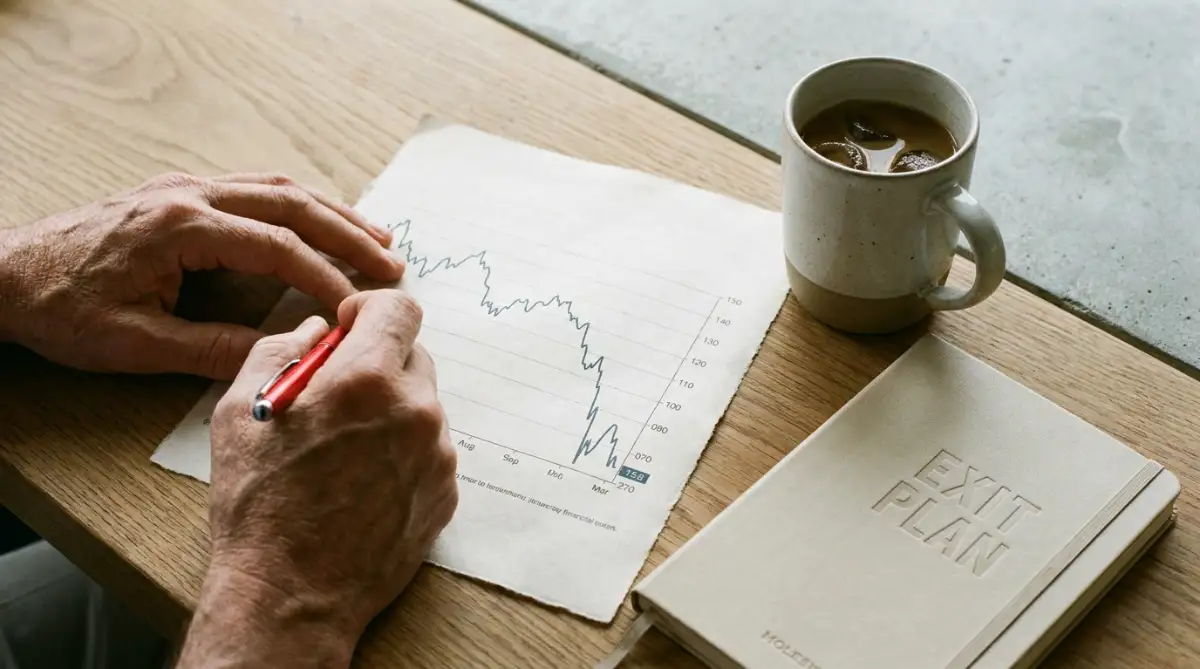
Mismanaging your emotions in the market can lead to long-term damage. It can affect your credit and your ability to buy a home later. You don't want to find yourself dealing with silent credit score killers because you let greed take over your life.
Lastly, be careful about "Outcome Bias." This means thinking you made a good choice just because you made money. Sometimes, people take a huge, stupid risk and get lucky.
They then think they are "geniuses" and take even bigger risks. This always ends badly. A good process is more important than a lucky win. Always focus on the logic behind your choice, not just the result on the screen.
The Path to Lasting Financial Peace
As we reach the end of this journey, I want you to take a deep breath. The world of investing is full of noise, but you have the tools to stay quiet. You now know that your greatest edge is not a computer program; it is your own discipline.
The "Instant Wealth Myth" is a shadow that disappears when you turn on the light of logic. You are building something real. You are building a future that is based on steady growth and calm choices.
This path is not as "exciting" as the one they show in the movies. But this path is the one that actually leads to the finish line. You are a marathon runner in a world full of people trying to sprint through a minefield.
Don't be discouraged when the market goes down. See it as part of the seasons of wealth. Just as winter always leads to spring, market cycles always turn. Your job is simply to stay in the game.
Start today by checking your emotional state. If you feel too excited or too scared, do nothing. Wait for the "cool" mind to return. This simple habit will save you more money than any expert tip ever could.
You have the power to change your financial story. It starts with a single choice to be patient. It starts with the decision to value your peace of mind more than a "get rich quick" dream.
Go forward with confidence. You are now part of the small group of people who truly understand how wealth is built. Stay disciplined, stay patient, and let time do the heavy lifting for you.
Your future self is already thanking you for the calm decisions you are making right now. You are doing a great job. Keep focusing on the long-term, and the rest will take care of itself.
If you found this guide helpful, stay tuned for more deep dives into the world of smart finance. Your journey is just beginning, and the rewards of discipline are waiting for you.
I know how boring it feels to just sit back and watch your money grow slowly, but I promise you that the peace of mind is absolutely worth it. The moment I stopped chasing fast cash and started trusting the slow process, my bank account finally started moving in the right direction. Take a deep breath, close your trading app for the day, and go enjoy a walk outside—your future self will thank you for it.
Disclaimer: The information provided in this article is for educational and informational purposes only and should not be considered as financial, legal, or professional advice. Investing in any asset, especially cryptocurrency, carries significant risk of loss. Always conduct your own research and consult with a licensed financial advisor before making any investment decisions. Any actions taken based on the content of this blog are at the sole risk of the reader.