
The Midnight Panic: When Borrowed Money Becomes a Heavy Burden
So, you took out a personal loan thinking it would quickly fix your money problems, but now it just feels like a heavy chain around your ankle. Trust me, I get it. Banks love to sell these loans as a simple, safe fix, but they rarely talk about the aggressive math that keeps you paying for years. Let’s cut the fluff today. I am going to show you exactly how lenders trap you in daily interest cycles, and more importantly, how you can trick the system to get your money back.
Have you ever woken up at 2 AM with a sudden, sinking feeling in your chest? For many people, that midnight panic is directly tied to an invisible weight: unsecured debt. We often borrow money with the best intentions, hoping to solve an immediate problem or cover an emergency expense.
But soon, the reality of managing those monthly payments begins to shadow every financial decision. It starts small, perhaps a skipped dinner out or ignoring a minor car repair. Slowly, that financial pressure creeps into your daily thoughts, stealing your peace of mind and causing unnecessary arguments with your loved ones.
Why does a financial product designed to "help" you often end up creating so much emotional distress?
The answer lies in how lenders market these products versus how they actually function in the real world. You are told there is no risk to your personal property, which sounds incredibly safe. But lenders are smart, and they never hand out money without a solid safety net in place for themselves.

Quick Summary: What You Will Learn Today
- The Bi-Weekly Trick: Why paying half your loan every 14 days destroys the bank's profit margins.
- The Hidden Collateral: How unsecured loans secretly hold your future credit score hostage.
- The Holiday Trap: Why skipping a payment in December ruins your payoff timeline.
- Renegotiation Scripts: Exactly what to say on the phone to force your lender to drop your rate.
The Illusion of "No Collateral": What Lenders Actually Secure
When you hear the term "unsecured," your brain naturally translates that to "risk-free." After all, if you do not have to put your house or your car on the line, what is the worst that can happen? This is the very first psychological trap borrowers fall into.
The truth is, an unsecured personal loan is absolutely secured. It is just not secured by a physical asset like a car or a house. Instead, the bank is securing the loan against something much more valuable: your future income and your peace of mind.
When you sign that digital contract, you are promising to hand over a portion of your upcoming paychecks for months or even years. If you hit a rough patch and cannot pay, they might not take your house right away. However, they will absolutely wreck your credit profile.
This credit damage acts as a modern-day financial prison. It stops you from renting a nice apartment, buying a reliable car, or even getting certain jobs. The invisible collateral is your future financial freedom.
Now that we understand the true nature of these agreements, we need to talk about taking control. You do not have to be a victim of a system designed to keep you paying interest forever.
There are specific, highly effective strategies you can use to beat the banks at their own game. These are not magic tricks, but calculated moves that anyone can apply right now.
Mastering Your Debt Trajectory: Insider Strategies for Borrowers
Once you realize how daily interest charges are eating your money, your entire perspective changes. Banks calculate your interest based on the exact number of days between your payments. This means the longer you wait to send them money, the more of your payment goes toward their profits instead of your actual debt.
To combat this, we are going to look at some advanced methods that shift the power back to you. You do not need a finance degree to use these tactics. You just need discipline and a clear understanding of the math.
The Bi-Weekly Micro-Payment Method
Most people wait for the end of the month, panic about the large sum due, and send one single payment. This is exactly what the lender wants you to do. By waiting 30 days, you allow the maximum amount of interest to build up on your account.
Instead, try cutting your monthly payment exactly in half. Send that half-payment every two weeks on your payday. Because there are 52 weeks in a year, this simple habit naturally creates 26 half-payments.
That equals 13 full payments over a 12-month period, rather than the standard 12 payments. You are secretly making an entire extra payment each year without feeling the squeeze on your monthly budget. More importantly, by paying every 14 days, you constantly reset the daily interest calculation, saving you a massive amount of money over the life of the loan.
My biggest mistake early on was waiting for the last possible minute to make one massive payment, honestly thinking I was doing the right thing. Once I realized I was just handing the bank free money in daily interest, I immediately switched to splitting my payments to match my paychecks. That one simple habit naturally shaved months off my repayment time without making my wallet feel any lighter.
The Real Math Behind Split Payments (Example: $10,000 Loan at 12%)
| Payment Strategy | What You Pay | Time to Pay Off | Total Interest Paid |
| :--- | :--- | :--- | :--- |
| Standard Monthly | $332 once a month | 36 Months | $1,957 |
| The Bi-Weekly Hack | $166 every two weeks | 32 Months | $1,643 |
| Your Net Result: | You barely notice the split! | Saved 4 Months | Saved $314! |
Notice how just cutting your payment in half and syncing it with your payday tricks the bank's daily interest calculator in your favor.
If you want to dive deeper into how to structure your daily spending to afford this, I highly recommend looking into managing personal budget strategies. A tight budget makes finding that extra half-payment incredibly easy.
The "Debt Snowflake" Principal Attack
You have probably heard of the debt snowball, but the "snowflake" method is far more aggressive for personal loans. This strategy involves taking tiny, random amounts of money and throwing them directly at your loan principal.
Did you skip your morning coffee run and save $6? Log into your banking app and transfer that $6 directly to your loan as a "principal-only" payment. Did you sell an old jacket online for $20? Send it straight to the bank.
These tiny amounts feel completely insignificant in the moment. However, when applied directly to the principal balance, they act like a hammer chipping away at the foundation of your loan. According to educational materials on debt management from the Consumer Financial Protection Bureau, reducing your principal directly is the fastest way to lower your overall interest burden.
The Mid-Term Renegotiation Script
Many borrowers believe that once they sign a loan contract, the interest rate is locked in stone forever. This is a massive myth. If your credit score has improved since you originally took out the money, you have immediate leverage.
Call your lender and ask to speak to the retention or loan modification department. You can use a very simple script: "I have been a loyal customer and made all my payments on time. My credit profile has improved significantly, and I am currently looking at refinancing offers from competing banks at a lower rate. What can you do to lower my current interest rate so I can keep my account with you?"
The worst they can say is no. But very often, banks will offer a slight rate reduction just to keep you from moving your balance to a competitor. If they refuse, you can always explore a balance transfer to a better lender, effectively giving yourself a raise.
Myth vs. Fact: Negotiating With Your Bank
- Myth: Asking for a better rate will hurt my credit score.
- Fact: A simple phone call to the retention department is not a hard inquiry. Your score stays totally safe.
- Myth: Banks never lower rates on existing personal loans.
- Fact: They absolutely do, but only if they think you are about to leave for a competitor. Always mention a "competing offer" on the phone.

Invisible Traps: Where Smart Borrowers Lose Their Footing
Taking action to pay off your balance is great, but the path is filled with hidden landmines. Lenders are experts in human psychology. They design specific features into their products that feel like helpful benefits, but are actually debt traps.
If you are not paying close attention, you can easily end up owing thousands of dollars more than you originally borrowed. Let us look at the most dangerous mistakes people make when trying to manage their unsecured obligations.
"Before we look at the specific landmines below, watch this quick video to see exactly how banks silently trick smart people into paying thousands in extra fees, and then keep reading to make sure you never fall for these sneaky tactics again!"
Falling for the "Skip-a-Payment" Holiday Trick
Around November and December, many banks will send you a cheerful email offering a "payment holiday." They tell you that you can skip this month's payment to free up cash for holiday shopping or family expenses. It feels like a massive relief and a generous gift from your bank.
Do not be fooled. This is one of the most profitable tricks in the banking industry. When you skip that payment, the interest for that month does not disappear.
Instead, that interest is capitalized, meaning it gets added to your total loan balance. From that day forward, you are now paying interest on top of your interest. You will end up paying significantly more over the life of the loan just for that one month of temporary relief.
The Double-Debt Consolidation Disaster
One of the main reasons people take out a personal loan is to pay off high-interest credit cards. On paper, this is a very smart move. You trade a 25% interest rate for a much lower fixed rate, saving money and simplifying your life.
The danger comes exactly three days after you pay off those credit cards. Suddenly, you look at your credit card app and see a zero balance. Your brain gets a massive hit of dopamine, and you instantly feel wealthy.
Because you did not fix the underlying spending habits that caused the debt in the first place, you start using those credit cards again. Six months later, you find yourself with a maxed-out credit card AND the massive personal loan payment. This double-debt scenario is emotionally crushing and forces many families into severe financial distress.
To avoid this, you must change your relationship with money before you consolidate. Understanding the psychology of spending is essential. Research on behavioral economics shared by the National Endowment for Financial Education shows that without addressing our emotional spending triggers, debt consolidation almost always leads to higher total debt.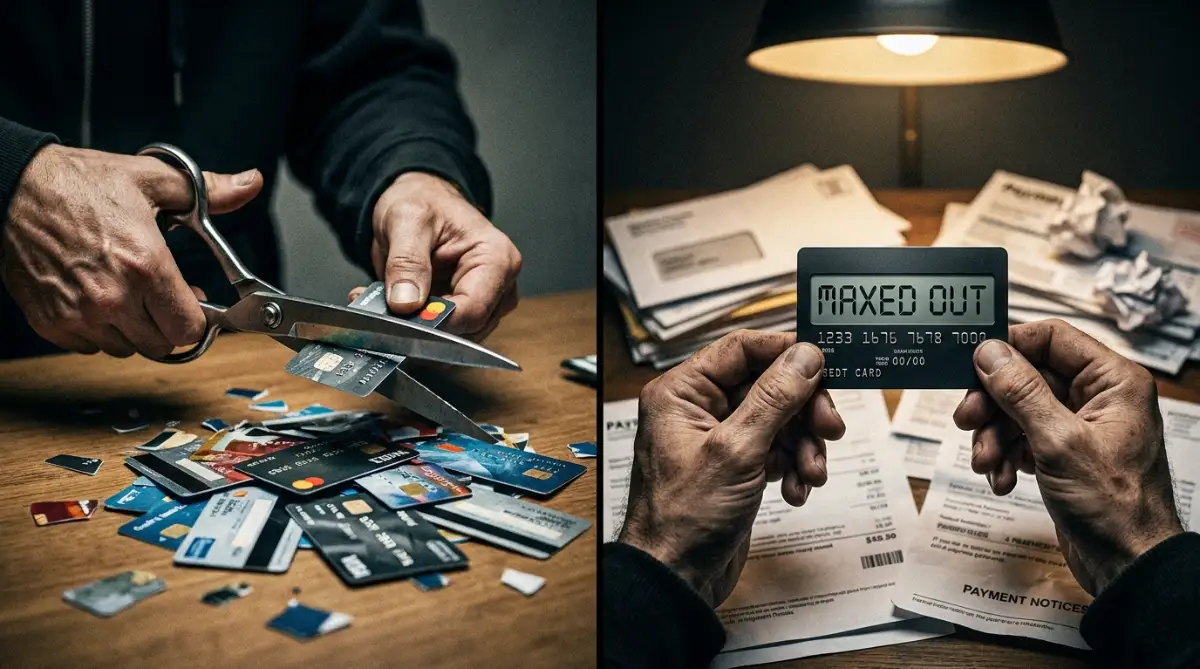
Blindly Trusting the Monthly Auto-Pay
Setting your loan payments on auto-pay is generally a good idea to avoid late fees. The mistake happens when borrowers set the auto-pay and completely ignore their loan statements for a year. They assume the bank is handling everything correctly.
Technology fails, and banks make administrative errors all the time. Sometimes, your extra payments get applied to future interest instead of your principal balance. If you are not logging in every month to verify exactly how your money is being applied, you could be losing hundreds of dollars.
Make it a habit to check your loan statement on the 5th of every month. Ensure every single dollar of your extra payments is going exactly where it belongs. If you want to build this level of discipline, checking out guides on understanding debt consolidation can give you the right mindset.
Common Questions Borrowers Are Afraid to Ask
Why is my balance barely moving after a year of payments?
Most personal loans are front-loaded with interest. This means during the first year, a massive chunk of your monthly payment goes directly to the bank's profit. Only a small sliver actually reduces the money you borrowed.
Can I really pay off my loan early without getting penalized?
This depends entirely on your specific contract. You must read the fine print and look for something called a "Prepayment Penalty." If your contract has one, the bank will actually charge you a fee for paying them back too quickly. Always check this before sending large lump-sum payments.
Does asking for a lower rate hurt my credit score?
Simply calling your current bank and asking for a rate reduction does not hurt your credit. It only becomes a hard inquiry if you formally apply for a brand new refinancing loan with a different lender.
Your Action Plan for Complete Financial Control
We have covered a lot of heavy information today, and it is completely normal to feel a bit overwhelmed. Dealing with financial stress is never easy, especially when the rules of the game feel hidden from plain sight. But you are now armed with the exact knowledge that lenders hope you never figure out.
You no longer have to sit back and let the bank dictate your financial future. You have the power to change the trajectory of your debt starting right this minute. It all comes down to taking small, deliberate actions every single day.
To make this incredibly simple, I want you to follow a specific routine tomorrow morning while you drink your coffee. Do not wait for the perfect time; just execute these three easy steps.
First, log into your banking portal and find your exact daily interest rate. Write that number down on a sticky note and put it on your bathroom mirror. Seeing exactly how much money evaporates every single day will give you intense motivation to fight back.
Second, set up just one micro-payment for your next payday. It does not matter if it is $10 or $50. The goal is to break the psychological barrier of only paying once a month and to start chipping away at that principal balance directly.
Third, if you used this loan to consolidate credit cards, physically remove those cards from your wallet. Put them in a ziplock bag, submerge them in a bowl of water, and freeze them in your freezer. If a real emergency happens, you have to wait for the ice to melt, which stops impulse spending instantly.
You can absolutely conquer this mountain. It requires patience, a bit of strategy, and the willingness to look your finances straight in the eye. For more detailed steps on taking control of your future, exploring strategies for smart financial planning is a great next step on your journey.
Take a deep breath, trust the math, and start executing your plan today. Your future self will thank you for the financial peace you are building right now.
Looking back, taking that very first step to break free from my loan felt completely terrifying, but it was easily the best thing I ever did for my family. You have the exact same power to rewrite your money story starting today, so take a deep breath and start fighting back for your peace of mind.
Disclaimer: The information provided in this article is for educational and informational purposes only and does not constitute financial, legal, or tax advice. Always consult with a certified financial planner or professional advisor before making any major decisions regarding your personal loans or debt management strategy.