The Heavy Weight of the "Experience Required" Trap
Have you ever looked at a job posting for an "entry-level" remote role, only to see they want three years of highly specific experience? It is honestly enough to make you want to throw your laptop straight out the window. I used to think the online job market was a rigged game meant only for tech wizards and coding geniuses. But the truth is, you do not need a fancy college degree or a massive resume to start making money from your living room. Let me show you how to skip the traditional job application completely and get hired just by using the skills you already have.
It felt like a cruel joke that you needed experience to get a job, but you needed a job to get experience. I almost gave up on my dream right there, thinking remote work was only meant for coding experts and marketing gurus.
The most painful part is the constant self-doubt that creeps into your mind. You start believing that your current skills are completely worthless in the modern online economy. The fear of starting over from scratch paralyzes you, keeping you stuck in a safe but deeply unfulfilling routine.
The truth is, the traditional corporate world has lied to you about what it takes to succeed online. You do not need a specialized degree or a decade of corporate tech background to make a comfortable living from home. You just need a completely new way of looking at the skills you already possess.
📌 The "Get Hired Today" Cheat Sheet
- Skip the boring resume: Nobody cares about a blank piece of paper. Build a free Google Drive portfolio showing real samples instead.
- Translate your past: Dealing with angry customers in a physical store makes you an absolute expert in remote client support.
- Pitch the solution, not yourself: Find a broken link or a typo on a company's website, fix it for free, and email it to them.
- Stop hiding in silence: If a work project confuses you, drop your ego and ask your remote manager a question immediately.
Unlocking Your Hidden Professional Value
Most beginners make a massive mistake before they even apply for a single remote role. They look at their current job as a cashier, a teacher, or a warehouse worker, and assume they have zero digital value. This completely ignores the actual psychology of why businesses hire remote workers in the first place.
Business owners do not actually care about fancy job titles or complex degrees. They only care about whether you can solve a specific problem for them reliably and consistently. When we look at your past history through a problem-solving lens, everything changes.
If you have ever managed a busy retail store floor, you already know how to handle high-pressure project management. If you have ever calmed down an angry customer over the phone, you possess high-level client communication skills. These soft skills are incredibly rare and highly valued in the digital workspace.
Let's actually translate your offline life into online money. Here is a quick look at how your old jobs map directly to highly paid digital roles:
Deconstructing the Myth of "Tech Skills"
People often assume that remote work means you have to learn complicated programming languages or advanced graphic design. This creates a massive mental block that stops people from taking action. In reality, the vast majority of remote work relies on basic logic, organization, and clear communication.
Think about a role like a Virtual Assistant or a Customer Success Representative. The primary tools you need to master are email, a calendar, and a team chat app like Slack. These are things you can easily learn through free online videos over a single weekend.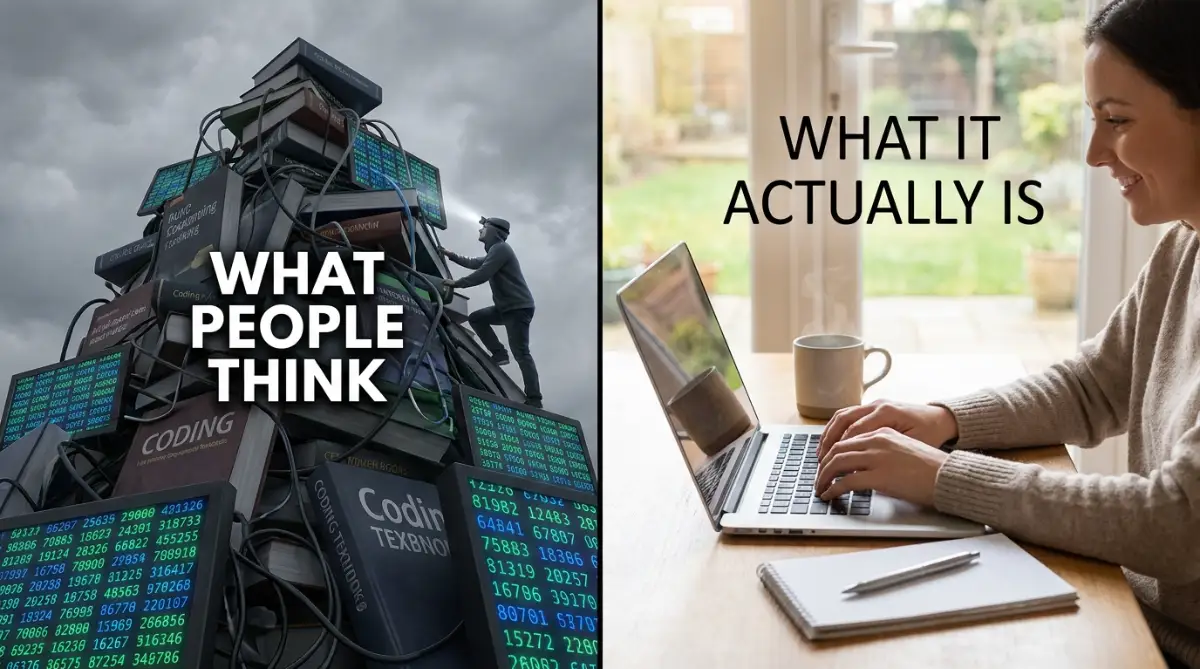
My biggest breakthrough happened when I stopped trying to learn complex coding and focused entirely on basic administrative organization. I realized that my ability to sort messy emails and schedule meetings efficiently was exactly what busy business owners were happy to pay for.
Choosing the Path of Least Resistance
When you are starting with zero experience, you must avoid highly saturated and complex fields. Do not try to become an advanced software developer overnight. Instead, pick a starter skill that has a very low barrier to entry but a high daily demand.
Data entry, basic social media scheduling, and email inbox management are fantastic entry points. These roles act as a stepping stone into the remote world. Once you get your foot in the door, you can always learn more advanced skills while you are getting paid.
Are you unsure about which beginner-friendly skill to pick first? Watch this excellent breakdown to see exactly which remote skills have the highest demand for complete beginners right now.
The Concept of "Proof of Work" Over Resumes
In the traditional job market, your resume is the only thing that matters. In the digital economy, a traditional resume is almost entirely useless for a beginner. If you submit a blank resume to a remote job board, you will simply be ignored.
The secret to bypassing the experience requirement is creating your own "Proof of Work." This means you stop asking for permission to show your skills and simply create examples on your own time. You have to prove you can do the job before anyone actually hires you.
Imagine you want to get a job managing social media for small businesses. Do not write a cover letter talking about how passionate you are about social media. Instead, spend three days creating a complete, thirty-day content calendar for a local coffee shop in your town.
Building a Free Digital Portfolio This Weekend
You do not need to spend any money on a fancy website to display your proof of work. You can use completely free platforms like Google Drive or Notion to organize your projects. A clean, easy-to-read document is always better than a messy, complicated website.
Let us say you want to apply for a basic copywriting role. Write three sample blog posts about topics you already understand well. Save them as PDF documents and put them in a neatly organized Google Drive folder.
When you approach a potential client, you can simply share that specific link. You instantly go from being a "beginner with no experience" to a professional who already has tangible work to show. This entirely shifts the power dynamic in your favor.
🔥 My 48-Hour Portfolio Challenge:
Stop reading about making a portfolio and just do it today.
- Find three local businesses on Google Maps with terrible, boring social media pages.
- Write two fresh, funny, and engaging posts for each of them.
- Save them in a clean Google Doc titled "Free Content Upgrades."
- Send the link to the owners.
- Congratulations, you just built a working portfolio out of thin air!
Treating the Job Hunt Like a Science Experiment
Applying for remote jobs is a numbers game, but it requires a very specific strategy. Most beginners blindly send out one hundred identical applications and hope for the best. This approach only leads to silence and deep frustration.
Instead, treat your applications like a focused science experiment. Track exactly what you are doing in a simple spreadsheet. Write down the company name, the role, the date you applied, and exactly which version of your portfolio you sent.
If you send twenty applications and get zero replies, your data is telling you something important. It usually means your initial pitch or your portfolio needs a major adjustment. You can then tweak your approach for the next twenty applications and measure the difference.
The Art of the Warm Cold Pitch
Job boards are incredibly crowded, with hundreds of people applying for a single beginner role within hours. To stand out, you have to bypass the traditional application process entirely. This is where the art of the direct pitch comes into play.
A direct pitch simply means finding the business owner or hiring manager on a platform like LinkedIn. You then send them a short, polite, and highly targeted message.
The mistake beginners make is asking for a job in the very first sentence. They sound desperate and pushy, which immediately turns the hiring manager away. You must approach them with a mindset of offering genuine value, not asking for a favor.
Structuring a Pitch That Actually Gets Read
A highly effective direct pitch is short, confident, and completely focused on their needs. Start by complimenting something specific about their recent work or their company. This proves that you are a real human being who actually did some basic research.
Next, clearly state the specific problem you noticed that you can solve for them. For example, you might mention that their recent podcast episodes do not have written summaries attached to them.
Finally, offer a risk-free sample of your work. You can say, "I took the liberty of writing a summary for your latest episode, which I have attached here." This proves your competence instantly and makes it incredibly easy for them to say yes to a quick chat.
Conquering the Mental Monster of Imposter Syndrome
As you start taking these actionable steps, your brain will try to self-sabotage you. You will experience a massive wave of imposter syndrome. A tiny voice in your head will tell you that you are not qualified and that someone will expose you as a fraud.
You must understand that every single successful remote worker on the planet felt this exact same way. Imposter syndrome is not a sign that you are failing. It is actually a biological sign that you are stepping outside of your comfort zone and growing.
The best way to silence this voice is through massive, consistent action. When you focus on completing small, daily tasks, you leave no room for anxiety. Action creates confidence, while overthinking only breeds fear.
Setting Up a Distraction-Free Environment
Your physical environment plays a massive role in your ability to transition into remote work. You cannot expect to build a new career while sitting on your bed with the television running. Your brain associates your bed with sleep, not deep focus.
You do not need an expensive home office setup to get started. You just need a dedicated corner of a room that is only used for your digital career transition. A cheap desk and a comfortable chair are all you need to signal to your brain that it is time to work.
Keep this space completely free from physical clutter and personal distractions. When you sit down in this specific spot, your family members must understand that you are in focus mode. Setting these firm boundaries early on will save you from constant interruptions.
Mastering Asynchronous Communication
The biggest difference between an office job and a remote career is how people talk to each other. In an office, you can just tap someone on the shoulder to ask a question. In a remote setting, this is considered highly disruptive.
Remote teams rely heavily on "asynchronous communication." This means you send a message, and the other person reads it and replies whenever it fits their schedule. You have to learn how to write incredibly clear messages so the other person does not have to guess what you mean.
If you ask a vague question, you might have to wait an entire day to get clarity. Always include all the necessary context, links, and proposed solutions in your very first message. This level of clarity will make you a highly desirable candidate for any remote team.
Leveraging Free Education Over Expensive Courses
There is an entire industry dedicated to selling thousands of dollars worth of courses to anxious beginners. You do not need to take out a loan to learn how to work remotely. Almost every basic digital skill can be learned completely for free.
Platforms like YouTube and free blog articles hold more value than most paid university courses. If you want to learn how to use a specific software, just search for a beginner tutorial. Spend your weekends practicing the tool instead of paying someone to tell you how it works.
Once you land your first entry-level remote job, the real education begins. You will learn more in your first two weeks of actually doing the work than you would in six months of watching videos. Focus on getting your foot in the door first, and let the company pay you to learn the rest.
Advanced Strategies to Fast-Track Your Remote Career
Getting your first remote job is only half the battle. The real secret to long-term freedom is knowing how to keep that job and continuously grow your income. The digital world moves incredibly fast, and what works today might be totally outdated by next month.
To build a truly sustainable career, you have to transition from a "beginner mindset" to a "business owner mindset." Even if you are working as a freelancer or a contractor, you must treat your daily tasks like you are running a high-end service agency.
This means being fiercely protective of your time and your energy. You cannot afford to wake up with a messy brain and just hope for the best. I highly recommend identifying and fixing those 7 sneaky morning habits that secretly ruin your daily focus and how to fix them so you can start your workday with complete clarity.
The "Skill Stacking" Method for Rapid Growth
Once you are comfortable with your entry-level remote job, it is time to start "skill stacking." This is a concept where you combine two very basic skills to create one highly valuable superpower.
Let us say you started by doing simple data entry for a marketing company. You already know how to use spreadsheets perfectly. If you spend just two weekends learning the basics of digital advertising terminology, you suddenly become a Data Reporting Specialist.
You do not need to be the absolute best in the world at either skill. You just need to be good enough at both to solve a specific problem that most people cannot. According to research on the future of work by the World Economic Forum, professionals who combine technical understanding with strong communication skills are currently the most difficult for companies to replace.
Mastering the Art of "Managing Up"
In a traditional office, your manager can physically see you sitting at your desk, which creates an illusion of productivity. In the remote world, you are completely invisible unless you are actively communicating. This is where the concept of "managing up" becomes your greatest asset.
Do not wait for your manager to ask you what you are working on. Be extremely proactive with your updates. Send a very brief bullet-point list at the end of every week detailing exactly what you accomplished and what you plan to do next week.
This level of transparency completely eliminates micro-management. When your boss feels confident that you are handling your responsibilities, they will give you more autonomy. If you want to ensure these weekly updates are actually read, you must know how to write professional emails for immediate responses so your manager always sees your value.
Building a Network Without Networking Events
The idea of "networking" usually brings up awful memories of awkward conferences and forced handshakes. In the digital economy, networking is much more organic and value-driven. You do not need to attend expensive seminars to build powerful connections.
Start by finding small, niche communities on platforms like Discord or specialized Reddit forums. Do not join these groups and immediately ask for a job. Instead, spend your first three weeks just answering questions and being genuinely helpful.
When you consistently provide value for free, people will naturally check out your profile. They will see your organized portfolio, and the job offers will start coming to you. A strong digital network is basically an insurance policy against future unemployment.
Creating a Sustainable Work-Life Boundary
One of the biggest lies about remote work is that you can work "whenever you want." While flexibility is great, a complete lack of structure will quickly destroy your mental health. When your bedroom is also your office, the line between resting and working becomes dangerously blurry.
You must establish a hard "clock-out" routine at the end of every single day. This could be as simple as closing your laptop and physically putting it inside a drawer. Just like we know that cleaning your desk instantly reduces anxiety and boosts focus, clearing your digital workspace tells your brain the workday is officially over.
If you do not create this boundary, you will find yourself checking work emails at midnight. This terrible habit directly exposes you to the hidden health risks of late-night scrolling you need to know about, which can lead to severe sleep deprivation. Protect your resting hours just as fiercely as you protect your working hours.

The Hidden Pitfalls That Ruin Remote Careers
Transitioning to an online career feels incredibly exciting at first, but that excitement can easily blind you to some dangerous traps. Many beginners completely sabotage their own success within the first three months because they fail to adapt to the realities of working alone.
It is crucial to recognize these pitfalls before they become permanent habits. When you work remotely, there is no manager standing over your shoulder to correct your mistakes. You have to become your own strictest supervisor. Let us look at the most common ways people accidentally ruin their new remote careers.
The Danger of Silent Confusion
The single biggest mistake a beginner can make is pretending they understand a task when they are actually totally lost. In a traditional office, you might lean over to a coworker and quietly ask for help. In a remote setting, beginners often feel too embarrassed to send a message asking for clarification.
They will spend six hours stressing out over a task that should have taken thirty minutes, all because they were afraid of looking stupid. When they finally deliver the work, it is completely wrong, and the manager is deeply frustrated by the wasted time.
You must drop your ego immediately. If a project brief is confusing, ask for a quick five-minute clarification call right away. Managers respect remote workers who ask intelligent questions much more than those who suffer in silence and deliver poor results.
Falling for the "Over-Employment" Fantasy
There is a popular trend on social media promoting the idea of working three remote jobs at the exact same time without telling the employers. They make it sound like a brilliant life hack to double your income overnight. This is a massive trap that almost always ends in disaster.
When you try to secretly juggle multiple full-time roles, your quality of work drops dramatically. You will start missing important meetings, forgetting deadlines, and making sloppy mistakes. Eventually, one or both of the companies will notice your severe drop in performance and fire you.
Instead of trying to cheat the system, focus on becoming incredibly valuable to one good client. Once you have built immense trust, you can negotiate higher pay or move to a more senior role. Building a solid reputation is always more profitable long-term than playing dangerous games with your employment.
The Trap of Physical Neglect
When you no longer have to commute or walk around an office building, your daily physical movement drops to almost zero. It is shockingly easy to spend ten straight hours sitting in the exact same chair, staring blankly at a glowing screen.
This level of physical inactivity will destroy your energy levels and ruin your posture. If you do not actively fix tech neck fast simple daily habits to reverse sitting damage, you will eventually develop chronic pain. This physical discomfort will make it impossible for you to focus on your actual work.
You have to treat your physical health like a mandatory business meeting. Schedule a daily thirty-minute walk outside, completely away from your phone and computer. This brief exposure to natural light and movement will reset your brain and dramatically improve your afternoon productivity.
Relying on Motivation Instead of Systems
Many beginners start their remote journey with a massive burst of motivation. They wake up early, organize their files perfectly, and tackle their tasks with intense enthusiasm. However, pure motivation usually burns out within the first three weeks.
When the initial excitement fades, they start sleeping in late and watching videos during work hours. They wait to "feel motivated" before starting a difficult task, which leads to massive procrastination.
You cannot rely on your feelings to pay your bills. You must build unbreakable daily systems. This means having a strict schedule for checking emails, a specific time block for deep work, and a clear list of priorities for the next day. A strong system will carry you through the days when you have absolutely zero motivation to work.
Your Final Blueprint for Digital Freedom
Stepping away from a traditional career path and moving into the digital world is a deeply courageous decision. It requires you to completely unlearn the old corporate rules and embrace a totally new way of proving your value.
Remember that every single expert you see online started exactly where you are right now: confused, slightly intimidated, and armed with nothing but a basic laptop. The only difference between them and you is that they refused to let the fear of "no experience" stop them from trying.
You do not need to have the entire ten-year plan figured out today. You just need to focus on taking the very first logical step. Clean up your digital workspace, identify one basic skill you can offer, and start building that simple proof of work this weekend.
My personal promise to you? The day I finally stopped applying for those "three years experience required" jobs and simply created a small Google Drive portfolio to pitch directly, everything changed. I realized that business owners are desperately looking for reliable problem-solvers, and once you show them you can do exactly that, your lack of formal experience will never matter again.
Common Questions About Starting a Remote Career
Do I need to buy expensive software to get started?
Absolutely not. You can run an entire freelance business using completely free tools like Google Workspace, Notion, and Canva. Wait until a client actually pays you before you invest any money into premium software subscriptions.
How do I explain my lack of experience in an interview?
Never apologize for your lack of formal experience. Instead, pivot the conversation directly to your proof of work. Say something like, "While I don't have a traditional agency background, I've completely built out this sample project that directly solves the problem you are facing."
Is it safe to quit my current job to learn remote skills?
No, it is highly unadvisable to quit your main source of income without a safety net. Keep your day job to pay the bills, and treat your remote career transition as a dedicated weekend project until your digital income matches your current salary.
What if a client asks me to do something I don't know how to do?
Honesty is always the best policy. Tell them, "I haven't used that specific platform before, but I am highly adaptable and will spend the weekend learning it." Most clients appreciate the transparency and are happy to give you the time to figure it out.
How do I avoid remote job scams?
If a job offer sounds too good to be true, it almost certainly is a scam. Never pay a company a "training fee" or buy equipment from a specific vendor they provide before starting. Legitimate companies pay you for your time; you never pay them for a job.
Disclaimer: The information provided in this article is for educational and informational purposes only and does not constitute professional career coaching, financial, or legal advice. The transition to remote work involves varying levels of risk depending on your personal circumstances. Always conduct thorough research and exercise caution when applying for online positions or interacting with potential clients.