
Why Leaving the Traditional 9-to-5 Felt Completely Impossible for Me
Let's be real—scrolling through social media and seeing people "working" from a sunny beach while you are stuck in morning traffic is incredibly frustrating. You want that freedom badly, but every remote job posting seems to require a giant list of tech skills you have never even heard of. I felt that exact same crushing panic a few years ago. But what if I told you that you already have the exact skills needed to make money online, and you just need to repackage them? Let me show you how to escape the daily commute without having to go back to college.
Every time you try to read an article about making money online, you are hit with complicated terms like SEO, CRM, or funnel optimization. The sheer volume of information feels like a heavy brick wall standing between you and your dream life. Your sleep gets ruined because your brain won't shut off, constantly worrying about your financial future and lack of freedom.
But I want you to know that these feelings of overwhelming fear are a completely normal psychological response to the unknown. Your brain is naturally wired to protect you from things it does not understand, which is exactly why starting feels so scary. Once you learn how to break this massive goal down into tiny, safe steps, that heavy anxiety will quickly disappear.
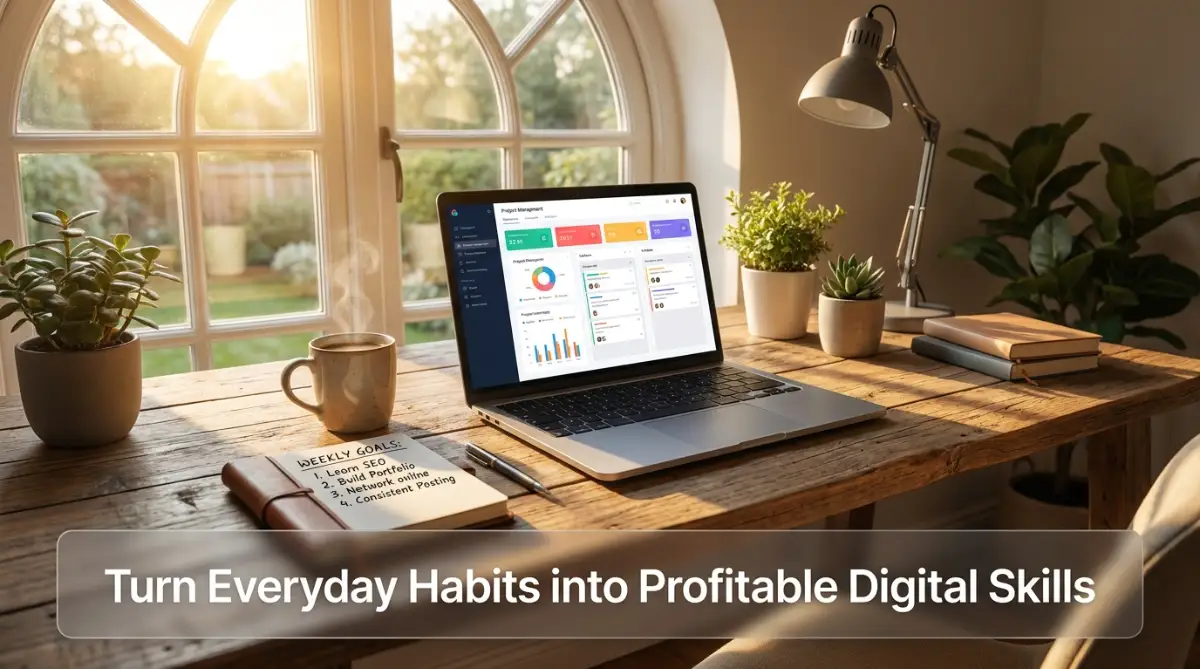
🚀 Your 9-to-5 Escape Plan At A Glance
- Repackage your daily habits: You do not need a fancy tech degree. Things like organizing family events translate directly to paid online project management.
- Build a 'Proof of Work': Skip the boring paper resume. Create 3 real-world samples (like a mock social media post) and show them directly to business owners.
- Solve, do not beg: When messaging potential clients, talk purely about fixing their current problems, not your personal need for a job.
- Charge for results: Stop pricing yourself by the hour, or you will actively punish yourself for working fast and efficiently.
Breaking Down the Remote Work Mystery
When you look at the digital job market from the outside, it looks like a highly exclusive club. You might think you need a fancy computer science degree or a natural talent for coding to get noticed.
The honest truth is that the digital economy runs on very basic human tasks that just happen to happen on a computer. Companies are not always looking for tech geniuses; they are mostly looking for reliable people who can solve simple daily problems.
Let me share a quick comparison to help you see how your current life fits into the online world perfectly.
Everyday Habits vs. Digital Job Titles
When you look at this table, you can easily see that you already possess basic skills that businesses need. The only thing you are missing is the specific digital wrapping paper to present these skills to online clients.
Once you understand this simple fact, the massive wall of fear starts to shrink down to a manageable size. You do not need to become a completely different person; you just need to translate what you already know.
🛑 Myth vs. Reality: The "Tech Genius" Trap
- The Myth: You need to know complex coding, advanced Photoshop, and website building to work online.
- The Reality: Most small business owners are completely drowning in messy email inboxes and unorganized Google Drive folders. If you can politely answer an email and drag a file into the correct folder, you can literally get paid as a Virtual Assistant today.
Rewiring Your Brain for Uncomfortable Learning
Starting something new without any background knowledge requires a massive shift in how you process failure. When we are children, falling off a bicycle is expected, but as adults, we expect to be perfect on the first try.
This expectation is scientifically proven to block your ability to learn through a concept known as high cognitive load. When you stress over needing to be an expert immediately, your brain simply shuts down its ability to absorb new information.
To beat this, you have to give yourself complete permission to be terrible at your new skills for at least a few weeks. Think of it like going to the gym for the very first time; your muscles will ache, and you will feel out of place.
But after a few consistent visits, the movements start to feel entirely natural and your confidence naturally grows. You need to apply this exact same patience to learning how to use remote software, write emails, or organize data.
Pro Tip: I used to get so frustrated wh en I could not figure out how to use a simple tool like Google Sheets. My biggest breakthrough happened when I simply started typing my exact problem into YouTube, realizing that every single mistake I made had already been solved by someone else. You do not have to be smart enough to know the answer; you just need to be patient enough to search for it.
Watch This Before You Overthink Your Next Move
If you are feeling completely stuck and wondering what exact skills you should focus on today, this short video breaks down the most beginner-friendly digital paths perfectly.
Designing Your Personal "Proof of Work"
The biggest trap beginners fall into is sending out hundreds of blank resumes and praying for a lucky response. Traditional jobs rely heavily on your past work history, but the online world cares entirely about what you can actually do right now.
This is where the concept of "proof of work" becomes your ultimate secret weapon for bypassing the experience requirement. You do not need a boss to give you permission to start doing the work you want to be hired for.
Let us say you want to become a remote social media assistant for small local businesses. You do not need a single client to start proving you know exactly what you are doing.
You can simply find three local coffee shops, look at their Instagram pages, and create five better sample posts for each of them. You put these posts into a clean Google Drive folder and call it your personal portfolio.
When you approach a client, you are not begging them to trust your resume; you are showing them the actual value you bring. This completely removes the risk for the business owner, making them incredibly likely to hire you regardless of your background.
Creating a Safe Space for Deep Focus
Transitioning into an entirely new career requires a high level of mental energy, which means your physical environment matters deeply. If you try to learn new digital skills while sitting on your bed watching television, your brain will struggle to retain anything.
You need to create a dedicated corner in your home that signals to your brain that it is time to work. It does not need to be an expensive office; a small, clean table in the corner of your bedroom works perfectly fine.
The psychology behind this is simple: humans are heavily influenced by environmental triggers and physical habits. When you sit in the same exact spot every single day at the same time, your mind automatically shifts into focus mode.
Start by clearing away any clutter on your desk, keeping only your computer, a notebook, and a glass of water nearby. Put your mobile phone in a completely different room to eliminate the constant temptation of checking social media.
Just one single hour of deep, uninterrupted focus at this desk is worth more than four hours of distracted, half-hearted reading. Building this small daily habit will accelerate your learning speed far beyond what you currently think is possible.
Finding the Right Skill for Your Personality
Many beginners make the painful mistake of choosing a digital skill based entirely on which one pays the most money. They force themselves to learn complex coding or advanced advertising, even though they naturally hate staring at complicated numbers.
This is a guaranteed recipe for burnout because learning something you hate takes ten times more mental effort. Instead, you need to align your new digital career path with your natural human personality and daily habits.
If you are someone who loves organizing things, planning trips, and keeping a tidy calendar, Virtual Assistance is your perfect match. If you are naturally talkative, empathetic, and love helping people solve problems, you will thrive in Remote Customer Support.
If you are introverted, love reading, and prefer expressing yourself through text, freelance Content Writing will feel incredibly natural to you. When your digital work matches your true personality, learning stops feeling like a chore and starts feeling like a fun hobby.
Do not worry about becoming an absolute master in your chosen field right away. Your only goal right now is to learn just enough to be slightly more helpful than the average busy business owner.
The Power of Cold Connecting
Once you have a tiny bit of knowledge and a small sample portfolio, you have to learn how to talk to strangers online. The idea of cold emailing or sending messages to business owners terrifies almost every single beginner.
We imagine that these business owners are going to laugh at us or send angry replies demanding that we leave them alone. But the reality is that most business owners are desperately overwhelmed, completely exhausted, and begging for someone to help them.
When you reach out, you must completely avoid talking about yourself, your lack of experience, or your need for money. Instead, your message should focus entirely on a specific problem you noticed in their business and how you can fix it.
For example, a bad message says: "Please hire me, I am a new virtual assistant looking for any work." A great message says: "I noticed your website's contact form is broken; I can manage your customer emails for a few hours a week so you do not miss any sales."
The second message is incredibly helpful, directly solves a painful problem, and completely ignores the fact that you are a beginner. Value always wins over experience when you are speaking directly to a business owner's biggest daily headaches.
Protecting Your Mental Health During the Journey
As you start taking these small actions, there will inevitably be days where you feel completely useless and defeated. You might send out twenty helpful messages and get absolutely zero replies, which will instantly trigger your imposter syndrome.
It is incredibly important to understand that silence from clients is almost never a personal rejection of your worth. Business owners are busy, emails get lost in spam folders, and sometimes the timing is just completely wrong.
You have to detach your personal happiness from the immediate results and instead focus entirely on the daily actions you control. Celebrate the fact that you were brave enough to send those messages, regardless of what the outcome was.
Surround yourself with positive inputs by joining free online communities where other beginners are sharing their own struggles and wins. Seeing other normal people overcome the exact same fears will give you the emotional fuel you need to keep pushing forward.
Remember, transitioning into a remote career is not a quick sprint; it is a slow, steady walk toward a much better life. Every single time you sit down at your computer to learn something new, you are actively building a bridge away from your old, unhappy routine.
Moving From Beginner to Highly Paid Professional
Once you land your very first online gig, a brand new kind of nervous energy usually sets in. You might start wondering how to keep this client happy so they do not fire you after the first week. The transition from just getting hired to actually building a sustainable online career requires a shift in how you operate daily. You are no longer just an employee waiting for instructions; you are now a trusted problem solver.
I remember shaking with anxiety when my first remote client asked me for an update on a simple data entry project. I thought they were checking up on me because they did not trust my skills. But the reality is that remote business owners just want peace of mind while they sleep. If you can master a few advanced habits early on, you will quickly become the one person they refuse to work without.
The Secret Art of Managing Client Expectations
The most profitable skill you can develop has absolutely nothing to do with fancy software or technical coding. It is the simple ability to communicate clearly before a problem actually happens. When you work from your living room, your client cannot walk past your desk to see if you are busy. This invisible gap can easily create unnecessary panic for someone who is paying you their hard-earned money.
To fix this, you must build a habit of sending very short, friendly updates at the end of your workday. You do not need to write a massive novel detailing every single mouse click. Just send a quick message stating what you finished today and what you plan to tackle tomorrow.
If you are struggling with exactly how to phrase these messages without sounding awkward, learning the basics of writing professional emails for immediate responses can completely change your confidence. When your communication is clear, clients will trust you with bigger tasks and happily pay you more.
Building a Reputation Stacking System
In the regular working world, you ask for a raise by sitting in a stiff office and begging your boss for a yearly review. In the digital economy, your income grows automatically based on the public reputation you build over time. Most beginners make the mistake of doing great work but completely forgetting to ask for proof.
Every single time a client sends you a message saying they loved your work, you need to capture it immediately. Ask them nicely if you can take a screenshot of their kind words to use in your private portfolio. Over the span of a few months, you will gather a massive folder filled with happy testimonials from real business owners.
This collection of praise becomes your golden ticket to charging higher rates with your next client. When a new prospect sees that five other business owners already trust you, their buying resistance completely melts away. You do not have to be a smooth salesperson; you just let your past results do all the heavy lifting.
Mastering the Daily Remote Routine
Working in your pajamas sounds like an absolute dream until you realize your brain slowly stops recognizing when it is time to focus. The line between your relaxing home life and your professional work life will completely blur if you are not careful. You might find yourself answering client messages at midnight while trying to watch a movie with your family.
To protect your peace, you must treat your morning routine with intense respect and discipline. Waking up and immediately staring at a bright screen is one of those morning habits that secretly ruin your daily focus before you even begin. Instead, force yourself to get out of bed, take a shower, and put on clean, comfortable clothes.
This physical change signals to your brain that the rest period is over and professional mode has officially started. According to recent psychological studies published by the MIT Sloan Management Review on remote work productivity, establishing physical boundaries prevents long-term burnout. You need to protect your personal energy just as strictly as you protect your work deadlines.
The "Value Over Hours" Pricing Strategy
When you first start out, charging an hourly rate feels like the safest and most logical option. But this traditional mindset actively punishes you for getting faster and better at your job. If you learn how to finish a five-hour task in just two hours, your paycheck suddenly gets cut in half.
This is why successful digital professionals eventually shift to charging a fixed project rate instead. Let us imagine a client needs a messy spreadsheet organized for a big presentation on Friday. They do not actually care if it takes you ten hours or ten minutes; they only care about having a clean file by Friday morning.
By quoting a flat price for the finished result, you completely disconnect your income from the clock. This allows you to scale your earnings rapidly without having to sacrifice your entire weekend sitting at a desk. You are paid for the headache you remove, not the exact minutes you spent staring at a screen.
💡 Quick Cheat Sheet: How to price your first flat-rate project
- Guess exactly how many hours the task will take you (e.g., 3 hours).
- Multiply that by a fair hourly rate you would be happy with (e.g., $20/hour = $60).
- Add a 20% "safety buffer" for unexpected problems ($60 + $12 = $72).
- Quote the client $75 flat. You get paid for removing their headache, not for watching the clock!
Upgrading Your Home Office Ergonomics
Your physical body is the primary engine that runs your new digital career, and sitting at a laptop all day is incredibly harsh on it. Many beginners start working on a soft couch or sitting cross-legged on their bed to save money on furniture. Within a few short weeks, they develop intense lower back pain and severe tension headaches that make looking at a screen miserable.
You do not need to spend thousands on luxury office equipment, but you absolutely must invest in your posture. Elevate your laptop on a stack of sturdy books so the screen sits exactly at eye level. This tiny adjustment is one of the easiest simple daily habits to reverse sitting damage and protect your spine.
Your physical comfort directly controls your mental patience when dealing with difficult client requests. If your neck hurts constantly, you will naturally become grumpy and start rushing through your work just to escape the chair. Take care of your body first, and your earning potential will naturally follow.

The Hidden Traps That Destroy New Remote Careers
The path to online success is beautifully rewarding, but it is also littered with silent traps that catch almost every beginner off guard. When you are sitting alone in your room, it is incredibly easy to develop toxic work habits without anyone noticing. I have watched so many talented people give up on their remote dreams simply because they stepped on these invisible landmines. If you know exactly what these traps look like, you can easily walk right past them.
Falling Victim to the Shiny Object Syndrome
The internet is flooded with loud, flashy advertisements promising you can become a millionaire overnight if you just buy one specific course. One day you are focused on learning virtual assistance, and the next day a YouTube guru convinces you to try dropshipping instead. This constant jumping from one trendy idea to another is called shiny object syndrome, and it completely ruins your progress.
When you switch skills every single week, you remain a beginner forever. You never actually push through the uncomfortable learning phase required to become genuinely good at anything. The real money and freedom only come when you pick one boring, reliable skill and stick with it for at least six months straight.
Ignore the flashy screenshots of sports cars on social media; those are specifically designed to manipulate your emotions and empty your wallet. Focus purely on solving simple, everyday problems for real business owners, and you will build a much safer, stress-free income stream.
Treating Remote Work Like a Permanent Vacation
Because nobody is standing over your shoulder with a stopwatch, the temptation to slack off is dangerously high. You might tell yourself you will just watch one quick episode of a television show during your lunch break. Three hours later, you are still on the couch, your client is waiting for an update, and a massive wave of guilt crashes over you.
When you fail to deliver on your promises because of poor discipline, word travels surprisingly fast in digital communities. Business owners talk to each other, and losing their trust over something as silly as an afternoon nap is a painful lesson. You have to become your own strict manager, enforcing deadlines just as seriously as a traditional corporate boss would.
The Silent Danger of Total Isolation
When you no longer have to commute or attend forced office parties, you might celebrate the peace and quiet at first. But as the months roll by, staring at the exact same four walls every day can start playing tricks on your mental health. Humans are naturally social creatures, and total isolation can lead to deep feelings of unexplainable sadness and anxiety.
According to guidelines on the psychological impact of workplace isolation published by the American Psychological Association, prolonged remote work without social effort heavily increases depression risks. You can easily go an entire week without speaking out loud to another human being if you are not paying attention.
To fight this invisible drain on your mood, you have to force yourself to leave the house every single day. Go work from a local coffee shop for two hours, take a walk in a busy park, or simply call a friend during your lunch break. Your mental health is the foundation of your digital career; if it crumbles, your ability to make money disappears completely.
Ruining Your Financial Stability by Underpricing
Out of pure desperation to get their first job, many beginners offer to work for pennies just to beat the competition. While this might land you a quick gig, it instantly traps you in a cycle of overwhelming exhaustion. When you charge extremely low rates, you have to work fourteen-hour days just to afford basic groceries.
This leads directly to severe burnout, making you deeply resent the exact remote freedom you originally fought so hard for. Plus, high-quality clients actively avoid freelancers who price themselves too cheaply, assuming the low cost means terrible quality. Learning to value your time properly is one of those powerful everyday habits that will secretly grow your bank account without requiring extra effort.
Have the courage to ask for a fair, livable wage right from the start. A client who argues with you over a few extra dollars is almost always the same client who will demand endless revisions and ruin your weekends.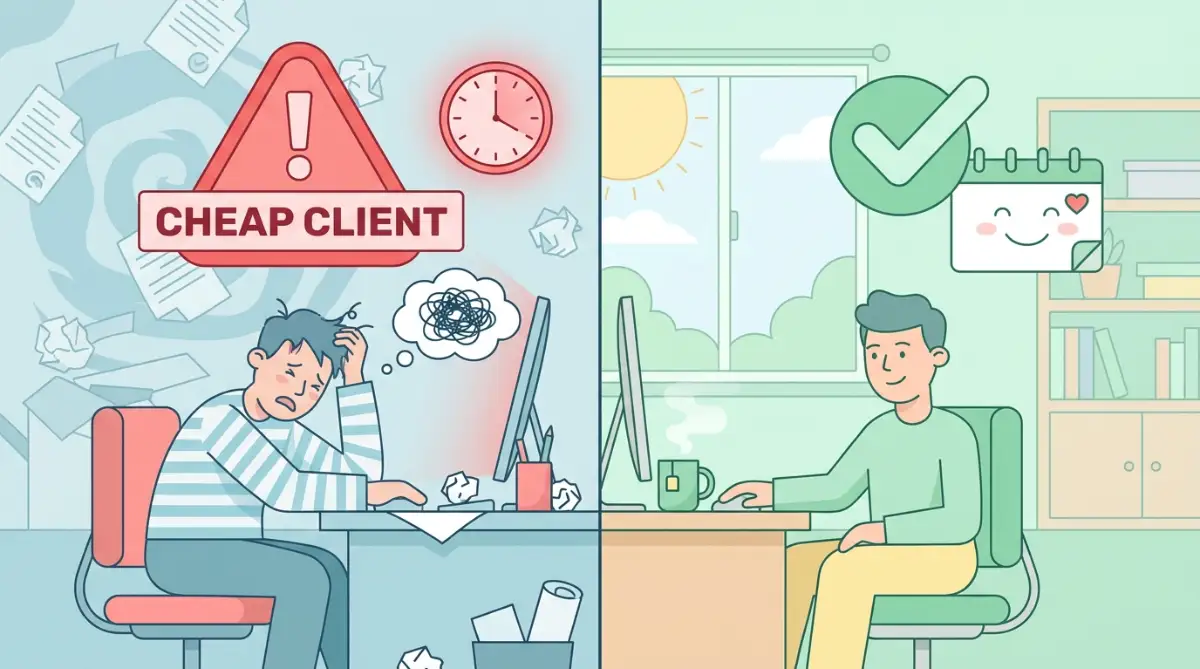
Ignoring Digital Security and Privacy
When you work for someone else online, you are often given access to their private business emails, customer data, and sometimes even their financial spreadsheets. Many beginners treat this sensitive data casually, leaving their laptops unlocked in public cafes or using easily guessable passwords. If your computer gets hacked and a client's business is damaged, your reputation will be destroyed instantly.
You must adopt a strict security mindset from day one to protect both yourself and the people who hire you. Use a dedicated password manager and never share your login details with anyone, even close family members. Learning the basics of setting up a secure smart home network is a great first step to ensuring your home Wi-Fi is locked down tight.
It is also incredibly wise to follow basic digital security guidelines provided by trusted agencies like CISA to understand how modern phishing scams work. When clients see that you take their data security seriously, they instantly view you as a high-level professional rather than a careless beginner.
Your Exact Action Plan for Tomorrow Morning
Transitioning into a completely new way of working is never going to happen overnight, and that is perfectly okay. The goal right now is not to become a millionaire by next Friday; the goal is simply to prove to yourself that earning a living online is entirely possible. You have already absorbed the hardest part by understanding how the digital world actually operates behind the scenes.
Tomorrow morning, do not overwhelm yourself by trying to learn five different software programs at once. Start by simply picking one basic skill that matches your personality and spending just thirty minutes reading about it. If you ever feel your chest tightening with anxiety, take a deep breath and remind yourself that every expert alive today started exactly where you are sitting right now.
To instantly trigger a sense of calm and control before you begin your new learning session, start by organizing your physical space. You will be amazed at how cleaning your desk instantly reduces anxiety, giving your brain the breathing room it needs to absorb fresh ideas.
I know exactly how terrifying it feels to stare at a blank screen, wondering if you are making a massive mistake by trying something new. But my own life completely transformed the exact moment I stopped letting fear make my career decisions for me. You genuinely have what it takes to build a beautiful, flexible life on your own terms, as long as you promise not to quit on your hardest days.
Honest Answers to Your Biggest Remote Work Questions
Do I need an incredibly powerful and expensive computer to start working online?
Not at all, as most beginner tasks only require a standard web browser and a stable internet connection. Unless you are planning to edit heavy 4K videos or render 3D animations, a basic laptop from five years ago will work perfectly fine. Your energy is much better spent improving your communication skills rather than stressing over hardware upgrades.
How do I safely receive money from clients who live in completely different countries?
Receiving international payments is actually incredibly simple thanks to trusted platforms like PayPal, Payoneer, or Wise. These services allow your client to pay with their local credit card while depositing the funds directly into your local bank account. Always ensure you send a professional digital invoice before starting the work to keep everything legally documented.
Is it genuinely possible to build a remote career using only a smartphone?
While you can definitely handle light emails and social media updates from a phone, trying to build a full-time career on a tiny screen will quickly become deeply frustrating. You cannot easily manage complex spreadsheets, type long articles quickly, or organize multiple browser tabs on a mobile device. Borrowing or saving up for a cheap, second-hand laptop is absolutely necessary for serious, long-term success.
What should I do if a client asks for a university degree I do not have?
The amazing truth about the modern digital economy is that traditional degrees are becoming completely irrelevant for most freelance roles. If a client asks for a degree, simply pivot the conversation back to your practical portfolio and the real-world value you offer. Show them a free sample of your work; strong proof of your actual ability will always beat a piece of paper.
How many exact hours a day do I actually need to work to survive?
The beauty of this lifestyle is that you completely control your own schedule based on your personal financial needs. Some people work just four intense hours a day and make enough to live comfortably, while others choose to work longer to save for big goals. As long as you meet your client deadlines and communicate clearly, you decide exactly when you clock out.
Disclaimer: The information provided in this blog post is for educational and informational purposes only and should not be construed as financial, legal, or professional career advice. Earning potential and career transitions vary greatly depending on individual effort, market conditions, and location. Always conduct your own thorough research and consult with a certified professional before making any major financial or career changes.