
The Hidden Agony of Denied Medical Coverage
So, you survived the surgery, made it home, and finally started feeling like yourself again. Then the mail arrives. You rip open a letter from your health insurance, expecting a standard summary, but instead, you see a five-figure bill glaring back at you. Your claim was denied. I've been in that exact spot, staring at a piece of paper that threatened to wipe out my entire savings over a simple typo. Let's fix this so it never happens to you.
Suddenly, you open your mailbox and find an envelope from your health provider. You open it, expecting a standard receipt, but instead, your heart drops. Your claim has been denied.
A massive medical bill is staring right back at you. All of a sudden, your physical pain is replaced by an overwhelming sense of financial dread. You pay your monthly premiums on time, every single month. How could this happen to you?
This exact scenario is playing out in thousands of households every single day. People are losing sleep, emptying their emergency savings, and fighting endless phone battles with automated customer service robots. The mental toll of fighting a massive health corporation is exhausting.
I will never forget the day I opened my mailbox a month after a routine knee surgery and found a bill for over $15,000. My heart started pounding, and I almost emptied my entire savings account right then out of pure panic. It turns out, my insurance denied the whole thing just because a billing clerk typed a single number wrong on my paperwork.
I have seen families take out personal loans just to cover bills that their policy should have paid for. This happens because most of us were never taught how to properly navigate the confusing world of medical billing. We just hand over our ID cards at the front desk and hope for the best.
Hope is not a strategy when it comes to your finances. Let's explore exactly what is going wrong behind the scenes.
 The TL;DR: How to Stop Claim Denials Before They Happen
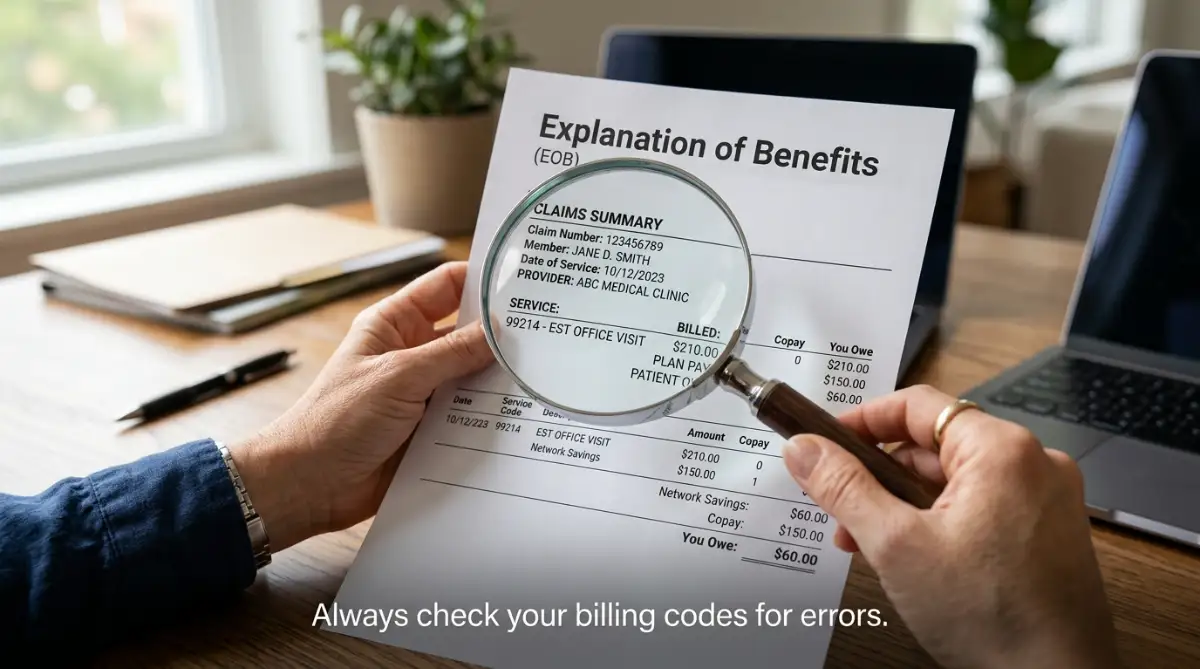
- Never pay a hospital bill until you match it against your official Explanation of Benefits (EOB).
- Always request a fully itemized receipt to catch hidden coding typos.
- Verify your specific doctor's network status, not just the hospital building itself.
- Keep a dedicated notebook for every single phone call, logging names and reference numbers.
Decoding the Traps: Why Your Claims Get Rejected
Filing a medical claim is a lot like filing your taxes. If you miss a single checkbox, the entire document gets bounced back to you. The burden of proof is always entirely on your shoulders.
To fix this problem, we need to completely change how we interact with medical facilities. Let's break down the hidden traps that are secretly draining your wallet.
Mistake 1: Blindly Trusting the Hospital's Billing Department
When you leave a clinic, you assume the billing department knows exactly what they are doing. This is an incredibly dangerous assumption to make. Medical coders are human, and they make typing errors every single day.
A single wrong number in a CPT (Current Procedural Terminology) code can change your routine checkup into an experimental surgery on paper. When the insurance computer scans that incorrect code, it automatically triggers a rejection. They will not call you to clarify. They will just send you the bill.
Ask the Expert: What if I already paid a bill with a coding error?
Can I get my money back? Yes, you absolutely can. If you paid a bill and later found out the hospital used the wrong billing code, immediately call their billing office and request a "coding review." Once they fix the code and submit the correct version to your insurance, the hospital is legally required to refund your overpayment. It takes a few weeks, but it's your money—go get it!
Actionable Advice:
Always ask for an Itemized Medical Bill before you pay a single penny. An itemized bill breaks down every single band-aid, pill, and procedure you were charged for. Compare this detailed list against your Explanation of Benefits (EOB).
If you see a charge for a medication you never received, call the hospital's billing department immediately. Ask them to audit the bill and correct the coding error before they send it back to your insurance.
For years, I made the huge mistake of paying my hospital bills the second they arrived in the mail just because the red "past due" letters scared me. I finally realized that waiting for my official Explanation of Benefits (EOB) and forcing the hospital to give me an itemized receipt actually saved me thousands of dollars in fake charges.
Myth vs. Reality: The "In-Network" Illusion
The Myth: If I go to a hospital that is in my network, every single doctor inside that building is also in my network.
The Reality: Hospitals are just buildings. Many of the professionals working inside are independent contractors.
Mistake 2: Falling Victim to the "Surprise Out-of-Network" Trap
This is perhaps the most emotionally devastating mistake patients make. You do your homework, find a hospital approved by your provider, and schedule your procedure. You think you are completely safe.
During your surgery, an anesthesiologist comes into the room to administer your medication. You do not get to choose this doctor. A few weeks later, you get a massive Surprise Medical Bill.
It turns out that specific anesthesiologist was not in your approved network, even though the hospital was. Your policy refuses to cover their fee. You are now legally responsible for thousands of dollars.
"Watch this short video to see why your free credit app score is wildly different from your actual mortgage score, and then keep reading below to learn how to fix the gaps before you apply!"
Actionable Advice:
Before any scheduled procedure, ask the facility for a complete list of every specialist who will be in the room. This includes the surgeon, the anesthesiologist, and the radiologist reading your scans. Call your insurance company and verify each specific doctor by their National Provider Identifier (NPI) number.
If an out-of-network doctor is scheduled, you have the right to request an in-network alternative. Speak up before the anesthesia hits your system.
Quick Comparison: Explanation of Benefits (EOB) vs. Medical Bill
It is extremely easy to confuse these two documents. Understanding the difference is your first line of defense.
Feature Explanation of Benefits (EOB) Medical Bill
Sender Your Insurance Company Your Doctor or Hospital
Purpose Explains what they covered and why Demands payment for services rendered
Action Needed Review for errors and denials Pay the remaining balance (if accurate)
Warning Sign "Amount Not Covered" is unusually high "Final Notice" warnings
Mistake 3: Skipping the Pre-Authorization Process
Imagine throwing a huge party in a rented hall without asking the owner for permission first. The owner would probably kick you out or charge you a massive penalty fee. Your health coverage works the exact same way.
Many expensive tests like MRIs, CT scans, and specialized surgeries require Pre-Authorization. This means your doctor must officially prove to the insurance company that the procedure is medically necessary before it happens.
Patients often assume their doctor handles all of this automatically. Sometimes, the doctor's office forgets to send the paperwork. If you get the MRI without that prior approval on file, your claim will instantly be denied.
Actionable Advice:
Never assume the paperwork is done. A week before your major test or surgery, call your insurance directly. Ask the representative, "Is there an approved pre-authorization on file for my upcoming procedure on this specific date?"
If they say no, hang up and call your doctor's office immediately. Force them to submit the paperwork and do not proceed with the test until you have a confirmation number in your hand.
Expert Insight: The Power of Documentation
"When dealing with health coverage disputes, if it is not documented, it simply never happened. Your memory is not evidence. A paper trail is your greatest weapon."
Mistake 4: Relying on Phone Calls Without Keeping Records
When a claim gets complicated, you will likely spend hours on the phone with customer service. The representative might tell you, "Don't worry, we are reprocessing this and it will be covered." You feel relieved and hang up.
A month later, another denial letter arrives. You call back, but a different representative has no record of your previous conversation. You are back at square one, and your payment deadline is getting dangerously close.
Actionable Advice:
Start a dedicated notebook just for medical billing issues. Every single time you call your provider, write down the date and the exact time of the call.
Most importantly, ask the representative for a Call Reference Number and write down their first name. If a promise is made on the phone, ask them to email you a written confirmation right then and there. This detailed log will save you if you ever need to file a formal dispute.
Mistake 5: Giving Up After the First Rejection
Insurance companies rely heavily on patient exhaustion. They know that a large percentage of people will simply give up and pay the bill out of pocket when they see the word "Denied."
A denial is rarely the final answer. Often, it just means they need one additional piece of information, like a doctor's chart or a specific test result. Sometimes the rejection is generated entirely by an automated computer algorithm.
Actionable Advice:
You have the absolute right to Appeal any denied claim. Read the denial letter carefully; it usually states the exact reason for rejection at the very bottom.
Gather your medical records, write a clear letter explaining why the service was necessary, and submit your appeal before the stated deadline. Many successfully appealed claims are overturned simply because the patient refused to back down.
Mistake 6: Missing the Silent Filing Deadlines
Time is not your friend when you are dealing with medical billing. Every policy has a strict Timely Filing Limit. This is the maximum amount of time allowed to submit a claim or file an appeal after a medical service is provided.
Depending on your specific plan, this window can be as short as 90 days. If your doctor's office is disorganized and submits the paperwork on day 91, the claim is permanently denied. The worst part? The hospital might then try to bill you for their own delay.
Actionable Advice:
Set calendar reminders on your phone the moment you leave the hospital. Track your claim status online through your patient portal.
If 30 days pass and you do not see an EOB generated, call the provider to find out why there is a delay. Do not let their administrative laziness run out your legal clock. Stay proactive and monitor your accounts weekly.
Taking control of your health coverage requires a shift in mindset. You are not just a patient; you are the manager of your own medical finances. By paying attention to these hidden administrative details, you can protect your peace of mind and keep your hard-earned money exactly where it belongs.
Mastering the System: Pro-Level Strategies for Flawless Medical Payouts
Now that we understand the basic traps, it is time to shift from playing defense to playing offense. You do not have to wait for a denial letter to take action. The most successful patients are the ones who manage their healthcare coverage actively before they even step foot in a clinic.
Let us look at some highly effective, advanced strategies that will protect your family from unexpected medical expenses. These methods might take a little extra time upfront, but they will save you thousands of dollars down the road.
The Power of an Independent Patient Advocate
Most people have no idea that professional help is available when dealing with a massive medical bill. An independent patient advocate is a professional who negotiates medical bills and fights insurance denials on your behalf. They know exactly how the billing system works from the inside out.
If you are facing a massive bill that you simply cannot understand, hiring an advocate can be a smart move. They can spot coding errors that an average person would completely miss. Sometimes, they can even negotiate a heavily reduced settlement directly with the hospital administrator.
You do not always have to pay for this service either. There are several non-profit organizations that offer free billing assistance to patients dealing with chronic illnesses. Exploring these resources can take a massive weight off your shoulders during a difficult recovery.
Decoding Your Summary of Benefits and Coverage (SBC)
Every single insurance provider is required by law to give you a document called the Summary of Benefits and Coverage. Most people throw this thick booklet straight into the trash. That is a massive mistake.
Your SBC is essentially the rulebook for your specific policy. It tells you exactly what is covered, what is excluded, and how much you have to pay out of pocket for different types of care. If you ever need to argue with a customer service representative, quoting their own SBC document is your strongest weapon.
Keep a digital copy of this document saved on your phone. When a doctor suggests a specific treatment, pull out your SBC and check the exact coverage terms right there in the examination room. If a treatment is explicitly excluded, you can ask your doctor for a covered alternative immediately.
Understanding the External Appeal Process
We talked earlier about filing an appeal when your claim is denied. But what happens if the insurance company rejects your appeal? Many patients just give up at this stage.
You actually have the right to request an External Review. This means you are asking an independent third party, entirely separate from your insurance company, to review your case. The insurance company has no control over this independent decision.
If the external reviewer decides that the medical service should be covered, your insurance company is legally forced to pay the bill. You can learn more about how patient protection laws mandate this process by reviewing official healthcare rights and protections guidelines to understand your legal standing. Never let a single internal rejection stop you from getting the coverage you paid for.
Scenario: The Emergency Room Out-of-Network Surprise
Let us look at a real-life situation that happens constantly. You rush to the nearest emergency room with intense stomach pain. You are in no condition to ask if the attending physician is in your network.
Later, you get a massive bill because the ER doctor was technically an independent contractor outside of your coverage. This feels incredibly unfair because you had absolutely no choice in the matter.
In many places, new consumer protection laws specifically ban this exact type of surprise billing for emergency services. If you receive an out-of-network bill for emergency care, do not panic. Call your provider immediately and demand that they process the claim at the in-network rate due to the emergency nature of the visit.

Dangerous Traps That Quietly Destroy Your Financial Security
Trying to navigate medical billing without a plan usually leads to panic. When families receive a threatening letter from a hospital, fear takes over logic. This emotional response causes people to make devastating financial choices that they deeply regret later.
Let us examine the most dangerous behaviors you must avoid at all costs. Falling into these traps will not only cost you money but could also damage your long-term financial health.
Trap 1: Paying the First Bill Out of Fear
The hospital sends you a bill with bright red letters stating "Payment Due Immediately." Your instinct is to write a check quickly just to make the problem go away. Do not pay a medical bill the second it arrives.
By paying the bill immediately, you lose all of your negotiating power. If you later discover that the insurance company should have covered it, getting a refund from a hospital is a complete nightmare. They already have your money, so they have no incentive to help you fix the error.
Always wait until you receive the official Explanation of Benefits from your provider. Compare the two documents line by line. Only open your wallet when you are 100% sure that the final amount is accurate and your appeals have been exhausted.
Trap 2: Using Desperate Measures to Pay Medical Debt
When faced with a sudden five-figure medical bill, many people turn to extreme measures. They might max out their high-interest credit cards or look for quick cash loans online. This turns a temporary medical problem into a permanent financial disaster.
Putting a massive hospital bill on a credit card means you will be paying high interest on that debt for years. Even worse, the hidden reality of unsecured personal loans is that they often come with aggressive terms that can quickly drain your monthly budget. Medical debt should never be replaced with consumer debt.
If you genuinely owe the money and cannot pay it, call the hospital's billing department. Almost every hospital offers interest-free payment plans. Many also have financial assistance programs that can completely forgive your debt if you meet certain income requirements.
Trap 3: Letting Disputed Bills Go to Collections
Sometimes, you might get so frustrated with the constant back-and-forth phone calls that you just stop answering them. You throw the medical bills in a drawer and try to ignore the problem. Unfortunately, ignoring the hospital will eventually trigger the collections process.
Once a medical bill is sold to a third-party collections agency, the situation becomes much more serious. They will aggressively pursue you for the money. More importantly, this negative mark will eventually be reported to the credit bureaus.
Having an unpaid medical collection on your record is one of the silent credit score killers that can block you from buying a house or getting a car loan in the future. If you are actively disputing a bill, formally request the hospital to place your account on a "hold" status so it does not get sent to collections while the investigation is ongoing.
Medical Debt & Credit Scores: Myth vs. Fact
- Myth: An unpaid medical bill ruins your credit score immediately.
- Fact: Credit bureaus now give you a full 365-day grace period before unpaid medical debt shows up on your report.
- Myth: All medical debts hurt your credit.
- Fact: Paid medical collections are no longer included on your credit report, and unpaid medical debts under $500 will not show up at all.
Do's and Don'ts of Claim Management
To keep things extremely simple, here is a quick breakdown of how you should behave when dealing with confusing medical paperwork.
DO: Always ask for the name and reference number of every customer service agent you speak with.
DON'T: Rely on verbal promises over the phone without getting them confirmed in an email.
DO: Ask your doctor for the exact medical billing codes they will use before a procedure.
DON'T: Assume the front desk receptionist knows the intricate details of your specific coverage plan.
DO: Keep a dedicated folder where you store every single piece of medical correspondence.
DON'T: Throw away original receipts until the claim is fully settled and paid out.
Educating yourself on the broader financial and personal management resources available online can dramatically improve how you handle unexpected life events. Knowledge is your best defense against administrative errors.

Your Action Plan for Ultimate Billing Confidence
We have covered a lot of ground, and the healthcare system can definitely feel overwhelming. However, you now possess the exact strategies that industry insiders use to protect themselves. You are no longer just a passive patient waiting to be overcharged.
By simply changing how you communicate with your doctor's office and your insurance provider, you drastically reduce your chances of dealing with denied claims. It all comes down to being organized, asking the right questions, and refusing to back down when an error is made.
To make sure you never fall victim to these costly mistakes, I want you to use this exact checklist the next time you schedule a doctor's appointment. Start building these habits today, and you will secure your financial peace of mind.
The Pre-Appointment Checklist
- Verify the Network: Call your provider and confirm that both the facility and the specific doctor are entirely in-network.
- Check Pre-Authorization: Ask your doctor if the upcoming procedure requires prior approval from the insurance company.
- Demand the Paperwork: If pre-authorization is required, refuse to schedule the appointment until you have the approval number in your hand.
The Post-Appointment Strategy
- Request Itemization: When checking out, specifically ask the billing department to send you a fully itemized bill with all CPT codes included.
- Wait for the EOB: Do not pay the hospital's initial invoice until you receive the official Explanation of Benefits matching the exact date of service.
- Audit Everything: Compare the itemized bill against the EOB. Look for duplicate charges, incorrect codes, or services you never received.
If you spot an issue, pick up the phone and start your paper trail immediately. Your health is the most valuable thing you own, but your financial stability comes in a close second. Protect them both with equal determination.
Fighting back against big insurance companies used to terrify me, but getting that first massive denial overturned gave me an amazing sense of power. You do not have to be a victim of a broken medical system, so grab your paperwork today and start standing up for your hard-earned money.
Disclaimer: The information provided in this article is for educational and informational purposes only. It does not constitute legal, medical, or financial advice. Insurance policies and regulations vary widely depending on your specific provider and location. Always consult directly with your insurance representative or a licensed healthcare advocate to fully understand the terms of your specific coverage.