 The Midnight Disaster and the Morning Heartbreak
Let's be honest, renting feels like a massive gamble sometimes. You pay your rent on time, keep the place clean, and just assume the landlord has your back if things go sideways. I learned the hard way that they absolutely do not. When my upstairs neighbor flooded my ceiling, my property manager basically shrugged, handed me a mop, and told me it wasn't his problem. Fixing that mess wiped out my entire savings. Let’s talk about the sneaky loopholes in your lease and how you can actually protect your stuff without going broke.
Imagine waking up at three in the morning to the sound of rushing water. You step out of bed, and your feet splash into two inches of freezing liquid. The main water pipe in the apartment directly above yours has completely burst.
Panic sets in as you turn on the lights. Your expensive gaming laptop is soaked. Your custom sofa is ruined. Your closet, filled with clothes you spent years collecting, smells like dirty pipe water.
You spend the entire morning cleaning up the mess, feeling exhausted but slightly hopeful. You think to yourself, "Well, the building pipe broke, so the landlord will obviously pay to replace my damaged stuff." You make a quick phone call to the property manager, expecting an apology and a check.
Instead, you get a cold, robotic response. The property manager calmly explains that the building's policy only covers the physical walls and the floor. Your personal belongings are your own problem.
This exact conversation happens in rental offices every single day. The emotional shock of losing your valuables is instantly multiplied by the heavy financial burden of replacing them out of pocket. Thousands of hardworking tenants find themselves completely broke simply because they assumed the property owner had their back.
Your landlord is running a business. Their paperwork is designed to protect their investment, not your personal lifestyle. To stop this nightmare from happening to you, we need to expose the hidden rules of the rental market. I am going to show you exactly where the safety nets are broken and how you can actually protect your home.
Your 30-Second Apartment Survival Cheat Sheet
- The Landlord Myth: Building insurance fixes the walls and roof; it pays zero dollars for your ruined TV, clothes, or couch.
- The Flood Catch: Bathtub overflows are covered. Natural weather flooding is completely ignored unless you buy a specific add-on.
- The Value Trap: Always demand "Replacement Cost" coverage. "Actual Cash Value" will only pay you pennies for your old electronics.
- The Roommate Rule: Never share a policy with your roommate. If they mess up, it ruins your insurance record forever.
Exposing the Illusions: A Deep Dive into Rental Traps
When property managers require you to buy your own coverage, they usually just ask for a basic piece of paper to keep on file. They never sit down and explain the dangerous loopholes hidden inside that document.
Let us break down the exact exclusions that leave tenants entirely vulnerable. We will approach this like an insider investigation, separating the comforting myths from the harsh financial reality.
Myth vs. Reality: The Structural Divide
The Myth: If a disaster destroys the apartment building, the property owner's insurance will replace my destroyed furniture and electronics.
The Reality: A landlord's policy only protects the physical box you live in. If the roof caves in, their policy buys a new roof. It will not pay a single penny for the television that the roof crushed.
The Flooding Deception: Water Damage Loopholes
When you hear the word "flood," you probably imagine heavy rain pushing a river into your living room. The insurance industry views water damage in a very specific, highly technical way. Understanding this difference is essential for your financial safety.
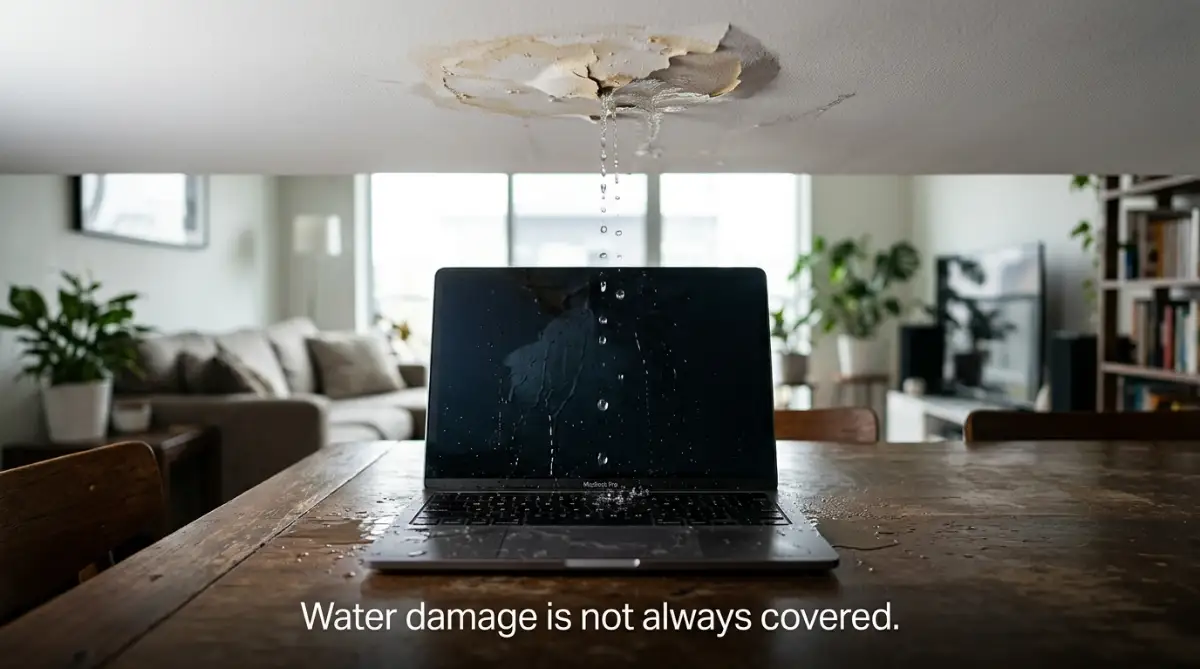
If your upstairs neighbor leaves their bathtub running and the water ruins your ceiling, your standard tenant policy will usually cover the damage. This is considered an internal, sudden accident.
However, if heavy rain causes a nearby river to overflow and push mud into your ground-floor apartment, your standard policy will pay absolutely nothing. Natural flooding is universally excluded from basic renter's protection.
Actionable Advice:
If you rent a basement apartment or live on the ground floor near a body of water, you are in the danger zone. You must specifically ask your agent for a separate Flood Insurance Endorsement. It costs a little bit extra every month, but it is the only way to protect your furniture from weather-related water damage.
The Sub-Limit Trap on High-Value Items
Let us assume you do the right thing and buy a policy with $30,000 in personal property coverage. You feel completely safe. Then, a thief breaks into your unit and steals a $5,000 diamond engagement ring and a $3,000 professional camera.
You file a claim, expecting a check for $8,000. When the letter finally arrives in the mail, they only offer you $1,500 total. You feel completely scammed.
This happens because of sneaky clauses called Sub-Limits. Insurance companies place strict financial caps on easily stolen, high-value items. Even if your total coverage is massive, they will only pay a tiny maximum amount for specific categories like jewelry, electronics, firearms, and cash.
How to Fix This Today:
Walk around your apartment and identify any single item worth more than $1,500. Call your agent and ask them to Schedule these specific items on your policy. This means you provide a receipt or an appraisal to the company, and they insure that specific item for its exact full value.
Quick Comparison: Landlord vs. Tenant Responsibility
If you are still a little confused about exactly what your landlord is supposed to fix versus what you have to pay for, watching a visual breakdown can really help. Check out the short video below to see the exact differences, and then keep reading to learn how to avoid the most dangerous insurance traps!
To make things incredibly simple, let us look at exactly who is responsible when a disaster strikes a rental property.
Type of Damage Who Pays for It? Hidden Catch
Broken Window (Storm) Landlord Does not cover the rain damage to your rug
Stolen Bicycle (From Balcony) Tenant Subject to your policy deductible
Kitchen Fire (Your Fault) Tenant Landlord can sue you for the building damage
Broken Refrigerator Landlord Does not cover the cost of spoiled groceries
The "Loss of Use" Blind Spot
Imagine a massive kitchen fire breaks out in the apartment next to yours. The fire department puts it out, but your unit smells heavily of toxic smoke. The health department declares your apartment unlivable for three whole weeks.
Your landlord will simply pause your rent or tell you to leave. They will absolutely not pay for you to stay in a hotel. You are suddenly homeless with zero warning.
A good renter's policy includes a feature called Loss of Use or additional living expenses. This feature pays for your hotel bills, extra food costs, and even laundry services while your apartment is being repaired.
However, many basic policies have strict time limits or dollar limits on this specific feature. If your limit is too low, you might end up sleeping on a friend's couch for a month. Always read the fine print and ensure your temporary housing budget can support you for at least a few weeks.
Behind the Scenes: The "Loss of Use" Secret
Property managers won't ever tell you this, but if a fire or flood forces you out, they immediately stop caring where you sleep. A solid "Loss of Use" clause doesn't just pay for a cheap motel. If you know how to use it right, it can cover your daily food delivery bills (since you don't have a working kitchen) and even the boarding fees for your pets!
Expert Insight: The Actual Cash Value Danger
"The biggest mistake a renter can make is buying a policy that pays Actual Cash Value instead of Replacement Cost. One small word completely changes how much money you receive after a total loss."
I made a very painful mistake when I bought my first renter's policy by just picking the cheapest option I could find on the internet. When someone stole my expensive camera, the insurance company only gave me a tiny fraction of what it cost because I had an "Actual Cash Value" policy instead of "Replacement Cost." Please learn from my exact mistake—spending an extra two or three dollars a month for the right coverage will save you thousands when things go wrong.
Let me explain exactly what that expert quote means in plain English. If your five-year-old television is destroyed in a fire, an Actual Cash Value (ACV) policy will treat it like a used item. They will look at how much a dusty, five-year-old TV sells for on the internet, and hand you a check for $150.
You cannot buy a brand new television for $150. You will have to pay the massive difference entirely out of pocket.
To avoid this, you must demand Replacement Cost Coverage from your agent. This specific upgrade forces the insurance company to pay you exactly what it costs to buy a brand new, modern version of your destroyed item. It is a tiny adjustment to your monthly bill that provides a massive financial shield during a real emergency.
The Roommate Risk Factor
Renting an apartment with a friend or a stranger is a great way to save money. However, sharing an address does not mean you share financial protection. This is a massive gray area that gets a lot of young adults in trouble.
If you put both of your names on a single policy, any claim your roommate makes will permanently go on your personal insurance record. If they accidentally start a fire, your future premiums will skyrocket. Furthermore, if you get into an argument and they move out, untangling the legal paperwork is a complete nightmare.
Actionable Advice:
Every single adult living in the apartment should carry their own separate policy. Treat your coverage like your toothbrush. You live in the same house, but you should never share it.
The Dog Breed Blacklist
We all love our pets, but the insurance industry views dogs purely as liability risks. A major part of your coverage is designed to protect you if someone gets hurt inside your apartment. If your dog bites a guest, your policy is supposed to pay the victim's medical bills so you do not get sued.
Here is the secret landlords will never warn you about. Almost every standard policy has a hidden blacklist of specific dog breeds. If you own a Pitbull, a Rottweiler, or a German Shepherd, they might quietly exclude your pet from the liability protection.
If your blacklisted dog bites someone in the hallway, the insurance company will deny the claim immediately. The victim's lawyer will then come directly after your personal bank account.
How to Fix This Today:
Never try to hide your dog's breed from your agent. Be completely honest about the type of pet you own. If your current provider excludes your specific breed, you simply need to shop around. Many modern companies have entirely dropped these breed restrictions and will cover your furry friend without any issues.
Quick Quiz: Renting with Pets
True or False: If my dog bites someone in the shared apartment hallway, my landlord's building insurance will handle the lawsuit.
Answer: FALSE. The hallway belongs to the landlord, but the dog belongs to you. If you own a restricted breed and didn't tell your renter's insurance, the victim's lawyer will come directly after your personal bank account. Always double-check your pet coverage!
Master-Level Defense: Strategies to Outsmart Rental Loopholes
Now that we have exposed the secret gaps in standard agreements, you are already ahead of most tenants. However, just knowing the problems will not magically pay your bills after a disaster. We need to build an aggressive defense strategy for your finances.
Smart renters do not just sign a standard paper to make their landlord happy. They customize their protection to fit their exact lifestyle. By using a few insider tactics, you can force the insurance company to pay out exactly what you deserve.
Let us look at a few highly effective strategies that industry experts use to protect their own apartments. These methods take very little effort but offer massive financial security.
The Bulletproof Video Walkthrough Method
Most tenants take a few quick pictures of the apartment on move-in day just to prove the walls were not scratched. That is completely useless if a fire destroys everything you own. If you lose everything, the insurance adjuster will ask you to prove exactly what was inside your home.
Trying to remember every pair of shoes, kitchen gadget, and book you owned is impossible during a crisis. If you cannot prove you owned a specific expensive item, they simply will not pay for it.
How to do it correctly:
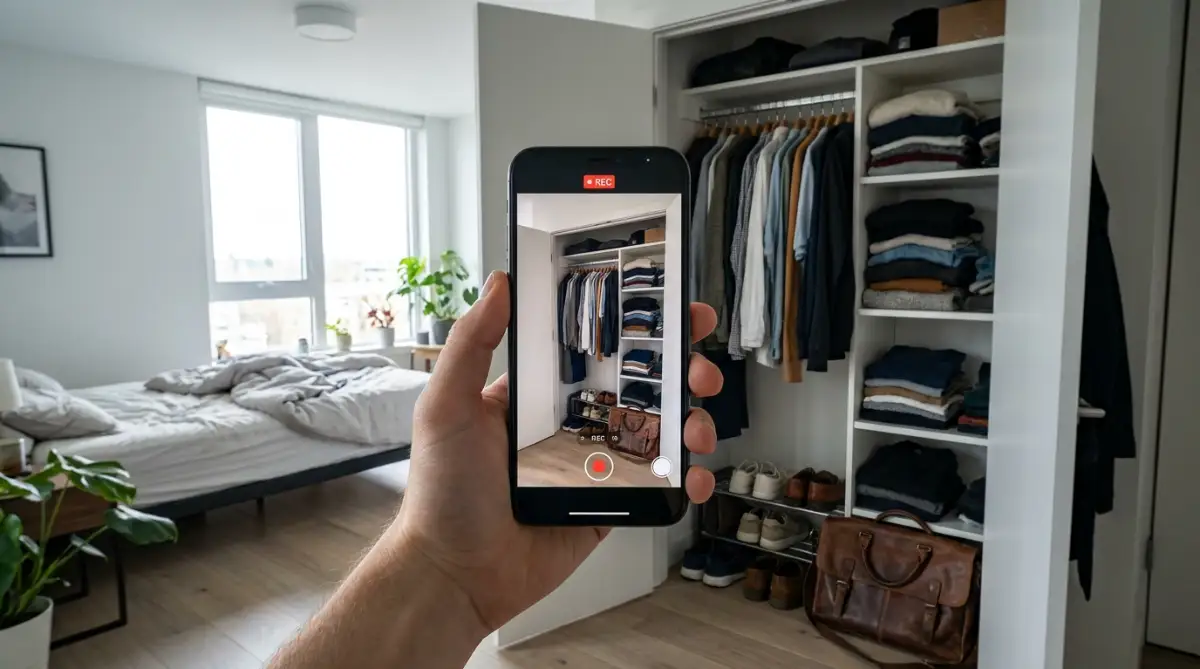
Open all your closets, drawers, and cabinets. Turn on your smartphone camera and slowly walk through the entire apartment while talking out loud. Describe the brand names, where you bought the items, and roughly how much they cost.
Upload this video file to a secure cloud drive immediately. The official federal disaster preparedness guide on home inventories strongly recommends this exact digital backup method to guarantee a smooth recovery process. It is the absolute best evidence you can ever provide to an claims adjuster.
Leveraging Off-Premises Protection
Here is a brilliant secret that property managers never mention. A high-quality renter's policy actually travels with you when you leave the building. It is not permanently stuck inside the four walls of your apartment.
Imagine you take your expensive laptop to a local coffee shop to get some work done. You go to the restroom, and when you come back, your bag is completely gone. Because the theft happened outside your apartment, you might think you are out of luck.
In reality, most good policies include Off-Premises Coverage. This means your belongings are protected anywhere in the world. If your luggage gets stolen while you are on vacation in Europe, your apartment policy can actually pay to replace your stolen clothes and electronics.
Real-Life Scenario: The Car Trunk Disaster
Let us look at a very common overlap between different types of protection. You park your car outside your apartment complex overnight. Inside the trunk, you left your expensive golf clubs and a brand new digital camera.
Thieves break your car window and empty the trunk. Naturally, you call your auto insurance provider first. They will quickly tell you that auto insurance only covers parts permanently attached to the vehicle, like the radio or the steering wheel.
They will completely deny the claim for your golf clubs and camera. This is exactly where your renter's policy steps in to save the day. Your renter's coverage treats your car just like a hotel room, protecting the personal items temporarily stored inside it.
Without this coverage, you would have to replace thousands of dollars worth of gear out of pocket. Many desperate tenants end up facing the hidden reality of unsecured personal loans just to buy back the things they need for work or daily life. Proper coverage prevents this painful debt cycle entirely. 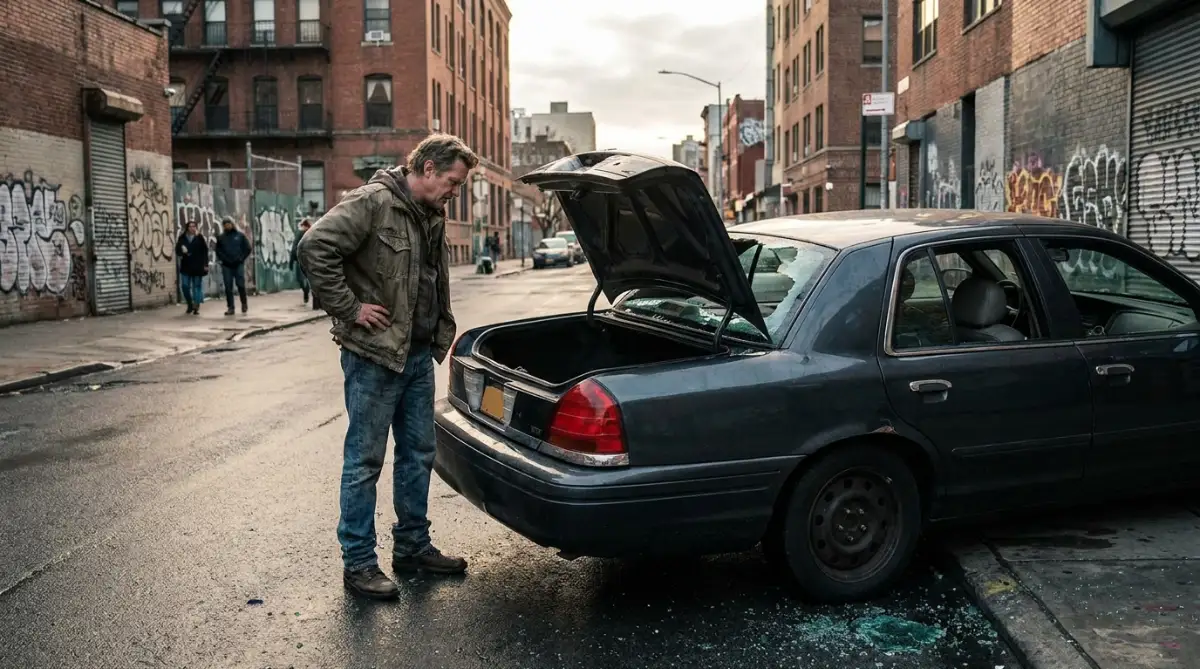
Q&A: Navigating Tenant Liability
Q: If I accidentally leave the bathtub running and ruin the apartment below me, who pays?
You will be held legally responsible. However, the Personal Liability section of your policy will hire a lawyer to defend you and pay for the neighbor's ruined ceiling.
Q: Will my policy pay if a guest gets hurt in my apartment?
Yes. If your friend trips over your rug and breaks their wrist, the Medical Payments to Others clause will cover their hospital bill so they do not have to sue you.
The Devastating Errors That Leave Renters Homeless
When people face sudden eviction due to a disaster, panic replaces logic. They sign bad settlement papers, accept terrible payout offers, or completely forget how their own legal agreements work. These simple errors can ruin your bank account for a decade.
Let us carefully break down the most dangerous mistakes tenants make every single day. If you can avoid these emotional traps, you will never find yourself stranded and broke.
The "Mysterious Disappearance" Nightmare
You come home from work, open your jewelry box, and realize your expensive watch is completely gone. There are no broken windows, and your front door was securely locked. You file a police report and call your insurance agent to report a theft.
The agent investigates and realizes there is zero evidence of a break-in. They officially classify your claim as a Mysterious Disappearance. Because you cannot prove someone actually broke into your home, they deny your claim completely.
Standard policies explicitly require hard evidence of theft, like a smashed window or a damaged door lock. If you accidentally leave your door wide open and someone walks in, or if you simply lose an item, the company will not protect you.
Always lock your doors, even if you are just walking down the hall to check the mail. Never give spare keys to casual acquaintances or maintenance workers without proper authorization.
Believing the Landlord's Verbal Promises
Property managers can be incredibly friendly when you are signing a new lease. They might casually say, "Oh, do not worry about the leaky roof, our building coverage will take care of your stuff if anything happens."
Never trust a verbal promise when your money is on the line. In the legal world, if a promise is not explicitly written in the lease agreement, it simply never happened. Your memory of a friendly conversation means absolutely nothing to a corporate lawyer.
When the roof actually caves in and ruins your bed, that friendly manager will point directly to the tiny paragraph in your lease that says you are completely responsible for your own belongings. Always read the fine print yourself.
Letting the Policy Lapse Over a Few Dollars
When money gets tight, people look for quick ways to lower their monthly bills. Because renter's coverage does not offer immediate gratification, it is usually the very first thing tenants cancel. They think, "I have lived here for two years and nothing bad has happened, so I am just wasting my money."
This is the most dangerous gamble you can possibly take. Disasters never happen on a convenient schedule.
If you cancel your policy and cause a kitchen fire the very next month, your landlord's insurance company will sue you directly for the damages. If you cannot afford to pay the fifty-thousand-dollar repair bill, they will drag you into court.
Unpaid legal judgments are one of the most destructive silent credit score killers that exist. A lawsuit from a property management company will destroy your credit, making it impossible to rent another apartment or buy a car in the future.
The Underinsurance Tragedy
Most apartment complexes require you to carry at least $100,000 in personal liability protection. Tenants often buy this exact minimum amount just to get the apartment keys, without thinking about what that number actually means.
If your apartment fire spreads and burns down the entire building, $100,000 will not even cover the cost of the raw building materials. The landlord's legal team will take the $100,000 from your insurance, and then sue you personally for the remaining millions.
Increasing your liability protection from $100,000 to $300,000 usually only costs an extra two or three dollars a month. According to standard property and casualty coverage metrics, this tiny upgrade provides an incredible amount of legal shielding against aggressive corporate lawsuits. Do not try to save three dollars when millions are on the line.
Assuming Roommates Share the Blame
We touched on this earlier, but it is worth expanding because it ruins so many friendships. If your roommate accidentally leaves a candle burning and burns down the living room, they are the one at fault.
However, if both of your names are on the apartment lease, the landlord can legally hold you responsible for the damages too. This legal concept is called "joint and several liability."
If your roommate does not have their own coverage and cannot pay the bill, the landlord will force you to pay for your roommate's mistake. You must demand that anyone living with you carries their own active policy. It is the only way to protect yourself from their careless behavior.
Making administrative errors in property agreements is very similar to making costly health insurance claim mistakes. You assume the system will automatically protect you, but small paperwork details end up destroying your wallet. You must actively manage your own paperwork to survive.
Your Action Plan for Complete Apartment Security
We have covered some heavy topics today, but you are no longer operating in the dark. You now know exactly how property managers shift financial risk onto your shoulders. More importantly, you know exactly how to push that risk back onto the insurance companies where it belongs.
You do not have to live in fear of a sudden flood or a late-night break-in. By setting up the right safety nets, you can actually enjoy your apartment with complete peace of mind. You are in total control of your financial destiny.
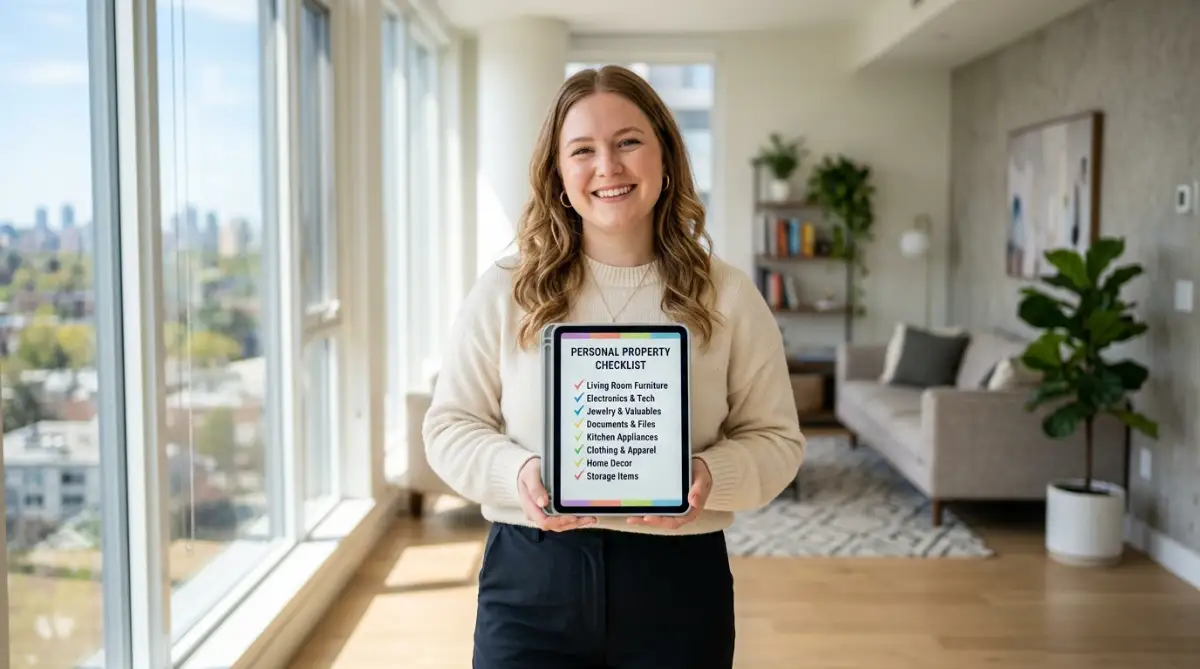
To make sure you never fall victim to these hidden exclusions, I want you to complete a very simple checklist. You can easily knock this out on your next day off from work.
The Ultimate Tenant Checklist
- Schedule a Video Tour: Take ten minutes tomorrow morning to film a complete walkthrough of your apartment. Open every drawer, zoom in on brand names, and upload the video directly to your email or a secure cloud server.
- Audit Your Limits: Pull up your current policy documents online. Look directly at your Personal Property limit and your Liability limit. Ask yourself if those numbers could truly replace everything you own or protect you from a major lawsuit.
- Check the Sub-Limits: Find the specific section that talks about jewelry, cash, and high-end electronics. If the maximum payout is lower than the value of your wedding ring or gaming computer, call your agent and schedule those specific items today.
Protecting your home does not require extreme wealth. It simply requires paying attention to the details that everyone else ignores. Taking the time to understand your financial management basics will always put you in a position of power.
Keep asking hard questions when you sign a new lease. Never assume the property manager is looking out for your best interests. Protect your space, protect your belongings, and sleep peacefully knowing you are completely covered.
Looking back, taking an hour to finally read my lease and set up the right protection was one of the smartest things I ever did for my own peace of mind. Knowing my stuff is fully covered lets me sleep so much better at night, and I want you to feel that exact same relief. Grab your phone, do that quick video walkthrough of your apartment today, and take total control of your own space.
Disclaimer: The insights and strategies shared in this article are strictly for educational and informational purposes only. This content does not constitute legal, financial, or professional real estate advice. Rental agreements and insurance policies are highly complex legal documents that vary greatly based on your state laws and specific providers. Always consult with a licensed insurance agent or a legal professional before signing a lease or altering your property coverage.