The Sudden Shock of a Crushed Bumper and Broken Trust
I still remember the exact sound of metal crunching against metal on that rainy Tuesday afternoon. My hands were shaking as I gripped the steering wheel, trying to process what had just happened. I was completely stopped at a red light, minding my own business. Suddenly, a distracted driver slammed right into my rear bumper without even touching the brakes.
I stepped out of my car, expecting a simple apology and an easy insurance swap. Instead, the other driver started screaming and blaming me for stopping too suddenly. I felt completely helpless, confused, and overwhelmed by the sudden chaos. I had no idea how an auto accident liability investigation actually worked. I just knew I was about to face an uphill battle to prove my innocence.
That single event turned my daily life entirely upside down for months. I found myself waking up in the middle of the night, sweating over the thought of massive repair bills. My daily commute became a source of intense anxiety. I constantly worried that my insurance premiums would skyrocket for something that wasn't my fault at all.
Every time my phone rang, my stomach tied itself into tight knots. Dealing with aggressive insurance adjusters made me feel like a criminal on trial. They asked trick questions, trying to poke holes in my completely honest story. The mental peace I once took for granted was completely gone.
Average people face this exact same nightmare every single day on our roads. You are just trying to get to work or pick up your kids from school. Then, in a split second, someone else's mistake becomes your massive financial burden. The stress of managing paperwork, securing repair estimates, and fighting uncooperative drivers takes a heavy toll.
Your mental health suffers when you feel nobody believes your side of the story. The constant back-and-forth emails and delayed responses can drain your energy fast. Families often have to cut back on groceries just to pay a deductible they should never owe. It is an incredibly unfair situation that leaves honest drivers feeling trapped and exhausted.
Decoding the Fault: How Insurance Adjusters Actually Think
To win this battle, you need to understand the hidden rules of the game. An insurance adjuster is not your friend, even if they sound very polite on the phone. Their main job is to save their company money by minimizing your final payout. They look for any small excuse to shift at least some blame onto your shoulders.
Think of an auto accident liability investigation like a giant jigsaw puzzle. The adjuster starts with an empty table and slowly looks for matching pieces. If you do not hand them the right pieces, they will build a picture that works against you. You have to take control of the narrative from the very first minute.
Taking Charge at the Accident Scene
The first few minutes after a crash define the entire future of your claim. Most people panic, apologize out of habit, and just wait for the police to arrive. This is exactly how you lose a perfectly winnable case. You need to act like a private detective collecting hard facts.
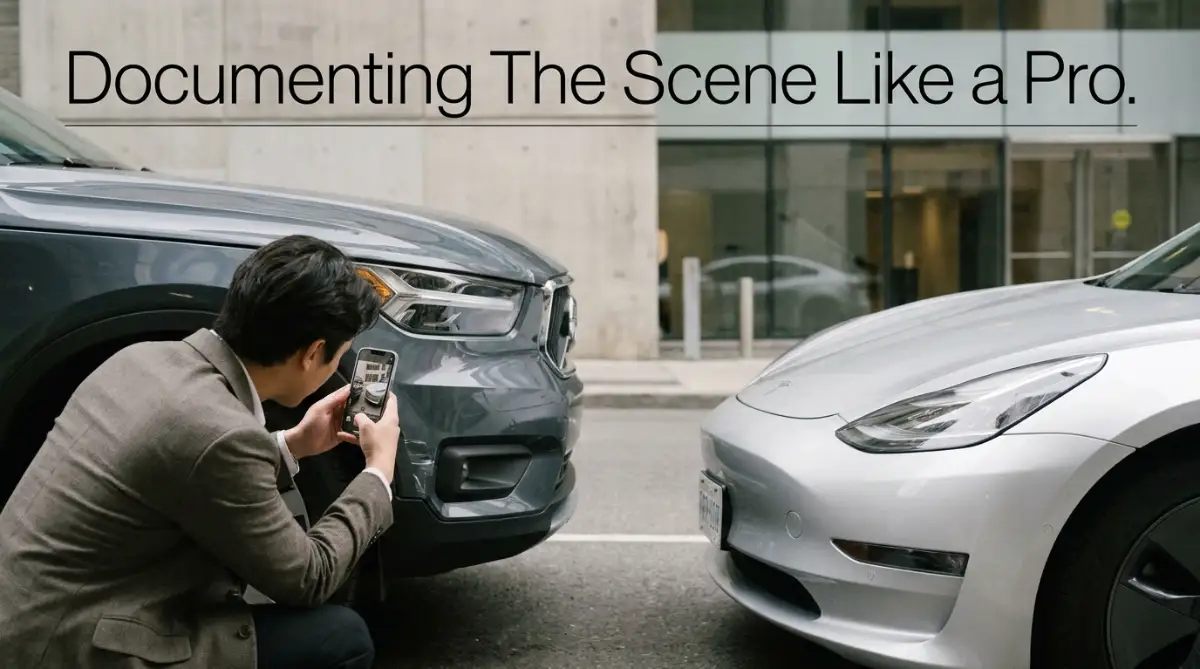
Your smartphone is the most powerful weapon you have in this fight. Take wide shots of the entire intersection, showing traffic lights and stop signs. Get extremely close pictures of the damage on both vehicles to show the point of impact. These visual details tell a clear story that the other driver cannot easily deny.
Look around for anything that might explain why the crash happened. Are there skid marks on the wet road? Is the other driver's view blocked by a large tree or a parked truck? Capture all these tiny environmental details before the tow trucks clear the scene.
Watch This Expert Breakdown on Scene Documentation
Here is a brilliant, short video that perfectly explains what to look for immediately after a crash to secure your claim.
The Power of Independent Eyes
Never underestimate the massive impact of a neutral third-party witness. The other driver will naturally lie to protect their own wallet. It becomes a classic case of your word against theirs. An independent witness breaks that tie instantly.
If you see people stopping to check if you are okay, ask for their contact details immediately. You do not need a full written statement right there on the sidewalk. Just grab their name, phone number, and a quick email address. A simple text message confirming they saw the other driver run the red light is pure gold.
I once made a massive mistake that I want you to avoid at all costs.
My Pro Tip: I was so shaken up after my crash that I told the other driver, "I'm so sorry this happened," just to be polite. The insurance company twisted my simple empathy and tried to use it as an admission of guilt. Never, ever apologize at the scene, even if you are just trying to be a nice person. Stick to the facts, ask if they are hurt, and let the evidence do the heavy lifting.
Navigating the Police Report Paradox
Many drivers assume a police report is the ultimate, unquestionable truth. You might think that if the officer writes down you are not at fault, you automatically win. The truth is quite different in the insurance world. Adjusters use police reports as a guide, but they conduct their own separate review.
Sometimes, police officers make simple mistakes because they are rushing to clear traffic. They might write down the wrong street name or misunderstand a witness statement. You must request a copy of the official police report as soon as it becomes available. Read every single line very carefully to spot any weird errors.
If you find a factual mistake, do not panic or give up hope. You can actually contact the police department to request a formal amendment. Provide your photos and witness contacts to politely ask the officer to correct the record. A highly accurate police report makes the adjuster's job much harder if they try to deny your claim.
The Recorded Statement Trap: Play It Smart
Within days of the crash, the at-fault driver's insurance will call you. They will casually ask if you have five minutes to give a quick recorded statement. This is the most dangerous part of the entire auto accident liability investigation. They are actively fishing for ways to ruin your credibility.
They will ask leading questions like, "So, you didn't see the car until the last second, right?" If you say yes, they will argue you were not paying proper attention. You have the right to politely decline giving a recorded statement until you are ready. You can easily ask them to send their questions in writing instead.
If you do agree to talk, keep your answers incredibly brief and robotic. Do not guess speeds, distances, or exact times if you are not completely sure. Saying "I do not know" is a perfectly acceptable and safe answer. Never offer extra information that they did not directly ask for.
What to Say vs. What Not to Say (Quick Comparison)
To make things easier, let's look at a simple breakdown of how to communicate safely.
This simple shift in your language removes emotions and sticks strictly to the facts. It gives the insurance company absolutely zero room to twist your words.
Understanding Comparative Negligence
Sometimes, an accident is not entirely one person's fault. Insurance companies use a concept called comparative negligence to split the blame. Think of the total fault as a whole pizza. The adjuster wants to force you to eat as many slices of that blame pizza as possible.
For example, maybe the other driver pulled out illegally in front of you. However, you were driving five miles over the speed limit. The adjuster might say you are 20% at fault for the crash. This means they will reduce your final payout by that exact percentage.
You have to push back aggressively against this tactic. Use your photos and witness statements to prove your actions did not contribute to the crash. If they claim you were speeding, ask them for the hard physical proof. Do not just accept their percentage without a strong, logical fight.
Myth vs. Reality in Claim Investigations
There is a lot of bad advice floating around the internet about insurance claims. Let's clear up some of the most common misunderstandings right now.
Myth 1: You must use the body shop the insurance company recommends.
Reality: You have the absolute legal right to choose any certified repair shop you trust. Insurance companies just prefer their own network because it saves them cash.
Myth 2: If you do not feel pain immediately, you cannot claim a medical injury later.
Reality: Adrenaline masks serious pain for days after a major collision. It is completely normal for whiplash or soft tissue injuries to appear a week later. Always see a doctor just to be perfectly safe.
Myth 3: The first settlement offer is the best you are going to get.
Reality: The first offer is almost always a lowball test to see if you are desperate. They expect you to negotiate and ask for a fairer amount.
By knowing these realities, you level the playing field against massive corporations. You transform from a nervous victim into an educated, empowered driver.
Gathering Independent Repair Estimates
Do not blindly trust the damage estimate provided by the at-fault insurance adjuster. They will often write an estimate using the cheapest aftermarket parts available. They might also completely ignore hidden structural damage underneath the plastic bumper. This leaves you driving a car that is secretly unsafe.
Take your car to at least two highly rated, independent collision centers. Ask them to do a thorough tear-down estimate to find every single broken clip and bent frame piece. Submit these detailed, professional quotes to the adjuster to demand a proper repair budget. Hard numbers from certified mechanics are very difficult for adjusters to ignore.
Remember, patience is your best friend during this annoying process. The insurance company wants you to get frustrated and settle quickly for a tiny amount. If you stand your ground and provide organized evidence, they will eventually realize you are not an easy target. Take a deep breath, follow these steps, and protect your hard-earned money.
Insider Strategies to Outsmart the Insurance System
Once you understand the basic rules of an auto accident liability investigation, it is time to level up your approach. The insurance company has teams of highly trained professionals working against you every single day. To protect your financial future, you have to start thinking three steps ahead of their game. You do not need a law degree to win this fight. You just need to apply a few hidden strategies that most drivers completely ignore.
One of the most powerful things you can do is maintain a detailed "impact journal" from day one. Do not just write down when you visit the doctor or talk to the mechanic. Write down exactly how the accident is affecting your daily routine and overall happiness. Documenting these personal struggles creates a highly emotional record that adjusters find very hard to dispute.
For instance, maybe your back pain makes it impossible to pick up your toddler. Perhaps the stress of the crash is ruining your sleep schedule entirely. These deeply personal details fall under the category of "pain and suffering" in the legal world. A raw, honest journal proves that the accident caused real damage beyond just a dented bumper.
The Art of the Counter-Offer
Eventually, the adjuster will call you with a settlement offer that sounds officially calculated. They will speak in a very confident tone, making it seem like this number is a fixed law. Never accept their first numerical offer under any circumstances. It is almost always an artificially low number designed to test your actual desperation.
Think of this process like buying a house or negotiating a salary. The first number is just the starting line of a much longer conversation. Politely thank them for the initial offer, and immediately ask them to send the detailed breakdown in writing. Once you have their exact reasoning on paper, you can start picking it apart systematically.
If they refuse to cover a specific medical bill, ask for their medical justification. Remind them that your doctor is a licensed professional, while they are just looking at a computer screen. By asking direct, logical questions, you force them to defend their lowball offer. Often, they will increase the amount just to avoid a long, drawn-out debate.
Managing Your Digital Paper Trail
Communicating with the insurance company over the phone is always a massive risk. Spoken words can be easily twisted, forgotten, or completely denied later on. You should always force the adjuster to communicate with you through written emails. This creates an undeniable digital paper trail that protects you if they suddenly change their story.
When sending emails to the claims department, keep your tone strictly polite but completely firm. If you struggle with getting replies, learning how to write professional emails for immediate responses can totally change the game. State the facts clearly, attach your evidence, and always give them a reasonable deadline to reply.
If they do call you unexpectedly, just let it go straight to your voicemail. Listen to the message, take a deep breath, and write out your response in a clear email. Start the email by saying, "I am writing to follow up on the voicemail you left me today." This puts you entirely in the driver's seat of the conversation.
Taking Care of Your Mind and Money
Going through a long investigation can severely drain your mental and physical energy. The constant waiting game is designed specifically to wear you down until you give up. You might even find yourself looking into the hidden reality of unsecured personal loans just to pay your bills while you wait. Do not let their delay tactics force you into making a terrible financial decision.
Instead, focus heavily on keeping your mind sharp and your environment completely organized. I highly recommend setting up a dedicated folder on your computer for all your claim documents. Surprisingly, knowing how cleaning your desk instantly reduces anxiety can translate directly into managing your digital files better. When your evidence is organized, your mind feels much clearer and more confident.
If you feel your heart racing before calling the adjuster, take a few minutes for yourself first. Using simple nervous system regulation techniques can help you speak with calm, unshakeable authority. Adjusters can smell fear and desperation through the phone instantly. When you sound relaxed and prepared, they realize they cannot bully you into a cheap settlement.
If you ever feel totally lost, look for unbiased consumer resources from the National Association of Insurance Commissioners. They offer excellent, free guidelines on how your specific state handles bad faith insurance practices. Educating yourself through trusted, official channels is the absolute best way to build an ironclad case.

Silent Traps That Will Destroy Your Claim
Even the smartest drivers can completely ruin their chances by falling into predictable traps. Insurance companies set up invisible landmines throughout the entire investigation process. They bank on the fact that you are stressed, tired, and uneducated about legal loopholes. If you step on just one of these traps, your settlement check could instantly drop to zero.
The scariest part is that these mistakes usually seem completely harmless at the time. You might think you are just being helpful or cooperating with a friendly request. In reality, you are handing the adjuster the exact ammunition they need to deny your payment. Let's walk through the most dangerous pitfalls you must actively avoid.
The Social Media Surveillance Trap
We live in a world where we share almost every moment of our lives online. After an accident, your first instinct might be to post a picture of your crushed car on Facebook. You might write a long, angry rant about the other driver to get sympathy from your friends. This is the absolute worst thing you can possibly do during an active liability investigation.
Insurance adjusters will immediately search for your name across all major social media platforms. If they find your profile, they will screenshot every single thing you post. Suppose you claim you have severe back pain, but you post a photo smiling at a family barbecue. They will use that exact photo to accuse you of faking your injuries completely.
Even innocent late-night posts can be twisted to suggest you were tired and distracted before the crash. Just like the hidden health risks of late-night scrolling, late-night posting carries massive hidden dangers for your claim. Do yourself a massive favor and set all your profiles to perfectly strict privacy settings. Better yet, simply stop posting anything personal until the settlement check clears your bank account.
The Blanket Medical Authorization Trick
A few days after the crash, the adjuster might send you a very official-looking document to sign. They will politely explain that they just need to review your hospital bills to send you a check. The document is usually called a "Medical Authorization Release," and it looks completely standard. However, if you read the fine print, you are giving them the keys to your entire life.
Many of these forms allow the insurance company to pull your medical history for the last ten years. They are actively searching for any pre-existing conditions they can blame your current pain on. If you had a minor sports injury in college, they will claim your current neck pain is just an old problem acting up. Never sign a blanket medical release form under any circumstances.
You should only ever authorize them to see records directly related to the date of the crash. If you are unsure what the document says, you can always check legal guidelines from trusted sources. For example, the Legal Information Institute at Cornell Law School provides great breakdowns on how legal releases actually function. Always control exactly what information leaves your hands.
Cashing the "Trojan Horse" Check
Sometimes, an insurance company will unexpectedly mail you a very small check right away. They might include a friendly letter saying this is just to help you cover immediate rental car costs. You are stressed about money, so depositing that check feels like a massive relief. Unfortunately, this is one of their oldest and most effective dirty tricks.
Look incredibly closely at the back of that check before you even think about endorsing it. Often, there is a tiny line of text that says, "Full and Final Settlement of All Claims." The exact moment your bank teller cashes that check, your entire case is legally closed forever. You will never get another single penny for your medical bills or hidden car damage.
Treat every piece of paper they send you like a legally binding contract, because it usually is. Building everyday habits to protect your finances means reading the fine print before making any money moves. If they send you a check you did not explicitly agree to, call them and ask what it represents. If it is a trap, politely tear it up and demand a proper negotiation.
Skipping Your Doctor Appointments
Consistency is your strongest weapon when proving that you are actually hurt. If your doctor tells you to attend physical therapy twice a week, you must go twice a week. Missing appointments tells the insurance company that you are magically healed and no longer need medical attention. They will immediately use your missed visits as an excuse to cut off your medical payments.
Life gets busy, and sitting in a waiting room is incredibly boring and frustrating. However, you have to treat your medical recovery like a strict, mandatory job. Keep a perfectly clean record of every visit, every copay, and every prescription refill. This undeniable mountain of medical evidence forces the adjuster to take your physical pain seriously.
Your Master Action Plan for Victory
Handling an auto accident liability investigation is never a fun or relaxing experience. It is a messy, frustrating puzzle that forces you to fight for what is rightfully yours. However, you now have the exact knowledge required to protect yourself from predatory tactics. You are no longer an easy target for a greedy corporate adjuster.
Remember that patience and extreme attention to detail are your best friends right now. Take hundreds of photos, communicate strictly through organized emails, and never accept the very first offer. Protect your social media accounts like they are locked bank vaults. If you simply follow these practical steps, you will drastically increase your chances of a fair payout.
My biggest piece of advice is to never let a rude adjuster make you doubt your own truth. I know exactly how scary it feels to fight a massive insurance company, but your honesty is your ultimate shield. Take a deep breath, gather your hard evidence today, and stand firm until you get the absolute best result possible!
Common Questions About Auto Claim Investigations
How long does an insurance company have to investigate my claim?
Every state has different specific laws, but insurance companies generally have about 15 to 30 days to acknowledge your claim. Once they start, they must accept or deny it within a reasonable timeframe, usually around 40 days. If they need more time, they are legally required to send you a written explanation for the delay.
Can I legally refuse to speak with the other driver's insurance adjuster?
Yes, you absolutely have the right to decline an immediate recorded statement. You can ask them to send their questions in writing or direct them to speak with your legal representative if you have one. Always remember that the other driver's adjuster is actively looking for ways to blame you.
What should I do if the police report has completely wrong information?
Do not panic if the reporting officer wrote down the wrong street name or missed a witness. You can easily contact the specific police department and respectfully request a supplemental amendment to the report. Bring your photos and witness statements to politely prove why the original report needs correcting.
Does a zero-fault accident permanently increase my monthly insurance rates?
If the investigation proves you are 100% not at fault, your rates generally should not skyrocket. However, some insurance providers might still remove a "claims-free discount" from your policy upon renewal. If your current provider treats you unfairly after a zero-fault crash, it is highly recommended to shop around for better coverage on our reliable consumer advice hub.
Should I hire a lawyer for a really minor fender bender?
If there are absolutely no bodily injuries and the car damage is very minimal, you can usually handle the claim yourself. However, if you feel any physical pain or the insurance company completely denies a clear claim, seeking a free legal consultation is a very smart move. Lawyers know exactly how to handle stubborn adjusters who refuse to pay out.
Disclaimer: The information provided in this blog post is for general educational and informational purposes only and does not constitute professional legal or financial advice. Always consult with a licensed attorney or a certified insurance professional regarding the specific details of your auto accident and personal liability claim.