
The Silent Fear Haunting Our Desks Today
Let me guess: you recently watched a free software program do a massive chunk of your job in about ten seconds, and your stomach completely dropped. I had the exact same panic attack just a few weeks ago. I sat at my desk and honestly wondered if my boss even needed me anymore. But after panicking for a few days, I realized something that completely changed my mind. The bots might be incredibly fast, but they are incredibly boring. Let me show you how I stopped worrying and actually started using this tech to make my daily work so much easier.
My hands literally shook as I scrolled through the perfectly formatted, highly detailed text on my monitor. I felt completely useless in that exact moment, and I suddenly started to question everything about my chosen career path. Was my personal touch, my unique imagination, and my hard-earned experience about to become completely obsolete?
I honestly thought I was watching the sudden death of my creative value right before my very eyes. I closed my laptop, walked away, and genuinely wondered if I should start looking for a completely different profession the next morning.
This deep, dark fear is not just my personal story. It is a quiet terror that thousands of hard-working professionals wake up with every single day. People are losing sleep, wondering if a smart machine will soon make their daily efforts look entirely pointless.
We sit at our desks, sipping our morning coffee, while secretly worrying that we are slowly transforming into simple button-pushers. This heavy anxiety completely ruins our mental peace. It makes the weekend feel incredibly short, because the dread of Monday morning and the pressure to compete with a robot is always hiding in the back of our minds.
Coworkers whisper in the breakroom about sudden layoffs, automation taking over, and how human imagination just cannot keep up with computer speeds. You start to second-guess your own ideas, assuming an algorithm could probably come up with something better, faster, and cheaper.
📌 Quick Action Summary
- Stop panicking: Treat the software like a fast but slightly clueless intern, not your replacement.
- Keep your secrets: Never paste private client details or company numbers into public chat tools.
- Embrace the mess: Machines create boring, average perfection. Your weird ideas and human flaws are your best selling points.
- Control the input: Always feed the machine your own original thoughts first; never ask it to generate an idea from a completely blank screen.
Breaking Down The Automation Illusion
Let us take a deep breath and look at the actual reality behind these massive workplace fears. We often give these machines way too much credit for things they cannot actually do.
Yes, an algorithm can process a million data points in a single second. It can definitely write a perfectly grammatical sentence or generate a beautiful picture of a sunset based on billions of past examples.
But processing data is entirely different from actually feeling something, experiencing life, or understanding human emotion. Real creativity is born from human struggle, joy, mistakes, and deeply personal memories. A machine has absolutely zero life experience to draw from.
When you create something, you are putting a tiny piece of your own soul, your background, and your unique perspective into the work. A computer program is simply predicting the next most logical word or pixel based on a mathematical formula.
Myth Vs Reality: The Truth About Machine Ideas
There is a huge misconception that utilizing these smart programs makes a person lazy or less imaginative. People falsely believe that relying on algorithms means turning your brain off completely.
Let us completely bust that myth right now. If you hand a brilliant tool to someone with absolutely no vision, the output will still be incredibly boring and totally generic. The magic only happens when a deeply creative human being takes the steering wheel.
Myth 1: The Machine Generates Original Thoughts
The absolute biggest lie we tell ourselves is that the software is actually "thinking" of new ideas. It is not. It acts as a massive digital blender, mixing up things that human beings have already created in the past.
If you want a truly groundbreaking, entirely original concept that has never been seen before, a machine simply cannot do that for you. It relies heavily on past human brilliance to function at all. You are still the master chef; the software is just chopping the onions.
Myth 2: Perfection Equals Good Creativity
Algorithms are explicitly designed to be completely safe, perfectly structured, and totally inoffensive. But if you look at the most memorable marketing campaigns, the best novels, or the most striking designs, they all have slightly rough edges.
They break the standard rules on purpose to make you feel a strong emotion. Machines do not understand how to creatively break the rules because they are strictly programmed to follow them. Your weird, slightly unusual ideas are actually your biggest competitive advantage right now.
I actually learned this the hard way during a massive client presentation a few months ago. I used an AI tool to write my entire pitch speech, thinking it would make me sound incredibly smart and professional.
When I read it out loud in the meeting, the room was completely dead, and I sounded entirely robotic and fake. I quickly realized my biggest mistake, threw the script away, and just spoke honestly from my own messy, passionate human heart, which instantly won the client over.
How Algorithms Actually Work Behind The Scenes
If you really want to stop fearing something, you have to completely understand how it works on a basic level. The mystery makes it scary, but the actual mechanics are surprisingly simple and deeply uncreative.
Watch this incredibly eye-opening breakdown that explains exactly why human brains will always outsmart mathematical prediction models.
The software basically plays a massive game of fill-in-the-blank based on statistics. When you ask it a question, it looks at millions of text documents and guesses which word usually comes next.
It does not actually understand the meaning of the words it is typing. It just knows that the word "blue" often comes before the word "sky." This means it lacks complete context, empathy, and real-world understanding.
When you realize this, the fear instantly starts to melt away. You begin to see the software not as a terrifying genius, but as an incredibly fast digital parrot copying human speech.
A Clear Look: Human Magic Vs. Digital Math
Sometimes, seeing the exact differences laid out side-by-side makes the reality much easier to digest. Let us look at exactly what you bring to the table versus what the software actually does.
When you look closely at this breakdown, the winner is completely obvious. The software is just a massive database of past human achievements. You are the actual living, breathing source of the future.
Let’s look at a real-world example of how this plays out in a normal office setting.
Scenario: Writing an apology email to an angry client.
- What the Bot Writes: "Dear Client, we apologize for the inconvenience regarding your account. We are optimizing our workflow to ensure better service." (Result: The client feels like a ticket number and stays angry).
- What You Write: "Hey Sarah, I completely messed up your order yesterday and I am so sorry. I am personally tracking your new package right now and will call you the minute it ships." (Result: The client forgives you because they hear a real human voice).
Practical Steps To Reclaim Your Creative Confidence
Now that we have completely destroyed the scary myths, it is time to take some actual, real-world action. You cannot just sit around waiting for the industry to change; you must adapt your daily routine immediately.
Here are some highly practical, everyday habits you can start using right now to ensure your personal imagination stays incredibly sharp and highly valued.
Shift Your Daily Mindset Completely
The very first thing you must do tomorrow morning is completely change the way you talk to yourself about this technology. Stop using words like "replacement" or "threat" in your own head.
Start calling the software your digital intern. When you treat the program like an eager, slightly clumsy intern, you completely take back your own power. You are the senior director, and you are simply giving the intern a basic task to save yourself some time.
If the intern gives you a boring, generic piece of work, you do not panic. You simply fix it, add your own brilliant flavor to it, and take the final credit. This simple mental shift instantly stops the daily anxiety.
Double Down On Your Emotional Intelligence
Since the computer program completely lacks the ability to feel empathy, you must make empathy your main superpower. Whenever you are working on a project, constantly ask yourself how it will make another human being feel.
Focus heavily on the human connection side of your job. Have more face-to-face conversations, share personal stories in your work, and show genuine vulnerability. A machine can never replicate the feeling of one human being truly understanding another human being's pain.
When your clients or your boss feel deeply understood by you, they will never want to replace you. People fundamentally want to do business with other real people whom they actually like and trust.
Use The Tools For The Boring Stuff
To truly protect your creative energy, you should actually use the technology to handle all the deeply boring, repetitive parts of your day. Let the algorithm organize your messy notes, draft your standard emails, or format your long reports.
By passing off these highly tedious tasks, you actually free up massive amounts of brain power. You will suddenly have way more mental energy left over to do the deep, highly imaginative thinking that you actually love doing.
You are basically outsourcing the robotic parts of your job to an actual robot. This leaves you completely free to be entirely human, giving you the time and space to dream up completely massive, industry-changing ideas.
Embrace The Chaos Of Real Life
The software lives inside a perfectly clean, sterile digital box. You live in a wonderfully messy, loud, and incredibly complex real world. Use this to your absolute advantage every single day.
Go for a long walk without looking at your phone, talk to strangers at the coffee shop, or read a weird book outside of your normal industry. Inspiration hits you in the shower, during a traffic jam, or while laughing with old friends.
Algorithms cannot experience these deeply random, beautiful moments. Your messy, unpredictable daily life is exactly where your greatest, most unbeatable ideas will always come from. Hold onto that truth, and you will never have to fear a machine again.
Mastering The Human-Machine Partnership
If you want to completely secure your position in the modern office, you need to go far beyond simply changing your mindset. You must actively change the way you interact with these software programs on a daily basis. The people who will win in the future are not those who avoid the technology, but those who learn to aggressively control it.
I want to share some incredibly powerful, expert-level strategies that will keep your personal imagination front and center. Think of these methods as your personal shield against generic, boring work. When you apply these steps, your boss will notice a massive difference in your daily output.
The "Context-First" Sandwich Method
One of the biggest secrets to maintaining your creative edge is controlling the exact context you give to the machine. Never ask a blank screen to generate an idea from scratch. Instead, you must feed it your own messy, human thoughts first.
Start by writing down your specific memories, your client's unique pain points, and your totally weird, outside-the-box ideas. Then, ask the software to simply organize or expand on the highly specific human data you just provided.
By starting with your own brain and ending with your own editing, you trap the machine's work right in the middle. If you are struggling with understanding how to fix robotic outputs, this simple sandwich method completely changes the game.
Building A Personal Experience Library
Algorithms scrape the public internet for data, which means they only have access to information that everybody else already knows. Your greatest advantage is the private, undocumented knowledge sitting right inside your own head.
Start keeping a digital journal of your daily workplace observations, weird customer interactions, and personal mistakes. When you are asked to brainstorm a new project, completely ignore the software at first and open your personal experience library.
According to research from the Stanford Human-Centered Artificial Intelligence group, machines heavily struggle with abstract, real-world reasoning. This proves that your unique, undocumented human memories are your most valuable professional asset today.
The 80/20 Creative Energy Split
You should aim to spend exactly 80 percent of your mental energy on human connection and big-picture imagination. The remaining 20 percent should be spent managing the software to handle your busywork.
Use the tools to instantly format your spreadsheets, summarize your long email threads, or build basic presentation templates. If you are entirely new to this concept, learning the basics of automating repetitive tasks will give you hours of your week back.
Take those saved hours and spend them talking directly to your clients or sketching out wild concepts on a physical whiteboard. You are essentially buying back your own freedom to think deeply.
My Personal 80/20 Workflow Rule:
If a task requires me to organize data, fix spelling, or format a messy list, I give it to the machine instantly. But if a task requires making a joke, telling a personal story, or fixing a broken relationship with a client, my fingers are the only ones touching the keyboard. Keep your boundaries strict.
Treat The Output As A Rough Draft, Never The Final Product
Top professionals never, ever copy and paste exactly what the machine spits out. They treat the generated text or image as a highly flawed, incredibly basic rough draft.
You must act like a strict magazine editor reviewing an article from a very junior writer. Cross things out, rewrite sentences to add your personal sense of humor, and inject completely unexpected plot twists.
The software gives you a block of plain marble. It is your exact job to take a chisel and carve that block into a beautiful, unique piece of art. 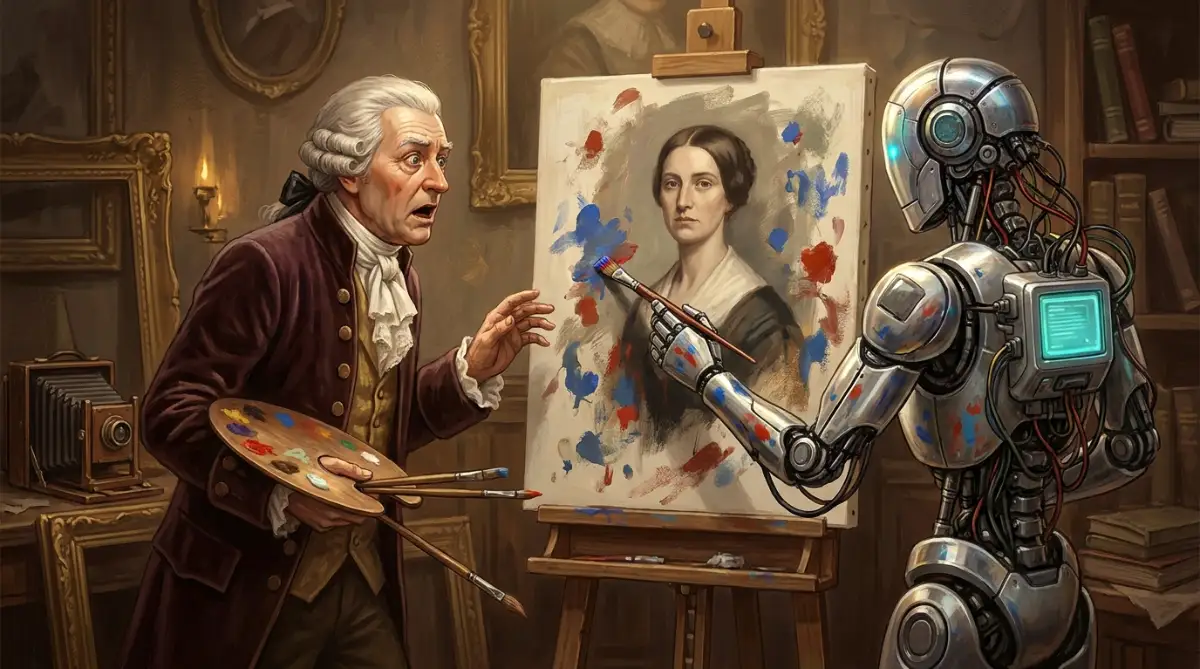 If you just present the plain block to your boss, you are entirely missing the point of your job.
The Trap Of Lazy Thinking (And How To Escape It)
While learning to use these new tools is highly recommended, there are some deeply dangerous traps waiting for you. If you are not incredibly careful, you can accidentally strip away your own professional value without even realizing it.
Let us look closely at the most common, deeply harmful mistakes people make when they start relying too heavily on algorithms. Avoiding these exact pitfalls will save your career and protect your mental peace.
Falling For The "Echo Chamber" Effect
The absolute easiest mistake to make is accepting the very first answer the machine gives you. Because the software is trained on average data, its first guess is always the most average, boring idea possible.
If you just take that first idea and run with it, your work will start looking exactly like everyone else's work in your entire industry. Your brand voice will suddenly become totally flat, corporate, and completely stripped of any human personality.
Over time, clients will notice this sudden drop in quality and completely lose interest in your services. You must heavily resist the urge to be lazy, and constantly push the software to give you weirder, more unusual combinations.
Giving Away Your Secret Sauce
Many hard-working professionals accidentally leak their company's most sensitive information straight into public software tools. They paste confidential client data, secret marketing strategies, and private financial numbers into the chat box just to get a quick summary.
This is an incredibly dangerous habit that can destroy trust and ruin your entire professional reputation overnight. These public systems often use your input to train their future models, meaning your secret ideas could eventually be shown to your direct competitors.
Always keep your unique intellectual property entirely offline and totally private. You need to deeply understand how free systems consume your personal inputs so you can protect your own brilliant ideas from being stolen.
Believing The "End Of The Expert" Hype
There is a highly toxic rumor going around that you no longer need any hard skills because a computer can just do it for you. People falsely believe they do not need to study design, writing, or programming anymore.
This is a massive lie that will completely ruin your career progression. If you do not understand the basic rules of your industry, you will never know if the machine is actually giving you good work or completely garbage output.
For example, the ongoing fears about software replacing tech programmers completely ignore the fact that you still need a human brain to solve complex logic puzzles. Your foundational skills are actually more important right now than they have ever been before.
Losing Your Willingness To Take Big Risks
Algorithms are explicitly programmed to avoid taking risks. They will never suggest a highly controversial marketing angle or a totally shocking design color palette.
If you lean on these tools too heavily, you will slowly become terrified of stepping outside the completely safe, boring box. You will start playing it too safe, which is the exact opposite of true human imagination.
The most memorable human achievements always come from someone taking a massive, totally unreasonable risk. You must actively fight the machine's desire to make you average.
Your Roadmap To Remaining Irreplaceable
We have covered a massive amount of ground today, and we have successfully busted the deeply scary myths hiding in our offices. The heavy anxiety you felt at the beginning of this article should now be replaced with a strong sense of clarity and excitement.
You are not competing against a highly intelligent super-being that wants to steal your job. You are simply learning to manage a very fast, slightly clumsy digital assistant that entirely relies on your specific instructions to function.
Let us quickly look at a practical action plan you can use to dominate your workplace starting first thing tomorrow morning. These are the steps that will completely separate you from the people who are still hiding in fear.
First, totally forgive yourself for feeling scared in the first place, because the media makes this technology sound like a horror movie. Second, start using the tools to handle your boring spreadsheets and daily emails, buying back your precious time.
Third, take that free time and heavily invest it into your human relationships at work. Grab coffee with your coworkers, call your clients directly, and show massive empathy in every single meeting.
Fourth, completely embrace your messy, chaotic human life. Your daily struggles, your weird hobbies, and your unique background are the exact things that make your ideas completely impossible to copy.
A Personal Note On Your Creative Future
I genuinely want you to remember that your imagination is a deeply beautiful, highly messy thing that no mathematical equation could ever replicate. I stopped letting a glowing screen dictate my self-worth, and my daily work has never felt more alive. Step up, completely own your weirdness, and show the world exactly why human beings will always run the show.
Real Questions About Tech And Everyday Workplace Anxiety
Will I eventually be fired if I refuse to use these new tools completely?
You probably will not be replaced by the software itself, but you might be outpaced by a human coworker who uses it efficiently. The goal is not to become a robot, but to use the tech to handle your boring chores. This frees you up to do the highly creative human thinking your boss actually values.
How can I prove to my clients that my work is truly human-made?
The absolute best way to prove your human touch is by heavily injecting your personal life experiences into your work. Add highly specific emotional details, slightly imperfect humor, and deep empathy that a machine cannot fake. Your clients will instantly feel the genuine warmth in your completely original ideas.
Why do all the generated ideas always sound so generic and boring?
These programs are explicitly built to predict the most statistically average response based on old public data. They physically cannot generate a truly wild, boundary-pushing idea because they are programmed to play it entirely safe. If you want a deeply unique concept, you have to dig into your own messy brain.
Is it safe to upload my company data to get a faster summary?
You should never upload sensitive, private, or completely original company data into a free, public software tool. Many of these platforms use user inputs to train their future systems, which could leak your secrets. Always use highly secure, approved enterprise versions, or explore safe local data training methods if you really need privacy.
Can this technology actually understand human emotions?
Absolutely not; it just acts like a highly advanced parrot copying words associated with sadness or joy. It does not actually feel pain, love, excitement, or daily workplace stress. True emotional intelligence will always remain a deeply unique, entirely human superpower.
Disclaimer: The information provided in this article is for educational and informational purposes only. The strategies discussed regarding workplace productivity and software usage are based on personal experience and general industry observations. We are not responsible for any direct consequences or career changes resulting from the application of these methods. Always consult with your company's specific IT and privacy guidelines before using third-party software tools for professional work.