
The Secret Terror Hiding In Every Writer's Mind
Have you ever stared at a blinking cursor on your screen, quietly wondering if a robot could do your job faster and better? You are definitely not alone. Just last month, a regular client asked me if an AI wrote my latest email campaign because it felt "too perfect" and boring. That completely stung. But it also taught me a massive lesson: our messy, unpredictable, and highly emotional human flaws are exactly what people actually want to read. Let me show you how to beat the bots by simply being yourself.
I realized in that highly embarrassing moment that my raw, slightly messy, human thoughts were exactly what they were paying me for. My unique personality was my actual product, not just a bunch of correctly spelled words on a page. I felt like a complete fraud, and I spent the rest of the night manually rewriting everything from scratch.
You start to wonder if a robot could write a better headline, structure a better story, or explain a difficult concept faster than you can. This toxic self-doubt quietly eats away at your daily confidence. It makes Monday mornings feel incredibly heavy, because you constantly feel like you are running a race against an opponent who never gets tired. We are all desperately trying to hold onto our creative passion in an industry that suddenly feels very cold and highly mathematical.
💡 Quick Survival Guide for Writers
- Your flaws are your superpower: Machines write perfectly, which is boring. Your weird human stories are what keep readers hooked.
- Use the bot as an intern: Let the software handle spelling checks and basic outlines so you can focus on deep creativity.
- Do not feed the echo chamber: Never accept the first output the software gives you; edit it heavily to add your own personality.
- Keep secrets safe: Stop pasting your client’s private data into public chat boxes.
The Reality Check We All Desperately Need
Let us take a massive step back and look at the actual facts behind these scary workplace rumors. The media loves to sell panic because panic gets clicks, but the real-world application of this technology tells a completely different story.
We often give these prediction models way too much credit for things they cannot actually achieve. Yes, a software program can read a million books in a minute and spit out a perfectly grammatical paragraph. It can definitely summarize a long report or fix your spelling mistakes instantly.
But putting words in the correct order is entirely different from actually making a reader feel something deep inside. Real, impactful writing is always born from human struggle, pure joy, embarrassing mistakes, and highly personal memories. A machine has absolutely zero life experience to draw its inspiration from.
To prove this point, I ran a quick split test on two different blog introductions for a fitness client. The results completely speak for themselves:
The Human vs. Machine Split Test:
- Version A (AI Generated): "Fitness is highly beneficial for your daily health. It improves heart rate and builds muscle over time." (Result: Only a 12% scroll rate).
- Version B (Human Written): "I skipped the gym for three months straight because my couch was just too comfortable. Here is the funny trick I used to finally get back on the treadmill." (Result: A massive 68% scroll rate).
- Real human honesty wins every single time.
When you write an article, you are quietly packing a tiny piece of your own soul into those sentences. A computer program is simply guessing the next most mathematically probable word based on old data.
Are we genuinely going to let a fancy text-calculator convince us that our human voice has zero value?
Think about when microwave dinners were first introduced to the public. People honestly believed that home cooking was completely dead and traditional chefs would lose their jobs forever. They thought no one would ever spend an hour cooking a meal when they could just push a button and eat in two minutes.
Instead, people quickly realized that while microwaves are great for heating up quick leftovers, they cannot replace the rich taste and love of a real home-cooked meal. The exact same thing is happening right now in the content creation industry.
It is time to completely change our perspective on this supposed digital enemy. Instead of looking at this software as a job-stealing monster, we need to understand its actual limits and expose the big lies surrounding it.
Breaking Down The "Perfect Writing" Illusion
There is a massive misunderstanding that just because a machine can write quickly, it automatically writes well. People falsely assume that perfect grammar equals highly engaging content.
Let us completely destroy that silly myth right now. If you hand a brilliant tool to someone with absolutely no storytelling ability, the output will still be incredibly boring to read. The real magic only happens when a deeply empathetic human being takes control of the narrative.
The Auto-Complete Problem
The absolute biggest lie we tell ourselves is that the software is actually "thinking" of fresh ideas. It is definitely not doing anything remotely close to thinking. It acts as a massive digital blender, mixing up things that real human beings have already published on the internet.
If you want a truly groundbreaking, entirely original perspective that stops a reader in their tracks, a machine simply cannot do that. It completely relies on past human brilliance to function at all. You are still the master architect; the software is just the cheap hammer.
The Flaw Of Perfect Averages
Algorithms are explicitly designed to be completely safe and incredibly average. They find the middle ground of human opinion and spit it back out to avoid offending anyone. But if you look at the most memorable blog posts, the best sales pages, or the most striking stories, they all have a distinct, slightly weird flavor.
They break standard grammar rules on purpose to make you pause and think. Machines do not understand how to creatively break the rules because their entire existence is based on strictly following them. Your unique, slightly unusual way of explaining things is actually your biggest competitive advantage right now.
I completely learned this lesson when I tried to use a software tool to write a heartfelt apology email to a dissatisfied customer. I wanted it to sound highly professional, but the machine made it sound incredibly cold, robotic, and completely fake.
I quickly realized my huge mistake, deleted the whole generated draft, and just spoke honestly from my own messy, passionate human heart. That simple, slightly imperfect human message instantly won the customer back.
The Hidden Science Of Reader Psychology
If you really want to stop fearing these programs, you have to completely understand how human beings actually consume written content. We do not read just to gather raw information; we read to feel deeply connected to another living person.
Watch this incredibly fascinating explanation that reveals exactly why human readers always crave the messy reality of human storytelling.
The human brain is scientifically wired to look for shared experiences and relatable pain points. When we read a story about someone failing and then trying again, our brain releases chemicals that build instant trust.
A mathematical prediction model does not actually understand the meaning of failure or success. It just knows that the word "sad" often comes before the word "tears." This means it completely lacks real context, empathy, and genuine human warmth.
When you fully realize this truth, the fear instantly starts to melt away. You begin to see the software not as a terrifying genius, but as an incredibly fast digital parrot that just repeats human speech without understanding the joke.
A Clear Comparison: Your Brain Vs. The Algorithm
Sometimes, seeing the exact differences laid out clearly makes reality much easier to accept. Let us look at exactly what you bring to the writing desk versus what the software actually brings.
When you study this breakdown closely, the true winner is completely obvious. The software is just a massive digital warehouse of past human achievements. You are the actual living, breathing creator of the future.
Practical Steps To Reclaim Your Writing Power
Now that we have completely destroyed the scary myths, it is time to take some actual, real-world action to protect your career. You cannot just sit around waiting for the writing industry to fix itself; you must adapt your daily routine immediately.
Here are some highly practical, everyday habits you can start using right now to ensure your personal writing skills remain incredibly sharp and highly valued by clients.
Change Your Internal Dialogue Instantly
The very first thing you must do tomorrow morning is completely change the way you talk to yourself about these digital tools. Stop using words like "replacement" or "threat" in your own daily thoughts.
Start calling the software your free digital intern. When you treat the program like an eager, slightly clumsy intern, you completely take back your own power. You are the senior editor, and you are simply giving the intern a basic research task to save yourself some time.
If the intern gives you a boring, generic piece of text, you do not panic or feel threatened. You simply rewrite it, add your own brilliant flavor to it, and take the final credit for the polished piece. This simple mental shift instantly stops the daily writing anxiety.
Lean Heavily Into Your Vulnerability
Since the computer program completely lacks the ability to feel embarrassment or pain, you must make vulnerability your main superpower. Whenever you are working on a new post, constantly ask yourself how you can share a personal struggle related to the topic.
Focus heavily on the deeply human side of your niche. Share personal stories in your introductions, admit your past mistakes openly, and show genuine empathy for your reader's current situation. A machine can never replicate the feeling of one human being truly understanding another human being's hidden struggles.
When your readers or your clients feel deeply understood by your words, they will never want to replace you. People fundamentally want to read content written by real people who have actually walked in their shoes.
Use The Enemy To Do Your Chores
To truly protect your creative energy, you should actually use the technology to handle all the deeply boring, repetitive parts of your day. Let the algorithm create your basic outlines, generate lists of keyword ideas, or format your messy reference notes.
By passing off these highly tedious tasks, you actually free up massive amounts of brain power and physical energy. You will suddenly have way more mental space left over to do the deep, highly imaginative storytelling that you actually love doing.
You are basically outsourcing the robotic parts of your writing process to an actual robot. This leaves you completely free to be entirely human, giving you the time to craft beautiful sentences that actually move people to take action.
If you are confused about what to hand over to the software and what to keep for yourself, use my simple "Task Splitter" cheat sheet:
✅ Give These To The Bot:
- Formatting messy bullet points.
- Finding secondary keyword ideas.
- Checking your final draft for silly spelling errors.
🚫 Keep These For Yourself (The Human):
- Writing the catchy headline.
- Telling personal stories or sharing childhood memories.
- Injecting your unique sense of humor into the paragraphs.
Step Away From The Screen Regularly
The software lives entirely inside a perfectly clean, sterile digital box on a server. You live in a wonderfully messy, loud, and incredibly complex real world. Use this massive difference to your absolute advantage every single day.
Go for a long walk without looking at your smartphone, talk to the cashier at the local grocery store, or read a weird physical book outside of your normal niche. The best writing inspiration hits you during a traffic jam, or while laughing with old friends over dinner.
Algorithms cannot experience these deeply random, beautiful real-world moments. Your messy, unpredictable daily life is exactly where your greatest, most unbeatable writing ideas will always come from. Hold firmly onto that truth, and your blank page will never look scary again.
Mastering The Hybrid Writing Workflow For Long-Term Success
If you want to completely secure your position in the modern publishing world, you need to go far beyond simply changing your morning mindset. You must actively change the physical way you interact with these digital programs on a daily basis. The writers who will win in the future are not those who hide from the technology, but those who learn to aggressively control it.
I want to share some incredibly powerful, expert-level strategies that will keep your personal storytelling front and center. Think of these highly practical methods as your personal shield against boring, generic content. When you apply these steps, your clients will instantly notice a massive difference in your daily output.
The "Human First, Machine Second" Rule
One of the biggest secrets to maintaining your creative edge is controlling the exact context you feed into the machine. You should never, ever ask a blank digital screen to generate an original idea completely from scratch. Instead, you must feed the program your own messy, emotional human thoughts first.
Start by writing down your specific childhood memories, your client's most unique pain points, and your totally weird, outside-the-box opinions. Then, simply ask the software to organize or expand on the highly specific human data you just provided.
By starting with your own messy brain and ending with your own careful editing, you trap the machine's work safely in the middle. If you are currently struggling with understanding exactly how to fix robotic outputs, this simple sandwich method will completely change your entire game.
Building A Private Swipe File Of Real Emotions
Smart algorithms constantly scrape the public internet for data, which means they only have access to information that everybody else already knows. Your absolute greatest advantage is the private, undocumented life knowledge sitting right inside your own head.
Start keeping a physical journal of your daily observations, weird conversations at the grocery store, and personal failures. When you are asked to write a new blog post, completely ignore the software at first and open your personal experience library.
According to extensive research on human reading patterns by the Nielsen Norman Group, people scan digital text looking for authentic, relatable human stories. This perfectly proves that your unique, undocumented human memories are your most valuable professional asset today.
Embrace The Frankenstein Drafting Method
Top professionals never copy and paste exactly what the machine spits out on the screen. They treat the generated text as a highly flawed, incredibly basic rough draft that needs heavy surgery.
You must act like a strict magazine editor reviewing an article from a very lazy junior writer. Cross things out, rewrite entire sentences to add your unique sense of humor, and inject completely unexpected plot twists.
The software simply gives you a basic pile of digital bricks. It is your exact job to take those boring bricks and build a beautiful, unique house. If you just present the plain pile of bricks to your boss, you are completely missing the entire point of your job.
Protect Your Mental Energy For High-Level Thinking
You should aim to spend exactly eighty percent of your daily mental energy on deep human connection and big-picture storytelling. The remaining twenty percent should be spent managing the software to handle your boring administrative work.
Use these tools to instantly format your messy reference notes, summarize long email threads from clients, or build basic article outlines. If you are entirely new to this concept, learning the basics of automating repetitive tasks will literally give you hours of your week back.
Take those freshly saved hours and spend them talking directly to your readers or sketching out wild concepts on a physical whiteboard. You are essentially buying back your own freedom to think deeply and dream bigger.

The Dangerous Traps That Will Actually Destroy Your Career
While learning to use these new tools is highly recommended, there are some deeply dangerous traps waiting for you in the dark. If you are not incredibly careful, you can accidentally strip away your own professional value without even realizing it.
Let us look closely at the most common, deeply harmful mistakes freelance writers and corporate copywriters make when they start relying too heavily on prediction algorithms. Avoiding these exact pitfalls will literally save your career and protect your mental peace.
Falling Deeply Into The "Echo Chamber" Trap
The absolute easiest mistake to make is accepting the very first answer the machine gives you. Because the software is trained entirely on average data, its first guess is always the most average, boring idea possible.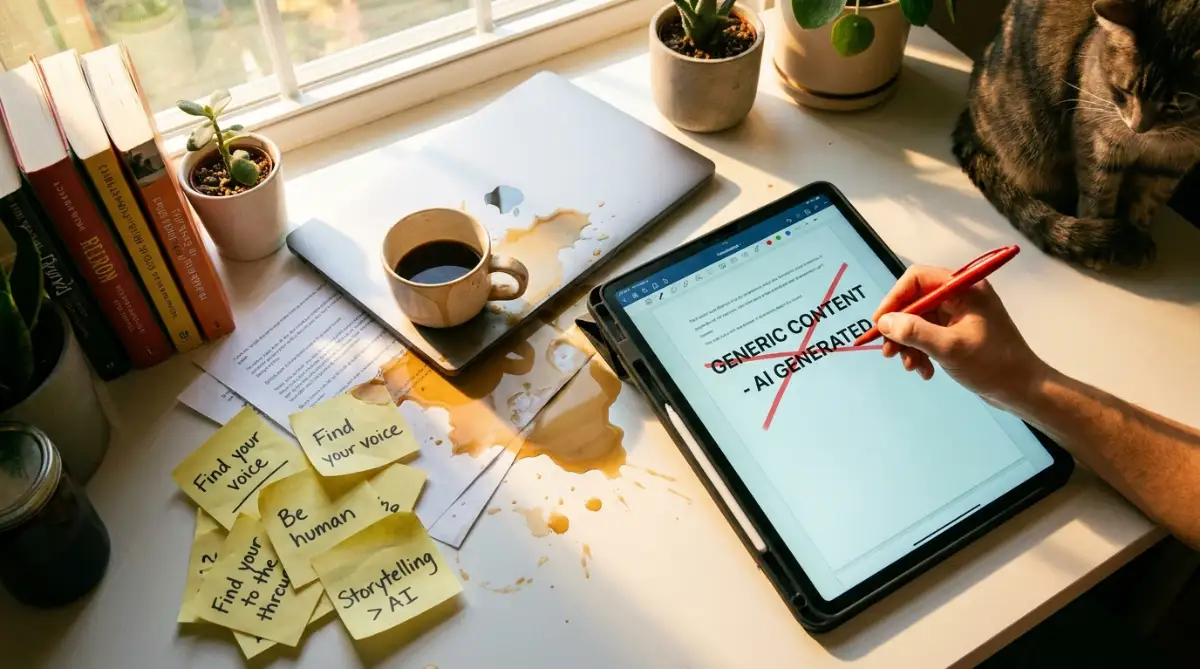
If you just take that first digital idea and run with it, your writing will start looking exactly like everyone else's writing in your industry. Your unique brand voice will suddenly become totally flat, corporate, and completely stripped of any real human personality.
Over time, your readers will notice this sudden drop in quality and completely lose interest in your message. If you want to master building authentic brand trust in a noisy market, you must actively fight the urge to be lazy. You must constantly push the software to give you weirder, more unusual combinations.
The Absolute Nightmare Of Privacy Leaks
Many hard-working writers accidentally leak their client's most sensitive information straight into public software tools. They paste confidential business strategies, secret product launches, and private customer stories into the chat box just to get a quick summary.
This is an incredibly dangerous habit that can permanently destroy client trust and ruin your entire professional reputation overnight. These public systems often use your private input to train their future models, meaning your secret ideas could eventually be shown directly to your competitors.
Always keep your unique intellectual property entirely offline and totally private. You need to deeply understand how free digital platforms consume your private prompts so you can protect your own brilliant ideas from being silently stolen.
If you are working with highly sensitive corporate documents, you must take extra precautions. You should heavily look into training digital systems on personal data safely using closed, local networks instead of public websites.
Believing The "End Of The Expert" Hype
There is a highly toxic rumor going around social media that you no longer need any hard writing skills because a computer can just write for you. People falsely believe they do not need to study grammar, pacing, or human psychology anymore.
This is a massive lie that will completely ruin your long-term career progression. If you do not understand the basic rules of great storytelling, you will never know if the machine is actually giving you good work or complete garbage.
We see this exact same panic happening in other industries right now, and the result is always the same. For example, the hidden truth about software replacing tech coders completely ignores the fact that you still need a human brain to solve complex logic puzzles. Your foundational writing skills are actually more valuable right now than they have ever been before.
Losing Your Willingness To Take Big Creative Risks
Algorithms are explicitly programmed by their creators to strictly avoid taking any risks. They will never naturally suggest a highly controversial marketing angle or a totally shocking story introduction.
If you lean on these digital tools too heavily, you will slowly become terrified of stepping outside the completely safe, boring box. You will start playing it way too safe, which is the exact opposite of true human imagination.
The most memorable human achievements always come from someone taking a massive, totally unreasonable creative risk. You must actively fight the machine's strong desire to make your writing perfectly average.
Your Action Plan For Becoming An Irreplaceable Creator
We have covered a massive amount of ground today, and we have successfully busted the deeply scary myths hiding in our home offices. The heavy anxiety you felt at the beginning of this article should now be replaced with a strong sense of clarity, power, and massive excitement.
<