The Unexpected Reality of Leaving the Driveway
I will never forget the sheer panic of my first long road trip in my brand-new electric car. I had easily managed daily commutes by simply plugging in at home, assuming the rest of the world operated just as smoothly. Three hours into my journey, my dashboard flashed a bright orange low-battery warning, and my stomach instantly dropped. I pulled into a random shopping center that my map promised had a charging station, only to find a totally confusing machine that required a specific card I did not own. I spent forty-five miserable minutes sitting in the freezing rain, desperately downloading random apps just to get enough juice to reach my hotel.
That overwhelming sense of helplessness is exactly what stops thousands of people from fully enjoying their electric cars today. You make the switch to green energy, expecting a seamless, futuristic driving experience. Instead, you are thrown into a wildly unorganized puzzle of different companies, weird connection plugs, and broken screens.
Range anxiety completely takes over the joy of driving. You find yourself constantly staring at your battery percentage instead of looking at the beautiful scenery out the window. Simple weekend getaways suddenly require hours of military-level planning just to make sure you do not end up stranded on the side of a highway.
Families end up arguing in empty parking lots because the only available charger refuses to connect to the car's computer. The mental peace you wanted by avoiding dirty gas stations is quickly replaced by the stress of managing five different mobile apps.
The core issue is that there is no single, universal system for powering up your car on the go. Unlike gas stations where you just swipe a card and pump, the electric grid is split among dozens of competing software networks. To survive out there, you need a very specific set of skills that the dealership completely forgot to teach you.
Decoding the Puzzle of Public Power Stations
You do not need a degree in electrical engineering to comfortably drive across the country. You just need to understand how these machines actually talk to your vehicle and how to prepare your digital wallet beforehand. Let us break down the exact strategies you need to master the open road without ever feeling that terrible low-battery panic again.
Understanding the Three Levels of Power
The biggest mistake new owners make is assuming all public plugs deliver the exact same amount of energy. Pulling up to the wrong type of machine can mean the difference between a twenty-minute coffee break and a painfully slow ten-hour wait. You have to learn how to instantly identify the speed of the station before you even park.
Level One charging is essentially just a standard wall outlet, like the one you use for your toaster. If you see a public station offering Level One, just keep driving unless you plan to leave your car there for three entire days.
Level Two chargers are the most common units you will find at hotels, shopping malls, and office buildings. They deliver a steady, moderate flow of energy, usually adding about twenty to thirty miles of range per hour. These are absolutely perfect when you are planning to eat a long dinner or sleep overnight, but they are terrible if you are rushing down the highway.
When you are on a serious road trip, you only want to look for DC Fast Chargers, often referred to as Level 3. These massive, heavy-duty machines bypass your car’s internal converter and push raw power directly into the battery. A good fast charger can boost your battery from twenty percent to eighty percent in the time it takes to grab a burger and use the restroom.
The "Rule of 80" for Highway Travel
When you finally connect to a fast charger, you might notice something very strange happen to the charging speed. The machine pumps electricity incredibly fast at first, but then suddenly slows down to a crawl once your dashboard hits eighty percent. Many new drivers think the machine is broken and angrily call customer service.
This massive slowdown is actually a built-in safety feature designed by the car manufacturer. Think of your battery like a crowded movie theater. When the theater is totally empty, hundreds of people can rush through the doors at top speed.
However, as the theater fills up, those last few people have to squeeze slowly past the aisles to find the remaining empty seats. Forcing electricity into a nearly full battery creates intense, dangerous heat that can permanently ruin the chemical cells inside. To prevent your battery from cooking itself, the car's computer intentionally chokes the power flow at that eighty percent mark.
I used to sit at public stations for an extra forty minutes just trying to reach a perfect one hundred percent before getting back on the road. I quickly realized I was wasting my entire afternoon fighting the computer's safety limits. The smartest road trip strategy is to charge quickly to eighty percent, unplug, and drive to the next fast charger down your route.
Watch Exactly Why Your Car Slows Down and How to Save Time
If you want a brilliant visual breakdown of exactly how this battery science works, check out this quick guide. Watching this short video will instantly change how you plan your road trip stops and save you hours of waiting.
Consolidating Your Digital Wallet
The most frustrating part of the public infrastructure is that every single charging company wants you to use their specific app. If you just drive blindly, you will end up standing in the cold downloading new software and typing in your credit card numbers every time you stop. This ruins the entire travel experience.
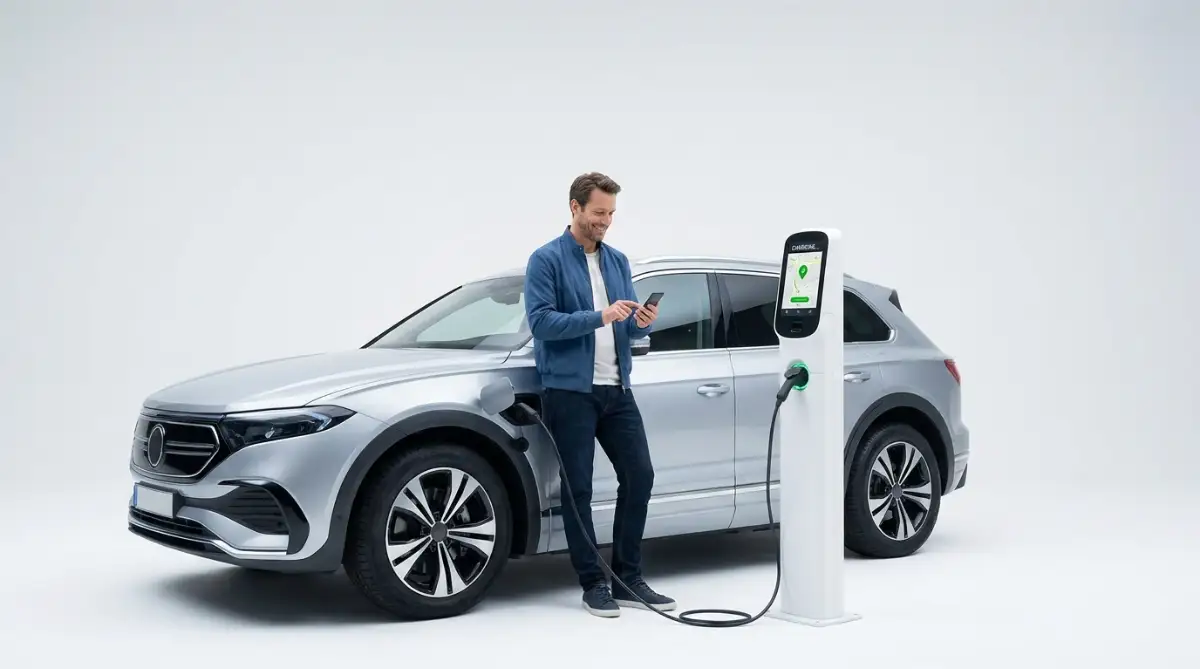
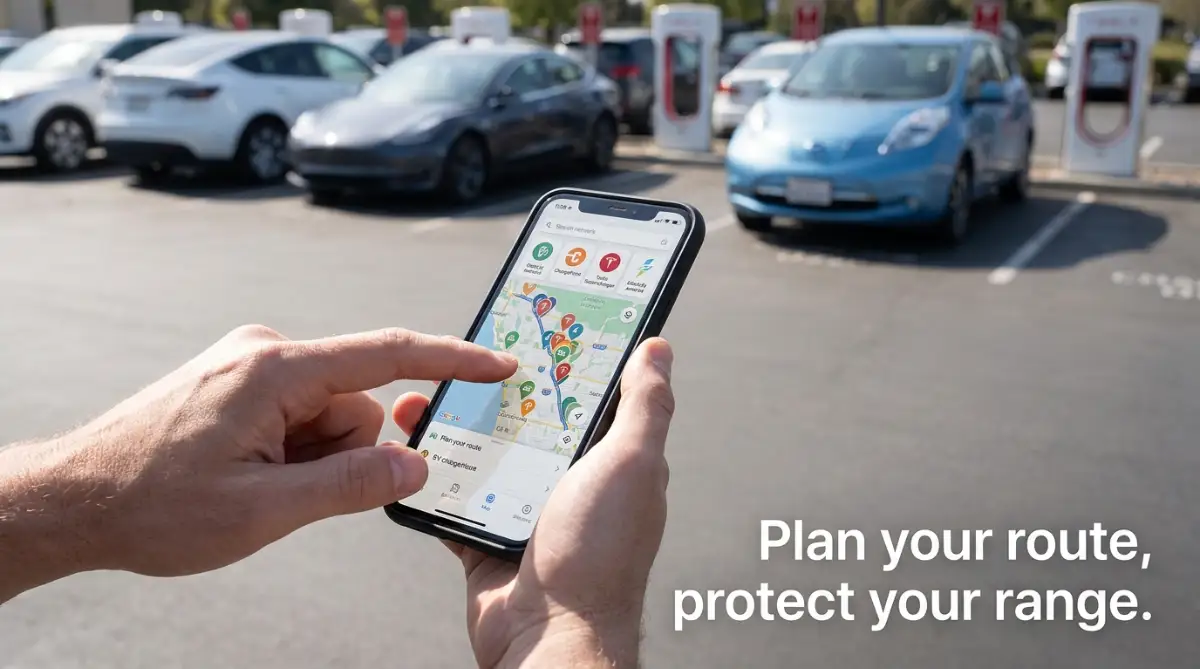
Before you ever leave your driveway, you need to create a dedicated "charging folder" on your smartphone. Find out which three major networks operate along your planned route. Download those specific apps, create your user accounts, and safely link your payment method while sitting comfortably on your couch.
Some major networks allow you to simply tap a physical credit card on the machine, but you should never rely on this as your only option. The credit card readers on these outdoor machines break constantly due to rain and heavy sun exposure. If the card reader is broken, activating the machine directly through the network's mobile app is usually the only way to get the power flowing.
The Art of Preconditioning Your Battery
If you want your car to accept electricity at maximum speed during the winter, you have to prepare the battery before you arrive. Cold batteries are highly resistant to fast charging, meaning a thirty-minute stop can easily turn into a miserable ninety-minute wait if the battery is frozen.
Most modern electric vehicles have a brilliant software feature called "preconditioning." When you use your car’s built-in navigation system and select a fast charger as your destination, the car starts doing math in the background. About twenty miles before you arrive, the car will secretly use a little bit of energy to physically heat up the battery pack.
By the time you pull into the parking lot, the battery is perfectly warm and ready to swallow electricity at maximum speed. Never just use a third-party map on your phone and drive to a charger without telling the car where you are going. Always input the charger directly into the dashboard screen so the vehicle can physically prepare itself for the incoming power surge.
Navigating the "Broken Charger" Reality
The unfortunate reality of the current public network is that not every machine you see on the map is actually functioning. Vandalism, software glitches, and broken connector clips are incredibly common across the country. Pulling up to a row of completely dead chargers with only ten miles of range left is a true nightmare.
You must never treat a public charger like a traditional gas station, assuming it will definitely work when you arrive. You have to verify the status of the machine using community-driven apps before you commit to driving there. Apps that rely on actual driver check-ins will tell you if the machine was working successfully ten minutes ago, or if it has been broken for three weeks.
When you are planning your stops, always look for locations that have at least four or more charging stalls lined up together. If you drive to a location that only has one single machine, you have a massive single point of failure. If that one machine is broken, you are completely stuck. A location with six stalls guarantees that even if two are broken, you can still get home safely.
Mastering the Etiquette of the Plug
Because public stations are still relatively limited, a strong sense of community etiquette has developed among experienced drivers. The golden rule is that charging spots are for active charging only, never for long-term parking. The moment your car hits its required percentage, you need to move it to a regular parking space immediately.
Many major networks now enforce this rule by charging massive "idle fees." If your car finishes charging and remains plugged into the machine, the network will start charging you a dollar a minute just for blocking the space. These fees add up incredibly fast and will easily cost you more than the electricity itself.
If you are using a slow Level Two charger at a hotel and plan to leave it plugged in overnight, try to leave a polite note on your dashboard with your phone number. If another driver arrives at 2:00 AM with a completely dead battery, they can text you and ask to swap the plug. Treating other electric drivers with respect ensures the whole messy system works better for everyone.
Advanced Travel Tactics for the Modern Electric Driver
Once you get comfortable with the basics of different power levels and managing your mobile apps, you can start using advanced strategies to make your trips truly effortless. The most experienced drivers rarely think about their battery percentage because they use smart routing software to do all the heavy lifting. Instead of relying purely on the map provided on the dashboard, they use specialized third-party planners designed specifically for electric travel.
These advanced routing apps do much more than just point you toward the nearest plug. They calculate your specific car model, the current outside temperature, wind speed, and even the elevation of the mountains you have to drive over. If you are driving up a steep hill in freezing weather, the app automatically knows your battery will drain much faster and adjusts your charging stops perfectly. The US Department of Energy actively encourages using smart routing tools to prevent unexpected power loss during extreme weather conditions.
Another brilliant tactic is matching your charging speed with your actual biological needs. If you know you only need to stop for a quick five-minute bathroom break, pull up to the fastest Level 3 charger available. But if you plan to sit down inside a restaurant for an hour to eat a full lunch, plug into a slightly slower Level 2 machine if one is nearby.
Using a slower charger during a long meal saves you money, as fast chargers are usually twice as expensive per minute. It also prevents you from having to rush out of the restaurant halfway through your meal to move your car to avoid those massive idle fees. Stopping unexpected EV battery drain is often just a matter of matching your lifestyle habits to the correct machine.
If you are planning a multi-day road trip, calling your hotel ahead of time is an absolute must. Many hotels proudly advertise "EV Charging Available" on their websites, but that usually means they only have two plugs for a parking lot of three hundred rooms. Call the front desk and ask them exactly how many machines they have and if they are currently fully functional.
I actually learned this the hard way when I booked a beautiful mountain resort specifically because they promised on-site charging. When I arrived with five percent battery remaining, I discovered their only charger had been broken for six months! I had to spend the next morning driving ten miles under the speed limit just to reach a working plug in the next town over.
The Dangerous Traps of the Open Road
Even with the best planning apps on your phone, human error can quickly turn a fun road trip into a highly stressful rescue mission. One of the most dangerous psychological traps new owners fall into is trusting the "Guess-O-Meter" too much. The range number displayed on your dashboard is just an optimistic guess based on your recent driving history, not an absolute guarantee.
If you just spent a week driving slowly around city streets, your car might proudly display three hundred miles of range. But the moment you merge onto a massive highway and drive at eighty miles per hour, that number will drop like a stone. Pushing your car at high speeds creates massive aerodynamic drag, which forces the battery to work twice as hard just to keep you moving forward.
If you plan your charging stops based on that optimistic city driving number, you will run out of power long before you reach the station. Always build a "twenty percent buffer" into your travel plans. If your app says you will arrive at the charger with zero percent battery, you need to change your route and stop somewhere closer. Understanding why heavy EV batteries destroy normal tires and drain extra energy is crucial for safe highway driving.
Another massive mistake is aggressively unplugging the heavy connector before the machine is actually ready to let go. These high-voltage cables lock themselves into your car's port to prevent accidental electrical arcs. If you pull the handle forcefully while the lock is still engaged, you can easily snap the plastic locking pin right off your car.
If that locking pin breaks, your car will never accept a fast charge again until you pay for a very expensive repair at the dealership. Always use the app or the physical button on the machine to formally end the session. Wait for the mechanical "click" sound from your car before you gently pull the handle away.
Finally, relying on a single network for your entire trip is a massive gamble. Some drivers only buy the monthly subscription for one specific charging brand, ignoring all the others. If that specific network experiences a nationwide software outage—which absolutely happens—you will be sitting in a parking lot with a dead car. Always keep at least three different network apps updated with your current credit card information.
Your Action Plan for Stress-Free Electric Travel
You no longer have to look at long road trips with fear and anxiety. You now understand that navigating the public grid is not about getting lucky; it is about intentional preparation. By learning the difference between slow Level 2 stations and rapid DC fast chargers, you take complete control over your travel schedule.
You know how to protect your battery by stopping at eighty percent, and you understand the massive importance of preconditioning your car before you arrive. Most importantly, you know how to build a safety buffer into your route so a broken machine never leaves you stranded. You have effectively removed all the guesswork from driving an electric car.
You can finally enjoy the quiet, smooth ride and the incredible acceleration that made you buy the car in the first place. Learning how to plan the perfect home EV charger setup gives you peace of mind overnight, and this guide gives you peace of mind on the open highway. The electric future is absolutely brilliant once you learn how to read the map correctly.
I spent my first three months of ownership terrified to drive more than fifty miles away from my house. The moment I started using smart routing apps and treating charging stops like normal rest breaks, the fear completely vanished. I want you to grab your phone right now, download the top three charging apps in your area, and start planning your next amazing weekend adventure!
Most Common Questions About Public EV Charging
Can I charge my electric car in the pouring rain?
Yes, it is completely safe to charge your vehicle during heavy rain or even snowstorms. Both the charging cable and the port on your car are heavily weatherproofed and designed to handle extreme outdoor elements safely. The system will not send any high-voltage electricity until it confirms a perfectly sealed and secure connection.
Do I need to bring my own cable to use public fast chargers?
No, Level 3 fast charging stations always have their own heavy-duty cables permanently attached to the machine. You only need to use your personal cable if you are plugging into a standard wall outlet or certain types of very basic Level 2 stations.
What happens if a public charger is broken and I have zero battery left?
If you are completely stranded, you will need to call a flatbed tow truck to take your car to the nearest working station. Never allow a tow company to pull an electric vehicle with its wheels on the ground, as this will destroy the electric motors. Always demand a flatbed truck for safe transport.
Why does my battery charge so much slower during the winter?
Cold temperatures physically slow down the chemical reactions inside your battery pack. Until the battery warms up to its optimal operating temperature, it cannot accept heavy amounts of electricity safely. Protecting your EV battery during winter drops requires you to use the car's preconditioning feature before arriving at the station.
Is it cheaper to charge my car at home or at a public station?
Charging at home overnight is almost always significantly cheaper than using public stations. Public networks heavily mark up the price of electricity to cover the massive cost of installing and maintaining those giant fast-charging machines.
Disclaimer: The information provided in this article is for educational and informational purposes only. Charging speeds, network availability, and vehicle software features vary significantly between different car manufacturers and regions. Always refer to your vehicle’s official owner’s manual and practice safe driving habits when planning long-distance travel.