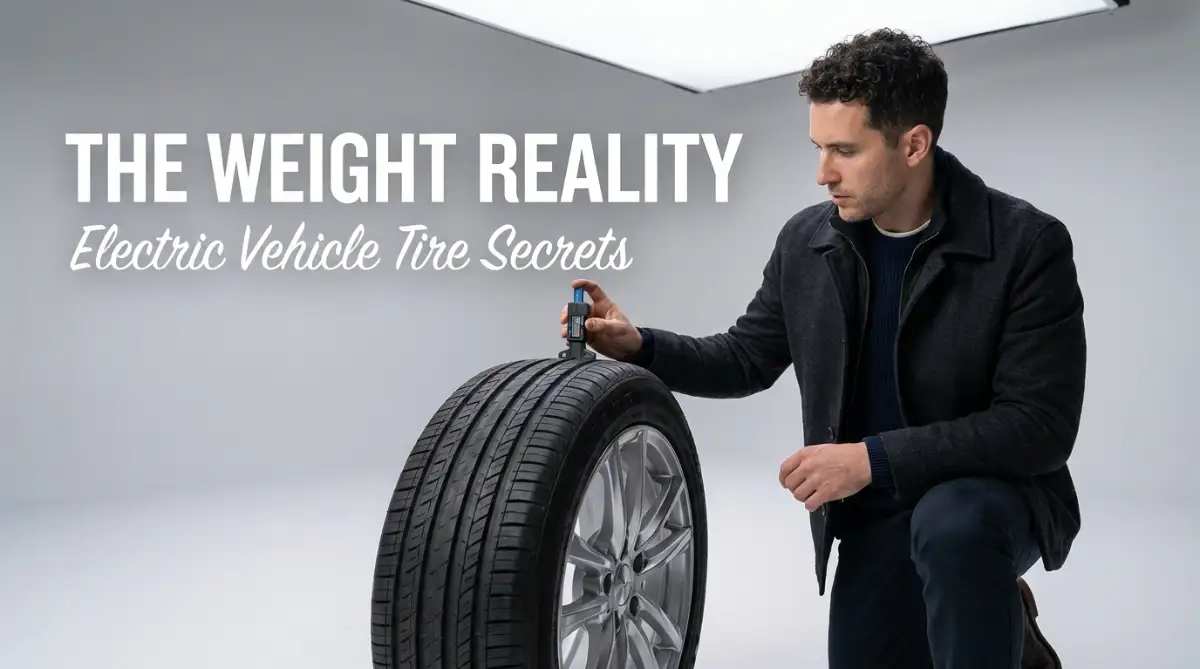
The Shocking Truth About Owning a Battery-Powered Ride
I still remember the exact moment my stomach dropped. I had just taken my shiny new electric car in for its very first routine checkup, feeling pretty proud of all the gas money I was saving. The mechanic walked out, wiped his hands on a rag, and told me I needed a completely new set of tires. I thought he was joking because I had only been driving the car for seven months. My old gas-powered car would easily go years on a single set of rubber. I was confused, angry, and honestly, a little embarrassed that I didn't know this was going to happen.
This unexpected expense is a nightmare that so many new drivers are facing right now. We buy these amazing, quiet, eco-friendly machines to save money and reduce our carbon footprint. But nobody tells us about the hidden tax hiding right under the chassis.
Regular folks are suddenly getting hit with massive replacement bills that completely wipe out their fuel savings. It ruins the joy of driving when you are constantly worried that every time you hit the accelerator, you are burning away dollar bills.
The stress of failing a safety inspection or getting a flat tire on a busy highway is keeping drivers awake at night. You start to second-guess every trip to the grocery store or weekend getaway.
It feels completely unfair. You did the right thing by going electric, but now you feel punished by the maintenance costs. The problem is not your driving habits.
The real issue comes down to pure physics and the massive batteries sitting underneath your seats. Normal rubber simply cannot handle the extreme pressure and stress that these modern machines put out on a daily basis.
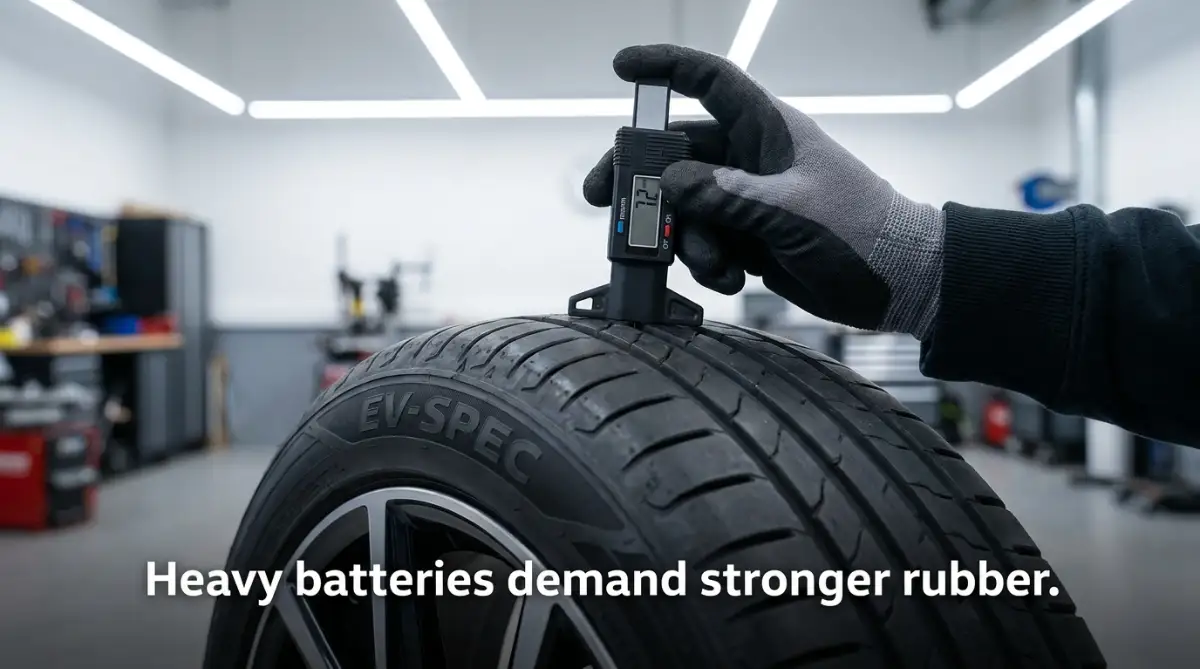
Understanding the Hidden Burden on Your Wheels
When we talk about cars, we rarely think about the actual math happening where the rubber meets the road. But with your new battery-powered ride, that connection is the most important part of the entire machine.
Let me paint a picture for you. Imagine you are running a marathon in your favorite, lightweight running shoes. You feel fast and agile.
Now, imagine putting on a heavy backpack filled with bricks and trying to run that same race. Your knees will hurt, your feet will drag, and the soles of your shoes will scrape against the pavement and tear apart quickly.
This is exactly what is happening to your wheels. The massive battery packs required to give you hundreds of miles of driving range add thousands of pounds of extra mass to your vehicle.
Because of this intense added pressure, standard off-the-shelf tires get squashed flat against the asphalt. The friction increases dramatically, and the rubber simply melts away as you drive around town.
The Magic Inside Specialized Rubber Compounds
To fix this massive weight issue, engineers had to completely rethink how a tire is made. They could not just use the same old recipes they used for standard gas cars.
Instead, they started blending new, highly advanced materials into the rubber. They add high amounts of silica, resin, and special synthetic polymers to create a compound that is incredibly strong but still flexible.
Silica is the secret ingredient here. It helps the tire grip the road tightly when it rains, but it also lowers the rolling resistance.
Low rolling resistance means the car does not have to fight the road to move forward. This directly gives you more driving range on a single charge.
Without these specialized ingredients, your range would drop significantly, and you would find yourself searching for a charging station much more often.
The Silent Power That Eats Tread
Weight is only half of the story. The other invisible enemy of your tires is the sheer power of electric motors.
If you have ever pressed the pedal down in a battery-powered car, you know that the acceleration is instant. There is no waiting for an engine to rev up or gears to shift.
All of that instant power, known as torque, goes directly to the wheels in a split second. This silent, aggressive force acts like sandpaper against your tread.
Every time you take off quickly from a red light, you are shaving microscopic layers off your tires. You do not hear screeching or burning rubber, but the damage is happening quietly.
Why the Sidewalls Must Be Built Like Tanks
Because of the heavy batteries, the sides of the tires carry an unbelievable amount of stress, especially when you turn a corner. If you put a regular tire on a heavy EV, the side of the tire will bend and bulge dangerously.
To prevent this, specialized tires feature highly reinforced sidewalls. They are built with thicker layers of steel belts and stiffer rubber.
This extra muscle keeps the car stable when you take sharp turns or hit sudden bumps. It ensures the car does not feel wobbly or unsafe at highway speeds.
However, this stiffness also means the tire has less bounce. To keep your ride comfortable, the rubber compound on the very outside has to be specifically tuned to absorb the shock of potholes.
Here is a quick breakdown to help you see the differences clearly:
The Acoustic Foam Secret You Never Knew
Here is a fascinating detail that most drivers never realize. Without a loud engine masking the sounds outside, road noise becomes a huge annoyance in a quiet electric cabin.
If you drive with regular tires, you will hear a constant, loud humming sound from the pavement. It can give you a headache on long road trips.
To solve this, manufacturers actually glue a thick layer of special sound-absorbing foam directly to the inner wall of the tire. This foam acts like a sponge for sound waves.
It absorbs the hollow echoing noise before it can travel up through the suspension and into your ears. This is why replacing an EV tire is so much more expensive than a standard one.
Rethinking Your Maintenance Routine
Because these vehicles behave so differently, the old rules of car maintenance completely go out the window. You cannot just wait for your annual oil change to have a mechanic look at your wheels.
Since you don't need oil changes anymore, it is incredibly easy to forget about maintenance entirely. This is a trap that catches thousands of new owners every single month.
You must take ownership of your visual checks. You need to get up close and personal with your car regularly to ensure everything is safe.
If you ignore this, the heavy weight and instant power will wear your tread down to the metal wires before you even realize there is a problem.
Are you wondering what to look for when you check your car? Watch this expert breakdown before we move to the next step.
Before you spend hundreds of dollars on your next replacement set, take two minutes to watch this visual guide on how battery weight creates uneven wear patterns.
How to Inspect Like a Pro
Start checking your tread depth every single month. Do not wait for a warning light to pop up on your dashboard.
You can buy a cheap digital tread depth gauge online for just a few dollars. It is the best investment you will ever make for your garage.
Press the gauge into the grooves of your tire in three different spots: the outer edge, the middle, and the inner edge.
Because electric cars are so heavy, they often wear out the very inside edge of the tire faster than the outside. If you only look at the part of the tire facing you, you might completely miss the dangerous bald spot on the inside.
If you see a difference in depth between the middle and the edges, your car is telling you it needs an alignment immediately.
I actually learned this the hard way during a family road trip.
I always thought checking the pressure meant just looking to see if the tire looked a little flat. I ignored the actual numbers on my digital dashboard for weeks. When I finally used a real gauge, I realized all four tires were severely under-inflated, which caused them to wear out extremely fast on the outer edges and cost me a small fortune to replace. My biggest lesson was that human eyes cannot judge air pressure on a car this heavy.
The Regenerative Braking Trap
Another unique feature of your car is regenerative braking. When you take your foot off the accelerator, the motor reverses to slow the car down and feed energy back into the battery.
This is amazing for saving your brake pads, but it puts extra backward force onto your rubber.
Instead of just wearing down when you speed up, your tires are also wearing down aggressively every time you slow down. It is a double-edged sword that speeds up the degradation process.
To manage this, you might need to adjust your driving settings. Many cars allow you to lower the intensity of the regenerative braking in the main menu.
If you are just driving on flat highways, lowering this setting can take a lot of stress off your rubber and help it last a few extra months.
Managing Air Pressure in Heavy Machines
Air pressure is your best defense against premature wear. Because the vehicle is so heavy, even a slight drop in pressure causes the tire to completely flatten out on the bottom.
When a tire runs low on air, it generates massive amounts of heat. Heat is the ultimate enemy of the special silica compound we talked about earlier.
The heat will bake the rubber, making it brittle and weak. This leads to cracking and sudden blowouts on the highway.
Always check your air pressure when the tires are cold. Driving just a few miles will heat up the air inside and give you a false, high reading.
Keep a portable air compressor in your trunk. It is a simple tool that allows you to top up the air exactly when you need it, without relying on broken gas station pumps.
Why Tire Rotation is Non-Negotiable
Rotating your tires means moving the front wheels to the back and the back wheels to the front. This is an old trick, but it is absolutely essential for heavy battery cars.
Most electric cars push more power to the rear wheels. Because of this, the rear tires handle the most abuse and wear down twice as fast as the front ones.
If you do not swap them around every five to seven thousand miles, you will end up having to buy two new tires while the other two are still perfectly fine.
Set a strict reminder on your phone. Better yet, find a local shop that offers free rotations if you buy your replacements from them.
Debunking the High-Cost Myth
Many people complain that specialized tires are a scam designed by car companies to steal your money. This is simply not true.
Yes, they cost more upfront. But if you put standard, cheap tires on a heavy battery vehicle, they will literally disintegrate in less than ten thousand miles.
You will end up buying three sets of cheap tires in the same time it takes to wear out one set of the proper specialized ones.
Plus, the cheaper tires will ruin your driving range. You will spend more time sitting at charging stations, paying premium rates for electricity, completely erasing any money you thought you saved.
Always stick to the manufacturer's recommendations. Look for tires that have specific EV badges printed directly on the sidewall.
By understanding the physics of your car and taking a few minutes each month to inspect your wheels, you can take control of your maintenance. You do not have to be a victim of surprise repair bills. Treat your heavy machine with the respect it demands, and it will reward you with a smooth, quiet, and highly efficient ride for years to come.
Next-Level Survival Strategies for Your Electric Vehicle Tires
Now that we understand the massive weight sitting under our seats, it is time to talk about real-world defense. You do not have to just accept that your battery-powered ride will eat through rubber every few months. I want to share some expert-level secrets that completely changed how I manage my own vehicle's maintenance.
The first massive secret revolves around a tiny rating printed on the side of your tire that most people completely ignore. When you look at the sidewall, you will usually see a string of numbers followed by letters like XL or HL.
Those letters are incredibly important for your safety. XL stands for Extra Load, while the newer HL stands for High Load capacity.
Think of this load rating like the foundation of a heavy brick house. If you build a heavy house on a weak wooden foundation, the whole structure will eventually sag and collapse.
When you buy replacement tires, you must guarantee they have the exact load rating your manufacturer requires. If you downgrade to a standard load tire to save a few dollars, the heavy battery will crush the internal steel belts.
According to national tire safety and load guidelines provided by highway safety experts, ignoring these load limits is a leading cause of dangerous highway blowouts. You can easily find the correct load index printed on the sticker inside your driver-side door frame.
Taming the Instant Torque Monster
Another advanced trick involves changing how your car actually behaves on the road. Most modern electric cars come with different driving profiles, usually labeled as Sport, Normal, and Eco or Chill mode.
When I first got my car, I left it in Sport mode all the time because the instant acceleration felt like a rollercoaster ride. What I did not realize was that this specific habit was literally shaving miles off my tire lifespan every single day.
When you press the pedal in Sport mode, the electric motors dump maximum power to the wheels instantly. This sudden, violent force causes the rubber to microscopically slip and shear against the rough pavement.
You will not hear the tires screeching, but the damage is definitely happening. By switching your daily commute setting to Eco or Chill mode, you force the computer to deliver that power smoothly and gradually.
This one simple setting change reduces the grinding friction on your tread significantly. Plus, driving in a smoother mode is an excellent way to prevent sudden EV battery drain when you are running errands around town.
The Hidden Connection Between Suspension and Tread Wear
You cannot talk about heavy electric vehicles without talking about the suspension system holding them up. Because these cars easily weigh over five thousand pounds, the shocks and struts work overtime on every single bump.
When your suspension components start to wear out, they lose their ability to push the tire firmly against the road. Instead of rolling smoothly, the tire starts to bounce like a heavy basketball as you drive.
This tiny, continuous bouncing creates a very specific type of damage called cupping or scalloping. If you run your hand along the edge of your tire and it feels wavy instead of perfectly smooth, your suspension is struggling to handle the battery weight.
Have a professional mechanic inspect your suspension components at least once a year. Keeping those parts fresh ensures your tires stay perfectly planted on the asphalt, maximizing their lifespan.
The Seasonal Temperature Trap
Your specialized EV rubber is highly sensitive to the weather outside. The advanced silica compounds that give you great range in the summer react very differently when the temperature drops.
When the winter cold hits, standard summer or all-season EV tires can turn as hard as a hockey puck. This hard rubber easily chips and wears unevenly on freezing, jagged winter roads.
If you live in an area with harsh winters, you must switch to dedicated winter tires designed specifically for heavy battery cars. This simple swap will completely transform your winter driving experience.
It is also worth noting that cold weather heavily impacts your battery chemistry as well. Understanding how to protect your EV range during freezing winter months goes hand in hand with proper seasonal tire management.
Mastering the Art of Deceleration
We touched on regenerative braking earlier, but there is an advanced way to use it to your advantage. The goal is to drive smoothly enough that you rarely have to use your physical brake pedal at all.
When you anticipate a red light from a distance, slowly lift your foot off the accelerator instead of snapping it back quickly. This gentle release commands the electric motor to slow the car down smoothly rather than aggressively.
Aggressive regenerative braking throws the heavy weight of the car forcefully toward the front tires, grinding them into the pavement. By smoothing out your foot movements, you distribute that heavy weight much more evenly.
If you want to dive deeper into this driving technique, you should spend some time mastering how regenerative braking actually works to protect your entire braking system.
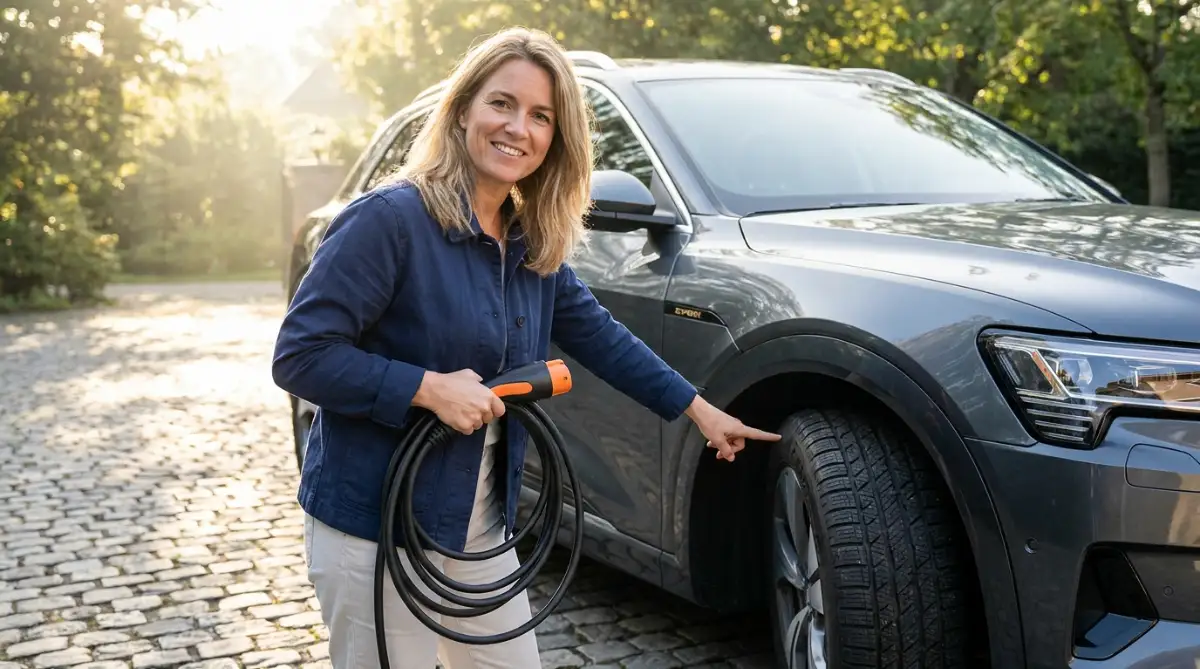
The Financial Traps Destroying Your Wheels
Even with the best driving habits, many owners accidentally destroy their tires by making a few very common, yet highly destructive mistakes. I want to walk you through these pitfalls so you do not end up paying the ultimate price at the repair shop.
The most common trap is relying entirely on the automated tire pressure light on your dashboard. This system is known as TPMS, and it is a helpful safety net, but it is not a maintenance tool.
Most dashboard lights only turn on when a tire loses about twenty-five percent of its air pressure. For a heavy electric car, driving with even a ten percent pressure drop is enough to completely destroy the inner sidewall in just a few weeks.
If you wait for the dashboard light to tell you something is wrong, the damage is already done. You must check the pressure manually with a digital gauge every single month to catch small leaks early.
The "Cheap Replacement" Illusion
Another massive mistake happens the moment people see the price tag for specialized replacement rubber. The sticker shock is real, and it tempts many drivers to ask the shop for the absolute cheapest generic tires available.
Mounting cheap, standard gas-car tires on an EV is basically throwing your money directly into the garbage. Those standard tires lack the internal steel reinforcement needed to support the massive battery packs.
Within just five or six thousand miles, those cheap tires will bulge, crack, and wear completely bald. You will find yourself back at the tire shop buying another set, spending far more money in the long run.
Government studies detailing how battery weight impacts vehicle efficiency constantly highlight that using incorrect, cheap tires ruins your driving range and forces you to charge more often. Investing in the right equipment upfront is always the smartest financial move.
Ignoring the Invisible Misalignment
Electric vehicles are completely silent, which means they hide their mechanical cries for help very well. If a gas car is out of alignment, you can often feel the engine vibrations acting strangely or hear the tires fighting the road.
In an EV, a bad alignment is a silent killer. Because the car is so incredibly heavy, hitting a medium-sized pothole is enough to knock the steering components slightly out of place.
Even if the steering wheel still looks perfectly straight to you, the wheels might be pointing inward by a fraction of an inch. This slight angle acts like a massive cheese grater, aggressively shaving rubber off the inside edge of your tires while you drive on the highway.
Many owners never notice this because they only look at the outside of the tire when walking up to the car. You must make a habit of turning your steering wheel all the way to the side while parked, just so you can inspect that hidden inner edge.
The Chemical Wash Disaster
Here is a mistake that car enthusiasts make all the time without realizing it. We all love the look of shiny, deep black tires after a fresh weekend car wash.
However, many cheap, petroleum-based tire shine products are extremely bad for EV-specific rubber compounds. These heavy cars require the natural oils inside the rubber to keep the sidewalls flexible under the immense weight.
Harsh chemical sprays actually bake in the sun and strip those natural, flexible oils right out of the rubber. Over a few months, this causes tiny micro-cracks to form all along the sidewall of the tire.
These cracks weaken the exact spot that needs to be the strongest. Instead of using cheap aerosol sprays, switch to water-based tire gels that protect the rubber without drying it out.
Considering the massive impact of electric vehicle manufacturing on resources, the least we can do is properly maintain the parts we already own so they stay out of landfills.
Mixing and Matching Rubber
Sometimes a sharp nail on the highway forces you to replace just one single tire. Many drivers think they can just throw any cheap tire on that one wheel and continue driving normally.
Mixing tire brands, tread patterns, or rubber compounds on an electric vehicle is incredibly dangerous. The advanced traction control computers inside your car expect all four wheels to grip the road exactly the same way.
If one tire has a different grip level, the computer can panic during heavy rain or emergency braking. It might send the wrong amount of power to the wheels, causing the heavy vehicle to slide out of control.
Always replace tires in pairs, either both front or both rear. This keeps your vehicle balanced, safe, and predictable in all weather conditions.
Your Personal Roadmap to Long-Lasting Rubber
Taking care of an electric car is a completely different game, but it does not have to be a stressful one. You just need to shift your mindset from traditional oil-change maintenance to proactive visual inspections.
Start by building a quick, five-minute routine into your life once a month. Pick a specific day, like the first Saturday of the month, to walk around your car with a digital pressure gauge and a tread depth tool.
Check the pressure while the tires are cold in your driveway. Look closely at those hidden inside edges to make sure they are wearing evenly with the rest of the tread.
Reviewing independent tread wear testing data frequently proves that owners who physically inspect their tires get thousands of extra miles out of them.
You should also keep your daily driving mode set to Eco or Chill to protect the rubber from that harsh, instant torque. Save the Sport mode for empty highway on-ramps when you actually need it safely.
It might seem like a lot to remember at first, but these small actions turn into powerful routines. Just like learning everyday habits to grow your savings, learning to maintain your vehicle will keep hundreds of dollars in your pocket over the years.
I know exactly how frustrating it feels to stare at a massive, unexpected repair bill for a car that was supposed to be maintenance-free. But once I started taking these simple steps seriously, my anxiety completely vanished. Now, I drive with absolute confidence, knowing my heavy machine is safe, efficient, and perfectly maintained. You have the knowledge now, so take five minutes tomorrow morning and go check your tires.
Driver Troubleshooting: What Others Are Asking
Can I put standard gas-car tires on my electric vehicle?
You technically can, but it is highly discouraged and often dangerous. Standard tires cannot safely support the extreme weight of EV batteries and will wear out completely in just a few thousand miles. You will also experience a major drop in your driving range due to the wrong friction levels.
Why do my EV tires seem to wear out at only 15,000 miles?
This rapid wear is usually caused by the instant, aggressive torque from the electric motors and the heavy weight of the vehicle. If you frequently accelerate hard from a dead stop, you are essentially grinding the tread away every single day. Using a smoother driving mode and checking your alignment regularly will help stretch that lifespan.
Does regenerative braking actually ruin my tires?
It does not ruin them, but it definitely changes how they wear down over time. Regenerative braking applies strong reverse force to the tires every time you lift your foot off the pedal. If you use the highest regenerative setting and drive aggressively, it will accelerate the wear on your tread.
Can a heavy electric car cause a sudden tire blowout on the highway?
Yes, especially if the tires are under-inflated or have the wrong load rating. When a tire lacks proper air pressure under a heavy EV, it flattens out, generates massive amounts of heat, and eventually weakens the internal steel belts until it bursts. This is why checking your air pressure monthly is non-negotiable.
Are EV-specific tires really supposed to be quieter?
Yes, they are intentionally designed to reduce cabin noise. Because electric cars do not have a loud engine to mask the sound of the road, tire noise becomes very obvious. Manufacturers use special tread patterns and sometimes insert acoustic foam inside the tire to absorb that annoying humming sound.
Disclaimer: The information provided in this article is for educational and informational purposes only. I am not a certified mechanic or automotive engineer. Always consult your vehicle's official owner's manual or a certified automotive professional for specific maintenance advice, correct tire load ratings, and safety guidelines tailored directly to your specific vehicle model.