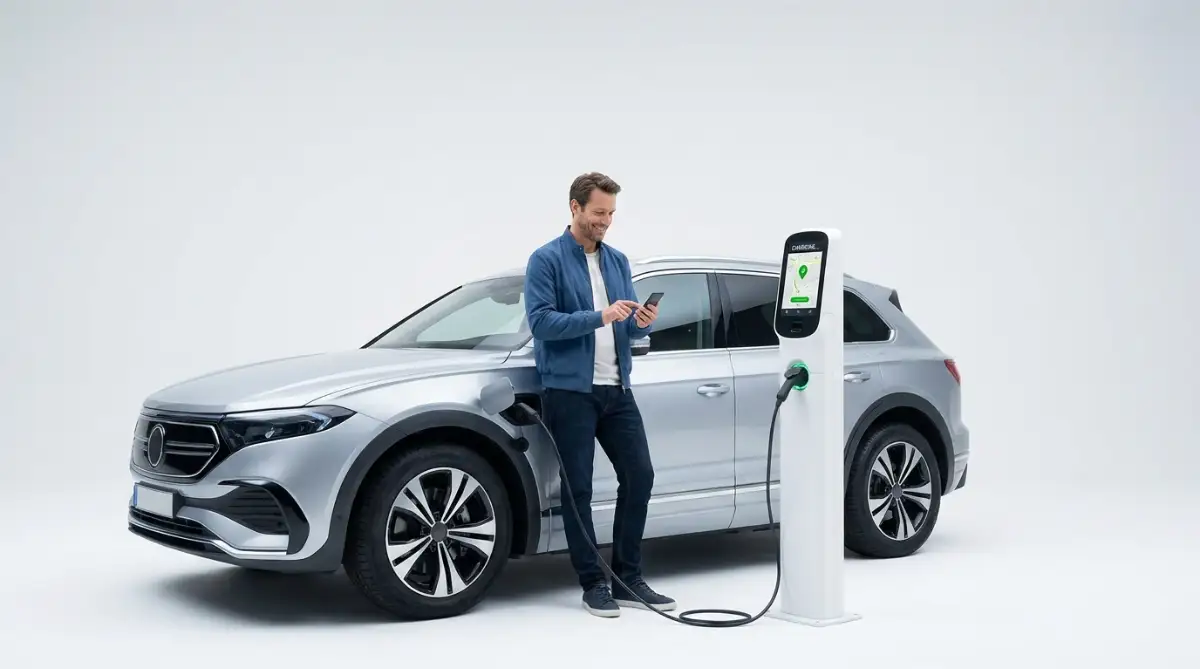
The Reality of Range Anxiety and Slow Charging Struggles
Let me guess—you bought an electric car to save money and help the planet, but right now, you’re just staring at your phone app in pure panic as your battery barely charges. Yep, I've been there. Plugging your brand-new EV into a standard wall outlet is like trying to fill up a massive bathtub using a tiny eyedropper. It’s stressful, it takes forever, and it completely kills the fun of driving. But do not worry, upgrading your home setup is way easier than you think. Let's fix your garage so you can wake up to a "full tank" every single morning without the headache.
The next morning, I woke up, checked my phone app, and my heart instantly sank. The car had only added about twenty miles of range after being plugged in all night long. I had a long commute ahead of me, and a creeping sense of panic started to settle in my chest.
I found myself turning off the heating in the car during a freezing morning commute just to save a few battery percentage points. Instead of enjoying my new ride, I was constantly doing stressful math in my head about distance, weather, and battery life. That standard Level 1 charger felt like trying to fill a massive swimming pool with a tiny drinking straw.
Many new electric car owners face this exact same nightmare during their first few weeks. You buy an expensive vehicle for convenience, but the lack of a proper home setup quickly turns your daily routine into a stressful chore. You start planning your life around public charging stations, wasting hours sitting in random parking lots waiting for your battery to fill up.
Waking up to a fully charged battery is the true luxury of owning an electric vehicle. But to get that peace of mind, you need a system that works efficiently while you sleep. The good news is that setting up a robust charging solution at your house is not nearly as complicated as it seems.
Fast Track: What You Need to Know Right Now
- Ditch the standard wall plug; a Level 2 (240V) station is a non-negotiable for stress-free overnight EV charging.
- Never buy hardware before hiring a licensed electrician to perform a home "load calculation."
- Hardwiring your charger directly to the panel is significantly safer and cleaner than using a heavy-duty wall plug.
- Avoid cheap, unbranded chargers from random websites—they lack safety sensors and are a massive fire hazard.
Decoding the Level 2 Charging Magic
Before we get our hands dirty with wires and electrical panels, we need to understand exactly what we are trying to build. A standard wall outlet gives you 120 volts of electricity, which is fine for charging a smartphone or running a television. But an electric car battery is massive, and 120 volts simply cannot push electricity fast enough to make a meaningful difference overnight.
A Level 2 charging station uses a 240-volt electrical supply, which is exactly the same type of power used by heavy household appliances like electric ovens and clothes dryers. Because it uses double the voltage, it can push energy into your car's battery much faster and more efficiently. Instead of getting three miles of range per hour, you can easily get twenty to forty miles of range per hour of charging.
This means a completely empty battery can be fully replenished while you get a good night's sleep. Understanding this power difference is the first step toward taking control of your daily driving routine. You are essentially bringing a mini gas station directly into your personal garage.
The Real-World Charging Speed Breakdown (What You Actually Get):
| Charger Type | Power Output | Miles Added Per Hour | The Bottom Line |
| :--- | :--- | :--- | :--- |
| Level 1 (Wall Outlet) | 120V | 3 to 5 miles | Good for plug-in hybrids or absolute emergencies. |
| Level 2 (Home Station) | 240V | 20 to 40 miles | The sweet spot for daily commuters. Charges overnight. |
| Level 3 (Public Fast) | 480V+ | 100+ miles in 20 mins | Great for road trips, but expensive and tough on battery health if used daily. |
Assessing Your Home's Electrical Capacity
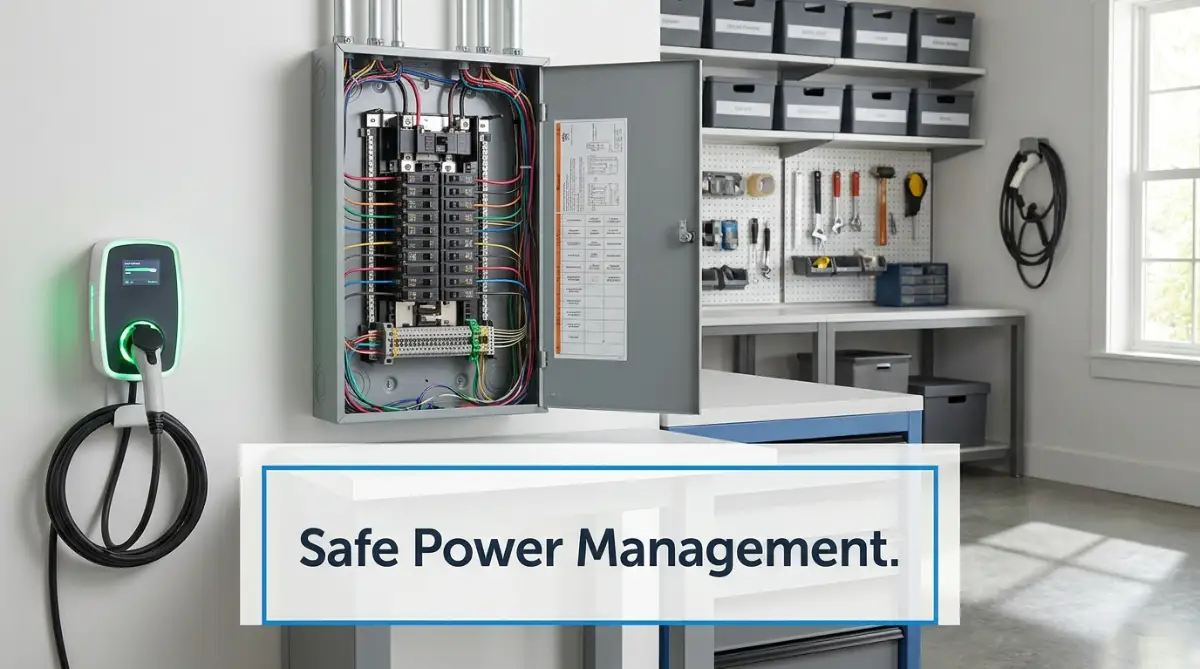
You cannot simply buy a large charging unit from the store and bolt it to your wall. Your home has a specific electrical capacity, and you need to know your limits before you start adding heavy loads. Think of your home’s electrical panel like a water pipe coming into your house from the main city line.
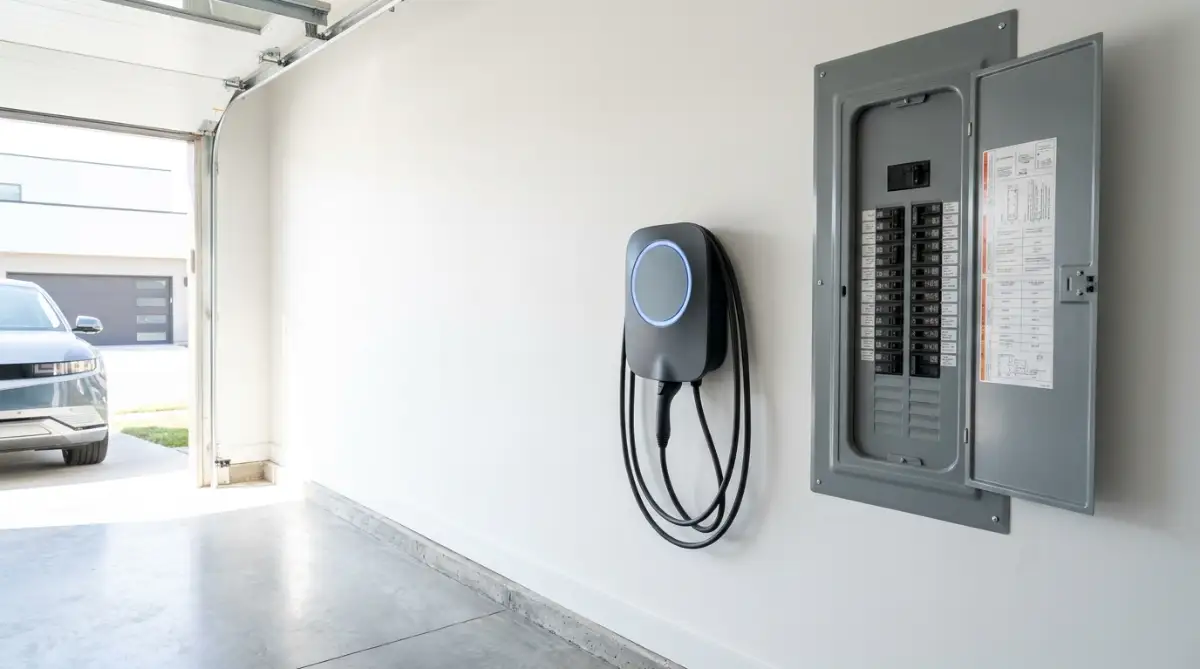
If you turn on every faucet and shower at the exact same time, the water pressure drops because the pipe can only handle so much flow. Electricity works in a very similar way. Most older homes were built with 100-amp electrical panels, which was plenty of power before the invention of electric cars.
Modern homes usually come with 200-amp panels, giving you much more breathing room for heavy appliances. If you have an older home and try to run the air conditioner, the electric dryer, and a high-speed car charger all at once, you will trip your main breaker and lose power to the whole house.
Pro Tip: When I first bought my EV, I assumed I needed the absolute fastest 48-amp charging speed available on the market. My electrician explained that a standard 32-amp charger was completely fine for my daily 40-mile commute, and choosing that slightly lower speed saved me thousands of dollars on electrical panel upgrades. You rarely need the absolute maximum speed for everyday driving!
To figure out what your home can handle, an electrician performs a formal "load calculation." This mathematical formula takes every appliance in your house into account to see how much spare power you have left for your car. Skipping this mathematical step is extremely dangerous and can lead to serious electrical hazards.
Want a visual breakdown of how this electrical math works inside your breaker box? Check out this excellent explanation below.
The Big Debate: Hardwired vs. Plug-in Installations
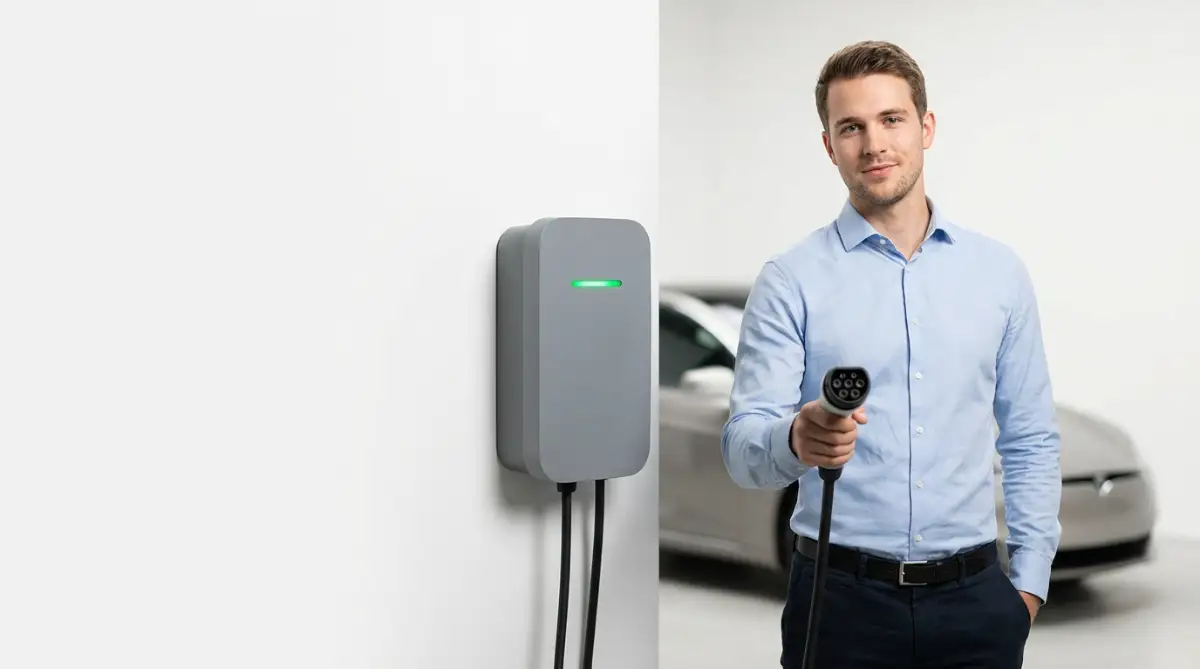
Once you know your home has enough power, you face a major hardware decision. You can either hardwire the charging unit directly into your electrical system, or you can have an electrician install a heavy-duty plug on the wall. Both methods will charge your car beautifully, but they have distinct differences in safety and performance.
A plug-in setup usually requires a NEMA 14-50 outlet, which looks just like the outlet behind a kitchen oven. The main benefit here is flexibility. If your charging unit ever breaks, you can easily unplug it and plug a new one right into the wall without calling a professional.
However, many standard industrial outlets are surprisingly cheap and are not designed for the continuous, hours-long electrical draw of an electric vehicle. If you choose a plug-in setup, you must insist that your electrician uses a high-quality, commercial-grade receptacle to prevent melting or fire risks.
Hardwiring the unit directly into your electrical panel is generally considered the safest and most reliable option. Because there is no physical plug, there are fewer points of connection where heat can build up over long hours of charging. Hardwired units also allow for faster charging speeds, as local building codes often restrict plug-in units to a maximum of 40 amps.
I always recommend hardwiring for any outdoor installation. Plugs and outlets are vulnerable to rain, snow, and humidity, which can cause electrical faults over time. A fully sealed, hardwired unit handles bad weather beautifully and provides a much cleaner look on your wall.
Finding the Perfect Location for Your Power Station
Picking the right spot for your new equipment seems like a tiny detail, but it makes a massive difference in your daily routine. You want the charging process to be as effortless as plugging in your smartphone at night. If you have to fight with a heavy, dirty cable every single evening, you will quickly grow to hate the setup.
First, you need to look at your specific car and locate exactly where the charging port is built into the body. Some manufacturers put the port on the front bumper, while others hide it near the rear driver-side tire. You need to think about how you naturally park your car every day.
Do you prefer backing into your garage, or do you always pull straight in? Your wall unit should be mounted on the side of the garage that aligns closely with your car's charging port. You never want to stretch a heavy electrical cable tightly across the hood of your expensive car, as it can scratch the paint or create a tripping hazard.
Cable length is another massive factor to consider during the planning phase. Most quality units come with cables ranging from sixteen to twenty-four feet long. Always buy a unit with the longest cable possible, even if your car parks right next to the wall.
A longer cable gives you amazing flexibility if you ever buy a different car with a differently placed port. It also allows you to easily charge a second electric vehicle parked outside in the driveway without having to move the cars around.
If you are mounting the unit completely outdoors, make sure you choose a product with a thick, flexible cable designed to handle cold weather. Cheap cables turn stiff and unbendable when the temperature drops below freezing. Fighting a frozen, snake-like cable in the middle of a snowstorm is an experience you definitely want to avoid.
Navigating Permits and Professional Help
It is incredibly tempting to watch a few online tutorial videos and try to wire the garage yourself to save money. I strongly advise against taking this path unless you are a licensed electrician. Electric vehicles draw a massive amount of continuous power, and a single loose screw can slowly build up heat until it causes a structural fire.
Your safety and the safety of your family are worth the cost of hiring a licensed, bonded, and insured professional. A good electrician knows the specific electrical codes for your city and will ensure everything is perfectly grounded and protected. They will also handle the necessary paperwork for city permits.
Many homeowners try to skip pulling a city permit because they do not want to pay the small fee or deal with an inspector visiting their house. This is a massive mistake that can completely void your homeowner's insurance policy. If an unpermitted electrical job causes a fire, your insurance company has the legal right to deny your claim entirely.
Having a city inspector review the electrician's work gives you a second pair of expert eyes on your project. It guarantees that the wire gauges are correct, the breakers are properly sized, and the entire system is completely safe to use. You will sleep much better at night knowing the heavy electrical load happening in your garage is perfectly legal and secure.
Myth vs. Reality: Smart Features
When you start shopping for hardware, you will immediately notice a huge price difference between basic units and "smart" Wi-Fi-connected models.
The Myth: You absolutely must buy a smart, internet-connected charging station to schedule your charging sessions and track your power usage.
The Reality: Almost every modern electric vehicle already has these smart features built directly into the car's computer screen and phone app.
You can easily tell your car to only accept power after midnight when electricity rates are the cheapest. You do not necessarily need the wall unit to do this job for you. A "dumb" unit simply provides raw power whenever the car asks for it, and these basic models are incredibly reliable because they have fewer computer chips that can fail.
However, smart units do have some excellent benefits depending on your specific local utility company. Many power companies offer massive cash rebates if you buy an approved smart unit and allow them to track your off-peak charging habits. Sometimes these utility rebates completely cover the cost of the hardware, making the expensive smart unit basically free.
Take a close look at your local power company's website before you make any final purchasing decisions. If they offer special electric vehicle billing rates, a smart unit might be required to participate in the savings program.
The Importance of Wire Quality and Gauges
The physical copper wire running through your walls is the true hero of this entire operation. Upgrading your panel and buying a fancy wall unit means absolutely nothing if the wire connecting them is too thin. Electricity traveling through a wire creates friction, and friction creates heat.
If an electrician tries to use a wire that is too thin for a 50-amp circuit, that wire will slowly cook inside your walls. For a standard heavy-duty electric vehicle setup, you generally need a very thick 6-gauge copper wire. Some older or cheaper installations might try to use 8-gauge wire, which is highly dangerous for continuous heavy loads.
Always ask your electrician directly about what specific size and type of wire they plan to run through your home. Knowing these tiny details keeps the professionals honest and ensures your house is protected against hidden thermal damage.
Quick Reality Check: How Much Are You Actually Saving?
I track my charging costs obsessively. Last month, driving about 1,000 miles cost me just $45 because I only charged at home while I slept. If I relied purely on public fast chargers (like Electrify America or EVgo) for those same miles, my bill would have easily topped $180. Yes, paying an electrician to wire your garage hurts your wallet today, but that upfront cost pays for itself in less than a year.
Taking Your Garage Power to the Next Level: Insider Secrets
Once you understand the basic mechanics of home charging, it is time to look at the advanced strategies that truly make your daily routine effortless. The biggest secret to a stress-free electric car lifestyle is something professionals call "future-proofing." When I first set up my garage, I only thought about the specific car sitting in my driveway at that exact moment.
I wired everything specifically for a smaller commuter vehicle that only needed a 32-amp draw. A couple of years later, our family upgraded to a much larger electric SUV with a massive battery pack. Suddenly, my perfectly fine charging station felt painfully slow for this bigger vehicle. I ended up having to hire an electrician a second time to pull entirely new, thicker wires through my walls.
You can easily avoid this expensive double-work. Always ask your electrician to install the thickest possible copper wire your budget allows, even if you are only buying a mid-speed charging unit right now. Running heavy-duty 4-gauge or 6-gauge wire from your electrical panel to the garage costs a little bit more upfront in copper prices. However, it completely prepares your home for whatever massive battery technology comes out next.
When you eventually buy a faster car, you simply swap out the wall box, and the heavy-duty wire hidden in your walls is already ready to handle the extra load. This single tip will save you hundreds of dollars in future labor costs.
Another brilliant advanced strategy involves managing the physical cable itself. Many people buy premium charging hardware but completely ignore how they will handle the long, heavy cord every single day. If you just leave twenty feet of thick cable lying on the garage floor, it quickly becomes covered in dirt, grease, and moisture.
Worse yet, you might accidentally back your car over the charging handle, instantly crushing a very expensive piece of equipment. I highly recommend investing in a ceiling-mounted cable retractor or a simple garden hose reel designed for heavy electrical cords. Suspending the cable from the garage ceiling allows you to easily pull it down when you park, and it automatically zips out of the way when you unplug.
This keeps your hands completely clean and removes a dangerous tripping hazard from your walking space. If you are integrating this setup into a broader secure smart home integration, you can even add motion-sensor lighting directly above your charging port. A simple motion light makes plugging in your car late at night incredibly easy and safe.
You also need to think about temperature control if you live in a region with extreme weather. We already know why EV range drops in winter due to cold batteries working overtime. If you install your charging station outside in the freezing cold, the hardware itself will be fine, but the cable will become stiff and difficult to bend.
If you have the space, always prioritize an indoor garage installation. Keeping your car and the charger in a relatively temperature-controlled environment helps condition the battery overnight. A warm battery accepts power much faster and runs significantly more efficiently during your freezing morning commute.
If your main electrical panel is completely full and you think you have no options left, do not panic. Ask your electrician about a smart load-sharing device. These brilliant little boxes sit between your main breaker and your new charger. They constantly monitor your home's total energy usage in real-time.
If you turn on your electric oven and your heavy clothes dryer at the same time, the smart box automatically pauses the car charging session to protect your home's residential electrical fire safety codes guidelines. The moment you finish baking or drying your clothes, the box instantly resumes sending power to your car. This advanced hardware entirely prevents the need for a massively expensive utility service upgrade.
The Most Dangerous Setup Blunders Homeowners Make
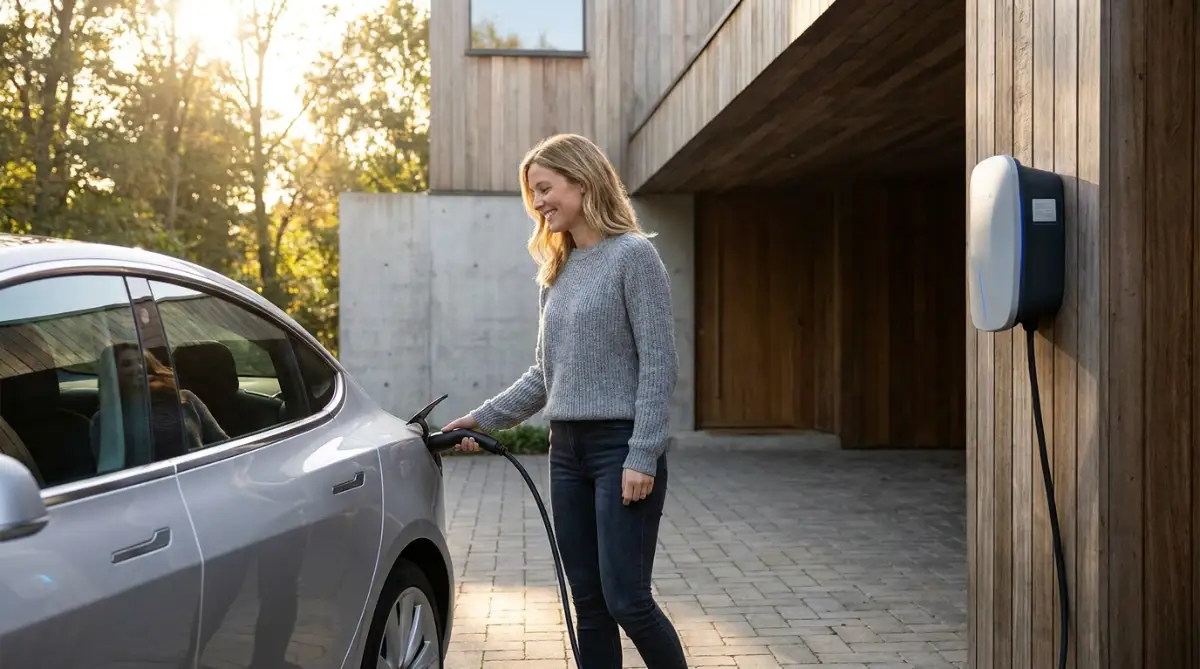
People often look for shortcuts when adding heavy electrical equipment to their homes. Unfortunately, taking shortcuts with 240 volts of electricity can lead to terrifying consequences. The most common and dangerous mistake new owners make is buying cheap, uncertified charging hardware from random online marketplaces.
You will often see unbranded chargers selling for half the price of reputable brands. These cheap units almost never have proper thermal sensors inside the plug. When you push forty amps of power through a cheap plastic connector for ten straight hours, it generates an immense amount of heat.
Quality units have internal thermometers that instantly shut down the power if things get too hot. Cheap units just keep pushing power until the plastic literally melts into your car's charging port. Always check that your equipment meets official certified electrical safety standards before attaching it to your expensive vehicle. A cheap charger can easily destroy a fifty-thousand-dollar car battery.
The second massive trap involves the actual wall plug. If you decide to go with a plug-in setup instead of hardwiring, your electrician will install a NEMA 14-50 outlet on your wall. This looks exactly like the plug behind your electric stove.
Here is the terrifying reality: most standard outlets sold at local hardware stores for ten dollars are only designed for residential stoves or dryers. A clothes dryer runs for maybe forty-five minutes and then turns off. An electric car will pull maximum power through that exact same outlet for eight to twelve hours straight without a single break.
Those cheap residential outlets simply cannot handle that kind of prolonged thermal stress. The metal contacts inside the cheap outlet will slowly expand and contract from the heat until they become loose. A loose electrical connection creates a tiny spark, and that continuous sparking will eventually start a wall fire.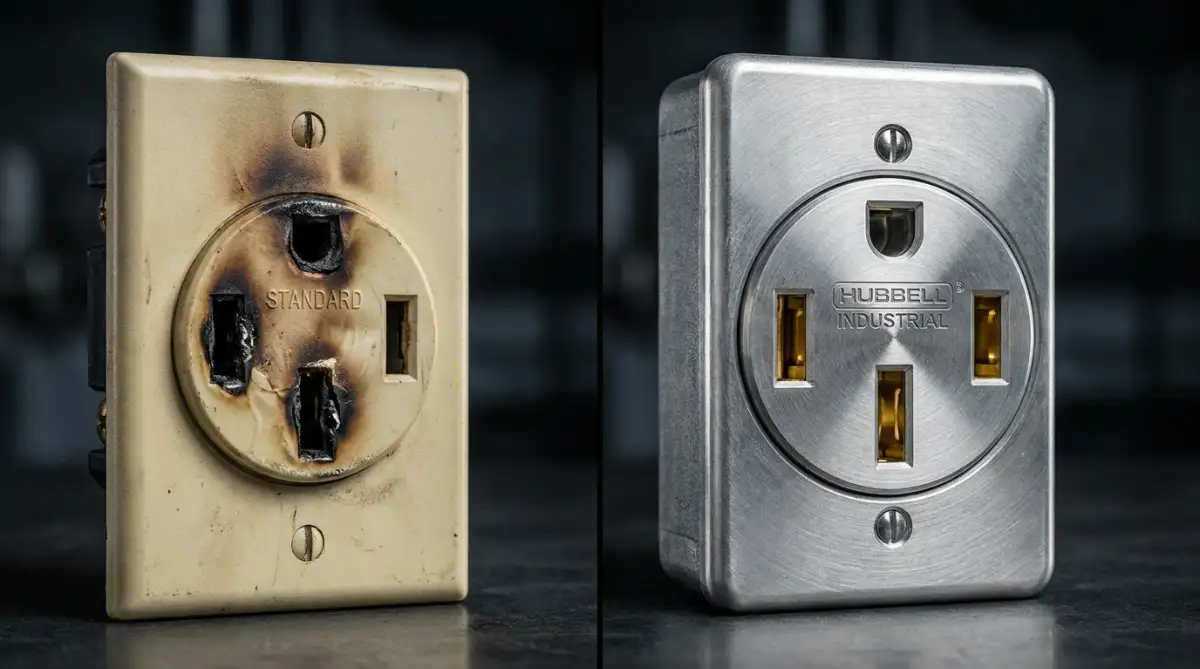
If you must use a plug-in setup, you must force your electrician to use a heavy-duty, industrial-grade receptacle. Brands like Hubbell or Bryant cost around eighty dollars just for the plug itself, but they are built with massive metal contacts designed to survive continuous, heavy industrial loads. Trying to save seventy dollars on a cheap outlet is the absolute worst financial decision you can make for your garage.
Another major mistake is using random extension cords. Sometimes your parking spot is just a few feet too far from the wall unit. It is incredibly tempting to grab a heavy-duty RV extension cord to bridge the gap.
Please, never do this. Adding an extension cord introduces another physical connection point into the circuit, which means another place for heat to build up and resistance to occur. The extra length also causes a drop in voltage, meaning your car has to work harder and longer to get the energy it needs.
This constant inefficient charging can actively harm your vehicle and ruin the environmental footprint of electric vehicles by wasting grid energy. If your cord does not reach, you need to either move the wall unit closer or buy a charger with a longer, factory-sealed cable.
Finally, relying on basic standard wall outlets for your daily driving is a massive mental trap. People think they can just get by with Level 1 trickle charging. But doing this means you are constantly fighting stopping everyday EV battery drain while barely adding any meaningful mileage back.
It keeps you in a constant state of range anxiety. You will find yourself skipping social events or taking the other gas-powered family car just because your electric vehicle did not get enough juice overnight. Investing in a proper high-speed home setup is not a luxury; it is an absolute necessity to actually enjoy the car you worked so hard to buy.
Your Action Plan for Tomorrow Morning
Transitioning to an electric vehicle lifestyle should feel exciting, clean, and incredibly convenient. Waking up every single morning to a "full tank" of energy without ever having to visit a dirty, freezing gas station is an absolute game-changer.
You no longer have to worry about fluctuating fuel prices or wasting time in line at the pump. By taking the time to understand your home's true electrical capacity and choosing the right hardware, you are building a safe, reliable system that will serve your family for decades.
Do not let the technical jargon of amps, volts, and wire gauges intimidate you. Your next steps are actually quite simple. Tomorrow morning, take a quick walk out to your garage and find your main electrical panel.
Open the small metal door and look for the large number printed on the very top main switch. That single number tells you exactly where you stand. Next, make a list of three highly-rated, licensed electricians in your local area and invite them over for a quick consultation.
Ask them specifically about hardwiring, ask them about industrial-grade materials, and see what they suggest for your specific parking layout. By following the proper national residential energy guidelines, you can easily create a personal power station that looks sleek, runs perfectly, and keeps your property completely safe.
My personal note to you: I spent my first two months of EV ownership completely stressed out, constantly checking my phone app to see if my car would have enough range for the next day. The very first morning I woke up after having my Level 2 station properly installed, I felt a massive weight lift off my shoulders. I want you to experience that exact same peace of mind, so please, do not wait—start planning your home charging upgrade today, and you will fall in love with driving all over again!
Questions New EV Drivers Always Ask
Can I leave my car plugged into the charger all the time?
Yes, absolutely. Modern electric vehicles have highly advanced battery management systems built directly into the car. Once the battery reaches your set limit (usually around 80% for daily driving), the car automatically stops pulling power from the wall unit, making it perfectly safe to stay connected.
Does rain or snow affect my outdoor charging station?
If you purchase a high-quality unit rated for outdoor use (NEMA 4 or NEMA 4X enclosure), it is completely safe to use in heavy rain or deep snow. The charging handle itself is designed to create a watertight seal when plugged into the car, ensuring no water ever touches the active electrical pins.
Do I absolutely need a 200-amp electrical panel upgrade?
Not always! While a 200-amp panel is ideal for a fast, full-power setup, many homeowners safely install mid-speed 24-amp or 32-amp chargers on older 100-amp panels. A licensed electrician can run a formal load calculation or install a smart load-management device to make your current panel work beautifully.
Will a faster home charger ruin my car's battery life?
No, a Level 2 home station uses alternating current (AC) power, which is actually very gentle on your vehicle's internal chemistry. The real wear and tear comes from overusing public Level 3 DC fast chargers on a daily basis. Charging at home overnight is the healthiest possible way to maintain your battery over the long term.
Is hardwiring better than plugging the charger into an outlet?
Hardwiring is highly recommended by most electrical professionals because it eliminates the physical wall plug, which is a common point of heat buildup and failure. It looks much cleaner on your wall, allows for faster maximum charging speeds, and is significantly safer for outdoor installations exposed to the weather.
Disclaimer: The information provided in this article is for educational and informational purposes only and does not constitute certified professional electrical advice. Electrical work carries severe risks of fire, injury, or death if not handled correctly. Always consult with a licensed, bonded, and insured electrician in your local area before attempting any modifications to your home’s electrical panel or installing electric vehicle supply equipment (EVSE). Make sure all work complies with your local city building codes and permit requirements.