Waking Up to a Dark and Silent House
You bought a massive solar battery so you would never have to sit in the dark again. So why are you waking up to a totally dead house and a screen showing zero percent? I went through this exact same nightmare last winter. Before you panic and think your expensive battery is broken, let me show you a few simple tweaks that actually bring the power back.
But there I was, staring at a battery monitor that displayed a flat zero percent charge. The sun had not even come up yet, and my supposedly reliable energy storage was completely empty. It honestly felt like a betrayal of my trust in renewable energy.
I immediately checked all my home appliances to see if I had left something heavy running overnight. Nothing was out of the ordinary, which only made me feel more frustrated and deeply confused. If you are reading this right now, you are probably dealing with the exact same headache.
Seeing unexplained drops in your home solar battery storage capacity is incredibly stressful. You invest heavily in off-grid freedom or backup security, only to wake up stressing about your energy levels. Your peace of mind simply disappears when the system you rely on acts completely unpredictable.
You start watching the power monitor obsessively instead of just living your life comfortably. Let me share how I finally stopped the bleeding and got my system back on track.
Before You Read Further, Here is the Short Version:
- Update the Brain: Sometimes your battery is full, but outdated software makes the screen show 0%.
- Kill the Phantoms: Stop your smart TVs and Wi-Fi devices from secretly sipping power all night.
- Keep It Warm: Cold weather freezes the chemicals inside. A warm battery holds way more power.
- Balance the Cells: Let your battery sit at 100% occasionally so all the tiny internal cells can equalize.
Getting Inside Your Battery's Brain
To fix this annoying problem, we first need to understand how your system thinks. Your home solar setup is not just a dumb box holding electricity. It is managed by a complex computer called the Battery Management System, or BMS for short.
This BMS is responsible for protecting your cells and reporting the current charge level to your screen. Sometimes, the actual physical capacity of the battery is perfectly fine. The real issue is that the BMS is confused and reporting inaccurate numbers to you.
When the BMS loses its calibration, it might think the battery is empty when it actually has plenty of juice left. This creates the illusion of an unexplained drop in your storage capacity. Resetting or recalibrating this internal brain is often the very first step to getting your power back.
The Firmware Update Reality Check
Just like your smartphone or laptop, your solar inverter and battery have internal software. Manufacturers frequently release updates to fix bugs and improve performance. If you are running old firmware, your system might misread voltage levels entirely.
I highly recommend logging into your system's companion app or web portal today. Check if there is a pending firmware update for either the inverter or the battery module. A simple software patch can sometimes restore your lost capacity overnight. 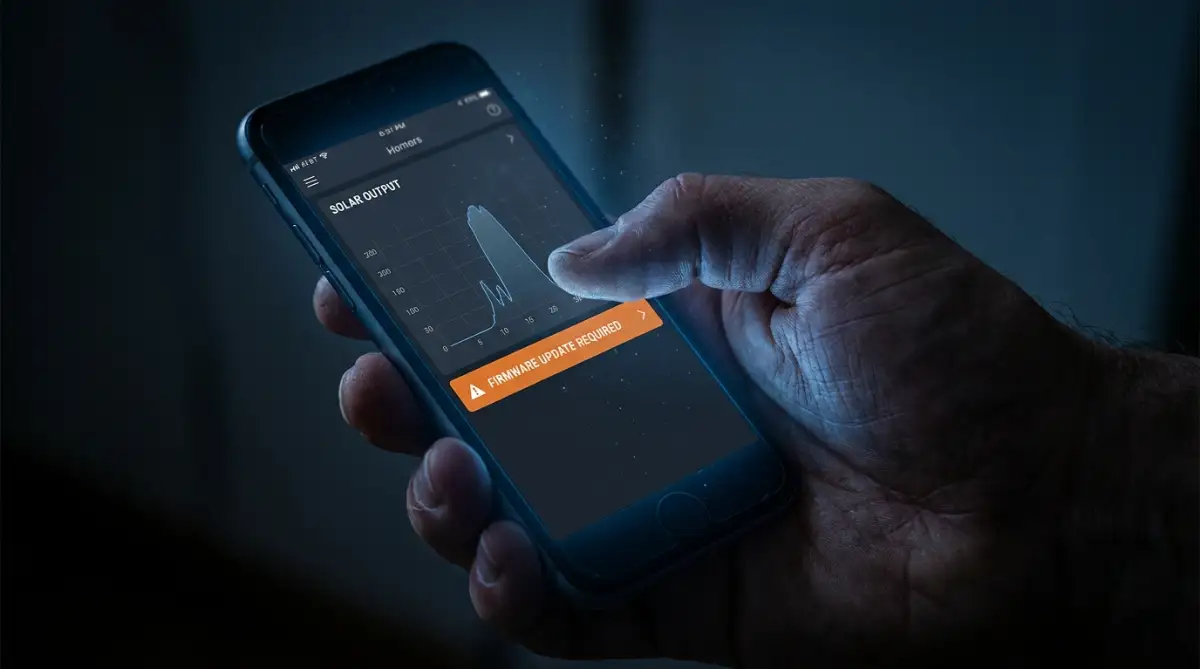
I once spent three days trying to fix my battery, only to realize my inverter just needed a simple firmware update. My system was actually holding a charge beautifully, but the software was reading the data completely wrong. I felt pretty silly, but a quick Wi-Fi update fixed the entire issue almost instantly.
Tracking Down Phantom Energy Thieves
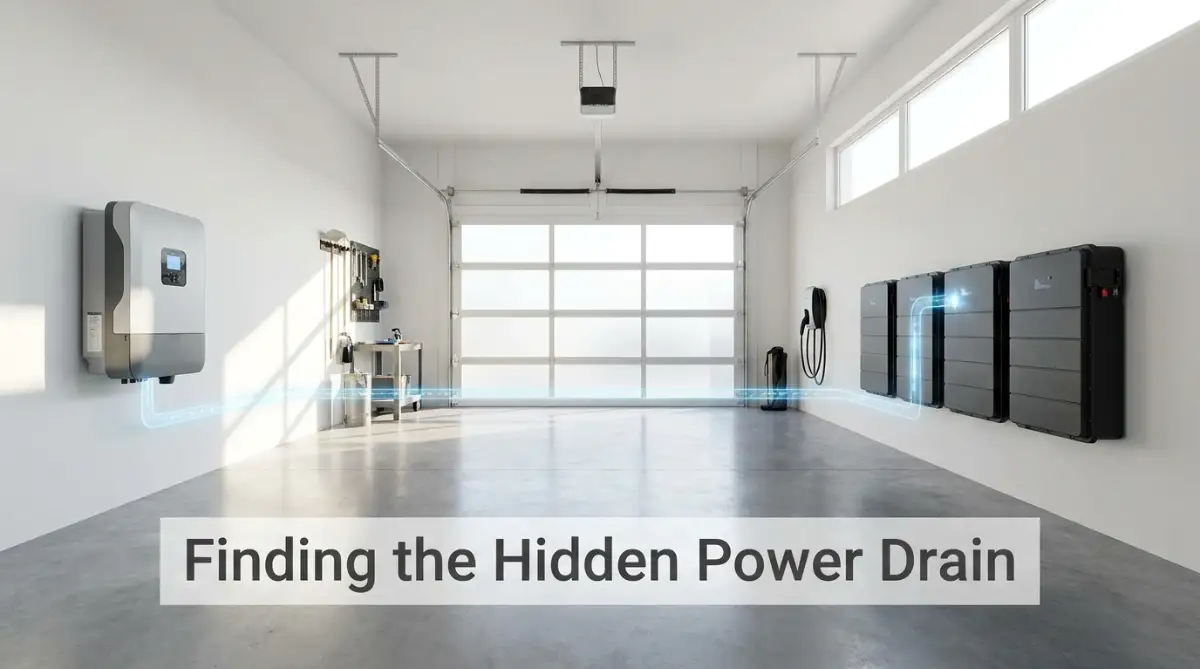
If your software is up to date, the next step is looking for hidden power drains. We often forget that the solar equipment itself requires power just to stay awake. This is commonly known as parasitic draw or a phantom load.
Your inverter is constantly converting DC power from the battery into AC power for your house. This conversion process is never one hundred percent efficient. A large inverter can easily consume a significant amount of power every hour just by remaining turned on.
The Heavy Toll of Standby Mode
Over a long night, this standby power consumption adds up to a massive energy drain. If you have a massive inverter but only run a few LED lights at night, you are wasting energy. The inverter is burning through your battery capacity just to keep itself ready for a heavy load.
Check your inverter settings immediately to see if there is an energy-saving mode.
Many modern systems have a sleep function that reduces standby consumption when power demand is low. Enabling this feature can easily save you a large percentage of your battery capacity by morning.
Smart Homes and Silent Drains
Modern homes are filled with smart devices that never truly turn off. Your smart TVs, security cameras, Wi-Fi routers, and smart plugs are always sipping electricity. While one device uses very little power, thirty smart devices can drain your battery significantly.
These tiny loads are completely silent, making them incredibly hard to notice during the day. However, when the sun goes down and your solar panels stop producing, your battery takes the full hit. You might think your capacity dropped unexpectedly, but your house was actually just quietly eating the power.
To test this theory, try turning off the main breaker to your non-essential circuits before bed. If you wake up and the battery capacity looks great, you know phantom loads are the real culprit. You can then start hunting down which specific devices are stealing your nighttime energy.
Here is a quick checklist of sneaky devices that drain my battery at night. You should check these right now:
- Wi-Fi Routers & Extenders: They pull power all day and night.
- Smart Plugs & Switches: They are always listening for a Wi-Fi signal.
- TVs & Soundbars: "Standby mode" is just a polite way of saying it is still eating electricity.
- The Inverter Itself: A massive inverter can burn up to 50 watts an hour just staying awake!
The Hidden Impact of Nighttime Chills
Another major factor that tricks homeowners is the weather. Lithium iron phosphate and other common solar batteries are highly sensitive to temperature changes. They prefer the exact same comfortable room temperatures that humans do.
When the temperature drops significantly at night, the chemical reactions inside your battery slow down dramatically. This cold environment increases the internal resistance of the battery cells. As a result, the voltage drops, and your monitoring screen shows a sudden loss of capacity.
The Cold Honey Analogy
Think of your battery energy like a jar of honey. When the honey is warm, it flows easily and you can get every last drop out of the jar. When the honey gets cold, it becomes thick, sluggish, and refuses to pour out.
The energy is still technically inside the battery, but the cold prevents your system from accessing it. Once the sun comes up and the battery room warms up, that "lost" capacity magically reappears. If your batteries are stored in an uninsulated garage or outdoors, cold weather is likely your main problem.
Keeping Your Power Source Warm
To prevent these temperature-related drops, you need to rethink your battery storage environment. Insulating the battery enclosure can make a massive difference during cold nights. Some high-end solar batteries even come with built-in internal heaters to solve this exact issue.
If your batteries do not have internal heating, consider adding a low-wattage heat mat to the insulated box. You just need to keep the ambient temperature above freezing to maintain a steady voltage. Keeping the batteries warm will instantly stop those scary morning capacity drops. 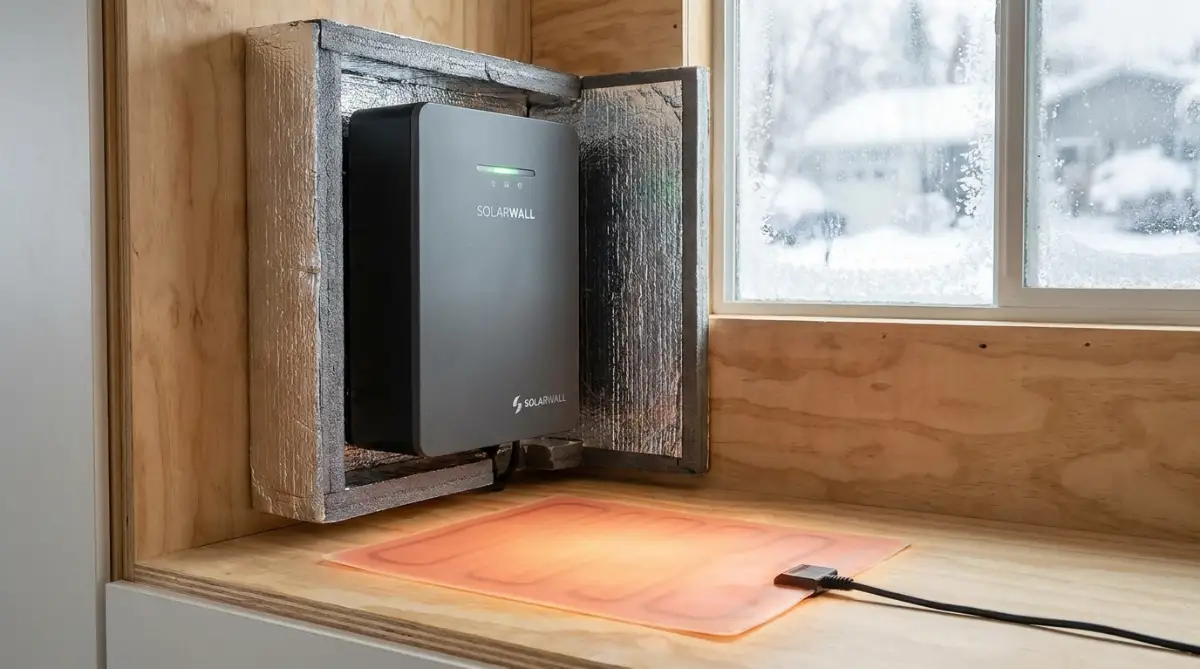
Identifying Battery Cell Imbalance
Inside your large home battery box, there are dozens of smaller individual battery cells wired together. For the system to work perfectly, every single cell needs to charge and discharge at the exact same rate. When they operate in harmony, your storage capacity remains highly predictable.
Over time, however, some cells can age slightly faster than others. When one cell drops its voltage much faster than the rest, the BMS panics. To protect that single weak cell from damage, the system will shut down the entire battery bank.
The Weakest Link Theory
Imagine a relay race where one runner is much slower than the rest of the team. It does not matter how fast the other runners are; the team's overall time depends on that slow person. Your home battery works the exact same way.
Even if ninety-nine percent of your battery cells are completely full and healthy. One unbalanced or weak cell will cause the entire system to report a massive drop in total capacity. This is why cell balancing is an absolutely essential part of system maintenance.
How to Fix Cell Imbalance
Most modern solar batteries perform automatic cell balancing when they reach a completely full charge. If you regularly drain your battery deeply and never let it hit one hundred percent, the cells become unbalanced. The system never gets the necessary time to equalize the voltage across all the internal cells.
To fix this, you need to force a full charge cycle. Let your solar panels charge the battery to maximum capacity, and then significantly reduce your home power usage. Keep the battery at maximum charge for a few hours so the BMS can slowly balance the weaker cells.
Myth vs Reality: Solar Storage Facts
There are many myths floating around the internet regarding home energy storage. Let's clear up some common misunderstandings to help you troubleshoot better.
Myth: A lithium battery should be completely drained regularly to keep it healthy.
Reality: Draining a lithium solar battery to zero percent frequently will severely damage its lifespan. You should always aim to keep the charge above twenty percent to maintain healthy internal chemistry.
Myth: If the screen shows fifty percent, I have exactly half my power left.
Reality: Battery percentages are calculated estimates based on voltage readings. Heavy electrical loads can cause voltage to sag temporarily, making the percentage look much lower than it actually is.
Charging Shortfalls Masquerading as Capacity Drops
Sometimes, the problem is not that your battery is draining too fast. The reality might be that your battery never actually got fully charged in the first place. This creates the illusion of a sudden capacity drop when the sun goes down.
The Illusion of a Full Charge
Your solar inverter might show the battery is "charging," but the actual current going in could be incredibly low. If it was a cloudy day, your panels might only deliver a fraction of their normal power. The battery might reach a high voltage temporarily, tricking the system into displaying a high percentage.
However, a surface charge disappears very quickly as soon as a heavy load is applied. When you turn on your electric oven at night, that fake high percentage plummets instantly. You blame the battery capacity, but the real issue was a poor daytime charging cycle.
Micro-Shading on Solar Panels
Check your solar panels carefully during the peak charging hours of the day. A small shadow from a growing tree branch or a neighbor's new chimney can ruin your energy production. Even a tiny amount of shading on one panel can drag down the performance of the entire solar array.
If your panels are dirty from dust, bird droppings, or pollen, they cannot push enough power into the batteries. Schedule a safe roof cleaning to ensure your panels are operating at peak efficiency. Getting more raw power into the battery during the day often solves nighttime shortage problems entirely.
Comparing Normal Wear vs Faulty Drains
It is helpful to know what normal battery behavior looks like compared to a real system fault. Here is a quick breakdown to help you analyze your specific situation.
By tracking your daily usage against a simple chart like this, you can quickly identify strange patterns. Knowledge is your best weapon against unexpected energy loss. Take a few minutes every morning to note down your battery percentage and the current weather conditions.
Over a week or two, this simple habit will reveal exactly what is stealing your power. You will transition from being an anxious homeowner to a confident energy manager.
Examining Inverter Settings and Timers
Many off-grid and hybrid solar inverters have incredibly complicated setting menus. It is very easy for a homeowner to accidentally change a setting that affects battery capacity. Sometimes, power drops happen simply because the inverter is following a bad set of instructions.
For example, many systems have an "off-peak charging" or "time of use" setting. If this is configured incorrectly, your battery might intentionally discharge itself into the main grid. The inverter thinks it is helping you save money, but it is actually draining your backup power.
Taking Control of Your Power Settings
Grab your inverter manual and carefully review the discharge parameters. Ensure that your system is set to prioritize home backup power over grid exporting. You want to strictly limit how much power the battery is allowed to send back to the utility company.
Adjusting the low voltage disconnect setting is also a very smart move. This setting tells the inverter to completely shut off before the battery gets dangerously low. Setting this parameter slightly higher will protect your battery from deep discharge damage and extend its life.
With a little bit of patience and investigative work, you can solve these storage issues. You do not need an expensive technician for most of these common problems. Just take it one step at a time, observe your system closely, and reclaim your energy independence.
Let's make this super simple. Here is a quick cheat sheet I use when my battery acts up:
Pro-Level Secrets for Long-Term Battery Health
Once you fix the basic settings and firmware, you might think your job is completely done. However, true energy independence requires a slightly deeper understanding of how electricity actually behaves. The default screen on your inverter is often just giving you a polite summary, not the hard truth.
If you really want to stop guessing about your power levels, you need to set up a secondary monitoring system. Relying solely on the built-in manufacturer app is a common beginner mistake. Those apps often suffer from server lag, meaning you are looking at old data from an hour ago.
I highly recommend installing a dedicated battery shunt directly on your negative battery cable. A shunt acts like a strict bank teller, counting every single amp that goes in and comes out. It completely bypasses the internal software and gives you raw, unedited electrical data.
Understanding the Voltage Curve Illusion
Lithium iron phosphate batteries have a very unique way of delivering power. Unlike old car batteries, their voltage stays incredibly flat and stable for a long time. It will sit at a steady voltage until it is almost completely empty, and then it suddenly drops off a cliff.
This flat voltage curve makes it extremely difficult for standard monitors to guess the remaining capacity. Your screen might say you have fifty percent left, but you are actually sitting right on the edge of the cliff. When you turn on your microwave, the voltage plummets, and the system shuts down instantly.
Learning to read your exact battery voltage rather than trusting the percentage icon is a total game changer. You can find excellent research on how flat voltage curves trick monitoring software over at the IEEE Xplore digital library for electrical engineering. Once you understand your battery's specific resting voltage, you will never be surprised by a sudden shutdown again.
Automating Your Nighttime Savings
We talked earlier about phantom loads stealing your power while you sleep. Manually walking around the house turning off breakers every night is completely exhausting. You need to let technology do the heavy lifting for you.
If you are already setting up a secure smart home, you can easily program automated energy routines. I use a smart hub to automatically cut power to my entertainment center, office desk, and garage tools at midnight. This simple automation saves me a massive amount of battery capacity by morning without any daily effort.
The Depth of Discharge Sweet Spot
You want your system to last for a very long time without losing its ability to hold a charge. To do this, you must respect the Depth of Discharge limits of your specific battery chemistry. Pushing your system to its absolute limits every single night causes microscopic damage to the internal cells.
Think of your battery like a human muscle. A moderate workout keeps the muscle healthy and strong over time. But if you push that muscle to total failure every single day, it will eventually tear and break down completely.
The National Renewable Energy Laboratory (NREL) has published extensive data showing that keeping solar batteries out of extreme low-charge states extends their life significantly. Set your inverter to stop discharging when the battery hits twenty or thirty percent. You will sacrifice a little bit of nighttime capacity, but you will easily double the lifespan of your expensive equipment.
The Dangerous Pitfalls Ruining Your Solar Setup
When homeowners get frustrated with low battery capacity, they often panic and make terrible decisions. Trying to forcefully squeeze more power out of a struggling system usually leads to permanent damage. Let's walk through the most destructive mistakes you must actively avoid.
It is incredibly stressful when your house goes dark, and your first instinct is often to start messing with heavy wiring. A simple mistake back there can lead to blown fuses, destroyed circuit boards, or even a serious fire hazard. Your safety is always worth more than keeping the television running.
Using Undersized Cables
One of the most common reasons an inverter falsely reports an empty battery is a voltage drop across thin cables. When heavy electrical current flows through a wire, it naturally creates friction and heat. If your battery cables are too thin for the amount of power your house needs, they act like a traffic jam.
This resistance causes the voltage to drop significantly by the time it actually reaches the inverter. The inverter reads this artificially low voltage and incorrectly assumes the battery is completely empty. The system will trigger a low-voltage alarm and shut down, leaving you in the dark.
I once helped a neighbor who was furious that his brand-new system kept shutting off every time his well pump turned on. His batteries were completely full, but the original installer used cheap, undersized wires. Upgrading to thick, pure copper cables fixed his "capacity drop" problem in less than twenty minutes.
Mixing Old and New Cells
Batteries are chemical storage tanks, and their internal chemistry changes as they age. When your system starts losing capacity, the worst thing you can do is just wire a brand-new battery next to the old ones. This is a very expensive mistake that many people make out of pure desperation.
Older batteries have a higher internal resistance than brand-new ones. If you wire them together, the new battery will end up doing all the heavy lifting while the old battery drags it down. It is like chaining a tired marathon runner to an Olympic sprinter; neither of them will perform well.
If you want to understand how bad advice spreads online, just look at the endless smartphone charging myths people still believe today. The same bad advice plagues the home solar community. If you must expand your storage, always use a separate charge controller or buy matching cells from the same manufacturing batch.
Ignoring Routine Hardware Inspections
Solar storage systems are not completely maintenance-free appliances, despite what the sales brochures say. Heavy electrical currents cause wires and metal terminals to heat up and cool down every single day. This constant thermal expansion slowly loosens the bolts connecting your battery cables.
A loose connection creates massive electrical resistance, which immediately drops your system voltage and fakes a loss of capacity. I make it a strict habit to check my battery connections with a proper torque wrench twice a year. You would be shocked at how much power is lost simply because a single nut vibrated loose over time.
Creating a Thermal Oven
We already discussed how freezing temperatures hurt your battery capacity at night. However, placing your battery bank in a hot environment is significantly more dangerous. Extreme heat actually boils the internal chemistry and permanently destroys the cells.
If your batteries are installed against a wall that bakes in the afternoon sun, their lifespan is rapidly disappearing. Proper airflow and ventilation around the heavy equipment are non-negotiable requirements. The U.S. Department of Energy (Energy.gov) clearly outlines how improper thermal management leads to rapid capacity degradation.
Do not stack boxes or store junk near your inverter and battery bank. These machines need room to breathe and run their internal cooling fans effectively. Keeping the storage room clean and cool is the easiest way to protect your heavy financial investment.
Taking Back Control of Your Home Power
You now know that a dropping percentage does not always mean your battery is actually dying. It could be a simple firmware glitch, a hidden phantom load, or a cold weather voltage sag. The power to diagnose and solve these headaches is entirely in your hands.
Do not let complicated technical jargon intimidate you into paying for expensive service calls. Most of these capacity issues can be resolved with a simple software reset or an hour of investigative work. By maintaining your equipment properly, you are secretly growing your bank account by avoiding premature replacement costs.
Knowledge is the ultimate backup battery for your mind. Take a deep breath, grab your inverter manual, and start checking off the troubleshooting steps we discussed.
I remember the immense relief I felt the first morning I woke up to a fully charged, perfectly balanced battery bank. Taking the time to understand my system gave me back my peace of mind, and I know these exact steps will do the same for you today.
Common Questions About Solar Storage Drops
Why does my solar battery drain so fast at night?
Your battery is likely supporting hidden phantom loads from smart home devices, Wi-Fi routers, and appliances in standby mode. Additionally, your solar inverter itself consumes a significant amount of power just to remain turned on. Checking your inverter's sleep settings can drastically reduce this nighttime power loss.
Can a bad inverter setting ruin my battery capacity?
Yes, absolutely. If your inverter is set to discharge into the main utility grid during off-peak hours, it will empty your battery on purpose. Always double-check your discharge parameters to ensure the system is prioritizing your home backup needs first.
Is it normal for battery percentage to jump up and down?
Sudden jumps in percentage usually indicate that your battery cells are severely unbalanced. When the management system detects one weak cell dropping voltage too fast, it forcefully recalculates the entire percentage downwards. Performing a slow, one hundred percent maintenance charge can usually rebalance the cells.
How often should I reboot my battery management system?
You only need to restart the system if you are experiencing totally unexplainable data glitches on your monitoring screen. A full power cycle forces the computer to re-read the raw battery voltage and clear any temporary software errors. Doing this once every few months is a good practice for keeping the data accurate.
Will keeping my batteries fully charged all the time damage them?
For lithium iron phosphate batteries, occasional full charges are highly recommended to keep the internal cells perfectly balanced. However, holding them at maximum capacity in extremely hot weather can slowly degrade the internal chemistry over time. It is best to use the battery normally and let it cycle a bit every day.
Disclaimer: The information provided in this article is for educational and informational purposes only and does not constitute professional electrical or engineering advice. Always consult with a licensed electrician or certified solar installer before making modifications to your home energy system. Working with high-voltage battery equipment carries severe risks of electric shock, fire, and property damage.