The Midnight Thunderstorm That Changed My Perspective
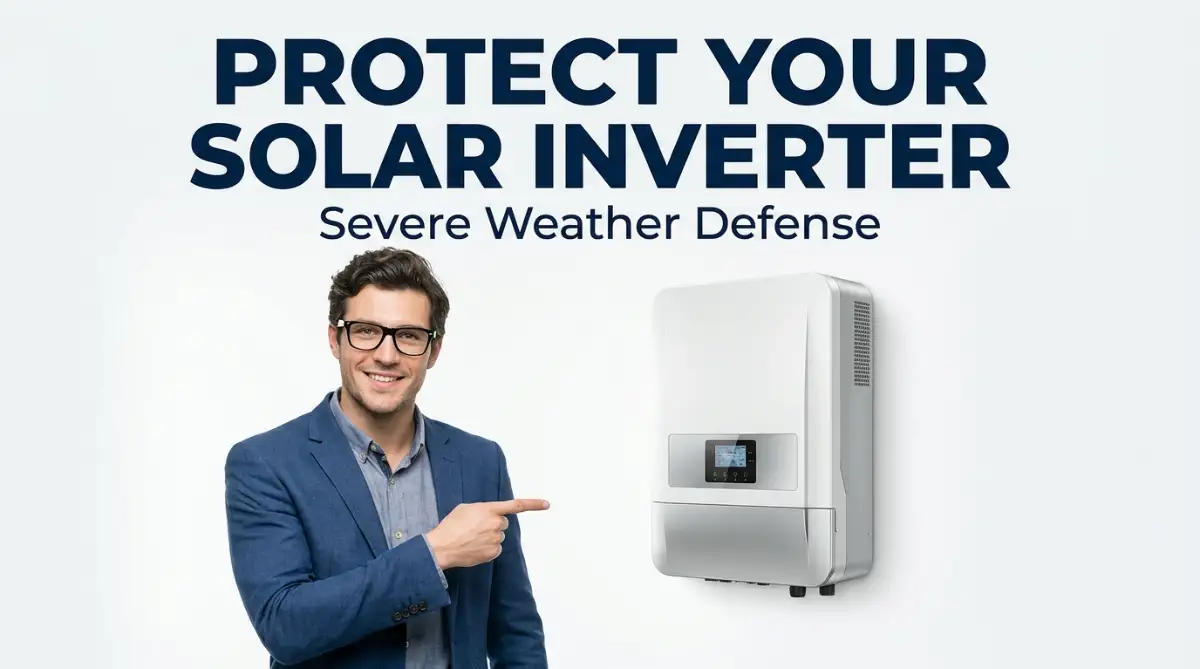
Has a summer storm ever knocked out your expensive solar inverter? It happened to me, and sitting in the dark while my fridge full of groceries spoiled was a total nightmare. You spend thousands of dollars to get off the grid, only to have a random lightning strike ruin everything. Let me show you exactly how to storm-proof your solar setup so you never have to panic when the sky turns dark.
This is a terrible reality that so many homeowners face when severe weather strikes. We spend our hard-earned money to achieve energy independence, only to watch Mother Nature threaten our investment in a matter of seconds. When your solar inverter goes down, your entire system becomes completely useless.
You suddenly find yourself dealing with spoiled groceries in the refrigerator because the backup power failed. You might have to endure freezing temperatures or sweltering heat because your HVAC system has no power source. The mental toll is honestly exhausting.
The good news is that you do not have to rely on luck to keep your energy system safe. There are proven, scientific ways to shield your equipment from the worst elements imaginable. You just need to understand exactly how the weather attacks your hardware and what steps to take to fight back.
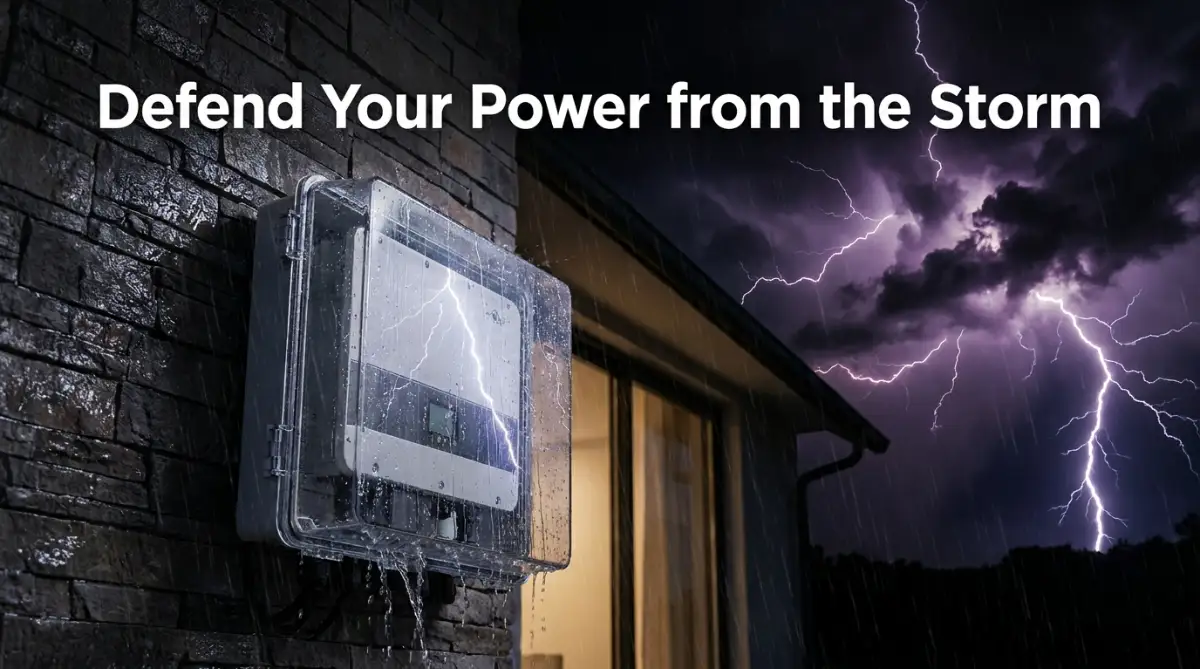
Quick Summary: How to Protect Your Gear
- Block the Surges: Install high-quality Surge Protective Devices (SPDs) to catch lightning strikes before they fry your inverter.
- Check Your Grounding: A surge protector is useless if your home's copper grounding rod does not reach deep into moist soil.
- Build a Shield: Use a NEMA 4X weatherproof metal box to stop flying storm debris and sideways rain.
- Flip the Switch: When a massive storm approaches, manually flip your DC disconnect switch to create a physical air gap.
Decoding the Threat: How Extreme Weather Attacks Your System
Before we talk about defending your equipment, we need to understand the science behind the attacks. Your solar inverter is basically the brain of your entire energy operation. It takes the raw, messy direct current (DC) power generated by your panels and translates it into clean, safe alternating current (AC) power for your home appliances.
Because this device is constantly managing high electrical loads, its internal computer chips and circuits are incredibly sensitive. Think of it like trying to run a delicate laptop in the middle of a warzone. Severe weather attacks this sensitive brain in three highly aggressive ways: electrical surges, physical impact, and thermal stress.
Lightning strikes are the most terrifying threat because they do not even need to hit your house directly to cause a disaster. When lightning strikes the ground nearby, it sends a massive shockwave of electricity through the soil. This stray energy can easily travel up through your system's grounding wires and fry the delicate circuits inside your inverter.
High winds and flying debris present a totally different type of danger. Heavy tree branches, flying rocks, and massive hailstones can easily crack the outer casing of your equipment. Once that protective shell is broken, moisture easily creeps inside and immediately shorts out the electrical components.
Even without physical damage, extreme temperature swings slowly silently kill your system over time. Scorching summer heat bakes the internal circuits, while freezing winter temperatures cause the metal components to contract and break. Understanding these scientific realities makes it completely clear why hoping for the best is a terrible risk management strategy.
The Shocking Truth: Common Misconceptions About System Safety
Many people falsely believe that their solar setup is automatically safe just because a professional installed it. Let us clear up some of the biggest myths regarding weather protection and home energy security.
Now that we know exactly what we are up against, it is time to build an unbreakable defense system. These are not just wild theories. These are heavily tested, practical strategies that you can start putting into place today to secure your peace of mind.
Building an Electrical Fortress Against Lightning and Surges
The absolute best way to stop a lightning-induced power surge is to block it before it ever reaches your expensive hardware. This is where Surge Protective Devices (SPDs) become your best friend. An SPD acts exactly like a highly trained bouncer at the door of a nightclub, aggressively rejecting any dangerous electrical spikes.
You need to install these devices on both the DC side (coming from the panels) and the AC side (going to your house). When a massive voltage spike tries to enter the system, the SPD instantly detects the danger. It intercepts that massive wave of energy and violently redirects it straight into the earth, completely bypassing your inverter.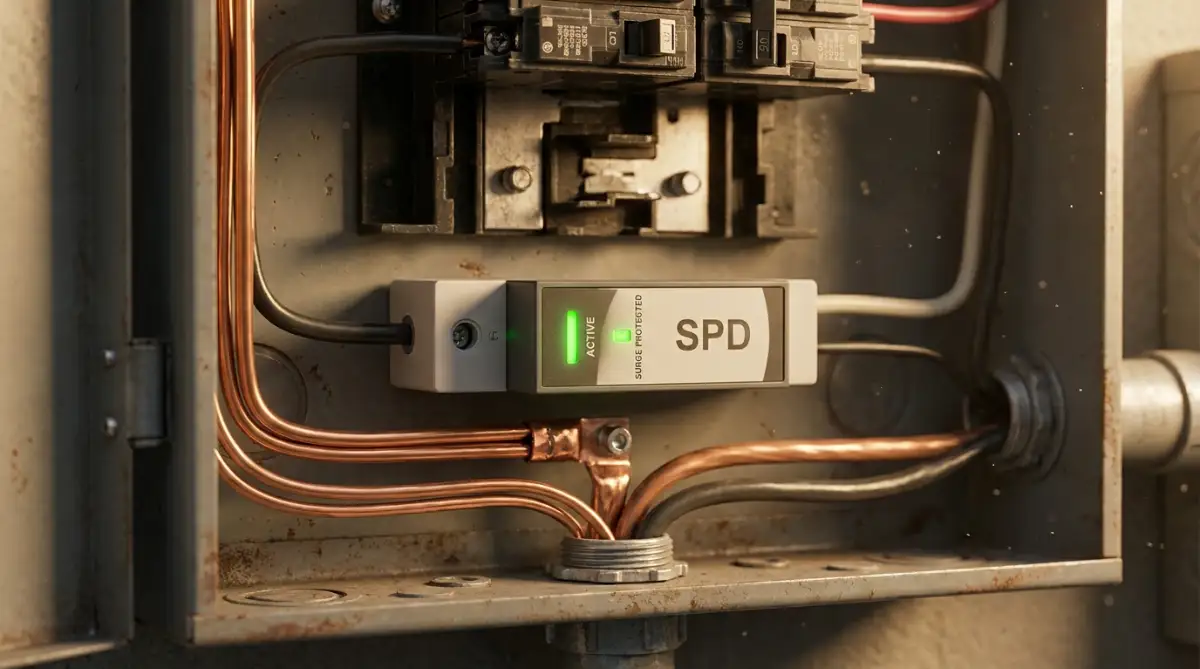
However, an SPD is practically useless if your physical grounding system is weak or poorly installed. Grounding is the pathway that allows that dangerous electricity to safely disperse into the soil. If your ground rod is too short, or if the soil around it is extremely dry and sandy, the electricity will bounce back up into your home.
You must ensure that your grounding rod is driven deep enough into moist, conductive earth. I highly recommend having a certified electrician measure the exact resistance of your soil. If the resistance is too high, they can install longer rods or use special conductive backfill dirt to improve the pathway.
Watch This Expert Explanation on Proper Surge Protection:
If you want to see exactly how these devices physically intercept lightning strikes, this short visual demonstration will completely change how you view your home's electrical safety.
I personally learned the hard way that buying cheap protection is the same as buying no protection at all.
I once bought a discount surge protector online thinking I was saving a hundred dollars on my setup. After a minor thunderstorm, that cheap plastic device completely melted and nearly caused a fire in my garage. Always spend the extra money on heavily certified, commercial-grade safety equipment because it will save you thousands down the road.
My Personal SPD Buying Checklist:
If you are shopping for a Surge Protective Device (SPD) today, do not just buy the first cheap box you see online. Make sure it checks these three boxes:
- It must have a UL 1449 certification (this proves it actually stops surges).
- It needs clear visual indicator lights (Green means good, Red means it took a hit and needs replacing).
- It must be rated specifically for the high DC voltage coming from your solar panels.
Defending Against Flying Debris and Sideways Rain
Even if your electrical defenses are perfect, physical destruction from flying storm debris can ruin your day. During a hurricane, tornado, or heavy windstorm, regular objects turn into dangerous missiles. A simple broken tree branch can easily shatter the digital display screen on your inverter.
If your unit is mounted on the outside of your home, you must consider building a heavy-duty physical enclosure. This is not just a simple wooden box. You need a properly rated weatherproof cabinet that allows for heavy airflow while stopping solid objects.
When shopping for an enclosure, you need to look very closely at the NEMA (National Electrical Manufacturers Association) rating. A NEMA 3R rating is the absolute bare minimum for outdoor equipment, as it protects against falling rain and light dirt. However, if you live in an area prone to severe hurricanes or blizzards, you really want a NEMA 4X rated enclosure.
A NEMA 4X cabinet is completely watertight, heavily dust-proof, and highly resistant to corrosion from salty coastal air. It acts as a heavy metal shield that takes the physical beating so your delicate electronic brain does not have to.
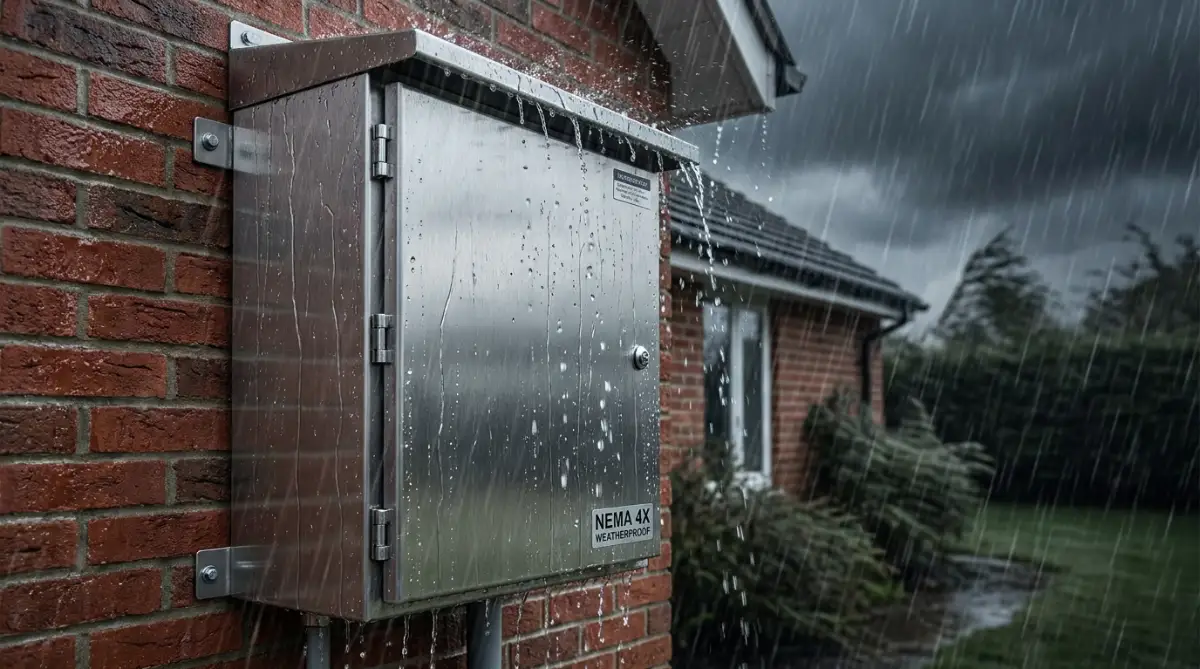
Another incredibly simple but effective strategy is smart placement during the initial installation. Never mount your equipment directly under large, old trees with heavy hanging branches. Try to locate the unit on the side of your house that is naturally shielded from the dominant wind direction in your specific region.
Mastering Thermal Management During Extreme Weather Swings
Weather is not just about rain and lightning; extreme temperature waves are silent assassins. When the summer sun beats down on your inverter during a 100-degree heatwave, the internal components start to literally cook. To prevent a complete system meltdown, the machine will purposefully throttle its own power output.
This process is known as thermal derating. Your system intentionally produces less energy exactly when you need it the most to run your air conditioning. To fight this, you must provide excellent shading and aggressive ventilation for your equipment.
If your unit is mounted outdoors, install a simple awning or metal shade cover directly above it. This blocks the harsh direct sunlight while still allowing plenty of fresh air to circulate around the heat sinks. Think of it like wearing a wide-brimmed hat while working out in the garden.
On the opposite end of the spectrum, deep winter freezing temperatures bring their own unique set of problems. Extreme cold causes the internal copper wires and metal brackets to shrink and pull tight. This constant shrinking and expanding can eventually snap delicate internal connections over the years.
If you live in a region with heavy blizzards, consider mounting the inverter inside a temperature-controlled garage or insulated basement. If it absolutely must remain outside, ensure that cold snow cannot pile up directly against the bottom cooling vents. Blocking these vents with packed ice will suffocate the machine and lead to immediate failure when the sun finally comes out to generate power.
By actively controlling the environment around your equipment, you drastically extend its operational lifespan. You stop playing a guessing game with Mother Nature and take real control over your home's energy security.
Next-Level Defense Tactics for Your Solar Investment
Once you have your basic physical and electrical shields in place, it is time to get incredibly proactive. Most people just wait for a storm to hit and hope their equipment survives the night. I prefer to stay three steps ahead of the weather by using smart technology and advanced isolation methods.
One of my absolute favorite tricks is creating a physical "air gap" when a massive storm is approaching. A heavy-duty DC disconnect switch gives you the power to completely sever the connection between your roof panels and your inverter. When you flip this heavy manual switch, you physically break the wires so that no rogue electricity can travel through the circuit.
Even if a massive lightning bolt strikes your roof directly, that destructive energy stops right at the open switch. It literally has nowhere to go and cannot reach your expensive sensitive equipment inside the garage. This single manual action has saved me from thousands of dollars in replacement costs.
Leveraging Smart Tech to Predict the Storm
You do not have to watch the local news constantly to know when danger is coming. I highly recommend integrating your energy system with predictive weather monitoring software. This process feels very similar to a complete beginner's guide to setting up a secure smart home, where your devices talk to each other to keep you safe.
Modern Wi-Fi-enabled systems can automatically pull severe weather alerts directly from government databases. For example, you can set up alerts using data from the National Oceanic and Atmospheric Administration (NOAA) to track incoming lightning clusters in real-time. If the system detects a severe storm cell within ten miles of your house, it can automatically send an alert straight to your phone.
This gives you a perfect 30-minute window to walk outside and flip your manual disconnect switches before the rain even starts falling. Taking control of your environment like this is incredibly empowering. It completely removes that tight feeling of panic whenever the sky starts turning dark.
The Software Security Blanket
Here is a highly guarded secret that many solar installers simply forget to mention during your setup. Your inverter relies on complex software to manage power loads, and this software needs regular updates to perform safely. Manufacturers frequently release new firmware patches that improve how the machine handles minor grid fluctuations and tiny electrical surges.
If you ignore these updates, your hardware might misinterpret a dangerous voltage spike and fail to shut itself down in time. I always set a reminder on my calendar to check the manufacturer's mobile app for new firmware every single month. Keeping your system's digital brain healthy is just as important as protecting its physical body.
You also need to think about your financial safety net when things go completely sideways. If a neighborhood power pole collapses onto your house, your equipment might be completely destroyed despite your best efforts. Many standard home insurance policies place extremely low limits on expensive renewable energy hardware.
You need to call your insurance agent today and ask about adding a specific rider policy for your solar equipment. Make sure they include coverage for "acts of God" and replacement cost value, rather than heavily depreciated value. Dealing with destroyed property is painful enough without having to worry about the beginner's blueprint for managing multiple loan payments stress-free just to buy a replacement unit.
The Most Dangerous Homeowner Errors
I have watched so many well-meaning friends make terrible mistakes that ended up costing them their entire energy independence. The biggest trap you can fall into is the "set it and forget it" mindset. You cannot just bolt a massive piece of electronic hardware to your wall and expect it to survive outdoor extremes for twenty years without regular checkups.
People often completely ignore their system after a medium-sized storm passes through the area. They see that the lights are still on, and they just assume everything inside the electrical cabinet is perfectly fine. This is a massive mistake because lightning often causes invisible micro-damage that slowly degrades the system over time.
The Silent Killer: Micro-Surges
A nearby lightning strike might not instantly fry your board, but it can slightly melt the internal capacitors. The next time a storm hits, those weakened capacitors will violently pop, leaving you completely in the dark. It is very similar to the most common smartphone charging myths completely debunked, where bad daily habits slowly destroy the battery from the inside out without you noticing.
According to guidelines published by the Institute of Electrical and Electronics Engineers (IEEE), repetitive low-level voltage transients account for a massive percentage of electronic failure. This means those small, hidden surges are secretly wearing down your equipment's lifespan day by day. You should visually inspect your surge protection devices after every single heavy thunderstorm.
Most high-quality surge protectors have a small LED indicator light right on the front panel. If that light turns red or completely turns off, it means the device took a massive hit and sacrificed itself to save your system. You must replace that cartridge immediately, or your system will have zero defense against the next storm.
The DIY Disaster Zone
Another highly destructive habit is trying to perform cheap DIY repairs on solar equipment. I have seen homeowners try to seal cracks in their outer casing using cheap bathroom caulk. This traps dangerous heat and moisture inside the box, which quickly shorts out the expensive motherboard.
Unless you are a licensed electrician, you should never open the main electrical panel of a solar setup. The massive amount of direct current flowing from your roof can cause immediate, fatal harm if you touch the wrong wire. Always pay a certified professional to inspect and maintain the internal wiring of your setup.
We also need to talk about the myth of the bulletproof warranty. Many people skip buying protective enclosures because they assume the manufacturer will just mail them a new unit if it breaks. Read the fine print carefully, because almost all warranties instantly void your claim if the damage was caused by lightning, hail, or flooding.
Myth vs. Reality: The Warranty Trap
| What Sales reps tell you | What the paperwork actually says |
| :--- | :--- |
| "Your inverter has a 10-year total replacement warranty!" | Reality: Factory warranties only cover internal manufacturing defects, not weather events. |
| "If it breaks, we just ship you a new one." | Reality: If they see burn marks from a power surge, they will instantly deny your claim. |
| "It is built tough for the outdoors." | Reality: You are still responsible for keeping it clear of physical debris and extreme water buildup. |
By actively avoiding these exact pitfalls, you keep your money exactly where it belongs. Adopting smart maintenance routines is honestly one of those 9 everyday habits that will secretly grow your bank account by saving you from massive unexpected repair bills.
Ignoring the Debris Danger
The final common trap is completely ignoring the immediate environment around your hardware. I once visited a friend's house and found his expensive outdoor inverter completely buried behind overgrown bushes and dead leaves. He thought the bushes provided nice shade, but he was actually suffocating the cooling vents and creating a massive fire hazard.
During heavy winds, those loose branches and dry leaves get whipped around like tiny blades. They can easily scratch the digital screen or get sucked directly into the cooling fans, causing the entire motor to seize up. Keeping the area around your equipment completely clean and clear is non-negotiable.
Taking Back Control of Your Energy Future
Protecting your home's energy source does not have to be an overwhelming or scary process. Yes, Mother Nature is incredibly unpredictable and highly aggressive, but human engineering is more than capable of handling the challenge. By mixing heavy-duty physical barriers with smart electrical shields, you build a fortress that wind and lightning simply cannot penetrate.
You no longer have to cross your fingers and pray every time you hear thunder in the distance. You now possess the exact knowledge required to intercept surges, block flying debris, and manage intense temperature swings safely. Taking these proactive steps gives you the ultimate reward: uninterrupted peace of mind for you and your family.
My own journey from sitting in the dark with a fried circuit board to having a perfectly secure system was totally worth the effort. Do yourself a huge favor this weekend and walk outside to give your setup a proper safety audit. Grab a flashlight, check those indicator lights, and make sure your energy independence is completely locked down for the next big storm.
Common Questions About Solar System Weather Protection
Should I turn off my solar panels during a thunderstorm?
You do not need to turn off the actual panels, but manually flipping the physical DC disconnect switch is a very smart move. This creates an open gap in the wiring, ensuring that stray lightning cannot travel down from the roof into your delicate hardware.
Can heavy hail completely destroy my solar inverter?
Yes, large hailstones driven by heavy winds can easily shatter the plastic casing and digital display screens of outdoor units. This is exactly why mounting your equipment inside a heavy-duty NEMA 4X rated metal enclosure is so highly recommended in storm-prone areas.
Will my regular homeowner's insurance cover a lightning strike?
Most standard policies treat lightning as an "Act of God" and might heavily depreciate the value of your electronics. You need to call your provider and ask for a specific rider policy that guarantees full replacement cost for your renewable energy hardware.
How often should I inspect my outdoor energy equipment?
You should do a quick visual check immediately after every major severe weather event to look for cracked casings or tripped surge protectors. Beyond that, scheduling a professional maintenance inspection once a year before your region's heavy storm season begins is highly recommended.
Do surge protectors wear out over time?
Yes, surge protectors absolutely degrade every time they absorb tiny voltage spikes from the grid or nearby storms. You must check their indicator lights regularly, as they eventually sacrifice themselves completely and need a physical replacement cartridge to keep working.
Disclaimer: The information provided in this article is for educational and informational purposes only. Working with high-voltage solar electrical systems is inherently dangerous and can cause severe injury or death. Always consult with a licensed, certified electrician or a professional solar installer before making any modifications, installations, or repairs to your home energy system.