My 2 AM Meltdown and the Lie I Was Sold
"Ever stared at a page for three hours, only to close the book and realize you remember absolutely nothing? It’s not your brain’s fault. You’ve just been using a study method that’s basically a lie. I’ve been there, crying over my notes at 2 AM, and I’m here to tell you there’s a much easier way to ace your exams without the burnout."
My eyes were red, my head was spinning, and I had been reading the same page for three hours straight. I thought that if I just looked at the words enough times, they would magically stick in my brain.
That night, I felt like a total failure. I had put in the work, but when I closed the book, I couldn't remember a single thing.
I was following the "old rules" of studying—the ones our teachers told us were right. But those rules were actually setting me up to fail.
Many of us are stuck in this same loop every single day. We spend hours trying to jam information into our heads using rote memorization.
It feels productive because we are busy. But being busy is not the same thing as actually learning.
It ruins your sleep and makes you hate the process of learning. You wake up with a heavy chest, wondering if you will ever be able to keep up.
The truth is, your brain is not broken. The problem is the tool you were given.
Rote memorization is like trying to carry water in a bucket full of holes. You can run as fast as you want, but by the time you get to the finish line, the bucket is empty.
We need to stop fighting our brains and start working with them. There is a better way to learn that doesn't involve suffering.
### ⚡ Quick Guide: How to Study Smarter
If you don't have time to read everything, here is how I fixed my grades:
- Stop Highlighting: It feels like work, but your brain isn't actually storing anything.
- The 10-Minute Test: After reading a page, close the book and try to explain it out loud for one minute.
- Use Spaced Repetition: Review your notes in gaps (1 day, 1 week, 1 month) to lock them in.
- Sleep is Your Friend: Your brain 'saves' your study data while you sleep. No sleep = no memory.
The Science of Remembering: Why Your Brain Hates "Read and Repeat"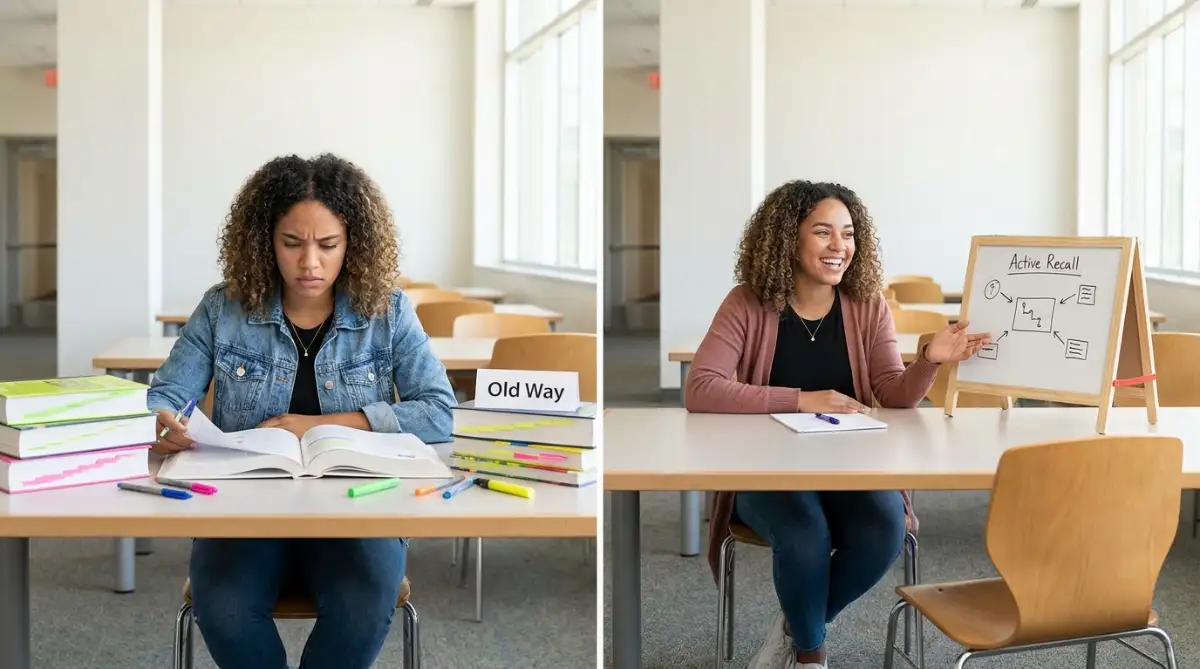
When we talk about rote memorization, we mean repeating information over and over until it sticks. Think about how you learned your multiplication tables or historical dates.
It works for small things, but for complex subjects, it falls apart. Your brain is designed to filter out "boring" and "useless" data to save energy.
When you just read a page over and over, your brain thinks, "I've seen this before, it's not new or important." It goes into a lazy mode called passive recognition.
You feel like you know the material because it looks familiar. But there is a huge difference between recognizing something and being able to pull it out of your memory during a test.
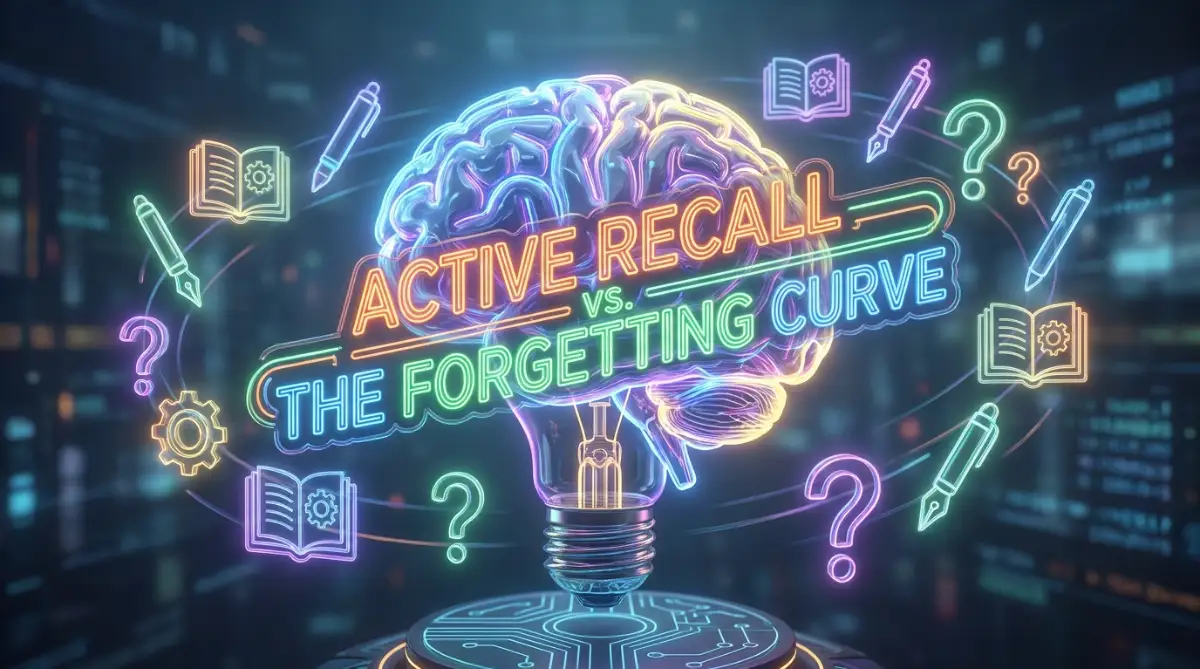
Active recall is the exact opposite of this. Instead of trying to put information in, you are practicing pulling it out.
Every time you force your brain to retrieve a fact, you are making that neural pathway stronger. It is like lifting weights for your memory.
The more it "hurts" or feels difficult, the more you are actually learning. Think of your memory as a forest.
Rote memorization is like walking through tall grass once. The path disappears immediately.
Active recall is like walking that same path ten times. Eventually, you create a clear, permanent trail that you can follow anytime.
The Problem with Highlighting and Re-reading
I used to love my highlighters. My books looked like a neon rainbow by the time I was done.
I felt so smart because I was "interacting" with the text. But science shows that highlighting is almost useless for long-term memory.
It is a passive activity. It doesn't require any deep thinking.
The same goes for re-reading your notes. You are just looking at things you already know.
This creates a "false sense of security." You walk into the exam thinking you are ready, but then the questions look different, and your mind goes blank.
Here is a quick cheat sheet to see if you are actually learning or just wasting time:
Pro Tip: I realized that my best study sessions happened when I didn't even have my book open. I started a habit where I would read a page, close the book, and try to write down everything I remembered on a blank sheet of paper. It felt much harder and I got a lot of things wrong at first, but that struggle is exactly what made the information stay in my head for weeks instead of minutes.
How to Start Using Active Recall Today
You don't need fancy apps or expensive courses to start learning the right way. You just need to change how you spend your time.
The goal is to stop being a "consumer" and start being an "active participant." Here are the best ways to jumpstart your memory.
1. The "Close the Book" Method
This is the simplest way to start. When you finish a section of your notes or a chapter in a book, stop immediately.
Don't look at the text again. Ask yourself: "What were the three biggest points I just read?"
Say them out loud or write them down. If you can't remember them, don't worry.
Open the book, check the answer, and then close it again. Try to explain it one more time.
This forces your brain to search for the data. That search is what builds the memory.
Watch this video to see how top students use these hacks to save hours of study time!
2. The Power of Flashcards (Done Right)
Flashcards are amazing, but most people use them wrong. They put too much information on one card.
Keep your cards "atomic." This means one card should only have one question and one answer.
Don't just read the back of the card and say, "Yeah, I knew that." You must say the answer out loud before you flip it.
If you get it wrong, put it back in the "study again" pile. Be honest with yourself.
Honesty is the only way to grow your brain. Use apps like Anki or Quizlet to help you manage this.
3. Using the Feynman Technique
One of the best ways to use active recall is to pretend you are a teacher. Take a complex topic and try to explain it to a five-year-old.
Use simple words. Don't use big jargon that you don't really understand.
If you get stuck or find it hard to explain a certain part, that is your "gap." Go back to your book and study only that specific part.
When you can explain a concept simply, you truly own it. You aren't just repeating words like a parrot.
This builds a deep understanding that rote memorization can never give you. It also makes you much more confident during class discussions.
Breaking the Cycle of Cramming
We have all been there—trying to learn a whole semester's worth of work in one night. This is the peak of rote memorization.
You might pass the test, but you will forget everything 24 hours later. This is a waste of your time and your money.
Active recall works best when you combine it with something called spaced repetition. This means reviewing the material at specific times.
Instead of studying for 10 hours once, study for 30 minutes five times over a week. Your brain needs time to "solidify" the memories while you sleep.
When you revisit a topic just as you are about to forget it, you give your memory a massive boost. It feels like a lot of work at first, but it saves you so much time in the long run.
You won't have to re-learn everything when final exams come around. You will already have a strong foundation.
Creating Your Own "Active" Schedule
Start small. Don't try to change every subject at once.
Pick your hardest class first. Spend the first 10 minutes of your study time testing yourself on what you learned yesterday.
Don't look at your notes yet! Just try to pull it from your head.
This little "warm-up" tells your brain that this information matters. It keeps the neural pathways fresh.
You will be surprised at how much faster you finish your work. You will have more time for friends, hobbies, and sleep.
The Mental Shift: From Boredom to Mastery
Rote memorization is boring. It is soul-crushing work that feels like a chore.
Active recall feels like a game. It is a challenge to see what you can remember.
When you get an answer right, your brain gets a hit of dopamine. You start to enjoy the process of learning.
Mastery is a great feeling. It builds your self-esteem.
You stop feeling like a victim of the school system. You become the master of your own mind.
We have to move away from the idea that "hard" means "bad." In learning, "hard" usually means "effective."
Embrace the struggle. Be okay with getting things wrong.
Every mistake is just a piece of data helping you get better. That is the true path to becoming a top-tier student.
Why Modern Exams Demand More Than Memory
In the old days, being a "walking encyclopedia" was a sign of intelligence. You just had to know facts.
But today, we have Google in our pockets. Facts are everywhere.
Modern exams are changing. They don't just ask "When did this happen?"
They ask "Why did this happen and how does it affect us today?" Rote memorization cannot answer "why."
Only deep understanding and active recall can help you solve complex problems. You need to be able to connect different ideas together.
This is what employers are looking for, too. They want people who can think, not people who can repeat.
By using active recall, you are training your brain for the real world. You are building skills that will last your entire life.
It is an investment in your future self. Don't settle for the "leaky bucket" method any longer.
Final Thoughts for the First Step
Change is uncomfortable. You might feel slower at first when you switch to active recall.
You might feel frustrated that you can't remember everything right away. That is normal.
Stick with it for just one week. Look at the data.
See how much better you feel when you actually know the answer instead of just guessing. Your confidence will soar.
You are capable of amazing things. You just need the right system to unlock your potential.
Stop reading and start recalling. Your journey to mastery starts with the very next thing you study.
Turn off the highlighters. Close the book. And ask yourself: "What did I just learn?"
Moving Beyond Basic Study Hacks: How to Master Your Brain
Once you start using active recall, you might feel like you have a superpower. But there is a way to make that power even stronger.
Many people stop at basic flashcards, but top learners go much deeper. To keep your results high for a long time, you need a plan that grows with you.
One of the best secrets is called Spaced Repetition. This means you don't just test yourself once and walk away.
You test yourself right before you are about to forget the information. This timing is the secret sauce for long-term memory.
If you learn something today, test yourself tomorrow morning. Then test yourself again in three days, then a week later.
This process tells your brain that this data is not "trash." It forces the brain to build a permanent home for that knowledge.
You can use software to help, but even a simple paper calendar works wonders. Just mark the days you need to revisit a topic.
If you want to try Spaced Repetition today, here is my favorite 'Easy Schedule' for beginners. Don't overthink it, just follow the gaps:
- First Review: 10 minutes after learning.
- Second Review: 24 hours later.
- Third Review: 1 week later.
- Fourth Review: 1 month later.
- This simple gap-method tricks your brain into keeping the info forever.
Another expert trick is the "Blurting" Technique. Take a blank sheet of paper and write down everything you know about a topic as fast as you can.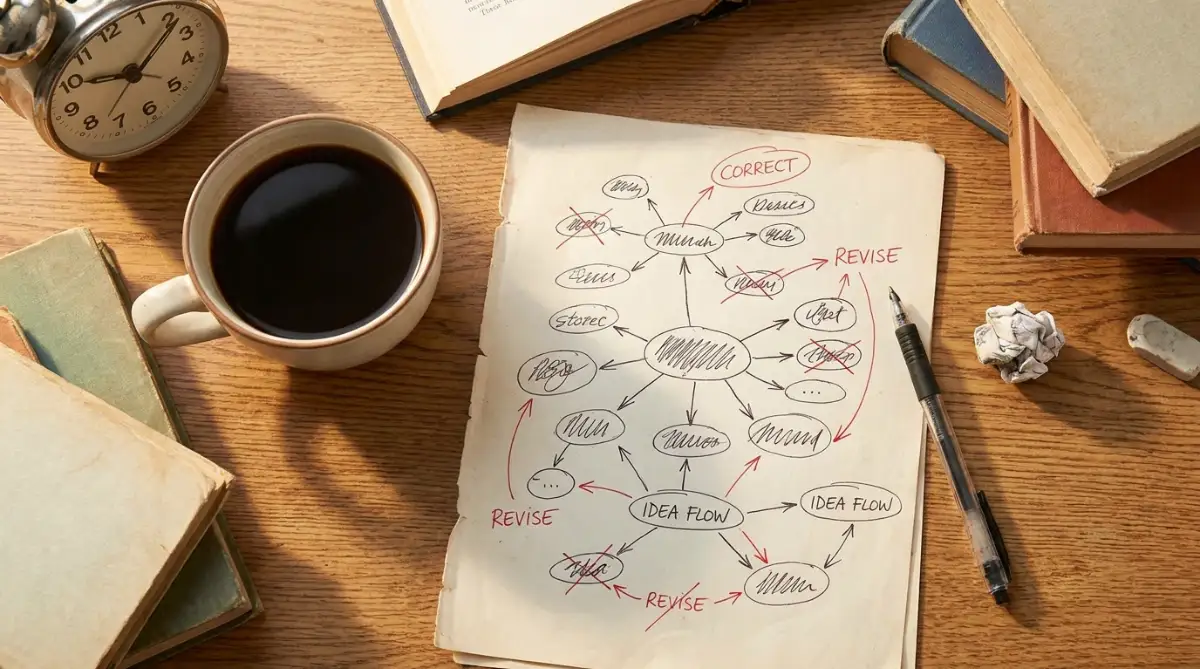
Don't look at your notes or worry about making it look pretty. Just get the ideas out of your head and onto the paper.
When you finish, take a red pen and look at your textbook. Write down the things you missed in red.
Those red marks show you exactly where your brain is weak. Next time, focus only on those red areas instead of wasting time on things you already know.
This helps you fix your daily focus so you don't spend hours on the wrong tasks. It is all about being efficient with your limited energy.
Your brain also needs the right environment to work. If you are stressed out, your memory will shut down like a locked door.
I found that nervous system regulation is a big part of being a good student. If your body feels safe, your brain can focus on learning.
If you are always in "fight or flight" mode, you will forget things almost instantly. Take five minutes to breathe deeply before you start your active recall session.
You should also look at how your physical space affects your mind. A messy desk creates a messy thought process.
I noticed that cleaning your desk instantly reduces anxiety, which makes it much easier to concentrate. When there is nothing to distract your eyes, your brain can dive deep into the material.
According to research from the National Center for Biotechnology Information, sleep is when your brain actually stores the things you learned. If you don't sleep, you are essentially deleting your hard work.
Active recall during the day and good sleep at night is the ultimate winning combo. Never trade your sleep for more study hours.
It is a bad deal that will cost you your grades in the end. Think of sleep as the "Save Button" for your brain.
Why Your Study Sessions Might Be Failing You
Even with the best intentions, it is very easy to fall into old, bad habits. These mistakes are like hidden holes in your shoes—you don't notice them until your feet are soaking wet.
The biggest trap is the "Illusion of Competence." This happens when you look at an answer and think, "Oh yeah, I totally knew that."
You didn't actually know it; you just recognized it. There is a massive difference between recognizing an answer and pulling it from your own mind.
If you skip the struggle of trying to remember, you aren't doing active recall. You are just reading with extra steps.
Don't be afraid of that "empty brain" feeling when you look at a question. That feeling is actually your brain growing stronger.
Another mistake is ignoring your physical health while studying. Many students live on energy drinks and salty snacks.
This leads to a massive crash that ruins your memory for days. You might think you're hungry, but the science of thirst shows that your brain is likely just crying for water.
Dehydration makes your brain feel like it is moving through thick mud. It makes every question feel ten times harder than it really is.
Also, watch out for "Revenge Bedtime Procrastination." After a long day of classes, you might feel like you deserve some "me time" on your phone.
But the hidden health risks of late-night scrolling are real and they destroy your focus. The blue light from your screen tells your brain it is daytime.
This prevents you from getting the deep sleep you need to lock in your memories. You end up waking up tired and forgetting everything you worked so hard to learn.
Many students also suffer from "Tech Neck" because they stare down at tablets or laptops for hours. This pain is not just annoying; it sends stress signals to your brain.
You can fix tech neck fast by changing how you sit during your study sessions. A healthy body supports a sharp mind.
If you are in pain, your brain will focus on the pain, not the math problems or history dates. Your posture actually changes how much you can remember.
Finally, don't try to learn everything at once. This is called "Massed Practice" and it is just a fancy name for cramming.
It creates a lot of stress and very little long-term memory. According to the American Psychological Association, spreading out your learning is far better for mastery.
If you try to jam too much in, your brain will just overflow and lose the most important parts. Treat your memory like a garden—you have to water it a little bit every day, not flood it once a month.
Your New Path to Stress-Free Learning
The journey from rote memorization to active recall is the best thing you can do for your future. It moves you from being a stressed student to being a confident master of your subjects.
Remember that your brain is a biological organ, not a computer. It needs rest, water, and the right kind of exercise to perform its best.
Don't be discouraged if you don't get it perfect on the first day. Every time you close your book and try to remember a fact, you are winning.
You are building a skill that will help you in your job, your hobbies, and your daily life. Learning how to learn is the most important lesson school never taught you.
Start small. Maybe just try the "Close the Book" method for 10 minutes today.
See how it feels to actually own the knowledge instead of just renting it for a night. You will notice that your anxiety starts to fade away.
You won't fear exams as much because you know the information is safely locked in your head. It is a very powerful feeling.
Take a deep breath and trust the process. You have all the tools you need right now to succeed.
I used to spend my nights crying over my notes because I couldn't remember anything. The day I switched to active recall, my whole life changed.
I want that same feeling of freedom and confidence for you. You are smarter than you think, and your brain is ready to show you what it can do!
Common Questions About Memory and Study Habits
Can I use active recall for subjects like math?
Yes! Instead of just reading a solved problem, hide the solution and try to work through it from scratch. This forces your brain to recall the steps and formulas, which is much better than just looking at the answer.
How long should I study before taking a break?
Try the Pomodoro technique. Work for 25 minutes of intense active recall, then take a 5-minute break. This keeps your brain fresh and prevents the boredom that leads back to lazy rote learning.
Is active recall harder than just reading?
Yes, it feels much harder because it requires more energy. But that "hardness" is the sound of your brain building new connections. Reading feels easy because your brain isn't doing much work, which is why it doesn't stay in your memory.
Do I need special apps to start?
Not at all. You just need your notes and a way to hide the answers. You can use a piece of paper to cover your book, or just close your eyes and try to explain a concept out loud.
Disclaimer: The information provided in this guide is for educational purposes only and is based on common learning science and personal experiences. Every student is unique, and results may vary based on individual learning styles, health conditions, and study environments. Always consult with a teacher or academic advisor for specific guidance on your school curriculum or personal learning needs.